
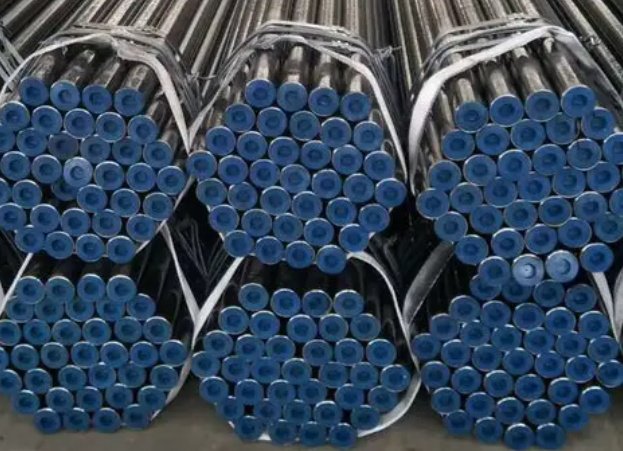
A106 carbon steel usually means ASTM A106 seamless carbon steel pipe, most often ASTM A106 Grade B, specified for high-temperature and pressure service in process plants, refineries, power stations, and industrial piping systems.
If you need the short answer, A106 is the go-to specification when a project requires seamless carbon steel pipe for elevated-temperature duty, but the final selection still depends on pipe size, schedule, code calculations, corrosion allowance, fabrication method, and service environment.
This guide explains grades, chemistry, mechanical properties, dimensions, manufacturing, welding, applications, testing, and how A106 compares with ASTM A53 and API 5L.
What Is A106 Carbon Steel?
ASTM A106 is the standard specification for seamless carbon steel pipe for high-temperature service. In plain terms, it is a seamless pressure pipe material widely used where heat, pressure, and code compliance matter more than low-cost general utility pipe.
Because it is seamless, A106 has no longitudinal weld seam. That makes it a common choice for critical piping classes, high-temperature services, and owner specifications that explicitly call for seamless construction.
- Product form: seamless carbon steel pipe
- Typical code designation: ASTM A106 or ASME SA-106
- Primary service intent: elevated-temperature and pressure service
- Steelmaking type: killed carbon steel
- Supply condition: hot-finished or cold-drawn
- Typical end use: steam lines, process piping, refinery piping, boiler plant systems, fabricated pipe spools
Engineer note: ASTM A106 vs ASME SA-106
ASTM A106/A106M is the ASTM material specification. ASME SA-106 is the corresponding ASME-adopted specification used within boiler and pressure vessel or code-driven procurement systems. Many projects treat them as materially equivalent for design intent, but the purchase order and code package should match the exact standard named by the EPC, owner, or inspector.
Grades, Chemistry, and Mechanical Properties
The specification includes Grade A, Grade B, and Grade C. In market practice, Grade B is the most common because it offers a useful balance of strength, weldability, broad mill availability, and familiarity in plant piping classes.
Chemical composition limits commonly cited from ASTM A106/A106M
| Grade | Carbon, max | Manganese | Phosphorus, max | Sulfur, max | Silicon, min |
|---|---|---|---|---|---|
| A | 0.25% | 0.27% to 0.93% | 0.035% | 0.035% | 0.10% |
| B | 0.30% | 0.29% to 1.06% | 0.035% | 0.035% | 0.10% |
| C | 0.35% | 0.29% to 1.06% | 0.035% | 0.035% | 0.10% |
Residual alloy limits for copper, nickel, chromium, molybdenum, and vanadium also apply in the specification. For critical fabrication, hardness-sensitive service, or owner approval, always verify the exact chemistry on the material test report rather than relying on a summary table.
Minimum mechanical properties
| Grade | Tensile Strength, min | Yield Strength, min | Typical market position |
|---|---|---|---|
| A | 48 ksi (330 MPa) | 30 ksi (205 MPa) | Less common |
| B | 60 ksi (415 MPa) | 35 ksi (240 MPa) | Most commonly stocked and specified |
| C | 70 ksi (485 MPa) | 40 ksi (275 MPa) | Higher strength, less common in routine plant buying |
Why Grade B is used so often
- Good availability across common pipe sizes and schedules
- Well understood in process and utility piping design
- Suitable for many shop fabrication and field welding programs
- Frequently named directly in piping classes and owner material standards
Buyer note: chemistry points that affect fabrication
Higher carbon content and residual alloying elements can affect weldability, hardness response, and procedure qualification. If the line class has low-temperature toughness, sour-service, or strict fabrication controls, do not assume standard A106 chemistry alone is enough. Review supplementary requirements, the actual heat analysis, and any project-specific restrictions before release to production.
Sizes, Schedules, and Dimensional Standards
A106 defines the material specification, but pipe outside diameter and wall-thickness series are usually taken from ASME B36.10M. That is why purchase orders normally describe A106 pipe by nominal pipe size (NPS) and schedule, such as Schedule 40, Schedule 80, Schedule 160, or XS.
- Typical order description: ASTM A106 Grade B, NPS 6, Schedule 40, seamless, beveled ends, random length
- Dimensions are tied to NPS and schedule, not to the word "A106" alone
- Wall thickness is critical because it directly affects calculated pressure capacity
- Common mill supply includes random, double-random, or cut lengths by agreement
One of the most common buying mistakes is to specify the material grade but not the schedule. A106 tells the mill what the pipe is made of; schedule tells the mill how thick the wall must be.
Schedule is not the same thing as a pressure rating. Actual allowable pressure depends on the governing code formula, design temperature, allowable stress, actual wall after tolerance, corrosion allowance, manufacturing condition, and any additional design factors required by the project.
Common end conditions and supply details
- Plain end
- Beveled end for butt welding
- Threaded and coupled where applicable
- Black finish, varnished, or coated by agreement
- Bundled or individually protected for export and spool-fabrication handling
How A106 Seamless Pipe Is Manufactured and Processed
The seamless manufacturing route begins with solid steel billet, which is heated, pierced to create a hollow shell, elongated, and then reduced or sized to final pipe dimensions. Because there is no electric-resistance or fusion weld seam, the product is often preferred when seamless construction is specified by design.
Typical mill manufacturing sequence
- Steelmaking and billet casting
- Billet heating
- Piercing to form a hollow shell
- Elongation and rolling
- Sizing or stretch reducing
- Cooling, straightening, and cutting
- Heat treatment where required by manufacturing condition or order
- Inspection, marking, and shipment preparation
Hot-finished A106 pipe may be supplied without heat treatment unless otherwise required, while cold-drawn A106 pipe is heat treated after the final cold-draw operation in accordance with the specification. That distinction matters for mechanical properties, dimensional precision, and some fabrication expectations.
Processing and fabrication in the shop
A106 pipe is routinely cut, beveled, threaded, grooved, bent, welded, machined, blasted, painted, and assembled into spools. Its broad use in fabrication shops is one reason Grade B remains so common in industrial projects.
From a practical engineering standpoint, successful fabrication depends less on the material name alone and more on procedure control: welding parameters, preheat logic, end preparation, fit-up quality, dimensional control, and traceability after cutting.
Processing note for engineers: welding, bending, and machining
- Welding: qualify the WPS and PQR to the applicable code and service class; do not assume field weldability removes the need for procedure control.
- Bending: tighter bend radii can increase ovality and wall thinning; verify minimum remaining wall after bending.
- Threading: threaded ends reduce wall at the root and may lower pressure margin on smaller sizes.
- Machining: maintain heat number traceability after cut pieces are separated from the parent length.
- Coating: remove scale, rust, oil, or mill varnish as required by the coating system specification.
- PWHT: post-weld heat treatment is governed by code, wall thickness, and service, not by the A106 material designation alone.
Common Applications, Service Conditions, and Limits
A106 is widely selected for high-temperature pressure service in plants where the piping class requires seamless carbon steel and where steam, hot condensate, hydrocarbons, or other process fluids are handled under code-controlled conditions.
| Application | Why A106 is used | Important caution |
|---|---|---|
| Steam and utility headers | Seamless construction and broad code familiarity at elevated temperature | Check allowable stress and thermal expansion design |
| Refinery and petrochemical process piping | Common in hydrocarbon and hot utility systems | Corrosion mechanism may control material choice more than base strength |
| Power plant piping spools | Good availability and fabrication familiarity | Do not exceed code temperature limits or ignore required heat treatment rules |
| General industrial pressure piping | Reliable seamless option for skids, packages, and plant tie-ins | Verify whether seamless is actually required; welded options may reduce cost |
A106 is not a universal answer for every severe environment. Corrosion, erosion, low-temperature toughness, sour-service cracking risk, oxidation at elevated temperature, and creep-sensitive applications can all push the engineer toward a different specification or additional project requirements.
When A106 is not the best choice
- For low-temperature service with impact requirements, ASTM A333 grades are often more appropriate.
- For corrosive or chloride-rich environments, stainless steel, alloy steel, lined pipe, or corrosion-resistant systems may offer better lifecycle performance.
- For H2S or sour service, hardness limits and NACE or ISO requirements must be reviewed explicitly.
- For very large diameters, welded pipe alternatives may offer better availability, shorter lead times, and lower installed cost.
- For highly elevated temperatures where creep strength governs, alloy steel grades may be required instead of carbon steel.
A106 vs A53 vs API 5L
A106 is not the same as A53 or API 5L, even though these specifications can overlap in carbon steel pipe projects and may appear similar to non-specialist buyers.
| Specification | Typical product form | Best known for | Common use case |
|---|---|---|---|
| ASTM A106 | Seamless | High-temperature service | Process piping, steam, refinery and power applications |
| ASTM A53 | Seamless or welded | General-purpose pipe | Mechanical and pressure service where elevated-temperature focus is less central |
| API 5L | Seamless or welded line pipe | Pipeline service | Oil and gas transmission, gathering, and distribution systems |
- Choose A106 when the piping class or design basis specifically calls for seamless carbon steel pipe for elevated-temperature duty.
- Choose A53 when general service, stock availability, or mixed seamless/welded sourcing is acceptable and project documents permit it.
- Choose API 5L when line-pipe requirements, PSL levels, or pipeline integrity criteria govern the job.
Some mills and distributors supply seamless pipe that is dual certified to A106 and A53. That can be useful for stock programs, but dual certification does not automatically make substitution acceptable. The owner specification, piping class, testing requirements, and code package still control the final decision.
Quick buying matrix: what to check before substituting A53 or API 5L
Confirm the design code, design temperature, whether seamless construction is mandatory, whether the line class explicitly names A106 or SA-106, whether impact testing is required, and whether the owner accepts dual-certified stock. Substitution should be reviewed as a technical change, not treated as a purchasing shortcut.
Inspection, Testing, Documentation, and Buying Checklist
The most reliable way to buy A106 pipe is to connect the purchase order to the project specification and then verify each lot by mill test certificate, product marking, and heat-number traceability.
Typical inspection and test points
- Tensile testing
- Flattening or bend testing as applicable
- Hydrostatic testing or approved nondestructive electric examination
- Dimensional inspection for outside diameter, wall thickness, length, and end prep
- Visual inspection for surface defects, dents, end damage, and handling damage
- Marking review for specification, grade, size, heat number, and manufacturer traceability
What a purchase order should clearly state
- Standard and edition: ASTM A106/A106M or ASME SA-106
- Grade: A, B, or C
- NPS and schedule or required wall thickness
- Quantity and length range
- Seamless construction requirement
- Hot-finished or cold-drawn if relevant to the application
- End condition: plain, beveled, threaded, or coupled
- Testing, NDE, supplementary requirements, and third-party inspection if needed
- Coating, preservation, packaging, and documentation package
Procurement checklist: common causes of rejection
- Material grade is specified, but schedule or wall thickness is omitted
- Impact testing, sour-service suitability, or special NDE is assumed but not ordered
- Mill certificate does not match the actual heat numbers on delivered pipe
- Pieces are cut and repacked without preserving traceability
- End bevel damage, out-of-roundness, or wall under-tolerance is found after receipt
- Outdated specification editions conflict with the project code basis
For code jobs, also check whether the owner wants material supplied and certified specifically as ASME SA-106. That request is common in power, boiler, and pressure-piping projects where document alignment matters as much as the base chemistry and strength.
References and Specification Notes
For formal design, procurement, and inspection, the governing documents must be the latest editions adopted by the project, code, and owner. The following are the principal references commonly used when citing A106 carbon steel pipe requirements:
- ASTM A106/A106M — Standard Specification for Seamless Carbon Steel Pipe for High-Temperature Service
- ASME SA-106 — ASME material specification adoption for pressure applications
- ASME B36.10M — Welded and Seamless Wrought Steel Pipe dimensions
- ASME B31.1 — Power Piping
- ASME B31.3 — Process Piping
- NACE MR0175 / ISO 15156 — Guidance for materials used in H2S-containing environments where applicable
This article summarizes specification intent, common engineering practice, and frequently cited minimum values. Final material acceptance should always be based on the governing code, detailed design calculations, the approved project specification, and the actual certified mill documentation for the delivered lot.