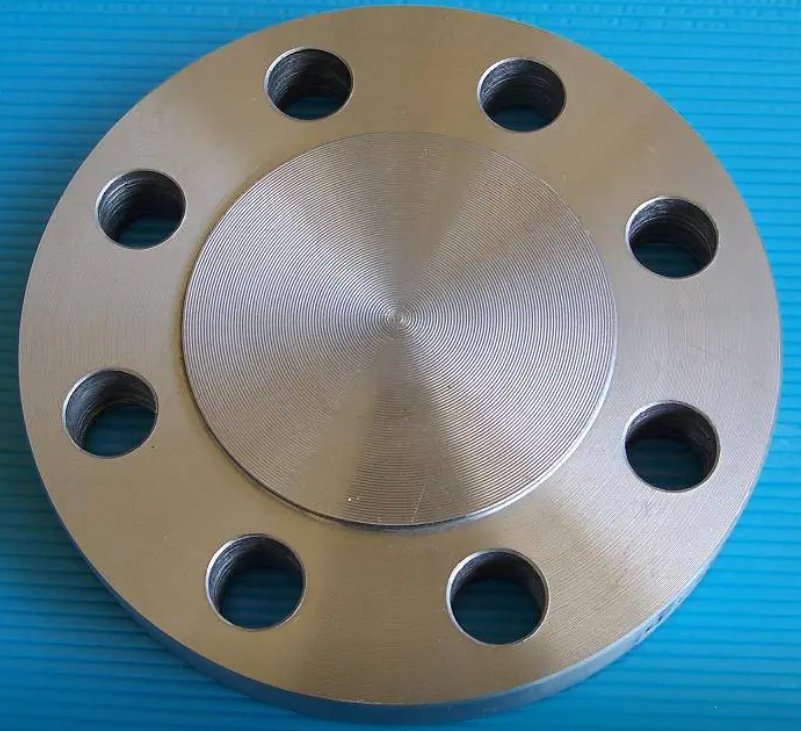
Carbon Steel Flanges are mechanical connectors used to join pipes, valves, pumps, pressure vessels and equipment in industrial piping systems. They provide a bolted, gasketed joint that can be assembled, inspected and disassembled more easily than a permanent welded joint. Our carbon steel flange range covers forged and plate flanges for oil and gas, petrochemical, power generation, water treatment, shipbuilding, HVAC, mining and general process piping.
Available standards include ASME B16.5, ASME B16.47 Series A/B, EN 1092-1, DIN, JIS and project-specific drawings. Common materials include ASTM A105, ASTM A350 LF2, ASTM A694, EN P245GH, P250GH, C22.8 and equivalent carbon steel grades. Flanges can be supplied with raised face, flat face, ring type joint, large male-female, tongue-and-groove, serrated finish, anti-rust coating and full material traceability.
Product Overview
A carbon steel flange is selected according to pipe size, pressure rating, facing type, material grade, temperature range, corrosion allowance and installation method. Compared with stainless steel or alloy steel flanges, carbon steel provides an economical balance of strength, machinability and availability for non-corrosive and moderately corrosive services when the correct coating, gasket and bolting are used.
For critical service, forged carbon steel flanges are preferred because the forging process refines grain flow and improves mechanical consistency. Plate flanges may be suitable for lower-pressure utility lines, water systems or non-critical applications where the project standard permits their use.
Key Specifications for Carbon Steel Flanges
| Item | Available Options |
|---|---|
| Product | Carbon Steel Flange, Carbon Steel Flanges, forged flange, pipe flange |
| Size Range | 1/2" to 60" for standard supply; larger sizes available by drawing |
| Pressure Class | ASME Class 150, 300, 400, 600, 900, 1500, 2500 |
| EN Pressure Rating | PN6, PN10, PN16, PN25, PN40, PN63, PN100 |
| Standards | ASME B16.5, ASME B16.47, MSS SP-44, EN 1092-1, DIN, JIS B2220, BS 4504 |
| Material Grades | ASTM A105, A350 LF2, A694 F42-F70, Q235, Q345, P245GH, P250GH, C22.8 |
| Facing | RF, FF, RTJ, LMF, SMF, tongue and groove, custom facing |
| Surface Finish | Anti-rust oil, black painting, yellow painting, zinc coating, hot-dip galvanizing, epoxy coating |
| Testing | Dimensional inspection, PMI when required, UT, MT, hardness test, MTC EN 10204 3.1 |
Types of Carbon Steel Flanges
The correct flange type depends on piping layout, welding method, pressure rating, inspection access and maintenance requirements. The following types are widely used in industrial projects.
Weld Neck Flange
Weld neck flanges have a long tapered hub and are butt-welded to the pipe. The gradual transition reduces stress concentration, making them suitable for high pressure, high temperature, cyclic loading, steam lines, refinery units and critical process piping.
Slip On Flange
Slip on flanges slide over the pipe and are normally welded on both the inside and outside. They are easier to align than weld neck flanges and are often used in low to medium pressure lines, water systems and general industrial piping.
Blind Flange
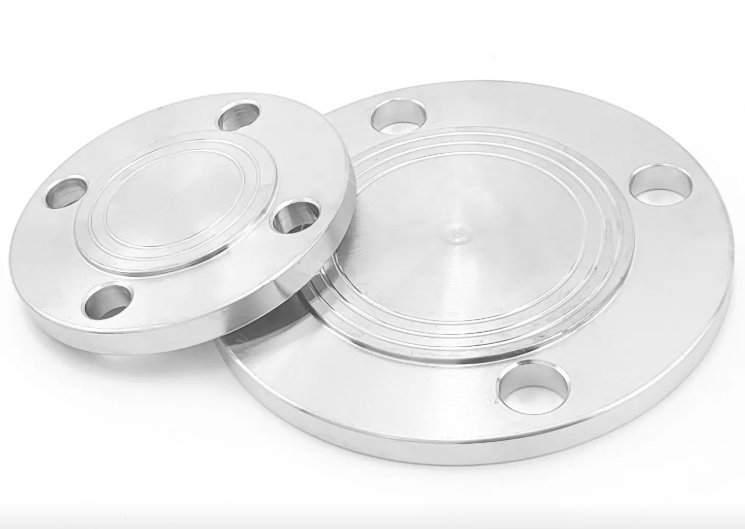
Blind flanges close the end of a piping system, valve outlet or pressure vessel nozzle. They are commonly used for hydrostatic testing, future expansion points and maintenance isolation. For high-pressure service, blind flange thickness and bolt loading must be carefully verified.
Socket Weld Flange
Socket weld flanges are used on small-bore high-pressure piping. The pipe is inserted into the socket and fillet-welded. They provide good alignment and are common in chemical plants, hydraulic lines and instrumentation-related services.
Threaded Flange
Threaded flanges connect to pipes without welding. They are used where welding is restricted, such as some low-pressure utility services or hazardous areas. Thread engagement, sealant compatibility and vibration conditions should be checked before selection.
Lap Joint Flange
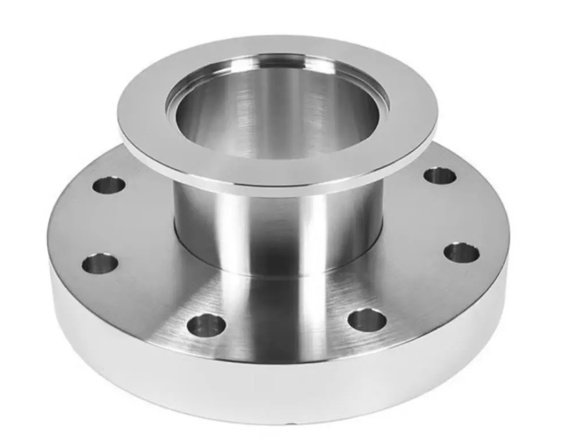
Lap joint flanges are used with stub ends. They allow flange rotation for bolt-hole alignment and are useful in systems requiring frequent dismantling. In carbon steel piping, they may be selected for large-diameter lines where alignment flexibility reduces installation time.
Material Grades and Service Conditions
| Material Grade | Typical Use | Engineering Notes |
|---|---|---|
| ASTM A105 | General forged carbon steel flanges for ambient and elevated temperature service | Common choice for ASME B16.5 forged flanges; widely available and cost-effective |
| ASTM A350 LF2 | Low-temperature service | Suitable when impact toughness is required; Charpy impact testing may be specified |
| ASTM A694 F42-F70 | High-yield carbon steel flanges for transmission pipelines | Used for pipeline and high-pressure applications requiring higher yield strength |
| EN P245GH / P250GH | European pressure equipment and boiler-related piping | Often supplied to EN 1092-1 with PED-related documentation when required |
| Q235 / Q345 | General industrial and utility piping | Common in non-critical systems; standard compatibility should be confirmed |
For low-temperature projects, the material is not selected only by pressure class. ASTM A350 LF2 is frequently specified when the design temperature requires verified impact toughness. For pipeline applications with higher yield requirements, ASTM A694 grades can reduce wall thickness or match high-strength pipe specifications, subject to project code approval.
Manufacturing and Machining Process
Carbon steel flange production normally includes raw material inspection, cutting, heating, forging or forming, heat treatment, rough machining, finish machining, drilling, facing, marking, inspection and surface protection. Critical dimensions include outside diameter, bolt circle diameter, bolt hole diameter, flange thickness, hub diameter, bore, raised face height and gasket seating finish.
- Raw material is checked against purchase specification, heat number and chemical composition.
- Billets or rings are heated and forged to improve density and mechanical properties.
- Normalizing, annealing or stress relieving is performed according to material grade and standard requirements.
- CNC turning controls flange thickness, bore, hub profile and sealing face geometry.
- Drilling and bolt-hole machining are completed according to ASME, EN, DIN or JIS dimensions.
- Final inspection verifies dimensions, surface condition, marking and documentation.
The gasket seating surface is especially important. A typical ASME raised face flange with a serrated finish may require a controlled roughness range suitable for spiral wound, graphite, PTFE or non-asbestos gaskets. Incorrect finish can reduce gasket bite or cause premature leakage under thermal cycling.
Why facing finish matters in flange sealing
In one steam utility project, leakage was traced to a mismatch between smooth flange faces and a gasket type requiring serration. After replacing the faces with a controlled phonographic serrated finish and applying the recommended bolt torque sequence, the line passed hydrostatic testing without visible leakage. The practical result was a reduction in rework time from two shutdown shifts to one inspection shift.
Quality Control and Documentation
Quality control for carbon steel flanges should be aligned with the design code, pressure class and service risk. Buyers and engineers should confirm not only the flange size and rating, but also the inspection level, heat treatment status and certificate requirements.
- Material Test Certificate according to EN 10204 3.1 or project equivalent
- Chemical composition and mechanical property verification
- Dimensional inspection using calibrated gauges and measuring tools
- Visual inspection for cracks, folds, dents, lamination and flange machining defects
- Ultrasonic testing for selected forged or large-diameter flanges when specified
- Magnetic particle testing for surface crack detection when required
- Hardness testing for heat-treated materials and specific project requirements
- Marking inspection for standard, size, class, material, heat number and manufacturer
For export and EPC projects, traceability from heat number to final marking helps prevent mixed-material installation. This is particularly important when A105, LF2 and A694 flanges are used on the same site but in different temperature or pressure services.
Typical inspection documents supplied with carbon steel flanges
- Commercial invoice and packing list
- Material Test Certificate
- Dimensional inspection report
- Heat treatment record when applicable
- NDT report when UT, MT or other tests are required
- Certificate of origin when required for customs clearance
Engineering Selection Considerations
Selecting Carbon Steel Flanges is not only a catalog decision. The engineer must verify the pipe schedule, design pressure, design temperature, gasket type, bolt material, corrosion allowance, fluid compatibility and installation environment.
Pressure and Temperature Rating
ASME flanges are rated by class, but allowable pressure decreases as temperature rises. For example, an ASME Class 150 carbon steel flange may be suitable for many water and low-pressure steam services, while Class 300 or Class 600 may be required for higher pressure or higher temperature conditions. Always verify the pressure-temperature rating table for the selected material group.
Pipe Schedule and Bore Matching
Weld neck and socket weld flanges should match the pipe wall thickness or schedule. A bore mismatch can create turbulence, increase pressure drop, complicate welding and introduce stress concentration. For process lines, the purchase order should specify pipe schedule, not only nominal pipe size.
Gasket and Bolt Compatibility
The flange, gasket and bolting form one sealing system. Raised face flanges with spiral wound gaskets are common in refinery and power plant service, while flat face flanges are often used with full-face gaskets where cast iron equipment is connected. Over-tightening can damage gaskets; under-tightening can cause leakage.
A practical field benchmark is that many flange leaks are linked to assembly issues rather than flange material failure. Controlled tightening sequence, calibrated torque tools and clean gasket surfaces can significantly improve first-time hydrotest pass rates.
Common flange ordering mistakes to avoid
- Ordering a weld neck flange without specifying pipe schedule or bore.
- Mixing RF and FF facing types in the same joint without engineering approval.
- Selecting A105 for low-temperature service where LF2 impact testing is required.
- Using Class 150 dimensions when the project specification calls for PN16 or PN40.
- Forgetting to specify coating requirements for outdoor or marine storage.
Applications
Carbon steel flanges are used wherever reliable detachable pipe connections are needed. They are commonly installed in:
- Oil and gas gathering stations, terminals and pipeline systems
- Refinery process units, tank farms and loading facilities
- Petrochemical plants and chemical processing lines
- Power plants, boiler systems and steam distribution networks
- Municipal water supply, wastewater treatment and desalination plants
- Fire protection piping and pump stations
- Shipbuilding, offshore modules and marine auxiliary systems
- Mining slurry lines, compressed air systems and industrial utilities
For outdoor projects, surface protection should be selected according to storage duration, transport route and site environment. Black paint or anti-rust oil may be enough for short-term indoor storage, while hot-dip galvanizing, epoxy coating or special preservation may be better for coastal, humid or long-distance export conditions.
Buyer and Procurement Guide
A complete flange inquiry reduces clarification time and prevents dimensional mismatch. Procurement teams should provide the standard, nominal size, pressure class or PN rating, material grade, flange type, facing type, pipe schedule, quantity, coating, inspection requirements and destination.
| Information to Specify | Example |
|---|---|
| Standard | ASME B16.5 |
| Size and Rating | 4" Class 300 |
| Type | Weld Neck Flange |
| Material | ASTM A105N or ASTM A350 LF2 |
| Facing | RF serrated finish |
| Pipe Schedule | SCH 40, SCH 80 or project-specific bore |
| Inspection | MTC 3.1, dimensional report, MT test if required |
| Coating | Black paint, anti-rust oil, galvanized or epoxy coated |
For project purchasing, it is recommended to group Carbon Steel Flanges by standard and pressure class before ordering. This helps reduce packaging errors, simplifies site receiving inspection and improves installation efficiency. When multiple flange standards are used in one project, bolt hole pattern and face-to-face connection compatibility should be checked carefully.
Packing, Marking and Export Handling
Standard marking normally includes material grade, nominal size, pressure class, standard, heat number and manufacturer identification. For small flanges, markings may be stamped on the flange edge. For large-diameter flanges, additional paint marking or tags may be used to support warehouse identification.
Flanges are typically packed in wooden cases, plywood cases or pallets with waterproof film. Sealing faces are protected with plastic caps, plywood covers or anti-rust paper depending on size and shipment conditions. Proper packing reduces sealing face damage during container loading, inland transport and site handling.
Why Specify Carbon Steel Flanges for Industrial Piping
Carbon steel flanges remain one of the most widely used pipe connection components because they combine strength, standardization, broad material availability and competitive cost. When correctly specified, manufactured and installed, they provide reliable service in pressure piping systems across energy, water, chemical and industrial infrastructure projects.
From forged ASTM A105 weld neck flanges to low-temperature A350 LF2 blind flanges and EN 1092-1 PN-rated plate flanges, the final performance depends on accurate engineering selection, controlled machining, verified documentation and proper installation. A well-defined specification helps ensure that the delivered flanges fit the piping system, pass inspection and perform safely throughout the intended service life.