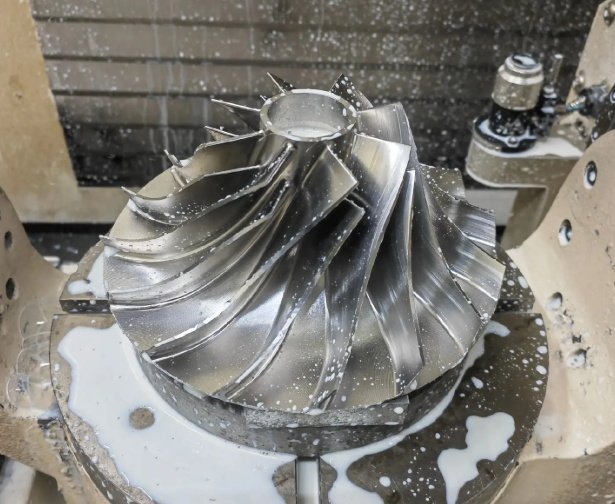
A stainless steel impeller is a rotating fluid-handling component designed to transfer energy from a motor or shaft into liquid, slurry, gas-liquid mixture or process media. For applications requiring corrosion resistance, mechanical strength, cleanability and long service life, Stainless Steel Impellers are widely used in centrifugal pumps, agitators, marine circulation systems, food processing equipment, chemical transfer units and wastewater treatment systems.
This product page is written for engineers, OEM buyers, maintenance teams and sourcing managers who need to compare impeller materials, select suitable stainless steel grades, understand machining requirements and reduce lifecycle cost rather than only purchase by unit price.
Product Overview
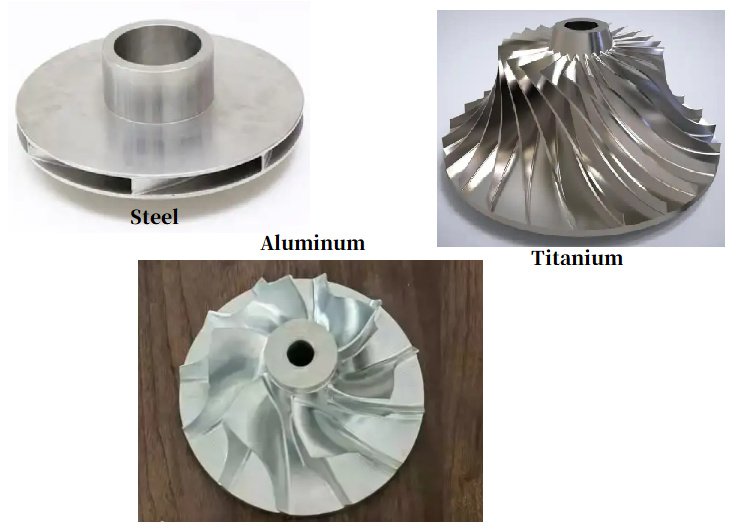
Stainless steel impellers are available as open, semi-open, closed, vortex, axial-flow, radial-flow and mixed-flow designs. The correct design depends on flow rate, head, viscosity, solids content, operating temperature, hygiene requirements and shaft speed. Compared with carbon steel or cast iron impellers, stainless steel provides better resistance to rust, pitting, chemical attack and cleaning chemicals.
- Product name: Stainless Steel Impeller
- Common grades: 304, 304L, 316, 316L, 2205 duplex, 17-4PH, 904L
- Manufacturing methods: investment casting, sand casting, CNC machining, welding fabrication, laser cutting, metal stamping, dynamic balancing
- Typical surface finish: machined, polished, electropolished, passivated, mirror polished for sanitary service
- Applicable equipment: centrifugal pumps, slurry pumps, mixers, agitators, marine pumps, chemical pumps, food-grade pumps and OEM assemblies
Key Benefits of Stainless Steel Impellers
Stainless steel is selected when the impeller must withstand aggressive environments, frequent cleaning, high rotational speed or strict contamination control. In many industrial systems, the impeller is one of the most failure-sensitive components because it is continuously exposed to fluid erosion, cavitation, cyclic stress and chemical corrosion.
- Corrosion resistance: 316L and duplex stainless steel perform well in chloride-containing water, mildly acidic media and many chemical process streams.
- High mechanical integrity: suitable for demanding pump curves, variable-speed drives and continuous-duty operation.
- Hygienic performance: stainless steel can be polished and passivated for food, beverage, pharmaceutical and clean-water systems.
- Dimensional stability: precision machining helps maintain vane geometry, balance grade and hydraulic efficiency.
- Lower lifecycle cost: longer service intervals can reduce unplanned downtime, replacement frequency and maintenance labor.
Available Impeller Types
Selecting the impeller geometry is as important as choosing the material. The wrong geometry may lead to low efficiency, vibration, overload, clogging or premature bearing and seal failure.
Closed Stainless Steel Impeller
A closed impeller has front and rear shrouds that enclose the vanes. It is commonly used in clean liquid centrifugal pumps where high hydraulic efficiency and stable performance are required. Closed impellers are often selected for water supply, HVAC circulation, marine cooling and chemical transfer with low solids content.
Open Stainless Steel Impeller
Open impellers have exposed vanes and are easier to clean and inspect. They are suitable for viscous liquids, fluids containing soft solids and some sanitary applications. Because vane clearance is critical, machining accuracy and wear control strongly influence pump performance.
Semi-Open Stainless Steel Impeller
Semi-open impellers combine one shroud with exposed vane faces. They offer a balance between efficiency and solids-handling capability. These are widely used in process pumps, wastewater systems and light slurry applications.
Vortex Stainless Steel Impeller
Vortex designs reduce direct contact between the impeller and solids by creating a whirlpool effect inside the casing. They are useful for sewage, fibrous media and liquids with suspended particles, although efficiency is usually lower than closed designs.
Axial-Flow and Mixed-Flow Impeller
Axial-flow and mixed-flow stainless steel impellers are used when high flow and low-to-medium head are required. Common applications include circulation tanks, crystallizers, marine systems, cooling loops and industrial mixing equipment.
Material Comparison: Stainless Steel vs Other Impeller Materials
For procurement teams, material comparison should include corrosion resistance, wear behavior, machining cost, allowable speed, sanitation needs and total cost of ownership. The table below summarizes common choices.
| Material | Strengths | Limitations | Best-Fit Applications |
|---|---|---|---|
| Stainless Steel | High corrosion resistance, strong, cleanable, durable, suitable for precision machining | Higher initial cost than cast iron or plastic | Chemical pumps, food processing, marine systems, sanitary equipment, OEM pump assemblies |
| Cast Iron | Low cost, good castability, acceptable for clean water | Rusts easily, poor performance in corrosive or hygienic environments | General water transfer, low-cost utility pumps |
| Bronze | Good seawater performance, anti-galling properties | Lower strength than many stainless grades, copper contamination risk in some processes | Marine pumps, seawater circulation, legacy pump replacement |
| Plastic or Composite | Lightweight, chemical resistant in selected media, low cost for molded parts | Lower temperature and mechanical limits, deformation risk at high speed | Small chemical pumps, low-load fluid systems |
| Carbon Steel | Strong and economical | Requires coating or protection; corrosion can reduce service life | Oil, non-corrosive industrial liquids, heavy-duty low-corrosion service |
In corrosive or clean-fluid applications, stainless steel often has a higher purchase price but a lower operating cost. For example, replacing a cast iron impeller with 316L stainless steel in a chloride-containing washdown pump can reduce corrosion-related replacement cycles from months to years when the pump operates within the correct hydraulic range.
Stainless Steel Grade Selection
Grade selection directly affects corrosion resistance, weldability, machinability, magnetic response and cost. Buyers should confirm the fluid chemistry, pH, chloride concentration, cleaning chemicals, operating temperature and required documentation before placing an order.
| Grade | Key Features | Typical Use |
|---|---|---|
| 304 / 304L | General corrosion resistance, good forming and welding, economical stainless option | Clean water, food equipment, general industrial pumps |
| 316 / 316L | Added molybdenum improves resistance to chlorides and pitting | Marine, chemical, pharmaceutical, washdown and mildly corrosive media |
| 2205 Duplex | Higher strength and better chloride stress corrosion cracking resistance than common austenitic grades | Seawater, brine, high-chloride process fluids |
| 17-4PH | High strength precipitation-hardening stainless steel | High-speed rotating components, demanding mechanical loads |
| 904L | Excellent resistance to strong acids and severe corrosion conditions | Special chemical processing, acid handling systems |
Engineering note: when 316L is not enough
316L is often chosen for chloride exposure, but it is not a universal seawater solution. If the application includes stagnant seawater, high chloride concentration, elevated temperature or crevice conditions, duplex stainless steel or super austenitic grades may be more reliable. In pump impellers, pitting near vane roots and hub transitions can initiate fatigue cracks, so corrosion resistance and geometry must be evaluated together.
Manufacturing and Machining Capabilities
Stainless steel impeller manufacturing requires control of casting quality, machining accuracy, surface roughness, welding distortion and balance. Even small dimensional deviations can affect flow rate, head, noise, vibration and power consumption.
Casting and Near-Net Shape Production
Investment casting is suitable for complex vane geometry, compact pump impellers and medium-volume production. Sand casting is often used for larger impellers where tooling cost and part size are important. After casting, critical areas such as bore, keyway, wear ring seats, back face, vane tips and mounting surfaces are machined to specification.
CNC Machining
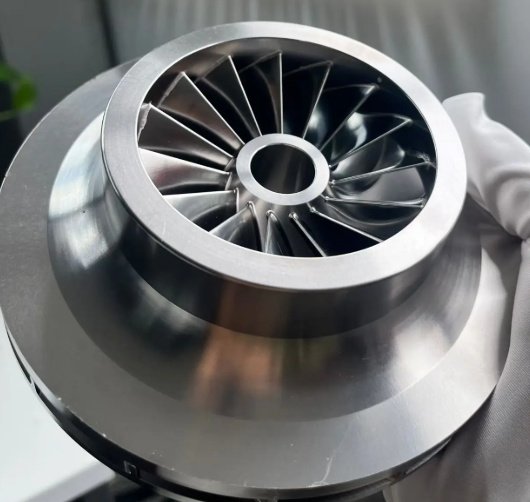
CNC turning and milling are used to achieve accurate concentricity, bore tolerance, vane trimming and surface alignment. For high-performance stainless steel impellers, 5-axis machining can improve vane profile accuracy and reduce hydraulic losses caused by inconsistent blade geometry.
Welding Fabrication
Fabricated impellers are common for large axial-flow or mixer applications. Plates, hubs and blades are cut, formed, welded and machined. Welding procedure control is important to avoid distortion, heat-affected zone cracking and imbalance.
Finishing, Passivation and Electropolishing
Surface finishing removes burrs, tool marks and embedded contaminants. Passivation improves the chromium oxide layer on stainless steel, while electropolishing can reduce surface roughness and improve cleanability in sanitary systems.
Machining tolerance considerations
Typical impeller tolerances depend on diameter, speed and pump design. Critical dimensions often include shaft bore, keyway, hub face runout, outside diameter, vane clearance and wear ring seat. For high-speed service, total indicated runout and dynamic balance are usually more important than general dimensional tolerance alone.
Performance Factors Engineers Should Verify
Before ordering or approving a replacement impeller, engineers should verify the operating point rather than only matching outside diameter. A stainless steel impeller can still fail if the pump operates far from the best efficiency point, experiences cavitation or handles unexpected solids.
- Hydraulic efficiency: vane angle, outlet width, surface finish and clearance affect pump curve and energy consumption.
- Dynamic balance: balanced impellers reduce vibration, bearing load and mechanical seal wear.
- Cavitation resistance: correct NPSH margin, inlet geometry and material selection reduce pitting damage.
- Solids handling: open, semi-open or vortex designs may be required for fibrous or particulate media.
- Thermal compatibility: operating temperature affects expansion, clearance and corrosion behavior.
- Chemical compatibility: pH, chlorides, oxidizers, acids and cleaning agents should be reviewed before grade selection.
Real Engineering Problems and Data-Based Results
The following examples show how material and manufacturing decisions affect measurable performance in actual engineering environments. Results vary by pump design, fluid chemistry and maintenance practice, but these cases reflect common field outcomes.
Case 1: Corrosion in Washdown Pump Service
A food-processing facility used cast iron impellers in a washdown area exposed to chlorinated cleaning solution. Surface corrosion increased roughness and reduced pump efficiency. After switching to 316L stainless steel impellers with passivated surfaces, replacement intervals increased from approximately 6 months to more than 24 months, and maintenance inspections showed significantly reduced pitting on vane surfaces.
Case 2: Vibration After Low-Cost Replacement
A maintenance team replaced an OEM impeller with a visually similar part that had poor bore concentricity and no verified balancing record. The pump developed vibration above 7 mm/s RMS at operating speed. After installing a dynamically balanced stainless steel impeller manufactured to the correct bore and wear ring dimensions, vibration dropped below 2.5 mm/s RMS, helping protect bearings and mechanical seals.
Case 3: Chemical Pump Upgrade
A process pump transferring mildly acidic liquid suffered frequent coating failure on carbon steel impellers. A machined 316L stainless steel replacement eliminated coating delamination and reduced unplanned pump downtime. Although the stainless steel part had a higher initial price, the annualized replacement cost decreased because coating repair and emergency shutdowns were reduced.
Quality Control and Inspection
Quality control for stainless steel impellers should cover raw material verification, dimensional inspection, surface finish, weld quality, balance and documentation. For critical applications, buyers may request inspection reports before shipment.
- Material certificate: chemical composition and mechanical properties according to applicable standards.
- Dimensional report: bore, keyway, OD, hub length, wear ring seat and critical runout values.
- Dynamic balancing: commonly specified according to ISO 21940 balance quality grades where applicable.
- Nondestructive testing: dye penetrant testing for cracks, especially on cast or welded impellers.
- Surface treatment verification: polishing, passivation, electropolishing or pickling records when required.
- Visual inspection: no sharp burrs, casting defects, unacceptable porosity or weld undercut in critical areas.
Buyer checklist for replacement impellers
- Confirm pump model, serial number and original impeller part number.
- Provide drawings or sample parts if the OEM drawing is unavailable.
- Specify rotation direction when viewed from the drive end or suction end.
- Check shaft diameter, keyway size, thread direction and locking method.
- Verify fluid, temperature, solids content, pH and chloride concentration.
- Define balance requirement and inspection documentation before production.
Specifications and Custom Options
Custom stainless steel impellers can be produced according to drawings, samples, pump curves or reverse-engineered dimensions. For OEM production, consistency of vane geometry, casting batch control and repeatable balancing are essential.
| Item | Available Options |
|---|---|
| Diameter range | Small precision impellers to large industrial pump and mixer impellers, depending on manufacturing process |
| Impeller structure | Open, semi-open, closed, recessed, vortex, axial-flow, radial-flow, mixed-flow |
| Material | 304, 316L, duplex 2205, 17-4PH, 904L and other stainless alloys by request |
| Surface finish | Machined, polished, passivated, electropolished, sanitary finish |
| Connection | Keyed bore, threaded bore, spline, taper bore, custom hub interface |
| Inspection | Dimensional report, material certificate, balance report, dye penetrant testing, surface roughness report |
| Production type | Prototype, replacement part, small batch, OEM batch production |
Applications
Stainless steel impellers are used wherever reliability, fluid compatibility and clean operation are required. The same product category may serve different industries, but the design details must be adapted to each operating condition.
- Chemical processing: acid transfer, alkaline liquids, solvents, process water and corrosion-sensitive media.
- Food and beverage: dairy, beverage circulation, CIP systems, edible oil transfer and sanitary pumping.
- Marine and offshore: seawater cooling, bilge systems, ballast water and deck wash pumps.
- Water and wastewater: treatment plants, drainage systems, sludge circulation and effluent transfer.
- Pharmaceutical and biotech: clean fluid handling, polished surfaces and contamination control.
- Mining and slurry: abrasive or corrosive slurry handling when paired with suitable geometry and wear design.
- OEM equipment: custom pump, mixer, compressor and fluid machinery assemblies.
How to Specify a Stainless Steel Impeller
To reduce quotation errors and production delays, provide as much technical information as possible. A complete specification allows engineering review of material grade, impeller geometry, machining sequence and inspection requirements.
- Pump or equipment model and operating speed
- Target flow rate, head, pressure or mixing requirement
- Fluid name, concentration, pH, temperature, viscosity and solids content
- Required stainless steel grade or corrosion environment
- Impeller type, diameter, bore size, keyway, thread and rotation direction
- Surface finish, passivation, polishing or sanitary requirements
- Balance grade and test documentation requirements
- Drawing files, 3D models, sample parts or photos with measurements
For buyers comparing suppliers, the lowest quoted price may not represent the lowest lifecycle cost. More important evaluation criteria include material traceability, machining capability, balance verification, repeatability, lead time control and engineering support for failure analysis.
Why Precision Matters in Stainless Steel Impellers
Impellers operate under combined hydraulic, mechanical and chemical loads. A small error in vane profile can reduce efficiency; a poor surface finish can accelerate corrosion or product buildup; an unbalanced rotor can damage bearings and seals. Precision manufacturing helps ensure that the impeller performs as intended in the actual pump or mixer assembly.
When correctly specified and manufactured, Stainless Steel Impellers provide a dependable solution for corrosion-resistant pumping, sanitary processing, marine service and high-value OEM fluid equipment. They are especially suitable where downtime is expensive, contamination is unacceptable or aggressive media make ordinary impeller materials unreliable.