
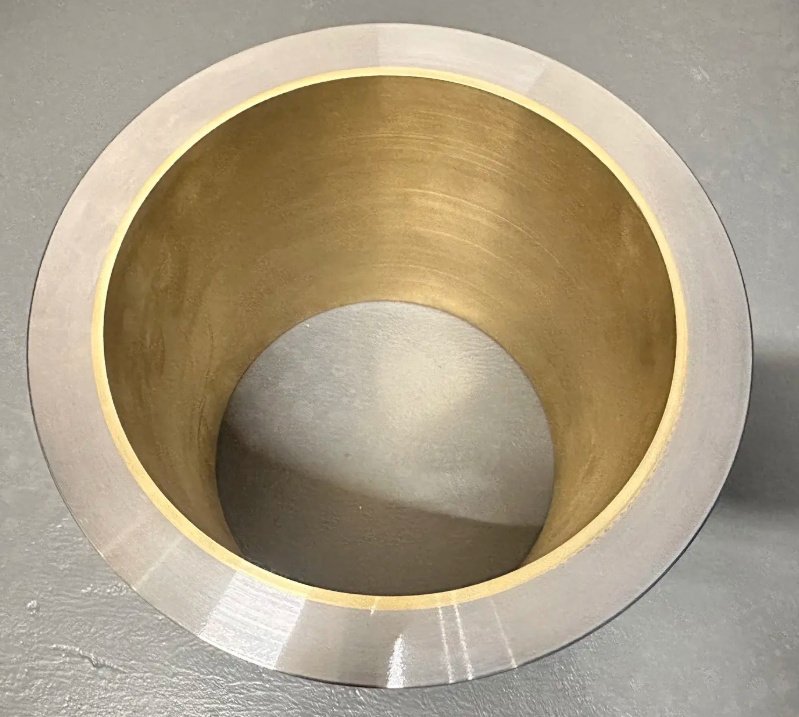
4140 alloy steel is a medium-carbon, chromium-molybdenum engineering steel widely used for shafts, gears, tooling components, bolts, couplings, spindles and high-strength machine parts. It is selected when carbon steel is not strong or hardenable enough, but when more expensive nickel-chromium-molybdenum grades such as 4340 are not required.
Searchers looking for “4140 alloy steel” usually need more than a definition. They need to know whether 4140 can be heat treated to the required hardness, whether it can be machined economically, how it compares with 4130, 4340 or 1045, and what to specify on a purchase order. This page addresses those engineering and procurement questions directly.
What Is 4140 Alloy Steel?
AISI/SAE 4140 is a quenched-and-tempered capable alloy steel containing carbon, chromium and molybdenum. The carbon provides hardenability and strength potential, chromium improves hardenability and wear resistance, and molybdenum improves high-temperature strength, toughness and resistance to temper embrittlement.
In practical terms, 4140 is valued for its balance of strength, toughness, wear resistance and cost. It is commonly supplied as hot rolled bar, cold finished bar, forged bar, plate, tube, normalized material, annealed material or pre-hardened 4140 HT.
Chemical Composition and Equivalent Grades
The following composition ranges are typical for AISI/SAE 4140 steel. Actual limits should be confirmed against the governing standard, mill test report and customer specification.
| Element | Typical Range, wt.% | Function in 4140 Steel |
|---|---|---|
| Carbon, C | 0.38–0.43 | Strength, hardness and heat treatment response |
| Manganese, Mn | 0.75–1.00 | Hardenability and deoxidation |
| Phosphorus, P | 0.035 max | Controlled residual element |
| Sulfur, S | 0.040 max | Machinability influence; controlled residual element |
| Silicon, Si | 0.15–0.35 | Deoxidation and strength |
| Chromium, Cr | 0.80–1.10 | Hardenability, wear resistance and oxidation resistance |
| Molybdenum, Mo | 0.15–0.25 | Hardenability, toughness and tempering resistance |
Common Standards and Near Equivalents
| System | Designation | Notes |
|---|---|---|
| AISI / SAE | 4140 | Common North American designation for chromium-molybdenum alloy steel |
| UNS | G41400 | Unified Numbering System designation |
| ASTM | ASTM A29 / A29M, ASTM A322 | Common bar steel specifications depending on supply form and quality requirements |
| EN / DIN | 42CrMo4, 1.7225 | European chromium-molybdenum steel often used as a functional equivalent, not always an exact substitution |
| JIS | SCM440 | Japanese chromium-molybdenum alloy steel with similar applications |
Buyer note: equivalent does not always mean interchangeable
When replacing AISI 4140 with 42CrMo4 or SCM440, verify chemistry limits, heat treatment condition, tensile requirements, impact requirements, hardness range, grain size, cleanliness and test location. For safety-critical parts, the drawing or engineering authority should approve the substitution.
Mechanical Properties by Condition
4140 properties depend heavily on heat treatment, section size and test location. The values below are representative industry ranges, not guaranteed design allowables. Always use the certified material test report and applicable standard for acceptance.
| Condition | Typical Hardness | Typical Tensile Strength | Typical Yield Strength | Engineering Comment |
|---|---|---|---|---|
| Annealed | Up to about 197 HB | Approx. 655–750 MPa | Approx. 415–520 MPa | Best for heavy machining before final heat treatment |
| Normalized | Approx. 200–240 HB | Approx. 700–900 MPa | Approx. 450–650 MPa | Refined structure; often used before quench and temper |
| Quenched and tempered | Approx. 22–35 HRC | Approx. 850–1,100 MPa | Approx. 650–950 MPa | Common condition for shafts, pins, bolts and tooling components |
| Pre-hardened 4140 HT | Typically 28–32 HRC | Often around 950–1,100 MPa | Often around 750–950 MPa | Useful when parts will be machined directly from prehard stock |
| Nitrided after Q&T | Surface may exceed 55 HRC equivalent | Core depends on prior Q&T | Core depends on prior Q&T | Improves wear and fatigue resistance with low distortion |
Section size matters because 4140 does not harden uniformly through every diameter or thickness. A small pin may reach the target hardness throughout, while a large forged shaft may have a softer core. For large sections, specify core hardness, mechanical testing location or ultrasonic quality if performance depends on through-section properties.
Heat Treatment Options for 4140 Steel
4140 alloy steel is commonly selected because it responds well to heat treatment. The main routes are annealing, normalizing, quenching and tempering, induction hardening, flame hardening and nitriding.
Annealing
Annealing softens 4140 for machining and improves dimensional stability before further processing. It is often used for complex components that require extensive rough machining before final quench and temper.
Normalizing
Normalizing refines the microstructure and can improve uniformity after forging or hot working. It is often performed before final hardening to reduce variability in response.
Quenching and Tempering
Quenching and tempering is the most common route for high-strength 4140 parts. The steel is austenitized, quenched in oil, polymer or another controlled medium, then tempered to achieve the required hardness, toughness and strength balance.
For many industrial components, 28-32 HRC is a practical hardness range because it offers high strength while retaining machinability and reasonable toughness. Higher hardness can improve wear resistance but may reduce impact toughness and increase cracking risk.
Nitriding
Nitriding introduces nitrogen into the surface after quench and temper. It is useful for gears, shafts, slides, spindles and wear surfaces because it creates a hard case with relatively low distortion compared with conventional carburizing or through hardening.
Engineer note: distortion control in heat-treated 4140 parts
Long shafts, thin-wall sleeves and asymmetrical parts may bend or move during quenching. Common controls include rough machining with stock allowance, stress relieving after rough machining, symmetrical geometry where possible, controlled fixturing, delayed final grinding and specifying straightness tolerance after heat treatment rather than before heat treatment.
4140 Alloy Steel vs Alternative Materials
4140 is often compared with 4130, 4340, 1045, 8620 and 1018. The best choice depends on strength, hardenability, toughness, surface hardness, weldability, cost and availability.
| Material | How It Compares with 4140 | Choose This Material When | Potential Limitation |
|---|---|---|---|
| 4130 Alloy Steel | Lower carbon and generally better weldability, but lower strength and hardness potential | Welded structures, aircraft tubing, roll cages and moderate-strength parts | May not meet high shaft or tooling strength requirements |
| 4340 Alloy Steel | Higher nickel content, better toughness and hardenability in larger sections | Critical aerospace, landing gear, heavy shafts and high-impact components | Higher cost and may be less available in some sizes |
| 1045 Carbon Steel | Lower alloy content, lower hardenability and usually lower cost | Simple medium-strength shafts, pins and machine parts with limited section requirements | Less suitable for deep hardening or high fatigue loads |
| 8620 Alloy Steel | Lower carbon case-hardening steel; excellent carburized surface with tough core | Gears, splines and wear parts needing a hard case and ductile core | Not normally used as a through-hardened substitute for 4140 |
| 1018 Carbon Steel | Much lower strength and much easier to weld and form | General fabrication, brackets, spacers and low-stress components | Insufficient strength and hardenability for demanding applications |
For many industrial designs, 4140 is often the practical midpoint: stronger and more hardenable than plain carbon steels, less costly than 4340, and easier to source than more specialized alloy grades.
Machining, Grinding and Fabrication
4140 can be machined successfully, but machinability is condition-dependent. Annealed 4140 is significantly easier to machine than quenched-and-tempered 4140 HT. Prehard material reduces or eliminates final heat treatment but increases tool wear and cutting force.
Machining Behavior
- Annealed 4140 is commonly rated at about 60–70% machinability compared with free-machining reference steels.
- Prehard 4140 at 28–32 HRC is machinable with carbide tooling, rigid workholding and controlled cutting parameters.
- Interrupted cuts, keyways and heavy roughing increase the risk of chatter, edge chipping and heat buildup.
- Flood coolant, high-pressure coolant or suitable oil-based cutting fluid can improve tool life in drilling, tapping and deep-hole operations.
- Final grinding is common after heat treatment when tight tolerances, bearing fits or surface finish requirements are involved.
Practical Machining Recommendations
| Operation | Preferred Condition | Manufacturing Note |
|---|---|---|
| Heavy rough turning | Annealed or normalized | Leave stock for heat treatment movement and final finishing |
| Finish turning | Prehard or stress relieved | Use rigid setup and carbide inserts with suitable nose radius |
| Drilling and tapping | Annealed preferred; prehard possible | Use correct tap geometry, lubrication and chip evacuation |
| Grinding | After heat treatment | Avoid grinding burn; verify surface integrity for fatigue-critical parts |
| EDM | Heat treated or annealed | Remove recast layer if fatigue or impact performance is critical |
Welding Considerations
4140 is weldable with proper procedure, but it is not as forgiving as low-carbon steel. Its carbon equivalent is relatively high, so hydrogen cracking is a real risk. Typical controls include low-hydrogen consumables, clean joint preparation, preheat, interpass temperature control, slow cooling and post-weld heat treatment where required.
For many 4140 weldments, preheat in the approximate range of 200–315°C may be considered depending on thickness, restraint, carbon equivalent and service severity. Welding procedure qualification should govern production work.
Manufacturing problem: why a 4140 shaft failed after welding
A common failure mode is welding a 4140 shaft without preheat or hydrogen control, then seeing a crack at the heat-affected zone days later. The root cause is often a hard, brittle microstructure plus diffusible hydrogen and restraint stress. Corrective actions usually include qualified welding procedures, preheat, low-hydrogen filler, controlled cooling, tempering or redesigning the part to avoid welding on heat-treated 4140.
Engineering Selection Notes
4140 is a strong candidate when a component needs high tensile strength, good fatigue performance, moderate wear resistance and better through-hardening response than plain carbon steel. It is not automatically the best choice for every high-strength part.
Where 4140 Performs Well
- Rotating shafts subjected to torsion, bending and moderate impact
- Machine components requiring 25–35 HRC core hardness
- Bolts, studs and fasteners requiring high tensile strength
- Tooling, dies, holders and fixtures needing toughness plus wear resistance
- Components that may benefit from induction hardening or nitriding
Where 4140 May Not Be the Best Choice
- Large cross sections requiring very high core toughness, where 4340 may be better
- Highly welded structures, where 4130 or low-carbon steels may be easier to fabricate
- Parts requiring corrosion resistance, where stainless steel or coating systems may be needed
- Gears requiring deep carburized cases, where 8620, 4320 or similar case-hardening steels may be preferred
- Low-stress parts where 1018 or 1045 may meet requirements at lower cost
Data-Based Example: Torque Shaft Material Upgrade
Consider a 50 mm diameter round shaft transmitting 2.5 kN·m of torque. The nominal torsional shear stress is approximately 102 MPa before stress concentration factors are applied. A keyway, shoulder radius or spline can raise local stress significantly. If the part also sees reversing bending, the decision is no longer based on static strength alone; fatigue resistance, surface finish, heat treatment and notch geometry become critical.
In this type of case, replacing untreated 1045 with quenched-and-tempered 4140 can improve strength margin and fatigue capability, especially when the design also uses generous fillets, controlled hardness and final grinding. However, the upgrade should be validated by actual load spectrum, safety factor, stress concentration and inspection requirements.
Engineer checklist: when specifying 4140 for fatigue-loaded shafts
- Specify hardness range, not just material grade.
- Control fillet radius, keyway geometry and surface finish.
- Confirm heat treatment depth for the actual diameter.
- Consider shot peening, nitriding or induction hardening for severe fatigue service.
- Require straightness and runout after heat treatment and final machining.
Procurement Checklist and Specifications
For purchasing and quality teams, do not specify 4140 by grade name alone. The same grade can be supplied annealed, normalized, hot rolled, cold finished, quenched and tempered, prehard, turned-ground-polished or forged. Each condition affects price, lead time, machinability and performance.
Information to Include on a Purchase Order
- Grade designation: AISI 4140, SAE 4140, UNS G41400 or approved equivalent
- Applicable standard: for example ASTM A29/A29M or ASTM A322 where relevant
- Product form: round bar, flat bar, plate, tube, forging or billet
- Condition: annealed, normalized, Q&T, prehard, stress relieved or as rolled
- Hardness range or mechanical properties required
- Dimensions, tolerances, straightness and surface finish
- Testing requirements: chemical analysis, tensile test, impact test, hardness test, ultrasonic test or grain size
- Certification requirement: mill test report, heat number traceability and country of melt if needed
Traceable MTRs are important for critical applications because they connect the delivered material to chemical composition, heat treatment condition and mechanical test results. For high-liability parts, require heat number traceability through cutting, machining and final inspection.
Common Applications of 4140 Alloy Steel
4140 is used across automotive, oil and gas, mining, agriculture, defense, tooling, power transmission and general machinery sectors. Its wide availability in bar and forging forms makes it a common default for high-strength machined components.
- Drive shafts, crankshafts, axle shafts and output shafts
- Gears, pinions, couplings and sprockets
- High-strength bolts, studs, tie rods and fasteners
- Hydraulic cylinder rods, piston rods and ram components
- Tool holders, mold components, dies and fixtures
- Spindles, arbors, mandrels and machine tool parts
- Oilfield parts, drill collars, subs and downhole tools where specifications permit
- Mining and heavy equipment pins, bushings and wear-related components
Key Takeaways
- 4140 alloy steel is a chromium-molybdenum medium-carbon steel with a strong balance of strength, toughness, hardenability and cost.
- Mechanical properties depend on heat treatment, diameter, test location and final hardness range.
- Annealed 4140 is easier to machine; prehard 4140 saves heat treatment time but increases tooling demands.
- 4140 is stronger and more hardenable than 1045, more capable than 4130 for many high-strength parts, and less costly than 4340 in many applications.
- For purchasing, specify grade, standard, condition, hardness, testing and certification requirements to avoid receiving material that is technically 4140 but unsuitable for the part.