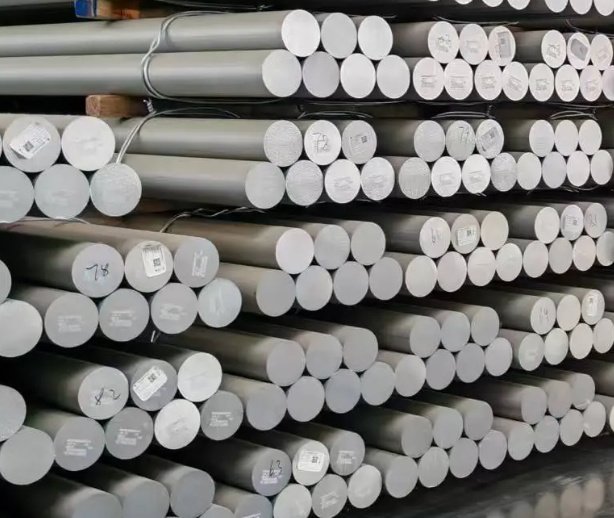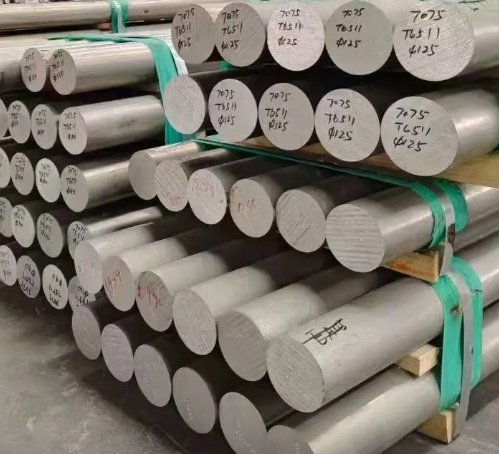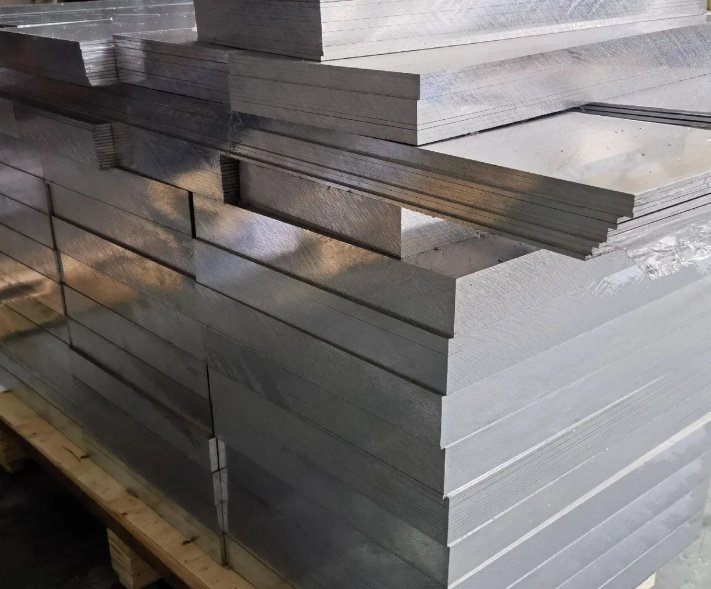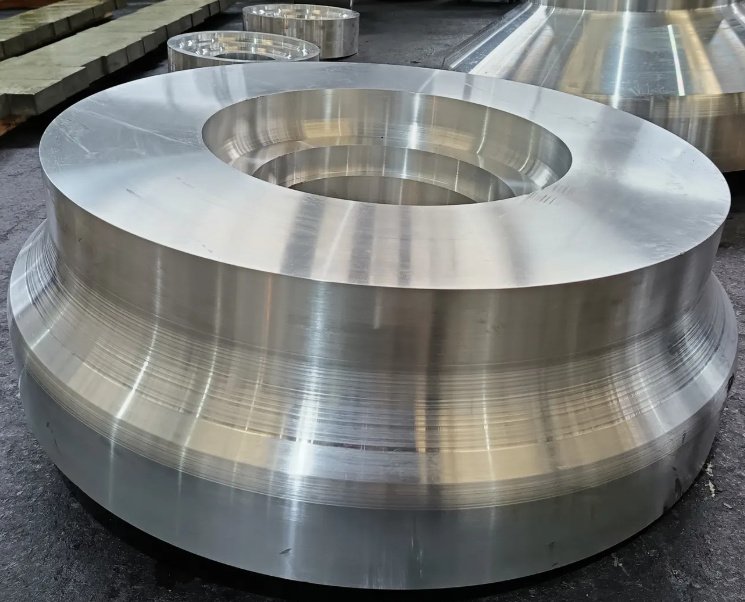
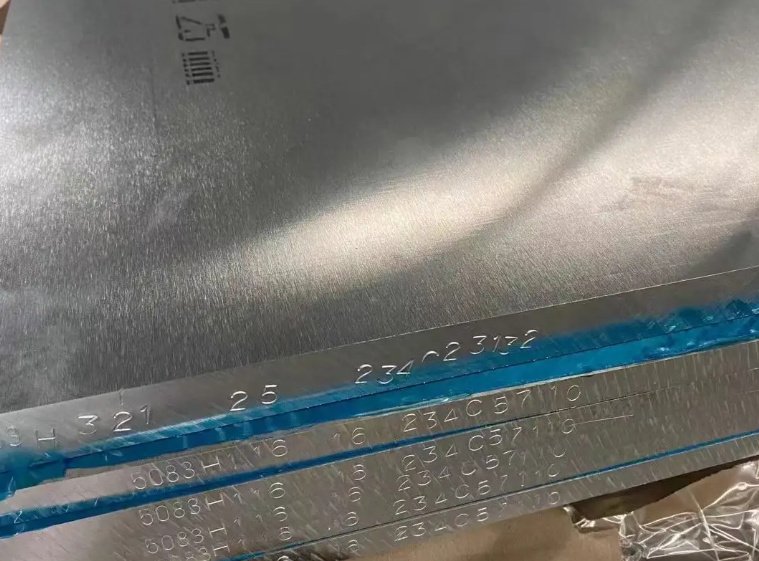
5083 aluminum is a high-magnesium, non-heat-treatable aluminum alloy widely specified for marine structures, pressure vessels, cryogenic equipment, vehicle bodies, storage tanks, and welded assemblies. It is often listed as AA5083, EN AW-5083, UNS A95083, AlMg4.5Mn0.7, Aluminum 5083, Al 5083, or al alloy 5083 depending on the standard, region, and purchasing document.
The search intent behind “5083 Aluminum” is usually practical: engineers want to confirm strength, corrosion resistance, weldability, machinability, temper selection, and whether it is better than 5052, 5086, or 6061 for a specific job. This guide summarizes the technical data, application limits, fabrication behavior, and procurement checks needed to specify the alloy correctly.
What Is 5083 Aluminum?
5083 aluminum is part of the 5xxx aluminum-magnesium alloy family. Its relatively high magnesium content gives it higher strength than many common non-heat-treatable aluminum grades, while manganese and chromium additions help improve resistance to corrosion and stress-related degradation in demanding environments.
Unlike 6xxx and 7xxx alloys, al alloy 5083 is not heat treatable. Its strength is mainly achieved through solid-solution strengthening and strain hardening, which is why temper designations such as O, H111, H112, H116, H321, and H32 are critical when ordering plate or sheet.
Al 5083 Chemical Composition
Composition ranges vary slightly by standard and producer. The following values represent commonly referenced limits for 5083 aluminum under widely used specifications such as ASTM B209 and EN 573. Always verify the mill test certificate for the exact production lot.
| Element | Typical Range or Maximum, % by Weight | Engineering Role |
|---|---|---|
| Magnesium, Mg | 4.0–4.9 | Primary strengthening element; improves marine corrosion resistance |
| Manganese, Mn | 0.40–1.00 | Improves strength and grain structure stability |
| Chromium, Cr | 0.05–0.25 | Supports corrosion resistance and microstructural control |
| Iron, Fe | 0.40 max | Impurity control; excessive Fe can reduce toughness and corrosion performance |
| Silicon, Si | 0.40 max | Impurity control; affects surface finish and fabrication behavior |
| Zinc, Zn | 0.25 max | Limited to maintain corrosion performance |
| Copper, Cu | 0.10 max | Kept low because copper can reduce corrosion resistance |
| Aluminum, Al | Balance | Base metal |
Mechanical Properties by Temper
The mechanical properties of Aluminum 5083 depend strongly on temper, product form, thickness, and standard. The data below are indicative values for plate or sheet and should not replace certified values from ASTM, EN, AMS, DNV, ABS, LR, or other project-required specifications.
| Temper | Typical Tensile Strength | Typical Yield Strength | Elongation | Common Use |
|---|---|---|---|---|
| O | 270–350 MPa | 110–160 MPa | 12–22% | Deep forming, bending, low-stress welded structures |
| H111 | 275–350 MPa | 125–180 MPa | 10–20% | Formed plate, general fabrication |
| H112 | 270–345 MPa | 125–200 MPa | 8–16% | Thicker plate and structural components |
| H116 | 305–380 MPa | 215–275 MPa | 8–14% | Marine plate requiring exfoliation-corrosion resistance |
| H321 | 305–380 MPa | 215–275 MPa | 8–14% | Marine and offshore structures, stabilized strain-hardened plate |
For welded design, use the appropriate reduced strength in the heat-affected zone rather than the parent metal value. In many welded 5xxx aluminum structures, joint efficiency, filler selection, and distortion control matter as much as the nominal base-metal strength.
Key Advantages and Limitations
Advantages
- Excellent resistance to seawater, industrial atmospheres, and many chemical environments.
- High strength among non-heat-treatable aluminum alloys.
- Very good weldability using common arc welding processes.
- Good low-temperature toughness, including cryogenic applications.
- Lower density than steel, enabling major weight reduction in transport and marine structures.
- Good formability in softer tempers such as O and H111.
Limitations
- Not suitable where precipitation hardening after fabrication is required.
- Lower machinability than free-machining aluminum grades such as 6061-T6 or 6082-T6.
- Can suffer sensitization and stress-corrosion risk if exposed for long periods to elevated temperatures.
- Requires correct filler metal and procedure qualification for critical welded structures.
- Thicker plate may require careful planning to avoid distortion during cutting and welding.
5083 Aluminum Compared with 5052, 5086, 5754, 6061, and 6082
The most common mistake is choosing 5083 only because it is “marine grade.” In practice, selection depends on strength, corrosion exposure, welding, bending radius, machining requirements, and availability. The comparison below helps match the alloy to the actual engineering requirement.
| Alloy | Family | Relative Strength | Corrosion Resistance | Machining | Best Fit |
|---|---|---|---|---|---|
| 5083 | Al-Mg | High for non-heat-treatable aluminum | Excellent in marine environments | Fair to good with correct tooling | Marine plate, pressure vessels, tanks, welded structures |
| 5052 | Al-Mg | Medium | Very good | Fair | Formed sheet metal, enclosures, panels, light marine use |
| 5086 | Al-Mg | Medium-high | Excellent | Fair | Boat hulls, marine structures, welded plate |
| 5754 | Al-Mg | Medium | Very good | Fair | Vehicle panels, flooring, tread plate, formed components |
| 6061-T6 | Al-Mg-Si | High in T6 | Good, but below 5083 in seawater | Good | CNC parts, frames, brackets, general structural components |
| 6082-T6 | Al-Mg-Si | High | Good | Good | Machined structural parts, bridges, transport structures |
If the job is a welded saltwater hull, tank, or offshore panel, 5083 or 5086 usually has a stronger case than 6061. If the job is a precision CNC bracket with many drilled and tapped features, 6061-T6 or 6082-T6 may provide better chip control, tolerance stability, and tooling economy.
Common Tempers and How to Choose Them
Temper selection has a direct effect on forming, strength, corrosion testing, and weld performance. For marine use, 5083-H116 or 5083-H321 is commonly preferred because these tempers are processed and tested to improve resistance to exfoliation and intergranular corrosion.
| Temper | Selection Logic | Buyer or Engineer Note |
|---|---|---|
| O | Choose for maximum ductility and forming. | Lower strength; useful for deep bends and formed shapes. |
| H111 | Choose for general forming plus moderate strength. | Often used where shape is formed after rolling. |
| H112 | Choose for thick plate or general structural use. | Check property requirements by thickness. |
| H116 | Choose for marine plate requiring corrosion performance. | Often requested by shipyards and classification societies. |
| H321 | Choose for stabilized marine plate with high resistance to corrosive attack. | Common in offshore, shipbuilding, and high-reliability plate supply. |
Procurement note: what to check before ordering 5083 plate or sheet
Confirm alloy designation, temper, thickness tolerance, flatness tolerance, surface finish, ultrasonic testing if required, certificate type, applicable standard, and any marine approvals. For critical marine use, verify temper and corrosion-test requirements rather than accepting a generic “marine aluminum” description.
Corrosion Resistance and Marine Performance
Aluminum 5083 is valued for excellent resistance to seawater and many chloride-containing environments. Its low copper content is important because copper-rich aluminum alloys generally perform worse in marine exposure. This is why Al 5083 is often selected for patrol boats, workboats, LNG-related structures, marine tanks, gangways, deck structures, and offshore platforms.
However, corrosion resistance is not unlimited. Long-term exposure of high-magnesium 5xxx alloys to temperatures above approximately 65°C can promote sensitization, where magnesium-rich precipitates form at grain boundaries. This can increase susceptibility to intergranular corrosion and stress-corrosion cracking, especially under sustained tensile stress.
- Use H116 or H321 for demanding marine plate applications.
- Avoid incompatible fasteners that create galvanic corrosion.
- Use isolation washers, sealants, or coatings when joining to steel, copper alloys, or carbon-fiber composites.
- Design drainage paths to prevent stagnant chloride solution traps.
- Specify proper surface preparation before coating or painting.
Welding 5083 Aluminum
5083 aluminum has very good weldability with GTAW, GMAW, and automated welding systems. Common filler metals include 5183, 5356, 5556, and 5554 depending on strength, corrosion environment, service temperature, and code requirements.
| Filler Metal | Typical Reason for Selection | Important Note |
|---|---|---|
| 5183 | Higher as-welded strength with 5083 base metal | Common for marine and structural weldments |
| 5356 | General-purpose 5xxx filler with good availability | Widely used, but confirm suitability for service temperature and code |
| 5556 | High-strength welded joints | Used where improved weld strength is required |
| 5554 | Elevated-temperature service in some tank applications | Often considered where 5356 is not preferred |
Welding Engineering Considerations
- Clean oxide and contaminants before welding to reduce porosity.
- Use qualified welding procedures for pressure vessels, vessels, and load-bearing structures.
- Control heat input to limit distortion and preserve joint quality.
- Use appropriate groove design and fixturing for thick plate.
- Account for lower heat-affected-zone strength in design calculations.
Real engineering issue: distortion in a welded 5083 marine panel
In a typical 6 mm to 10 mm 5083-H116 deck or hull panel, uncontrolled intermittent weld sequencing can produce visible waviness and fit-up rework. A practical improvement is to use balanced weld sequencing, strongback fixtures, lower heat input, and pre-set allowances. In production, these measures can reduce post-weld straightening hours by 20–40% compared with one-direction welding on unsupported panels, although the exact result depends on panel size, joint design, and welder procedure.
Machining 5083 Aluminum
5083 aluminum can be machined, drilled, milled, bored, and tapped, but it is generally not as machinable as 6061-T6 or 6082-T6. The alloy is tougher and more ductile, so built-up edge, stringy chips, and burr formation can occur if tooling geometry, coolant, and chip evacuation are not controlled.
For aluminum CNC machining, use sharp polished carbide tools, high rake geometry, effective coolant or mist lubrication, and stable workholding. Compared with 6061-T6, many shops reduce spindle load, optimize chip thickness, and use more aggressive chip evacuation to prevent welding of material onto the cutting edge.
Machining Guidelines
- Use 2-flute or 3-flute end mills for aluminum when slotting or pocketing.
- Prefer polished carbide tools or coated tools designed for non-ferrous alloys.
- Use climb milling where machine rigidity allows.
- Apply coolant, mist, or air blast to control built-up edge and chip packing.
- Deburr edges after machining, especially on marine parts that will be handled or coated.
- Use thread-forming or thread-cutting strategy based on hole depth, tolerance, and assembly load.
| Operation | Typical Challenge | Practical Control |
|---|---|---|
| Milling | Built-up edge and gummy chip behavior | Sharp tools, coolant, correct chip load |
| Drilling | Long chips and exit burrs | Peck drilling, sharp drill geometry, backing support |
| Tapping | Thread galling or chip packing | Lubricated tapping, correct pilot hole, controlled speed |
| Saw cutting | Heat buildup and rough edges | Non-ferrous blade, lubricant, stable clamping |
| Waterjet cutting | Edge taper and abrasive residue | Specify edge quality and clean before welding |
Buyer and machinist note: when 5083 is not the most economical CNC choice
If the part is mostly machined features and does not need seawater corrosion resistance or welded marine performance, 6061-T6 may reduce cycle time, tool wear, and deburring cost. If the part must be welded into a marine tank, hull, or offshore assembly, the added machining effort of Al 5083 may be justified by its corrosion and weld performance.
Forming, Cutting, and Surface Finishing
Formability depends on temper and thickness. O and H111 tempers bend more easily than H116 or H321. For tighter bends, use a larger inside bend radius than would be used for softer alloys, and orient bends carefully relative to rolling direction when crack risk matters.
- Laser cutting is possible but parameter control is needed for edge quality and heat-affected condition.
- Waterjet cutting is often preferred for thick plate where thermal effects must be minimized.
- Plasma cutting can be used for heavy fabrication, followed by edge cleaning where welding is required.
- Anodizing is possible, but cosmetic uniformity may be less predictable than with 5005 or 6063.
- Painting and powder coating require proper cleaning, conversion coating, or approved pretreatment.
For coated marine service, design life is often improved more by edge sealing, fastener isolation, drainage, and maintenance access than by alloy selection alone.
Typical Applications of Aluminum 5083
Because of its strength-to-weight ratio, weldability, and marine corrosion resistance, Aluminum 5083 is used in industries where both environmental durability and structural performance are needed.
- Boat hulls, superstructures, decks, bulkheads, and workboat components.
- Offshore platforms, gangways, marine access systems, and dock equipment.
- Pressure vessels, storage tanks, and welded chemical containers.
- LNG and cryogenic equipment where low-temperature toughness is needed.
- Armored vehicle structures, rail cars, truck bodies, and transport panels.
- Architectural and industrial panels exposed to aggressive atmospheres.
- Tooling plates, jigs, fixtures, and structural welded frames where corrosion resistance is valued.
Standards, Specifications, and Equivalent Names
5083 aluminum may be ordered under multiple standards depending on market and application. Equivalent naming should not be treated as automatic substitution unless the chemistry, temper, mechanical properties, inspection, and certification requirements match.
| Designation | Meaning or Region | Procurement Relevance |
|---|---|---|
| AA 5083 | Aluminum Association designation | Common in North American alloy references |
| UNS A95083 | Unified Numbering System | Useful for cross-referencing material databases |
| EN AW-5083 | European wrought aluminum designation | Common in EN 573 and EN 485 supply |
| AlMg4.5Mn0.7 | European chemical-style designation | Identifies magnesium and manganese alloying system |
| ASTM B209 | Aluminum sheet and plate specification | Frequently used for plate and sheet procurement |
| Marine approvals | ABS, DNV, LR, BV or similar | Required for many shipbuilding and offshore projects |
Design and Purchasing Checklist
A clear purchase specification reduces the risk of receiving the wrong temper, certification level, or surface condition. This is especially important for marine, pressure, and structural projects where replacement cost is much higher than the material price difference.
- Specify: “5083” plus exact temper, such as 5083-H116 or 5083-H321.
- Define product form: plate, sheet, coil, bar, extrusion, or cut-to-size blank.
- State thickness, width, length, and tolerance standard.
- Request mill test certificate with chemistry and mechanical properties.
- Confirm corrosion-test requirements for marine plate where applicable.
- Define surface condition: mill finish, PVC-coated, brushed, painted, anodized, or pretreated.
- Confirm flatness requirements for CNC machining or large welded panels.
- Check whether classification society approval is required.
- Confirm filler metal, welding procedure, and post-fabrication inspection needs.
For high-temperature service, avoid continuous exposure above recommended limits unless the design authority has evaluated sensitization risk, stress level, filler metal, and service environment. For marine structures, the safest specification is usually based on a recognized standard plus project-specific certification and inspection requirements.
Bottom Line: When to Specify 5083 Aluminum
Specify 5083 aluminum when the project requires a strong, weldable, corrosion-resistant aluminum alloy for marine, transport, pressure, or cryogenic service. It is usually a better choice than 6061 for welded saltwater structures, but it is usually less economical than 6061 for parts dominated by CNC machining and precision threaded features.
The best engineering use of Al 5083 is not simply selecting the alloy name. It is matching alloy, temper, certification, welding procedure, machining plan, corrosion protection, and inspection level to the real service environment.