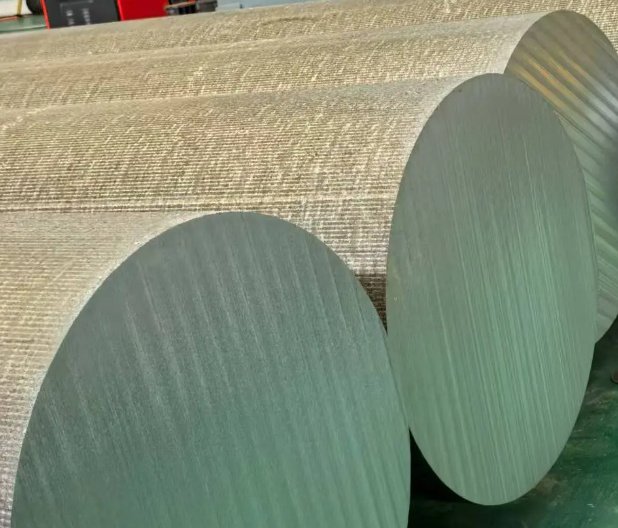
This guide explains Aluminum 7050, a high-strength 7xxx-series aluminum alloy widely used in aerospace structures, defense components, mold tooling, high-load fixtures and thick-section machined parts. It is written for engineers, buyers and manufacturing teams who need to compare 7050 aluminum with 7075, 2024, 6061 and other structural alloys before specifying material, temper, inspection requirements or machining strategy.
Common search terms for this material include Al 7050, al alloy 7050, Aluminum 7050, AA7050, UNS A97050 and 7050-T7451 plate. The alloy is valued for its combination of high strength, fracture toughness, stress-corrosion cracking resistance and reliable performance in thicker cross sections.
What Is 7050 Aluminum?
7050 aluminum is an aluminum-zinc-magnesium-copper alloy developed for high-strength structural applications where toughness and resistance to stress-corrosion cracking are critical. Compared with older high-strength alloys such as 7075, Al 7050 was optimized to perform better in heavy plate, forgings and thick machined parts, especially when the part must carry load through thickness.
The alloy is normally supplied in heat-treated tempers such as T7451, T7651, T7351 and T7452. These tempers balance tensile strength, exfoliation corrosion resistance, fracture toughness and residual stress control. In aerospace procurement, 7050 is frequently ordered as plate, sheet, hand forgings, die forgings and extrusions under AMS, ASTM, SAE, EN or customer-specific specifications.
| Attribute | Typical Description |
|---|---|
| Alloy family | 7xxx aluminum-zinc-magnesium-copper alloy |
| Primary strengthening mechanism | Precipitation hardening by heat treatment and artificial aging |
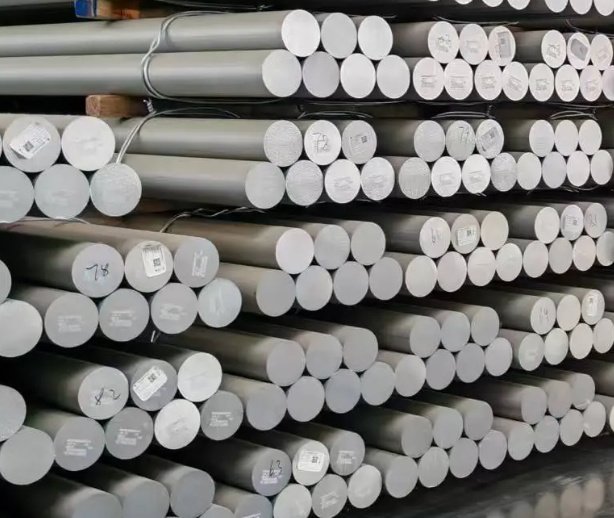
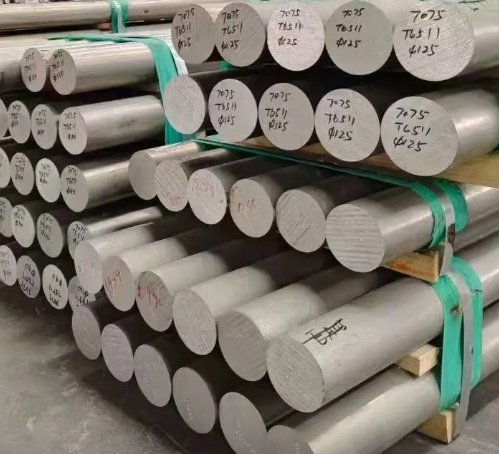
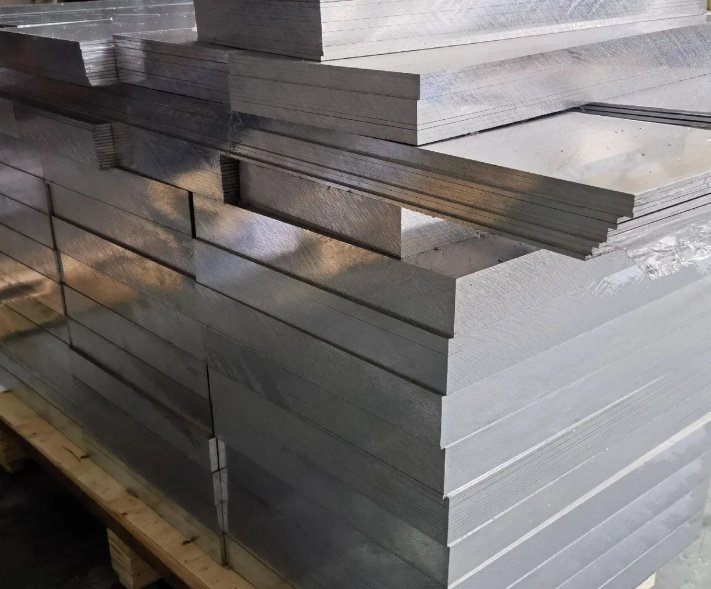
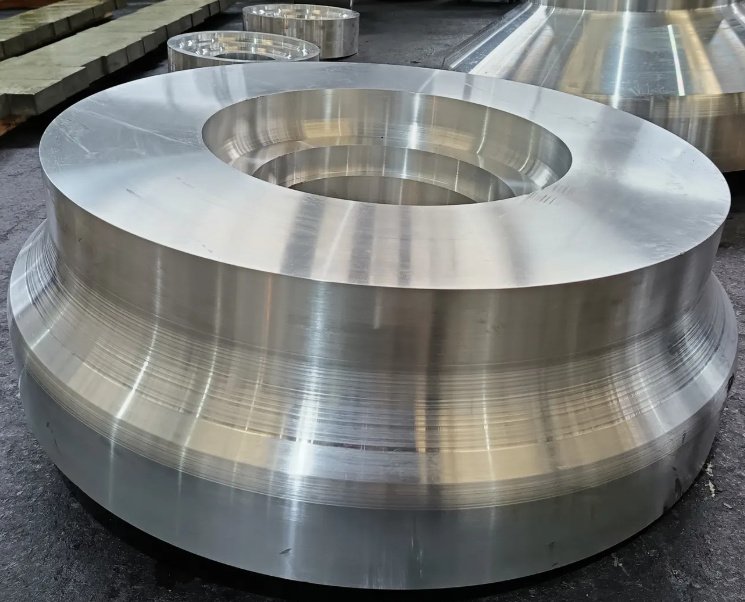
| Common product forms | Plate, sheet, forgings, extrusions, machined billet |
| Key advantage | High strength with improved toughness and stress-corrosion resistance in thick sections |
| Typical industries | Aerospace, defense, transportation, motorsport, precision tooling and high-load equipment |
| Weldability | Generally poor by fusion welding; mechanical fastening and machining are preferred |
Chemical Composition of 7050 Aluminum
The performance of al alloy 7050 comes from a controlled balance of zinc, magnesium, copper and zirconium. Zinc and magnesium provide high precipitation-hardened strength, copper improves strength and hardness, while zirconium helps control recrystallization and supports toughness in plate and forgings.
The values below are typical composition limits used for AA7050. Always verify against the purchase specification, mill test certificate and applicable aerospace standard.
| Element | Typical Range or Maximum | Function in the Alloy |
|---|---|---|
| Aluminum | Balance | Base metal |
| Zinc | 5.7–6.7% | Main strengthening element |
| Magnesium | 1.9–2.6% | Precipitation hardening with zinc |
| Copper | 2.0–2.6% | Strength and hardness improvement |
| Zirconium | 0.08–0.15% | Grain structure control and recrystallization resistance |
| Iron | 0.15% max | Controlled impurity |
| Silicon | 0.12% max | Controlled impurity |
| Manganese | 0.10% max | Controlled addition or impurity |
| Chromium | 0.04% max | Restricted because zirconium is the preferred grain-control element |
| Titanium | 0.06% max | Grain refinement during casting |
Mechanical Properties and Common Tempers
The exact mechanical properties of 7050 aluminum depend on product form, thickness, temper, grain direction and testing standard. In real engineering work, longitudinal, long-transverse and short-transverse properties can differ significantly, especially in thick plate. This is why aircraft bulkheads, wing ribs and landing gear support structures often specify both strength and fracture toughness by orientation.
Typical engineering values for 7050 plate are shown below. These are representative values for comparison and early design screening, not a substitute for certified material data.
| Temper | Typical Ultimate Tensile Strength | Typical Yield Strength | Typical Elongation | General Use Case |
|---|---|---|---|---|
| 7050-T7451 | 490–530 MPa | 420–470 MPa | 7–11% | High toughness plate with good SCC resistance |
| 7050-T7651 | 520–560 MPa | 460–505 MPa | 6–10% | Higher strength where corrosion resistance remains important |
| 7050-T7351 | 470–510 MPa | 390–440 MPa | 8–12% | Enhanced stress-corrosion resistance with lower peak strength |
| 7050-T7452 | Varies by forging | Varies by forging | Varies by section | Forged aerospace parts requiring toughness and strength |
For fracture-critical structures, design teams should evaluate plane-strain fracture toughness, fatigue crack growth rate, exfoliation corrosion rating, residual stress level and ultrasonic inspection class. Conductivity is also used as a quality-control indicator for heat treatment in many aerospace workflows.
Engineering note: why temper selection changes real part performance
T7651 can provide higher tensile strength than T7451, but T7451 is often selected when damage tolerance, corrosion resistance and thick-section stability matter more than maximum static strength. A 25 mm plate and a 150 mm plate should not be treated as equivalent simply because both are called 7050-T7451. Through-thickness properties, quench sensitivity and residual stress can change machining distortion and service performance.
7050 Aluminum vs 7075, 2024 and 6061
The most common comparison is 7050 vs 7075. Both are high-strength 7xxx alloys, but they are not interchangeable in critical structures. In general, 7075 usually wins on peak tensile strength, while 7050 often wins in thick-section toughness and stress-corrosion resistance. For large aerospace plate or forgings, that difference can be decisive.
| Alloy | Strength Level | Toughness in Thick Sections | Corrosion / SCC Resistance | Machinability | Best Fit |
|---|---|---|---|---|---|
| 7050 | Very high | Excellent for high-strength aluminum | Good in overaged tempers such as T7451 and T7351 | Good with proper tooling and stress management | Aerospace bulkheads, ribs, frames, high-load structural parts |
| 7075 | Very high to slightly higher | Good, but less favorable in heavier sections | Moderate; sensitive in some tempers and environments | Excellent | High-strength machined parts, aircraft fittings, fixtures, sporting goods |
| 2024 | High | Good fatigue behavior, moderate corrosion resistance | Often requires cladding, coating or protection | Good | Aircraft skins, fatigue-loaded components, formed sheet parts |
| 6061 | Medium | Moderate | Good general corrosion resistance | Very good | General structures, welded assemblies, frames and commercial components |
When to Choose 7050 Instead of 7075
- Choose 7050 for thick plate, heavy forgings or deep-machined parts where short-transverse toughness matters.
- Choose 7050-T7451 or T7351 when stress-corrosion cracking resistance is a major design requirement.
- Choose 7050 when aircraft, defense or space hardware requires damage-tolerant structural performance.
- Consider 7075 when maximum static strength, broad availability or lower raw material cost is more important than thick-section toughness.
When 7050 May Not Be the Best Choice
- It is generally not preferred for welded assemblies; 6061 is often better for weldability.
- It is more expensive than general-purpose alloys such as 6061.
- It requires careful corrosion protection in aggressive environments.
- It may need stress relief, controlled roughing and inspection for high-value machined parts.
Machining 7050 Aluminum: Practical Guidance
7050 aluminum machines well compared with many steels and titanium alloys, but it should not be treated like ordinary commercial aluminum when the part is large, thin-walled or highly pocketed. The alloy is often supplied as stress-relieved plate, such as T7451 or T7651, yet residual stress can still be released during aggressive material removal.
For stable results, use rigid workholding, sharp carbide tooling, high chip evacuation, and conservative finishing passes. High-speed milling is common, but the machining plan must account for part geometry, removal percentage, tool pressure, thermal growth and final inspection requirements.
| Process Area | Recommended Practice | Reason |
|---|---|---|
| Rough milling | Remove material symmetrically where possible; leave stock for stress equalization | Reduces distortion in large pockets and thin webs |
| Tooling | Use polished carbide end mills with geometry for aluminum | Improves chip evacuation and reduces built-up edge |
| Coolant | Use flood coolant or high-efficiency mist where allowed | Controls heat, chip welding and surface finish variation |
| Finishing | Apply light finishing cuts after rest period or intermediate stress relief for critical parts | Improves flatness, hole position and dimensional repeatability |
| Drilling and boring | Use sharp tools, adequate lubrication and chip-breaking cycles for deep holes | Prevents scoring, oversize holes and chip packing |
| Inspection | Check dimensions after thermal stabilization | Large 7050 parts can show measurable movement after heavy machining |
Real engineering problem: distortion after machining 7050 plate
A common issue is a large aerospace bracket machined from 7050-T7451 plate with more than 70% material removal. If roughing is performed mainly from one side, flatness may drift after unclamping. A practical solution is to rough both sides in stages, leave 1.5–3.0 mm finishing allowance depending on part size, allow thermal stabilization, then finish datum surfaces and critical bores in a balanced sequence. In many shops, this approach reduces rework from warped thin walls and improves first-pass inspection yield.
Heat Treatment, Forming, Joining and Surface Finishing
7050 aluminum is a precipitation-hardened alloy. It is normally supplied in a final heat-treated condition, so users usually machine it rather than heat treat it in-house. If heat treatment is required, it should be performed by qualified processors because quench rate, aging practice and section thickness directly affect strength, conductivity, corrosion resistance and toughness.
Heat Treatment and Stress Relief
Common plate tempers ending in “51” indicate stress relief by stretching after solution heat treatment and quenching. This reduces residual stress and improves machinability, but it does not eliminate all movement during heavy machining. Forging tempers such as T7452 may use compression stress relief.
Forming
7050 is not typically selected for severe forming in peak-aged or overaged conditions. Forming operations are more practical in softer conditions before final aging, but this requires a controlled process route. For sheet structures requiring extensive forming, alloys such as 2024 or 6061 may be more practical depending on strength and corrosion requirements.
Joining
Fusion welding of 7050 is generally not recommended for critical structural use because of hot cracking risk and loss of heat-treated strength in the heat-affected zone. Mechanical fastening, bolting, riveting, bonding or redesigning into machined integral structures is usually preferred.
Surface Finishing and Corrosion Protection
7050 has better stress-corrosion resistance than many high-strength aluminum alternatives when properly tempered, but it still needs protection in demanding service. Typical finishing options include chemical conversion coating, anodizing, primer and paint systems, shot peening for fatigue improvement, and controlled cleaning before assembly. Avoid galvanic coupling with carbon fiber, stainless steel or dissimilar metals unless isolation and sealing are engineered into the joint.
Applications of 7050 Aluminum
7050 aluminum is used where lightweight structures must carry high loads with reliable toughness. It is especially common in aerospace applications that require large machined parts from thick plate or forgings.
- Aircraft wing ribs, spars, frames and bulkheads
- Fuselage structural members and seat-track support components
- Landing gear support structures and high-load fittings
- Missile, spacecraft and defense structural parts
- High-strength tooling plates and precision fixtures
- Motorsport suspension components and lightweight structural brackets
- Robotics, automation and high-stiffness machined assemblies
In many of these applications, the main decision is not simply “high strength aluminum.” Engineers must evaluate static strength, fatigue life, crack tolerance, corrosion exposure, inspection access, fastener bearing strength, part thickness and machining distortion risk.
Procurement Checklist for Engineers and Buyers
Buying 7050 aluminum is more specification-driven than buying general-purpose 6061 plate. For critical parts, do not substitute temper, thickness class, or inspection level without engineering approval. Even small changes can affect toughness, corrosion performance, machining stability and certification compliance.
| Procurement Item | Why It Matters |
|---|---|
| Alloy and temper | 7050-T7451, T7651, T7351 and T7452 are not equivalent in strength and corrosion behavior |
| Product form | Plate, sheet, forging and extrusion have different property requirements and inspection methods |
| Thickness and grain direction | Mechanical properties vary by orientation, especially in thick sections |
| Specification | AMS, ASTM, SAE, EN or customer specifications define chemistry, properties and acceptance criteria |
| Mill test certificate | Confirms heat number, chemistry, temper, tensile values and traceability |
| Ultrasonic inspection | May be required for aerospace plate and fracture-critical parts |
| Surface condition | Machined, saw-cut, scalped or mill finish surfaces affect allowance and inspection planning |
| Dimensional tolerance | Flatness, thickness tolerance and saw-cut tolerance affect CNC setup and material yield |
Buyer perspective: questions to ask before ordering 7050 aluminum plate
Ask whether the material is domestic or import origin if the project has aerospace, defense or export-control requirements. Confirm whether the supplier can provide full traceability, mill test reports, ultrasonic inspection records and compliance to the exact specification revision. If the finished part is heavily machined, discuss oversized stock allowance, plate flatness and cutting direction before issuing the purchase order.
Standards, Test Data and Quality Documentation
7050 aluminum may be controlled by several standards depending on product form and industry. Common references include AMS specifications for aerospace plate and forgings, ASTM B209 for aluminum sheet and plate, ASTM B221 for extrusions, and aluminum association designations for alloy and temper. Customer drawings may impose additional requirements such as ultrasonic class, grain direction marking, conductivity range, fracture toughness testing or lot-specific approval.
Typical quality documentation may include:
- Mill test certificate with heat number and chemical composition
- Tensile test results by orientation where required
- Hardness or electrical conductivity readings
- Ultrasonic inspection report for plate or forging stock
- Heat treatment certification
- Country of origin and traceability documentation
- Material safety data sheet where required by the purchasing process
Key Takeaways
7050 aluminum is a premium high-strength aerospace alloy designed for structural parts that need strength, toughness and stress-corrosion resistance, especially in thicker sections. It is commonly chosen over 7075 when fracture toughness, damage tolerance and heavy-plate performance are more important than maximum tensile strength alone.
For best results, specify the exact alloy, temper, product form, standard, thickness, inspection requirement and grain direction. During manufacturing, plan machining around residual stress, balanced material removal and dimensional stabilization. When properly specified and processed, 7050 provides a proven solution for high-load aluminum structures where ordinary commercial alloys are not sufficient.