
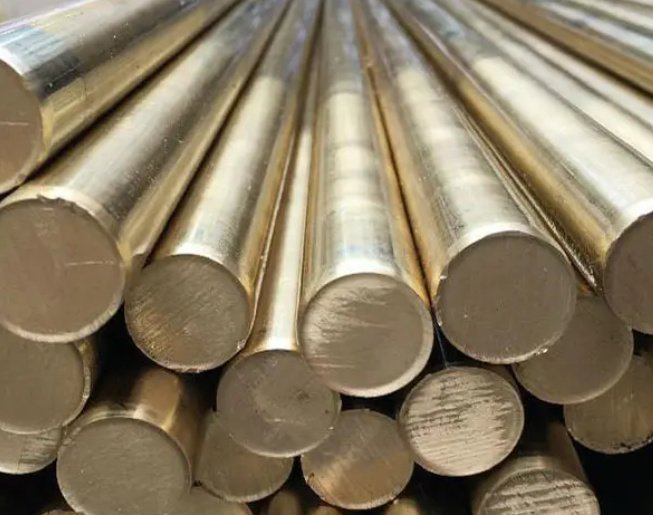
C33000 brass, also known as UNS C33000, CDA 330 or leaded semi-red brass, is a copper-zinc alloy with a small lead addition for improved machinability. It is commonly specified where engineers need a balance of cold workability, moderate strength, good surface finish, and easier chip breaking than unleaded cartridge brass.
This guide is written for engineers, purchasing teams, component designers and machining suppliers comparing C33000 with C26000, C36000, C44300 and other brass grades. It covers chemical composition, mechanical properties, manufacturing behavior, corrosion limits, compliance considerations and practical selection rules.
What Is C33000 Brass?
C33000 is a leaded alpha brass with nominal chemistry near 66% copper, 33% zinc and about 0.5% lead. The alloy is often selected for drawn tube, rod, small fittings, instrument components, plumbing-related parts, decorative hardware and machined items where free-cutting brass is not required but improved machinability over unleaded brass is valuable.
Because its copper level is higher than many yellow brasses, C33000 is sometimes described as a semi-red brass. The alloy generally offers better ductility and forming behavior than high-lead free-machining brass, while still providing a machining advantage over C26000 cartridge brass.
Chemical Composition and Common Standards
The exact limits depend on product form and applicable standard. For procurement, composition should always be confirmed from the mill test certificate rather than relying only on nominal chemistry.
| Element | Typical range or limit | Engineering relevance |
|---|---|---|
| Copper, Cu | 65.0% to 68.0% | Improves ductility, corrosion behavior and reddish brass color compared with lower-copper yellow brasses. |
| Lead, Pb | 0.25% to 0.70% | Improves chip breaking and tool life, but creates compliance restrictions for potable-water and some regulated applications. |
| Iron, Fe | Usually 0.07% max | Controlled impurity; excessive iron can affect surface quality and formability. |
| Zinc, Zn | Remainder | Provides strength and economic alloying balance. |
Common specifications associated with C33000 products may include ASTM B135/B135M for seamless brass tube and related copper-alloy tube forms, ASTM B16/B16M for free-cutting brass rod and bar when applicable alloy/product requirements are met, and CDA/UNS alloy designations used by North American mills and distributors.
Lead content is a design constraint for applications involving drinking water contact, medical devices, food contact, RoHS-controlled assemblies or customer-specific restricted substance lists. C33000 should not automatically be treated as a “lead-free” brass.
Typical Physical and Mechanical Properties
Mechanical values vary by product form, wall thickness, grain size, cold reduction and temper. The values below are representative engineering ranges used for preliminary material comparison, not substitutes for a certified datasheet.
| Property | Typical value or range | Notes for design use |
|---|---|---|
| Density | Approximately 8.5 g/cm³ | Comparable to most copper-zinc brasses. |
| Melting range | Approximately 900°C to 940°C | Relevant to brazing, hot working and scrap segregation. |
| Electrical conductivity | Typically around 26% to 28% IACS | Useful for terminals and instrument parts, but much lower than pure copper. |
| Thermal conductivity | Typically about 110 to 125 W/m·K | Good for moderate heat-transfer parts, but not equivalent to copper or admiralty brass in all heat-exchanger services. |
| Tensile strength | Approximately 300 to 500 MPa depending on temper | Higher tempers improve strength but reduce ductility and forming margin. |
| Elongation | Can exceed 30% in annealed tempers; lower in hard tempers | Important for flaring, bending, swaging and tube expansion. |
| Machinability rating | Often referenced around 50% of C36000 | Better than C26000, but not as fast-cutting as C36000 free-machining brass. |
C33000 Brass vs C26000, C36000 and C44300
Searchers comparing C33000 brass are usually trying to answer one question: is it the best compromise between formability, machinability, cost, corrosion performance and compliance? The comparison below highlights the practical differences.
| Alloy | Common name | Main advantage | Main limitation | Best-fit use case |
|---|---|---|---|---|
| C33000 | Leaded semi-red brass | Balanced machinability, ductility and moderate corrosion behavior | Contains lead; not the highest machinability grade | Drawn tube, fittings, instrument parts, moderately machined components |
| C26000 | Cartridge brass | Excellent cold forming and deep drawing | Poorer chip control and slower machining than C33000 | Stamped parts, drawn shells, formed hardware |
| C36000 | Free-cutting brass | Benchmark machinability and high productivity | Higher lead content and lower cold-forming capability | Screw-machine parts, threaded inserts, high-volume turned components |
| C44300 | Admiralty brass | Better heat-exchanger service in many waters due to tin addition | Not chosen primarily for machining productivity | Condenser tubes, heat exchangers, marine cooling water systems |
| C23000 | Red brass | High copper content and good general corrosion resistance | Less machinable than leaded brasses | Plumbing tube, architectural trim, general corrosion-resistant brass parts |
In simple terms, C33000 is more machinable than C26000 and more formable than C36000. It is not a direct replacement for admiralty brass in demanding heat-exchanger environments, and it is not automatically compliant for low-lead potable-water applications.
Machining and Manufacturing Guidance
The small lead addition in C33000 forms fine, discontinuous particles that help break chips and reduce built-up edge. This allows better turning, drilling, reaming and threading behavior than many unleaded alpha brasses.
Machining target for C33000 is usually stable chip control with good dimensional repeatability, not maximum removal rate. Compared with C36000, feeds and speeds may need to be reduced, especially in deep-hole drilling, thin-wall tube machining or operations where burr height is critical.
Turning and screw machining
- Use sharp carbide or high-speed steel tools with positive rake geometry for clean surface finish.
- Maintain rigid workholding, especially for small tube sections and long slender parts.
- Use controlled feed to avoid tearing on thin-wall edges.
- Expect shorter, more manageable chips than C26000, but longer chips than C36000.
Drilling, reaming and tapping
- Peck drilling may be required for deep holes because C33000 is not as free-cutting as C36000.
- For tapped fittings, specify burr control and thread gauge acceptance, not only nominal thread size.
- Use sulfur-free or copper-compatible coolants when surface staining is unacceptable.
- For thin-wall tube, support the bore to reduce ovality during secondary machining.
Forming, bending and tube expansion
C33000 can be cold worked, drawn, flared and bent when supplied in the correct temper. Annealed or light-drawn tempers provide better forming margin, while harder tempers improve strength and springback resistance but raise cracking risk.
For tight-radius bends, engineering teams should define minimum bend radius, outside diameter tolerance, wall thickness tolerance and acceptable ovality. A successful tube drawing specification often controls grain size as well as strength because coarse grains can cause orange-peel surface defects during expansion or flaring.
Joining, brazing and soldering
C33000 is generally solderable and brazable with proper surface preparation. Lead content can influence wetting behavior and fume considerations, so ventilation and filler-metal compatibility should be reviewed. For assemblies exposed to pressure cycling or vibration, joint design and cleanliness are more important than alloy name alone.
Machining buyer note: when to choose C33000 instead of C36000
Choose C33000 when the part needs moderate machining plus flaring, bending, tube drawing or secondary forming. Choose C36000 when the component is primarily a turned screw-machine part and lead restrictions allow it. If the drawing includes both tight threads and tube expansion, prototype both alloys before production release.
Corrosion, Compliance and Service Limits
C33000 performs well in many indoor, atmospheric and mildly corrosive environments, but engineers should avoid overgeneralizing “brass corrosion resistance.” Service water chemistry, ammonia exposure, residual forming stress, temperature and velocity can dominate field performance.
Do not assume dezincification resistance unless the material has been specifically tested or specified for that environment. In aggressive waters with high chlorides, low alkalinity, high dissolved oxygen or stagnant conditions, conventional brasses can suffer dezincification, pitting or stress corrosion cracking.
Stress corrosion cracking risk
Brasses containing zinc are vulnerable to stress corrosion cracking in ammonia-bearing environments. Risk increases when parts retain high residual tensile stress from drawing, bending, swaging or thread forming. Stress-relief annealing, lower forming strain, improved cleaning chemistry and avoiding ammonia-based cleaners can reduce the probability of failure.
Potable water and lead restrictions
Because C33000 contains intentionally added lead, it may not meet low-lead requirements for wetted surfaces in drinking water systems. Many jurisdictions reference a maximum weighted average lead content of 0.25% for pipes, fittings and fixtures used to convey potable water. A component made from C33000 may therefore require engineering and legal review before use in water-contact products.
Engineer note: dezincification and SCC screening questions
Before approving C33000 for a wet or chemical environment, ask for water chemistry, maximum operating temperature, flow velocity, stagnant periods, residual stress level, cleaning chemicals and expected design life. If ammonia, chlorides or aggressive water are present, compare C33000 against DZR brass, bronze, stainless steel or a tin-bearing copper alloy.
Applications and Alloy Selection by Engineering Intent
C33000 brass is suitable where moderate machining, forming and appearance are all part of the design requirement. It is often used when C26000 is too difficult to machine efficiently and C36000 is not ductile enough for the manufacturing route.
| Application area | Why C33000 may work | When to consider another alloy |
|---|---|---|
| Small fittings and connectors | Good thread quality with better forming capability than high-lead free-machining brass | Use low-lead or lead-free brass if potable-water compliance applies. |
| Instrument and control components | Stable machining, good finish and acceptable conductivity for many non-power parts | Use higher-conductivity copper alloys for electrical current-carrying components. |
| Drawn or flared tube | Good ductility when temper and grain size are controlled | Use C44300 or other heat-exchanger alloys for demanding condenser service. |
| Decorative hardware | Attractive brass color, polishability and moderate strength | Use lacquer, plating or alternative alloys for exterior marine exposure. |
| Prototype machined parts | Better machinability than cartridge brass with useful forming margin | Use C36000 for the fastest cycle time when forming is not needed. |
C33000 is not a universal substitute for either C26000 or C36000. Its value is strongest where the production route includes both material deformation and secondary machining.
Procurement Checklist for C33000 Brass
Buyers should specify more than “C33000 brass” on a purchase order. The correct procurement language reduces dimensional disputes, machining problems and compliance risk.
- UNS designation: C33000 or equivalent CDA 330 designation.
- Product form: tube, rod, bar, coil, strip or custom profile.
- Applicable standard: ASTM, EN equivalent if approved, customer drawing or internal material specification.
- Temper: annealed, light drawn, half hard, hard or project-specific temper.
- Dimensions and tolerances: outside diameter, wall thickness, straightness, ovality, length and surface finish.
- Chemical certification: mill test report with Cu, Pb, Fe and Zn balance.
- Mechanical certification: tensile strength, yield strength, elongation or hardness as required.
- Compliance documents: RoHS, REACH, conflict minerals, Proposition 65, NSF/ANSI/CAN 61 or customer-specific declarations if relevant.
- Surface condition: polished, pickled, mill finish, degreased, plated-ready or corrosion-protected packaging.
The procurement-critical variable is often temper. The same alloy chemistry can machine, bend or crack differently if supplied in the wrong cold-work condition.
Buyer perspective: questions to ask before placing an order
Ask whether the supplier can provide heat-lot traceability, actual chemical analysis, temper certification, dimensional capability data and samples from the intended production route. If the part will be machined after tube drawing, request trial pieces from the same temper and wall thickness rather than approving only flat coupon data.
Engineering Issues and Data-Based Troubleshooting
Many C33000 performance problems are not caused by alloy chemistry alone. They often result from incorrect temper, uncontrolled residual stress, unsuitable coolant, aggressive service chemistry or substituting the alloy without validating the full manufacturing process.
Issue 1: Cracking during flaring or tube expansion
Typical symptoms include radial cracks at the flare edge, grainy surface texture and inconsistent pass/fail results between lots. Common causes include excessive cold work, coarse grain size, sharp tooling, insufficient lubrication or too-small expansion ratio.
Corrective actions include specifying annealed or softer temper, controlling grain size, polishing flare tools, increasing lubrication consistency and using staged expansion. In production trials, reducing final expansion per pass from approximately 18% to 10% to 12% can significantly reduce edge cracking when material ductility is marginal.
Issue 2: Burrs and poor thread finish
Compared with C36000, C33000 can produce more continuous chips and larger burrs if the tool geometry is not optimized. Tool wear, low rake angles and inadequate part support are common contributors.
Dimensional drift in machined C33000 is often linked to workholding and tool wear rather than chemistry. Shops commonly improve thread finish by using sharper positive-rake tools, controlled coolant flow, optimized tap geometry and more frequent tool-offset checks.
Issue 3: Field corrosion after cleaning or installation
Cracking near bends, stamped marks or threaded regions may indicate stress corrosion cracking promoted by residual tensile stress and ammonia-containing cleaners. Pinkish, porous areas may suggest dezincification in aggressive water.
Mitigation can include stress relief, switching cleaning chemistry, improving rinsing, limiting chloride exposure, changing alloy family or adding a coating. For safety-critical or pressure-containing assemblies, failed parts should be examined by metallography, chemical analysis and fracture-surface inspection before approving a corrective action.
Quality-control note: practical inspection points
For C33000 tube and machined parts, inspect wall thickness, ovality, hardness, grain size where forming is critical, thread gauges, burr height, surface staining and lot-to-lot chemistry. When failures appear intermittent, compare actual temper and hardness before changing cutting parameters or blaming the alloy grade.
Summary: When C33000 Brass Is the Right Choice
C33000 brass is a practical engineering alloy when a component needs better machinability than C26000 while retaining more ductility and forming capability than C36000. It is especially useful for drawn tube, moderately machined fittings, instrument components and parts requiring both deformation and secondary machining.
The alloy should be specified carefully where lead compliance, potable-water regulations, dezincification resistance, ammonia exposure or tight forming limits are involved. The best results come from controlling temper, product form, dimensional tolerance, machining method and service environment together.
Technical References
- UNS C33000 copper alloy designation and CDA 330 alloy family data.
- ASTM B135/B135M, Standard Specification for Seamless Brass Tube.
- ASTM B16/B16M, Standard Specification for Free-Cutting Brass Rod, Bar and Shapes for Use in Screw Machines.
- Copper Development Association guidance on brass alloy selection, machinability and corrosion behavior.
- Engineering practice for brass stress corrosion cracking, dezincification assessment and copper-alloy tube forming.