
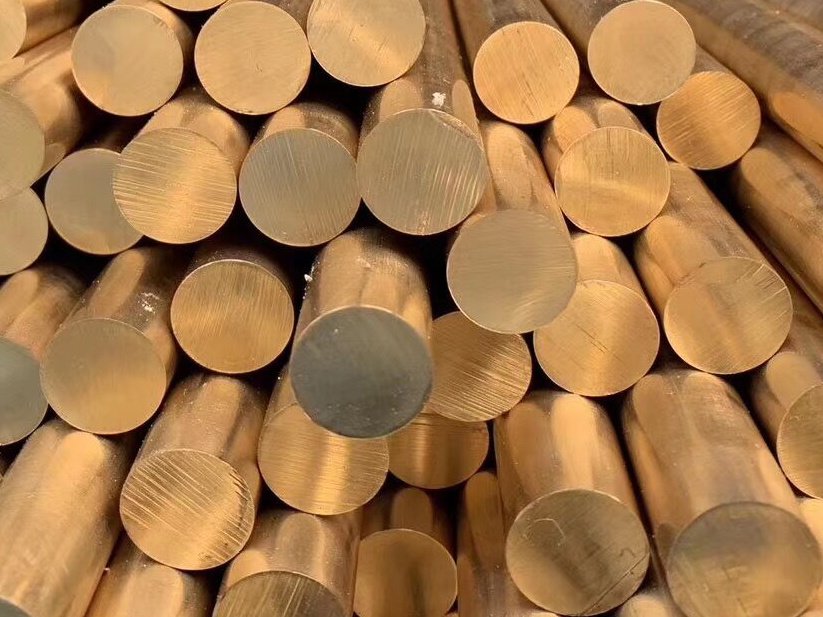
C46400 brass, commonly called naval brass, is a copper-zinc-tin alloy selected for marine hardware, condenser plates, shafting components, fasteners, valve parts and industrial wear components. Its added tin improves resistance to seawater corrosion compared with ordinary cartridge brass, while the copper-zinc base keeps the alloy strong, formable and commercially available in bar, rod, plate, sheet and selected tube products.
This page is written for engineers, procurement teams and buyers comparing C46400 brass with C36000, C26000, C44300 and bronze alternatives. It covers chemical composition, mechanical properties, corrosion behavior, machining considerations, joining, standards, application fit and sourcing risks.
What Is C46400 Brass?
C46400 is a wrought naval brass listed under the Unified Numbering System as UNS C46400. It is not the same as free-cutting brass, although it can be machined successfully with the right tooling and process control. The alloy is valued because it balances strength, seawater resistance, hot workability and cost.
The defining metallurgical feature is tin. In brass, tin helps reduce dezincification and improves performance in chloride-containing environments. This makes C46400 suitable for many marine and industrial water-service components, although it is not automatically immune to all forms of corrosion, especially in stagnant, polluted or high-velocity seawater.
C46400 Brass Chemical Composition
Typical composition ranges for C46400 naval brass are shown below. Exact limits should be verified against the purchase specification, mill certificate and applicable ASTM or EN requirement.
| Element | Typical Range | Function in C46400 |
|---|---|---|
| Copper, Cu | Approximately 59.0% to 62.0% | Primary base metal; supports corrosion resistance and ductility |
| Zinc, Zn | Balance | Increases strength and lowers material cost compared with high-copper alloys |
| Tin, Sn | Approximately 0.5% to 1.0% | Improves seawater and dezincification resistance |
| Lead, Pb | Usually limited | May improve machinability when present, but controlled for compliance requirements |
| Iron, Fe | Usually limited | Can influence strength and corrosion behavior when excessive |
For regulated products, buyers should confirm whether the material is suitable for potable water, RoHS, REACH, Prop 65 or customer-specific restricted-substance requirements. C46400 is often purchased for engineering performance rather than low-lead compliance, so documentation should not be assumed.
Key Physical and Mechanical Properties
Property values vary by product form, size, temper, manufacturing route and test standard. The values below are practical engineering ranges for preliminary comparison, not a substitute for certified data.
| Property | Typical Value or Range | Engineering Relevance |
|---|---|---|
| Density | About 8.40 to 8.45 g/cm³ | Useful for weight calculation and shipping estimates |
| Tensile strength | Approximately 345 to 655 MPa depending on temper | Higher tempers support stronger fasteners, shafts and marine fittings |
| Yield strength | Approximately 125 to 380 MPa depending on temper | Important for bracket, plate and threaded-part design |
| Elongation | Approximately 10% to 45% depending on temper | Higher elongation improves forming and bending reliability |
| Modulus of elasticity | About 100 to 110 GPa | Used in deflection and stiffness calculations |
| Electrical conductivity | About 20% to 30% IACS | Lower than copper; not selected primarily for electrical conductivity |
| Thermal conductivity | About 100 to 125 W/m·K | Relevant for heat exchanger and condenser-related parts |
| Melting range | Approximately 900°C to 940°C | Important for brazing, casting-adjacent processes and hot work planning |
The main advantage of naval brass is not one single property; it is the combination of moderate strength, useful ductility, chloride resistance and manufacturability.
C46400 vs Other Brass and Copper Alloys
Many searches for C46400 come from users deciding whether naval brass is better than cartridge brass, free-machining brass or bronze. The comparison depends on the service environment and manufacturing route.
| Alloy | Common Name | Best Advantage | Limitation Compared with C46400 | Typical Decision |
|---|---|---|---|---|
| C46400 | Naval brass | Good seawater resistance with solid strength | Machinability is lower than free-cutting brass | Use for marine fittings, plates, rods, fasteners and structural hardware |
| C36000 | Free-cutting brass | Excellent machinability and high production efficiency | Less suitable for aggressive marine corrosion exposure | Use for high-volume turned parts in non-marine service |
| C26000 | Cartridge brass | Excellent cold forming and deep drawing | No tin addition for enhanced seawater resistance | Use for formed components, terminals, stampings and drawn parts |
| C44300 | Admiralty brass | Strong tube and heat exchanger history | Usually selected more for condenser tube applications than general bar hardware | Use for condenser and heat exchanger tubing when specified |
| C95400 | Aluminum bronze | Higher strength and excellent wear resistance | Higher cost and different machining behavior | Use where load, wear or severe corrosion exceeds naval brass capability |
If the priority is high-speed screw machining, C36000 may be more economical. If the priority is marine exposure with reasonable machinability and availability, C46400 often offers a better balance. If the part sees heavy sliding wear, shock loading or highly turbulent seawater, aluminum bronze may be evaluated despite higher cost.
Corrosion Resistance in Marine and Industrial Environments
C46400 was developed for service where ordinary brass may dezincify too quickly. Tin helps stabilize the alloy in seawater and brackish water, giving it a long history in shipbuilding and coastal infrastructure.
Suitable environments may include seawater splash zones, brine exposure, condenser service, pump components, marine fasteners and decorative marine hardware. However, dezincification resistance depends on water chemistry, oxygen level, temperature, flow velocity, galvanic contact and surface condition.
| Condition | Expected C46400 Performance | Engineering Note |
|---|---|---|
| Clean flowing seawater | Generally good for many hardware applications | Avoid excessive velocity, erosion-corrosion and impingement zones |
| Stagnant seawater | Risk increases | Crevice corrosion and localized attack may occur under deposits or gaskets |
| Ammonia or ammonia compounds | Potentially poor | Brass alloys can suffer stress corrosion cracking in ammonia-bearing environments |
| Galvanic contact with stainless steel | Requires review | Use isolation, compatible fasteners or corrosion allowance where necessary |
| High-load sliding wear | Moderate | Bronze or aluminum bronze may be better for severe bearing service |
Engineering note: when C46400 may fail in marine service
C46400 can still experience localized corrosion if it is installed in stagnant, oxygen-depleted or polluted seawater. A common field issue is crevice attack under washers, deposits, insulation or gasket interfaces. For parts exposed to high flow velocity, sharp changes in direction can also create erosion-corrosion. Engineers should check flow rate, galvanic couples, stress level and inspection access before specifying the alloy.
Machining, Forming and Fabrication
C46400 brass can be machined, drilled, milled, threaded and turned, but it should not be treated exactly like free-machining C36000. Naval brass typically produces longer chips and may require sharper tools, controlled feeds and appropriate coolant. For production parts, the machining plan should be verified with sample material in the specified temper.
Its machinability is commonly considered moderate. A practical shop comparison is that C36000 machines faster, while C46400 provides better marine-service resistance. The trade-off is acceptable when corrosion performance is more important than cycle time.
Machining Recommendations
- Use sharp carbide or high-speed steel tools with positive rake geometry for cleaner cutting.
- Apply coolant or cutting fluid to control heat, improve tool life and reduce built-up edge.
- Use chip control strategies for drilling and deep-hole operations because chips may not break as easily as in leaded brass.
- Ream critical bores after drilling when tight tolerances or sealing surfaces are required.
- Deburr threaded and cross-drilled features to reduce stress risers in marine service.
Forming and Hot Working
C46400 has good hot working characteristics and can be forged or hot formed when the process window is controlled. Cold forming is possible in softer tempers, but bending radius and grain direction should be considered for plate and strip parts. Harder tempers increase strength but reduce forming margin.
Welding, Brazing and Soldering
Brazing and soldering are generally more common than fusion welding for many brass assemblies. When welding is required, the procedure should address zinc vaporization, fume control, joint design and filler selection. Post-fabrication cleaning matters because flux residues can accelerate corrosion in service.
Buyer and shop-floor note: reducing machining cost
For machined C46400 components, cost is often controlled more by geometry than by raw material price. Deep blind holes, fine internal threads, very thin walls and aggressive surface-finish requirements can increase cycle time. A practical cost reduction is to specify commercial tolerances where possible, use standard bar sizes, avoid unnecessary undercuts and define critical surfaces separately from non-critical surfaces.
Typical Product Forms and Specifications
C46400 is commonly supplied as round bar, flat bar, hex bar, plate, sheet, strip, rod and selected custom profiles. Availability depends on size, temper, mill minimum quantity and regional stock.
| Product Form | Typical Use | Specification Considerations |
|---|---|---|
| Round bar and rod | Shafts, pins, bushings, marine fasteners and turned fittings | Confirm diameter tolerance, straightness, temper and ultrasonic requirements if applicable |
| Hex bar | Nuts, threaded fittings, valve parts and custom fasteners | Useful for machining flats with less material removal |
| Plate | Wear plates, marine brackets, condenser plates and structural hardware | Check flatness, thickness tolerance, grain direction and surface condition |
| Sheet and strip | Formed covers, gaskets, shields and stamped parts | Specify temper and bend requirements before ordering |
| Custom cut blanks | CNC machining, waterjet parts and replacement components | Reduce scrap and setup time when tolerances are realistic |
Commonly referenced standards may include ASTM specifications for copper-alloy rod, bar, shapes, plate, sheet and strip, depending on the product form. Because standards are updated and product-form-specific, the purchase order should state the required standard, alloy, temper, dimensions, tolerance, certificate type and any inspection requirement.
Applications of C46400 Naval Brass
C46400 is used where strength and corrosion resistance are needed but the design does not justify a higher-cost bronze or nickel-copper alloy. Common applications include:
- Marine propeller shafts and shaft sleeves in suitable operating conditions
- Ship hardware, deck fittings, marine bolts, nuts and washers
- Condenser plates, heat exchanger parts and water-service components
- Pump and valve components exposed to brackish or seawater
- Decorative marine trim requiring better durability than ordinary brass
- Industrial fasteners, threaded parts and corrosion-resistant machined components
- Hardware for coastal infrastructure, docks and offshore support equipment
For load-bearing safety components, C46400 should be evaluated with stress analysis, corrosion allowance, fatigue loading and inspection interval. Marine parts often fail from combined mechanisms rather than simple static overload.
Real Engineering Selection Example
A maintenance team replacing coastal pump housing studs compared C36000 free-cutting brass, C46400 naval brass and C95400 aluminum bronze. The original fasteners were easy to machine but showed pinkish dezincification after repeated seawater splash and washdown cycles.
| Selection Factor | C36000 Brass | C46400 Naval Brass | C95400 Aluminum Bronze |
|---|---|---|---|
| Machining time | Lowest | Moderate | Higher |
| Marine corrosion margin | Lower | Good | Very good |
| Material cost | Lower | Moderate | Higher |
| Strength margin | Moderate | Moderate to good | High |
| Final decision | Rejected for corrosion risk | Selected for balanced cost and performance | Reserved for more severe locations |
After the change, the team standardized the exposed splash-zone studs in C46400 and kept aluminum bronze for the highest-load or most aggressive positions. This type of tiered specification can reduce material overspending while improving reliability compared with using ordinary brass everywhere.
How to Specify C46400 Brass for Purchase
A clear purchase specification prevents wrong-alloy substitutions, temper mismatch and machining delays. At minimum, define UNS alloy, product form, size, temper, tolerance, length, surface condition and certification requirements.
- Alloy: UNS C46400 naval brass
- Product form: round bar, hex bar, flat bar, plate, sheet or cut blank
- Temper: annealed, half-hard, hard or project-specific temper as applicable
- Dimensions: diameter, thickness, width, length and cut tolerance
- Specification: applicable ASTM or customer standard for the product form
- Documentation: mill test certificate, chemical analysis, mechanical test report if required
- Inspection: dimensional inspection, surface condition, straightness or NDT if relevant
- Compliance: RoHS, REACH or customer restricted-substance documents where needed
Procurement note: questions to ask before ordering C46400
Buyers should ask whether the quoted material is certified to UNS C46400, whether the temper matches the drawing, whether the supplier can provide traceability, and whether the stock size allows enough machining allowance. For imported or replacement parts, confirm the drawing does not use a trade name only. “Naval brass” should be converted into a controlled alloy and specification on the purchase order.
Limitations and Design Cautions
C46400 is versatile, but it is not the best alloy for every corrosive or mechanical condition. Designers should review the following limitations before final approval:
- Not as fast to machine as leaded free-cutting brass.
- May suffer stress corrosion cracking in ammonia-containing environments.
- Can be affected by galvanic corrosion when coupled to more noble metals without isolation.
- Not the highest-strength copper alloy for heavy bearing or shock-load applications.
- Requires correct temper selection for bending, forming and threaded components.
- Surface deposits and stagnant seawater can reduce expected corrosion life.
The best applications for C46400 are those where marine corrosion resistance and manufacturability are both important. When the design is dominated by severe abrasion, extreme velocity, high fatigue stress or chemical exposure outside seawater service, compare aluminum bronze, silicon bronze, nickel aluminum bronze or copper-nickel alloys before finalizing the material.
Summary
C46400 brass is a practical naval brass for marine hardware, machined components, fasteners, plates and water-service parts. Its tin addition improves resistance to dezincification and seawater exposure compared with ordinary brass, while its copper-zinc base keeps it more economical and available than many premium copper alloys.
For buyers and engineers, the strongest specification approach is to match the alloy to the real service condition, confirm certified UNS C46400 material, choose the correct temper, and account for machining behavior during part design. Used correctly, C46400 provides a strong balance of corrosion resistance, strength, workability and cost for demanding marine and industrial applications.