
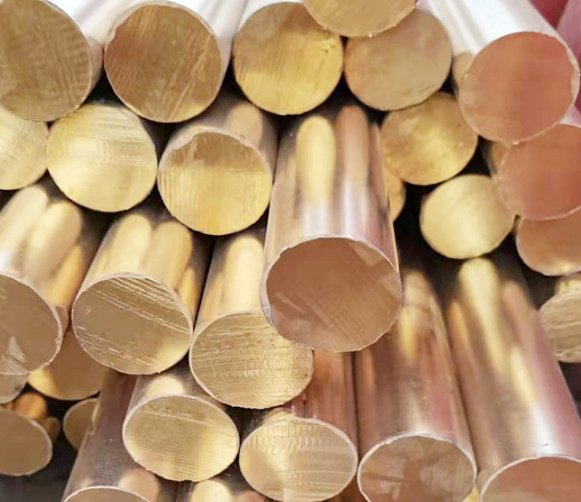
C69300 brass is a high-strength, lead-free copper-zinc-silicon alloy used when a component must combine machinability, potable-water compatibility, dezincification resistance and reliable mechanical performance. It is commonly selected for precision fittings, valve parts, plumbing hardware, pump components, metering bodies, fasteners and forged brass parts that previously used leaded free-machining brass.
Search intent for this material is usually practical: engineers want confirmed composition, machinability, strength, corrosion resistance and substitution guidance; buyers want to know whether C69300 is suitable for regulatory-driven lead-free projects without creating machining cost or field-failure risk. This page addresses both perspectives with specification-level data and comparison tables.
What Is C69300 Brass?
C69300 is a wrought copper alloy in the UNS system. It is often described as lead-free silicon brass because silicon improves strength, chip control and corrosion behavior while avoiding the intentional lead additions used in traditional free-cutting brass such as C36000.
In many commercial specifications, C69300 is used as a replacement for leaded brass in water-contact components, especially where regulations restrict lead content. It can be supplied as rod, bar, profiles, wire, forgings and machined parts, depending on mill capability and customer specification.
- UNS designation: C69300
- Common description: lead-free silicon brass, eco brass, silicon brass
- Material family: copper-zinc-silicon wrought brass
- Typical product forms: round bar, hex bar, rod, profiles, forged blanks, precision machined parts
- Primary design reason: lead-free machinability with improved strength and corrosion resistance compared with many conventional brasses
C69300 Chemical Composition
The exact chemistry must be verified against the latest purchase specification and mill certificate, but the following ranges are commonly associated with UNS C69300 wrought silicon brass.
| Element | Typical Range or Limit | Function in the Alloy |
|---|---|---|
| Copper, Cu | Approximately 76.0–79.0% | Base metal; provides corrosion resistance, ductility and thermal conductivity. |
| Zinc, Zn | Remainder | Strengthens the copper matrix and supports economical production. |
| Silicon, Si | Approximately 2.7–3.4% | Improves strength, wear behavior, chip formation and dezincification resistance. |
| Phosphorus, P | Typically controlled at low level | Assists deoxidation and contributes to alloy control. |
| Lead, Pb | Very low residual limit | Not intentionally added; controlled for lead-free compliance. |
| Iron, Fe and other residuals | Low residual limits | Controlled to maintain machinability, corrosion resistance and mechanical consistency. |
For regulated drinking-water or electronic applications, do not rely only on the alloy name. Require a material test report and compliance statement for the applicable regulation, such as NSF/ANSI/CAN 61, RoHS, REACH, ELV or customer-specific lead limits.
Mechanical and Physical Properties of C69300 Brass
Mechanical properties depend on product form, temper, section size and manufacturing route. Cold-drawn rod can show higher yield strength than annealed or forged material, while forged blanks may provide better grain flow for pressure-containing shapes.
| Property | Representative Range | Engineering Relevance |
|---|---|---|
| Tensile strength | Approximately 450–650 MPa, depending on temper | Supports threaded fittings, valve stems, connectors and structural hardware. |
| Yield strength | Approximately 250–550 MPa, depending on temper | Important for torque loading, press-fit features and pressure boundary design. |
| Elongation | Approximately 8–25% | Indicates forming margin and resistance to brittle failure during assembly. |
| Hardness | Typically around 100–180 HB | Affects tool wear, thread strength and surface indentation resistance. |
| Density | Approximately 8.3–8.5 g/cm³ | Useful for weight and cost calculations. |
| Elastic modulus | Approximately 105–115 GPa | Relevant to deflection, clamp load and sealing compression. |
| Electrical conductivity | Lower than pure copper; commonly in the low-to-mid %IACS range | Acceptable for some connector and grounding hardware, but not a copper substitute for high-conductivity bus parts. |
| Thermal conductivity | Moderate for brass alloys | Useful for fittings, sensor housings and fluid-control components where heat transfer is secondary. |
Published values should be treated as design references, not final acceptance criteria. For production release, specify temper, form, and test requirements on the drawing or purchase order.
C69300 Brass vs C36000, C46400 and Lead-Free Cast Brass
Material substitution is one of the most common reasons engineers search for C69300. The alloy is not simply a “lead-free C36000”; it has different tool wear behavior, corrosion resistance, strength and cost structure.
| Material | Main Advantage | Limitation | Best-Fit Use Case |
|---|---|---|---|
| C69300 lead-free silicon brass | Lead-free, high strength, good machinability, good dezincification resistance | Tooling and cycle times may need optimization compared with C36000 | Potable-water fittings, valve parts, precision machined components and forged brass parts |
| C36000 free-cutting brass | Excellent machinability and chip breaking | Contains intentional lead; restricted in many water-contact and environmental applications | High-volume non-regulated turned parts where lead is permitted |
| C46400 naval brass | Good marine corrosion resistance due to tin addition | Not as free-machining as C36000; not usually selected for lead-free plumbing replacement | Marine hardware, shafts, plates and seawater service components |
| Lead-free cast brass or bronze | Economical for complex near-net cast shapes | Cast porosity, pressure tightness and machining consistency require strict control | Pump bodies, valve bodies and components where casting geometry is advantageous |
In a typical replacement program, C69300 is strongest where the design needs both regulatory compliance and wrought-material reliability. If the only target is the lowest possible machining cycle time and lead is allowed, C36000 may still machine faster. If seawater exposure is the main issue, a naval brass, aluminum bronze or nickel aluminum bronze may be more appropriate.
Machining Performance and Practical Processing Guidance
C69300 is considered a machinable lead-free brass, but shops should not copy C36000 parameters without validation. Silicon-containing phases can improve chip control, yet they may increase abrasive tool wear compared with leaded brass. Good results normally come from sharp carbide tooling, stable workholding, correct coolant strategy and chip-breaker geometry.
Turning and Swiss Machining
- Use polished carbide inserts or sharp ground tools for lower cutting forces and cleaner surface finish.
- Typical starting surface speeds may fall around 150–300 m/min for carbide turning, adjusted for part diameter, tool life target and coolant delivery.
- Feeds around 0.05–0.25 mm/rev are common starting points for small-to-medium turned features, but thread geometry and tolerance stack must be considered.
- High-pressure coolant can help evacuate chips in deep grooves, cross-holes and small bores.
Drilling, Tapping and Threading
- Use drills with geometry suited for brass to reduce grabbing and improve hole roundness.
- For blind holes, chip evacuation is often more important than peak cutting speed.
- Form tapping may be possible in some cases, but cut tapping is often easier to control for small internal threads or tight tolerance classes.
- Thread rolling can improve fatigue and thread strength, provided ductility and diameter control are confirmed.
Forging, Hot Working and Heat Treatment
- C69300 is commonly used for hot-forged plumbing and valve components where grain flow improves pressure integrity.
- Hot-working temperature windows must be controlled by the forging supplier to avoid cracking, excessive scale or poor die fill.
- Stress relief may be specified after severe machining or cold work when stress-corrosion cracking risk is part of the service environment.
- Annealing and temper selection should be tied to final mechanical property requirements, not chosen generically.
Joining and Surface Finishing
- Mechanical joining, threading and compression sealing are widely used with C69300 components.
- Soldering and brazing can be used when flux, temperature and cleanliness are properly controlled.
- Plating and nickel/chrome finishing are possible, but the process should be qualified for adhesion, porosity and corrosion performance.
- Fusion welding is not typically the first choice for brass components and should be procedure-qualified if required.
A useful production benchmark is to evaluate C69300 with a short capability run before committing to full replacement. In many screw-machine operations, the material can reach commercially acceptable productivity, but tool life, burr height and chip evacuation are the variables that most often determine final cost.
Corrosion Resistance, Dezincification and Water-Service Behavior
One of the main engineering advantages of C69300 is its resistance to dezincification compared with many standard brasses. Dezincification is a selective corrosion mechanism in which zinc is leached from brass, leaving a porous copper-rich structure that can cause leakage, loss of strength and premature field failure.
C69300 is frequently chosen for water-contact service because silicon helps improve corrosion behavior and the alloy avoids intentional lead additions. However, no brass is immune to every water chemistry. Chloride level, pH, temperature, dissolved oxygen, residual stress and ammonia exposure can all influence field performance.
- Good fit: potable-water fittings, valves, meters, manifolds and regulated plumbing hardware.
- Use caution: high-ammonia environments, aggressive industrial fluids, high-temperature chlorides and stagnant water with unusual chemistry.
- Engineering control: specify dezincification testing when service conditions or regional water chemistry require it.
- Assembly control: avoid excessive residual stress from over-torquing, sharp thread roots or uncontrolled press fits.
For critical water-service parts, dezincification-resistant performance should be verified by testing and by reviewing historical field data from similar water chemistry, not assumed solely from the alloy designation.
Typical Applications for C69300 Brass
C69300 is used when lead-free compliance, mechanical strength and machining productivity must be balanced in one material.
- Potable-water fittings, couplings, adapters and compression nuts
- Valve stems, seats, bodies, bonnets and cartridges
- Water meter components and flow-control housings
- Pump parts, impellers, connectors and manifolds
- Hydraulic and pneumatic fittings
- Forged plumbing components requiring pressure integrity
- Precision screw-machine parts and threaded inserts
- Lead-free fasteners, nuts, pins and specialty hardware
- Sensor bodies and fluid-system instrumentation components
The alloy is especially attractive where a manufacturer wants to reduce lead exposure risk without moving to stainless steel, which may increase machining cost, galling risk and thermal expansion mismatch in some assemblies.
Engineering Issues That Often Decide Whether C69300 Is the Right Choice
Engineer perspective: replacing C36000 with C69300 in a turned part
The common problem is not whether the part can be machined, but whether the legacy C36000 process can maintain cost, burr control and tolerance in C69300. A practical trial should compare cycle time, insert life, bore finish, thread gauge stability, chip evacuation and deburring time. If the drawing includes tight internal threads, deep blind holes or sealing surfaces, those features should be measured first.
In many replacement projects, the best result comes from changing tool geometry and coolant delivery rather than simply reducing feed. Slowing down the machine may improve stability, but it can erase the economic benefit of using a machinable lead-free brass.
Buyer perspective: what to verify before purchasing C69300 brass bar or parts
Buyers should request the UNS designation, product form, temper, diameter or profile tolerance, applicable ASTM or customer standard, material test report, country of melt if required, and compliance documentation for lead-free regulations. For finished parts, ask whether the supplier has already machined C69300 at similar diameters and tolerances.
Price comparison should include scrap value, tool consumption, reject rate and deburring labor, not only raw bar cost. A lower-cost substitute may become expensive if it produces long stringy chips or inconsistent thread quality.
Quality perspective: data to collect during first-article approval
Useful first-article data includes material chemistry, hardness, tensile properties if required, dimensional capability, surface roughness, torque-to-failure for threaded features, pressure test results for fluid components and corrosion or dezincification test results when applicable.
For regulated water components, retain traceability from mill certificate to finished lot. This prevents compliance gaps when multiple bar sizes, subcontract machining sources or plating suppliers are involved.
Specification Checklist for C69300 Brass
To reduce ambiguity in sourcing and manufacturing, drawings and purchase orders should define more than the alloy name. A robust specification package helps prevent wrong temper, wrong residual lead limit or wrong product form.
- UNS alloy: C69300.
- Product form: bar, rod, profile, forging, machined part or wire.
- Temper or mechanical property requirement.
- Applicable standard, such as the current ASTM or customer specification for the product form.
- Chemical composition limits and required material test report.
- Lead-free compliance requirement, if applicable.
- Dimensional tolerances and straightness requirements for bar stock.
- Machined surface finish, thread class and burr limits.
- Pressure test, leak test or torque requirement for functional parts.
- Corrosion or dezincification test requirement for water-service components.
- Plating, passivation, cleaning or packaging requirements.
- Traceability level and lot-control requirements.
When to Choose C69300 Brass
Choose C69300 when the application requires a lead-free brass with better strength and water-service corrosion resistance than many conventional brasses, while still needing efficient machining and forging capability. It is a strong candidate for regulated plumbing, fluid-control and precision machined components.
Consider another material if the design requires maximum electrical conductivity, severe seawater exposure, high-temperature chemical resistance, very low raw material cost or the absolute fastest free-machining performance where lead is permitted.
Key Takeaways
- C69300 brass is a lead-free silicon brass used for machined, forged and water-contact components.
- It is often selected as a practical alternative to leaded C36000 in regulated applications.
- It offers useful strength, good machinability and improved dezincification resistance.
- Machining success depends on tool geometry, coolant, chip evacuation and validated process settings.
- For procurement, material certification and compliance documentation are as important as alloy naming.
- For engineering release, confirm corrosion performance, mechanical properties and manufacturing capability under real production conditions.
Reference Standards and Documents to Check
The applicable standard depends on product form and market. Common reference points include UNS alloy designations, ASTM specifications for copper-zinc-silicon rod or bar, customer material standards, NSF/ANSI/CAN 61 for drinking-water system components, RoHS restrictions, REACH requirements and dezincification test methods such as ISO 6509 where specified.
Always verify the current revision of the standard before final design approval or purchase release, because composition limits, test methods and compliance requirements can change.