
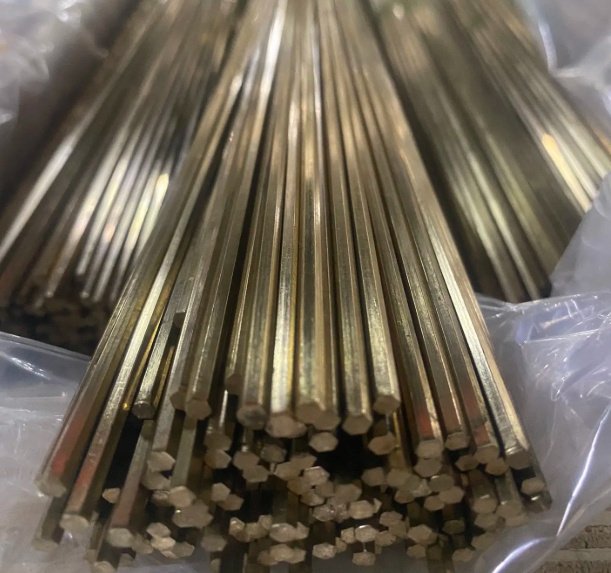
C54400 is a phosphor bronze alloy containing lead, specifically engineered for applications requiring high machinability combined with good wear resistance and moderate mechanical strength. Recognized under ASTM B139 and ASTM B103 standards, C54400 bronze serves as a critical material in precision manufacturing for bushings, bearings, thrust washers, and valve components. This alloy leverages a balanced tin content with lead additions to achieve a machinability rating of 80 relative to free-cutting brass (C36000 at 100), positioning it among the most readily machinable copper alloys.
ASTM C54400 Chemical Composition
Compliance with C54400 bronze specifications requires precise control of elemental composition. Trace elements influence both mechanical behavior and machinability characteristics critical to performance.
| Element | Composition (%) | Function in Alloy |
|---|---|---|
| Copper (Cu) | Remainder | Base metal providing thermal and electrical conductivity |
| Tin (Sn) | 3.5 – 4.5 | Enhances strength, hardness, and corrosion resistance |
| Lead (Pb) | 3.5 – 4.5 | Forms discrete particles enabling chip breaking during machining |
| Zinc (Zn) | 1.5 – 4.5 | Improves castability and reduces cost; solid solution strengthener |
| Phosphorus (P) | 0.01 – 0.50 | Deoxidizer; enhances wear resistance and fluidity |
Mechanical and Physical Properties
The engineering fitness of C54400 bronze for precision applications depends on verified tensile, hardness, and fatigue properties. The following data reflects mill-hardened temper conditions typical for engineered components.
| Property | Value | Unit |
|---|---|---|
| Tensile Strength (H04) | 69,000 – 91,000 | psi |
| Yield Strength (0.2% offset) | 41,000 – 71,000 | psi |
| Elongation in 2 inches | 10 – 30 | % |
| Hardness (Rockwell B) | 60 – 85 | HRB |
| Density | 0.318 | lb/in³ |
| Melting Point – Liquidus | 1,990 | °F |
| Electrical Conductivity | 10 – 15 | % IACS |
| Coefficient of Thermal Expansion | 11.0 | µin/in°F |
C54400 vs. Competing Bearing Alloys
Material selection for bearing and bushing applications frequently involves comparing C54000 grades against high-leaded tin bronzes and aluminum bronzes. The table below isolates critical decision factors for design engineers and procurement teams.
| Property | C54400 Bronze | C93200 Bearing Bronze | C95400 Aluminum Bronze |
|---|---|---|---|
| Nominal Tin Content | 4.0% | 7.0% | 0.0% |
| Lead Content | 4.0% | 7.0% | 0.0% |
| Machinability Rating | 80 | 70 | 50–60 |
| Tensile Strength (ksi) | 80 (H04) | 35 | 85 |
| Hardness (HB) | 140–170 | 65 | 170 |
| Typical PV Limit (pairing with steel) | 50,000 psi-fpm | 8,000 psi-fpm | 75,000 psi-fpm |
| Primary Application Bias | Precision machined components | General-purpose bearings | Heavy-load bushings |
Engineering relevance: C54400 occupies a distinctive niche. It provides substantially higher mechanical strength than C93200 (bearing bronze) while exhibiting superior machinability over C95400 aluminum bronze. For complex geometries produced on screw machines or CNC lathes, this property intersection reduces tooling costs and cycle times.
Machining Characteristics and Chip Formation
The microstructure of C54400 bronze features discrete lead inclusions within a tin-rich alpha copper matrix. These lead particles function as internal chip breakers, producing short, segmented chips under high-speed machining operations. This behavior eliminates the long, stringy chips associated with C51000 ( phosphor bronze), improving surface finish and reducing operator intervention.
Recommended machining parameters for C54400:
- Cutting speed: 250–400 SFM for turning and milling
- Feed rate: 0.004–0.008 in/rev for roughing; 0.002–0.004 for finishing
- Depth of cut: 0.030–0.150 inches standard; material permits aggressive interrupted cuts
- Tool geometry: Positive rake carbide or coated high-speed steel; built-up edge formation is minimal
Coolant application remains optional for many short-run operations, though flood coolant improves dimensional tolerance maintenance for components requiring ±0.0005 inch precision.
Processing Methods and Finishing
While machinability represents the primary processing advantage, C54400 bronze accommodates supplementary fabrication techniques:
Forming: Cold heading and coining applications are limited due to lead content. For light forming, 1/4-hard to 1/2-hard tempers provide adequate plasticity. Annealing at 1,000°F restores ductility when required before secondary processing.
Joining: Solderability rates excellent; oxyacetylene welding requires silicon bronze filler metal. Shielded metal arc welding produces acceptable joints using C61000 electrodes. Avoid fusion welding where lead vaporization concerns exist—brazing remains the preferred thermal joining method.
Surface Treatments: C54400 bronze accepts chemical conversion coatings, organic lacquers, and electroplating (nickel, tin, or silver) without substrate activation complications. Passivation in dilute chromic acid solutions enhances atmospheric corrosion resistance for outdoor hardware applications.
Engineering Applications and Load Ratings
Historical service data and laboratory tribology testing inform the application boundaries for C54400 bronze. The alloy demonstrates reliable performance within specific pressure-velocity envelopes.
| Application | Max Pressure | Max Velocity | Operating Temperature | Expected Service Life |
|---|---|---|---|---|
| Automotive transmission bushings | 4,500 psi | 250 fpm | -40°F to 250°F | 150,000+ cycles |
| Industrial valve stems (water media) | 1,000 psi | 30 fpm | 33°F to 180°F | 10+ years |
| Precision instrument bearings | 500 psi | 500 fpm | 68°F to 150°F | 5,000+ hours |
| Marine deck hardware | 3,000 psi | 100 fpm | -20°F to 300°F | 15+ years (with lubrication) |
Corrosion Behavior and Environmental Limits
Phosphor bronzes achieve inherent corrosion resistance through tin content, which forms protective oxide films. C54400 bronze demonstrates particular resilience in:
- Brackish water and marine atmospheres
- Dilute, non-oxidizing acids
- Steam environments up to 300°F
Limitations exist in contact with strong alkalis, ammonia-bearing solutions, and oxidizing acids. Lead inclusions render C54400 bronze unsuitable for potable water applications under modern lead-leaching regulations (NSF/ANSI 61, California Proposition 65 thresholds). Engineers must specify C87850 or low-lead silicon brass alternatives when potable water contact is anticipated.
Procurement perspective: sourcing C54400 bronze efficiently
Buyers evaluating C54400 bronze stock face several commercial variables. Mill lead times for standard rod and bar products typically range from 6 to 12 weeks for non-contract orders. Long-term supply agreements reduce lead times to 4 weeks and lock LME copper pricing adjustments.
Quality verification checklist:
- Request mill test reports (MTRs) verifying ASTM B139 or B103 chemical compliance
- Require ultrasonic testing for diameters exceeding 3 inches to detect internal lead segregation
- Specify Temper H04 for bearing applications requiring maximum load capacity
- Validate RoHS/REACH declarations when serving European automotive or electrical markets
Price volatility tracks underlying copper markets, with C54400 bronze generally commanding a 10–15% premium over C36000 free-machining brass due to tin content. Inventory hedging strategies or consignment stock arrangements with distributors mitigate this exposure.
Engineer guidance: design-for-manufacturing with C54400
Designing components for C54400 bronze production requires awareness of material-specific constraints. Wall thickness below 0.060 inches may compromise integrity during long automatic bar feeding operations due to lead nodularity variations.
Recommended design practices:
- Maintain minimum 0.5 mm corner radii to reduce stress concentrators in cyclic loading
- Specify surface roughness Ra 32 µin or better for bearing surfaces; mating shaft hardness should exceed 35 HRC
- Provide relief grooves for snap ring retention—C54400 work-hardens and resists staking deformation
- Consider galvanic isolation when mating with aluminum or stainless steel structures in marine environments
Tolerance capabilities on screw machines routinely achieve ±0.0003 inches for diameters under 1 inch, leveraging the alloy's machining consistency.
Complementary Bronze Materials
Engineers frequently evaluate C54400 bronze alongside related alloys for design optimization. Understanding semantic and functional relationships clarifies selection:
C54400-B: A bearing bronze specification variant with tighter lead distribution control, optimizing consistency for multi-spindle automatic screw machine production.
C51900 (Phosphor Bronze, 6% Tin): Higher tin content delivers superior fatigue resistance and spring properties but reduces machinability to 20. Selected for electrical contacts and spring washers where machining complexity is low.
C93800 High-Leaded Tin Bronze: Cast alloy with 15–20% lead content. Offers exceptional embeddability for dirty operating environments but lacks the structural strength necessary for C54400 applications.
C17200 Beryllium Copper: Achieves hardness exceeding 38 HRC after heat treatment. Selected for non-sparking tools and electrical connectors requiring fatigue life; machining requires carbide tooling and dust collection—C54400 bronze offers safer machining without beryllium oxide hazards.
Thermal Treatment and Stress Relief
C54400 bronze responds to thermal processing primarily for softening or dimensional stabilization rather than strengthening. Stress relief annealing at 500–600°F for 1–2 hours minimizes distortion in components subjected to aggressive machining cycles. Full annealing at 1,000–1,200°F produces maximum softness (Rockwell B 50–65) for subsequent cold forming or coining operations; rapid water quenching prevents grain boundary oxidation during cooling.
Age hardening does not apply to C54400 bronze. Engineers requiring precipitation hardenable bronzes should specify C63000 (aluminum-nickel bronze) or C17300 (beryllium copper) alternatives.
Availability and Typical Product Forms
Standard mill product availability for C54400 bronze includes:
- Round rod: 0.125 to 6.0 inches diameter
- Hexagonal bar: 0.25 to 2.5 inches across flats
- Rectangular bar: Custom widths with standard 12-foot lengths
- Hollow bar: Limited domestic availability; C93200 often substituted for tubular bearings
Custom forgings and continuous cast bars are produced to order for high-volume OEM agreements. Plate and sheet forms are not standard due to low demand—C51000 or C65500 silicon bronze better serve structural sheet requirements.
Standards and Specifications Cross-Reference
Multi-industry procurement requires awareness of standards equivalencies:
| Standard Organization | Specification | Coverage |
|---|---|---|
| ASTM International | B139 | Phosphor bronze plate, sheet, strip, and rolled bar |
| ASTM International | B103 | Identical scope to B139; historically parallel specification |
| SAE International | SAE J461 | Wrought and cast copper alloys—general requirements |
| SAE International | SAE J463 | Recommended practices for wrought copper and copper alloys |
| Federal/QQ | QQ-C-570 (historical) | Superseded by ASTM references; legacy drawings may reference |
Frequently Encountered Service Conditions
Field analysis of C54400 bronze failures identifies recurring mechanisms:
Galling during dry startup: Unlubricated boundary contact between bronze bushing and steel shaft generates adhesive wear. Solution: specify grease grooves or graphite plug inserts for self-lubricated operation; alternatively, specify oil-impregnated sintered bronze for low-load oscillating joints.
Pitting in sulfide environments: Exposure to hydrogen sulfide or sulfur-laden atmospheres attacks tin oxide films. Protective coatings (electroless nickel, 0.0003-inch minimum) prevent substrate degradation.
Creep relaxation in press fits: At sustained temperatures exceeding 200°F, C54400 bronze exhibits stress relaxation reducing interference fits. For elevated temperature operation (>250°F), transition to C63000 aluminum bronze maintains dimensional stability.
Summary: When to Specify C54400 Bronze
C54400 bronze delivers measurable engineering value for medium-duty bearing applications where machining productivity and moderate strength outweigh requirements for extreme load capacity or corrosion resistance. Its 80 machinability rating enables cost-effective precision manufacturing, while 80,000+ psi tensile strength supports structural bearing demands exceeding soft bearing bronzes. Procurement and engineering teams should verify lead-content compliance against end-market regulations and confirm availability of required temper and diameter combinations with qualified distributors before finalizing designs.