
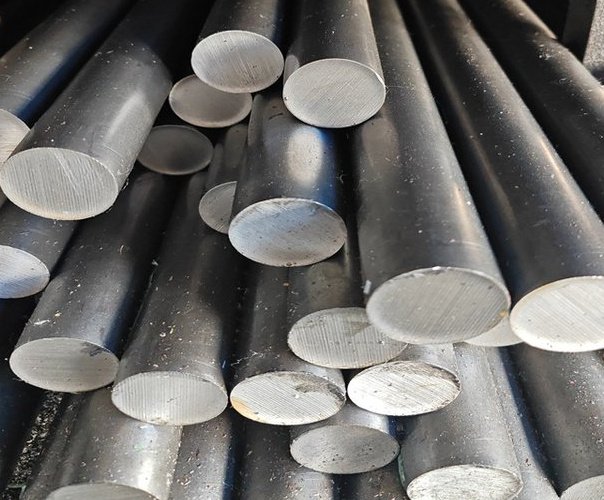
1020 carbon steel is a widely used low-carbon plain steel valued for its balance of formability, weldability, machinability and cost. It is commonly specified for shafts, pins, spacers, brackets, bushings, light-duty gears, fixtures, tubing and general-purpose machined components.
AISI 1020 carbon steel, also known as SAE 1020 or UNS G10200, typically contains about 0.20% carbon. This makes it stronger than very low-carbon steels such as 1008 or 1010, while still remaining easier to weld and form than medium-carbon steels such as 1045.
What Is 1020 Carbon Steel?
1020 carbon steel is a plain carbon steel in the AISI/SAE 10xx family. The “10” indicates a non-resulfurized plain carbon steel, while “20” indicates a nominal carbon content of approximately 0.20%. It is often grouped with mild steels because of its low carbon content and good manufacturing versatility.
Unlike alloy steels, 1020 does not rely on chromium, molybdenum, nickel or vanadium for strength. Its performance is mainly controlled by carbon content, manganese content, product form, rolling condition, cold working, heat treatment and final dimensional requirements.
Common names and designations include:
- AISI 1020 steel
- SAE 1020 steel
- UNS G10200
- 1020 mild steel
- Low carbon steel 1020
- EN equivalents often considered near C22, C20 or 1.0402 depending on specification and chemistry limits
1020 Carbon Steel Chemical Composition
The chemical composition of 1020 steel is controlled by standards and product specifications. Exact limits can vary slightly depending on whether the material is ordered as bar, plate, tubing, wire, forging stock or cold-finished product.
| Element | Typical Range or Maximum | Role in 1020 Steel |
|---|---|---|
| Carbon, C | 0.18–0.23% | Controls strength, hardness, machinability and response to heat treatment |
| Manganese, Mn | 0.30–0.60% | Improves strength and helps control sulfur effects |
| Phosphorus, P | 0.040% max, typical | Impurity controlled for toughness and ductility |
| Sulfur, S | 0.050% max, typical | Impurity; higher sulfur can improve machinability but reduce ductility |
| Iron, Fe | Balance | Base metal |
When comparing supplier quotations, the chemistry should be checked against the applicable standard, such as ASTM A29/A29M for general requirements for steel bars, ASTM A108 for cold-finished bars, ASTM A576 for special-quality carbon steel bars, or other product-specific standards.
Mechanical Properties of 1020 Carbon Steel
Mechanical properties depend strongly on processing condition. Hot-rolled 1020 steel usually has lower strength and broader tolerances than cold-drawn 1020 steel. Cold drawing increases yield strength, tensile strength and surface finish quality but reduces ductility.
| Property | Typical Hot-Rolled 1020 | Typical Cold-Drawn 1020 |
|---|---|---|
| Tensile strength | 380–480 MPa | 420–550 MPa |
| Yield strength | 205–295 MPa | 350 MPa or higher, depending on reduction |
| Elongation | 25–35% | 15–25% |
| Hardness | Approximately 111–143 HB | Approximately 130–170 HB |
| Modulus of elasticity | About 200 GPa | About 200 GPa |
| Density | About 7.87 g/cm³ | About 7.87 g/cm³ |
It is not a high-strength alloy steel; 1020 is selected when moderate strength, easy fabrication and economical processing matter more than high hardenability or extreme wear resistance.
Physical Properties and Performance Characteristics
1020 carbon steel has the typical physical behavior of low-carbon steel. It conducts heat and electricity reasonably well, has good impact resistance in ordinary service conditions and can be formed by bending, drawing, upsetting and forging when properly processed.
- Density: approximately 7.87 g/cm³
- Melting range: approximately 1,425–1,515°C
- Elastic modulus: approximately 200 GPa
- Thermal conductivity: moderate, suitable for general steel components
- Magnetic behavior: ferromagnetic
- Corrosion resistance: low without coating or protection
Because 1020 is not stainless steel, it will rust in humid, marine, chemical or outdoor environments unless protected by paint, oil, black oxide, phosphate coating, zinc plating, galvanizing, powder coating or another corrosion-control system.
1020 Steel Machining: Speeds, Tooling and Practical Notes
1020 steel is generally considered easy to machine compared with tougher alloy steels, but its low carbon content can produce built-up edge, stringy chips and burrs if the cutting setup is not optimized.
Machinability is generally rated around 65% when compared with AISI B1112 steel at 100%. In practical production, tool geometry, coolant, feed rate, rigidity and material condition often matter more than the nominal grade alone.
Machining Behavior
Cold-drawn 1020 bar usually machines more consistently than hot-rolled bar because it has better dimensional accuracy, improved surface finish and higher hardness. Hot-rolled stock may require scale removal, facing cuts or allowance for decarburized surface layers.
Turning and Milling Recommendations
- Use sharp high-speed steel or carbide tools with positive rake geometry for better chip flow.
- Apply sufficient feed to avoid rubbing, work hardening at the surface and poor finish.
- Use cutting fluid or mist coolant to reduce built-up edge and improve tool life.
- Choose chip-breaker inserts when long stringy chips create automation or safety problems.
- For close-tolerance shafts, consider stress relief or rough-machine and finish-machine sequencing.
Drilling, Tapping and Threading
1020 steel drills and taps well, but burr control is important. Proper pilot-hole size, sharp drills, suitable lubricants and thread-forming strategy help prevent torn threads and tool breakage. For high-volume tapping, sulfurized cutting oils or modern water-soluble coolants can improve tool life.
Machining note for production engineers
If burrs, poor finish or built-up edge appear during 1020 machining, increasing surface speed alone may not solve the problem. Check insert edge prep, rake angle, coolant delivery, feed per revolution and material condition. Cold-drawn or normalized stock can provide more stable machining than hot-rolled material for precision components.
Welding and Fabrication of 1020 Carbon Steel
1020 is readily weldable by common welding processes, including MIG/GMAW, TIG/GTAW, stick/SMAW, resistance welding and oxy-fuel welding. Its low carbon equivalent reduces the risk of hard heat-affected zones and hydrogen cracking compared with medium-carbon and alloy steels.
Preheating is usually not required for thin or moderate sections under normal shop conditions. However, thicker sections, restrained weldments, low ambient temperature or highly critical components may require preheat, controlled interpass temperature or post-weld stress relief based on engineering requirements.
Typical fabrication advantages include:
- Good bendability and formability
- Good weld bead quality with standard filler metals
- Low cracking tendency compared with higher-carbon steels
- Compatibility with brazing, soldering and mechanical fastening
- Good suitability for fixtures, frames, brackets and welded machine parts
For welding consumables, mild steel filler metals such as ER70S-6 for GMAW/GTAW or E7018 for SMAW are commonly used, but final filler selection should match design codes, strength requirements, joint type and service conditions.
Heat Treatment and Case Hardening
Because of its low carbon content, 1020 steel does not through-harden effectively by conventional quenching and tempering. It can be normalized, annealed, stress relieved, carburized, carbonitrided or case hardened for specific property improvements.
For wear resistance use carburizing or carbonitriding rather than expecting deep through-hardening. A hardened case with a tough, lower-carbon core is one of the most important engineering uses of 1020 steel.
| Process | Typical Temperature Range | Purpose |
|---|---|---|
| Annealing | Approximately 850–900°C, slow cool | Softens material and improves formability |
| Normalizing | Approximately 870–925°C, air cool | Refines grain structure and improves uniformity |
| Stress relieving | Approximately 540–650°C | Reduces residual stress after welding, forming or machining |
| Carburizing | Often around 900–950°C, followed by quench | Adds carbon to the surface for a hard wear-resistant case |
| Carbonitriding | Often around 760–870°C | Improves surface hardness and wear resistance with a shallower case |
Heat-treatment values are typical ranges, not mandatory process instructions. Final cycles should be established according to component geometry, furnace capability, case-depth target, distortion allowance and applicable standards.
1020 Carbon Steel Applications
1020 steel is chosen for components that need reliable manufacturing behavior, moderate mechanical properties and low material cost. It is common in automotive, machinery, agricultural equipment, construction hardware, tooling fixtures and general industrial products.
- Shafts, axles and light-duty spindles
- Pins, dowels, bushings and sleeves
- Spacers, collars, couplings and washers
- Brackets, plates, tabs and mounting parts
- Hydraulic and mechanical tubing
- Jigs, fixtures and machine bases
- Forged parts requiring good ductility
- Carburized gears, sprockets and wear components
- Threaded rods, fastener-related parts and general hardware
For heavily loaded gears, high-fatigue shafts, impact tools or components requiring high core hardness, engineers often move from 1020 to grades such as 1045, 4140, 8620 or other alloy steels.
1020 Steel vs 1018, A36, 1045 and 4140
Many buyers compare 1020 carbon steel with other common grades. The right choice depends on strength, tolerance, surface finish, weldability, heat treatment response and cost.
| Grade | General Comparison with 1020 | Typical Selection Reason |
|---|---|---|
| 1018 steel | Slightly lower carbon; often supplied cold finished with excellent machinability and surface quality | Precision shafts, spacers and parts needing good finish |
| A36 steel | Structural steel specified by mechanical properties more than tight chemistry | Structural plates, angles, channels and welded frames |
| 1045 steel | Higher carbon, higher strength and better through-hardening response | Shafts, studs, gears and parts needing higher hardness |
| 4140 steel | Chromium-molybdenum alloy steel with much higher hardenability and fatigue strength | High-load shafts, tooling, machine components and critical parts |
| 8620 steel | Nickel-chromium-molybdenum case-hardening steel with tougher core after carburizing | Carburized gears, shafts and drivetrain components |
Engineer’s note on choosing 1020 vs 1018 or 1045
Choose 1020 when you need a low-carbon steel with good weldability, moderate strength and broad availability. Choose 1018 when cold-finished accuracy and surface finish are the priority. Choose 1045 when higher strength, better through-hardening and improved wear resistance are required, but expect reduced weldability and formability.
Available Product Forms and Standards
1020 carbon steel is available in many forms, including hot-rolled bar, cold-drawn bar, round bar, square bar, flat bar, plate, sheet, wire, tubing, pipe, forgings and machined blanks. The same grade can perform differently depending on product form and manufacturing route.
Specify the product form and standard rather than ordering by grade name alone. “1020 steel” can mean different tolerance, surface, straightness, mechanical property and inspection expectations in different markets.
Relevant standards and specification families may include:
- ASTM A29/A29M for general requirements for steel bars
- ASTM A108 for cold-finished carbon and alloy steel bars
- ASTM A576 for special-quality carbon steel bars
- ASTM A513 for electric-resistance-welded carbon steel mechanical tubing
- SAE J403 for chemical compositions of SAE carbon steels
- AMS, EN, JIS or customer-specific specifications where applicable
Purchasing and Quality Considerations
For industrial sourcing, the most common problems are not caused by the 1020 grade itself but by unclear requirements. Buyers should define chemistry, standard, condition, size tolerance, surface finish, straightness, testing and certification needs before comparing prices.
Important purchase details include:
- Hot-rolled, cold-drawn, turned-ground-polished or normalized condition
- Required ASTM, SAE, EN or customer standard
- Dimensional tolerances and straightness requirements
- Surface condition, decarburization limits and scale removal needs
- Mechanical test requirements such as tensile strength, yield strength, elongation or hardness
- Material test report requirements, including heat number traceability
- Ultrasonic testing, macroetch, grain size or cleanliness requirements for critical applications
- Packaging, rust prevention and shipping protection
Procurement note: what to verify on a 1020 steel MTR
A useful material test report should identify the heat number, grade, product form, applicable standard, chemical composition and any required mechanical tests. If the part will be welded, machined to tight tolerance, carburized or used in a safety-related assembly, confirm traceability and specification compliance before production release.
Advantages and Limitations of 1020 Carbon Steel
Advantages
- Good weldability with common shop processes
- Good machinability for general production work
- Good formability and ductility
- Economical and widely available
- Suitable for carburizing and surface hardening
- Available in many shapes, sizes and supply conditions
Limitations
- Low corrosion resistance without coating or protection
- Limited through-hardening capability
- Lower strength than medium-carbon and alloy steels
- Can produce stringy chips during machining
- Dimensional stability may require stress relief for precision parts
Key Takeaways
1020 carbon steel is a practical low-carbon steel for general engineering, machining, welding and fabrication. It offers moderate strength, good ductility and broad availability at a competitive cost. It is especially useful when the design requires easy processing rather than maximum hardness or high alloy performance.
For best results, specify the exact product form, standard, supply condition and inspection requirements. For machined parts, consider cold-drawn stock and burr-control strategy. For wear components, use carburizing or carbonitriding. For corrosive environments, specify an appropriate coating or choose a more corrosion-resistant material.