
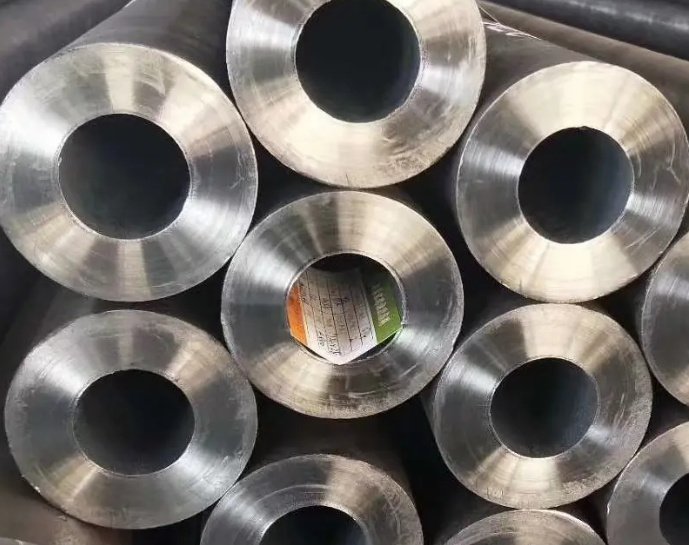
12L14 carbon steel is one of the best-known free-machining steels in North American manufacturing. If the goal is fast cycle time, stable chip breaking, and smooth surface finish on turned or threaded parts, 12L14 is often the first grade engineers and buyers evaluate. It is especially common in CNC turning, Swiss machining, screw machine production, and high-volume bar-fed components.
The reason is simple: 12L14 was designed for machinability first. Its sulfur, phosphorus, and lead additions make it dramatically easier to cut than general-purpose low-carbon steels such as 1018. The trade-off is that weldability, toughness, and corrosion resistance are not its strengths, so it should be selected with clear awareness of where it performs well and where it does not.
- Best known for: very high machinability, excellent surface finish, short chips
- Common forms: cold-drawn round bar, hex bar, square bar, flat bar, screw machine stock
- Typical uses: bushings, fittings, pins, couplings, inserts, threaded parts, hydraulic and pneumatic components
- Main limits: poor weldability, ordinary carbon-steel corrosion resistance, lead-related compliance concerns
What Is 12L14 Carbon Steel?
12L14 is a leaded free-machining steel in the low-carbon family. It is commonly described as a resulfurized and rephosphorized carbon steel with intentional lead addition to improve cutting performance. In trade language, it is often called free-cutting steel or screw machine steel because it performs so well in automatic machining operations.
In common industry usage, the material is identified as SAE/AISI 12L14 and UNS G12144. It is most often supplied as cold-finished bar, including cold-drawn or turned, ground, and polished conditions, depending on the dimensional tolerance and finish required by the part drawing.
12L14 is usually chosen when manufacturability matters more than structural performance. It is not a stainless steel, and it is not a high-strength alloy steel. It is a production-oriented carbon steel grade that helps reduce tool wear, improve chip control, and keep per-part machining cost low.
Chemical Composition and Metallurgy
The exact chemistry can vary slightly by specification and producer, but the following ranges are widely used as representative for 12L14 steel bar products.
| Element | Typical Range | Why It Matters |
|---|---|---|
| Carbon (C) | 0.15% max | Keeps the grade in the low-carbon range; limits through-hardening potential |
| Manganese (Mn) | 0.85% - 1.15% | Helps control sulfur as manganese sulfide inclusions and supports machinability |
| Phosphorus (P) | 0.04% - 0.09% | Improves machinability but can reduce ductility and toughness |
| Sulfur (S) | 0.26% - 0.35% | Promotes chip breaking and easier cutting |
| Lead (Pb) | 0.15% - 0.35% | Reduces friction at the cutting interface and improves tool life and finish |
| Iron (Fe) | Balance | Base metal |
The metallurgical behavior of 12L14 is driven less by strength enhancement and more by chip formation. Sulfur promotes manganese sulfide inclusions that help chips break cleanly. Lead acts almost like a built-in machining aid at the tool-chip interface, reducing friction and heat. This is why 12L14 frequently outperforms many other carbon steels in turning, drilling, tapping, and threading.
That same inclusion structure also explains the downside. Compared with cleaner low-carbon steels, 12L14 generally has lower ductility, reduced toughness in some directions, and less appeal for welded or impact-loaded fabrication.
Mechanical Properties and Material Behavior
Note: The values below are representative, not guaranteed minimums. Actual results vary with bar size, reduction ratio, cold-finished condition, and the governing purchase specification. Always use the applicable mill test report for procurement or design decisions.
| Property | Representative Value | Comment |
|---|---|---|
| Tensile strength | About 78 ksi (540 MPa) | Typical for cold-drawn bar |
| Yield strength | About 60 ksi (415 MPa) | Condition-dependent |
| Elongation in 2 in. | About 10% | Lower than many general-purpose low-carbon steels |
| Brinell hardness | Roughly 149 - 163 HB | Varies by condition and size |
| Density | About 0.284 lb/in³ (7.85 g/cm³) | Similar to other carbon steels |
| Elastic modulus | About 29,000 ksi (200 GPa) | Typical carbon steel value |
Strength, ductility, and service behavior
12L14 is strong enough for many small mechanical parts, but it is rarely selected for applications where high impact toughness, high transverse ductility, or critical structural performance is the main requirement. The inclusions that improve machinability can reduce toughness and make the grade less forgiving in severe bending, cold forming, or shock loading.
Cold finishing can increase strength and improve dimensional accuracy, but it may also reduce ductility further. For shafts, pins, and threaded parts with moderate loading, 12L14 often performs well. For fatigue-critical, impact-critical, or heavily loaded components, engineers often compare it against tougher alternatives such as 1018, 1144, or alloy steels.
Corrosion behavior
Like most plain carbon steels, 12L14 has low corrosion resistance. It will rust in humid, outdoor, or wet service unless protected by oil, black oxide, zinc plating, nickel plating, paint, or another surface treatment. If corrosion performance is central to the application, stainless steel or a properly coated alloy may be a better choice.
Why 12L14 Machines So Well
The main selling point of 12L14 is excellent chip control. In practical shop terms, that means fewer long stringers, easier threading, cleaner drilled holes, better tool life, and a smoother finish right off the machine. Industry sources commonly cite machinability for 12L14 at roughly 170% to 190% relative to B1112 = 100, although the exact number depends on test method and cutting conditions.
- Short, controllable chips in turning and automatic machining
- Very good surface finish on precision parts
- Reduced cutting forces compared with many non-leaded low-carbon steels
- Strong performance in drilling, reaming, tapping, broaching, and threading
- High productivity in Swiss-type and multi-spindle screw machine work
For high-volume production, this matters more than it may seem on paper. Faster speeds, fewer chip-handling problems, and lower tool consumption often reduce total manufacturing cost enough to justify the grade even when the raw material price is higher than basic mild steel.
Manufacturing engineer notes for turning, drilling, and threading
- 12L14 is especially effective where chip evacuation is a bottleneck, such as deep drilling, tapping, and bar-fed CNC turning.
- It usually produces cleaner threads than many standard low-carbon steels because chips break more readily and built-up edge is less severe.
- Coolant is still valuable for hole quality, dimensional stability, and tool life, even though the grade is inherently easy to cut.
- Thin-wall parts can still show workholding marks because the material is relatively soft; jaw design and clamping pressure matter.
- On highly cosmetic parts, validate the full process route, including machining, deburring, cleaning, and finishing, not just the cutting step.
Heat Treatment, Welding, and Finishing
Heat treatment
With its low carbon content, 12L14 is generally better suited to case hardening rather than through-hardening. If a part needs a harder wear surface but does not require a high-hardness core, carburizing or carbonitriding may be considered. Through-hardening response is limited because there is not enough carbon for the grade to behave like a true hardenable alloy steel.
That makes 12L14 useful for small wear components where the part shape is machining-intensive but the final application still benefits from a hard exterior. Even so, heat-treatment results should be verified by process trials because inclusion-rich free-machining steels do not always respond exactly like cleaner grades.
Welding and joining
12L14 is not recommended for welded fabrication. The sulfur and lead that improve machinability can create serious welding problems, including cracking, poor fusion quality, porosity risk, and fume concerns. If a part must be welded, engineers usually shift to a different grade such as 1018 or another low-carbon steel with better weldability.
Where joining is required but welding can be avoided, brazing, mechanical fastening, press fitting, threading, staking, or adhesive bonding may offer a better path depending on the service environment and part geometry.
Surface finishing and coating
12L14 can be black oxidized, plated, painted, or oiled, and it is often chosen for parts that are machined first and protected later. Surface preparation matters. Free-machining inclusions can affect final appearance on highly decorative finishes, so cosmetic plating should be trialed on production-like samples before release.
For general industrial parts, zinc and oil, black oxide with sealant, or nickel plating are common protection strategies. If hydrogen embrittlement control, coating thickness, or appearance uniformity is important, include those requirements on the drawing or purchase order.
Typical Applications
12L14 is used where machining dominates the cost structure and the component is relatively small, repeated in volume, and not expected to be welded or exposed to aggressive corrosion without protection.
- Hydraulic and pneumatic fittings
- Couplings, spacers, and bushings
- Pins, studs, and threaded fastener components
- Valve parts, nozzles, and inserts
- Sensor housings and instrument components
- Automotive and industrial screw machine parts
- Precision turned parts with tight dimensional tolerance
It is a strong candidate for high-volume lathe work, especially when excellent finish and repeatability are more important than weldability or structural toughness. It is a weaker candidate for heavily shock-loaded shafts, pressure-retaining welded assemblies, or parts that must comply with lead-free material policies.
12L14 vs 1018 and 1215
Many buyers and engineers search for 12L14 because they are really comparing it against 1018 or 1215. The table below summarizes the practical differences.
| Criteria | 12L14 | 1215 | 1018 |
|---|---|---|---|
| Machinability | Excellent | Very high | Moderate |
| Lead content | Yes | Typically no intentional lead | No |
| Weldability | Poor | Poor to fair | Good for a low-carbon steel |
| Formability | Limited | Limited | Better |
| Surface finish in machining | Excellent | Very good | Good with proper tooling |
| Typical selection reason | Maximum production efficiency | High machinability without lead | General-purpose fabrication and welding |
If machining speed is the main priority, 12L14 usually leads the group. If the application needs better weldability or more general fabrication flexibility, 1018 often makes more sense. If lead must be avoided but easy machining still matters, 1215 is frequently the closer substitute.
Ordering and Specification Notes
For purchasing, the biggest mistakes with 12L14 usually involve incomplete specification, wrong product condition, or missing compliance language. Because the grade is often bought for precision machining, details that seem minor at the quoting stage can materially affect yield, setup time, and final part quality.
Buyer checklist: what to include on a 12L14 RFQ or purchase order
- Grade designation: 12L14, and if needed, UNS G12144
- Applicable standard: commonly ASTM A108 for cold-finished bar, or another approved bar specification
- Product form: round, hex, square, flat, or cut blanks
- Size, tolerance, straightness, bar length, and end condition
- Condition: cold drawn, turned and polished, centerless ground, or other finish
- Required certifications: chemistry, mechanical properties, mill test report, heat or lot traceability
- Surface quality requirements, decarburization limits if relevant, and packaging needs
- Any secondary processing expectations, such as plating-ready finish or saw-cut blank tolerance
Compliance and sourcing note for leaded steel
Because 12L14 contains intentional lead, lead-related compliance must be reviewed before approval. Depending on the destination market and end use, this may affect customer specifications, internal restricted-substance lists, potable-water restrictions, consumer-product rules, or recycling policy. Some regulations allow exemptions for lead in steel under defined conditions, but those exemptions are not universal or permanent. Compliance should be verified against the current legal and customer framework for the actual product.
Standards and Reference Points
When evaluating or specifying 12L14 carbon steel, the following reference points are commonly used in industry documentation:
- SAE J403 for grade chemistry reference
- UNS G12144 for unified material identification
- ASTM A108 for cold-finished carbon and alloy steel bars
- ASTM A29/A29M for general requirements related to steel bars
- Supplier mill test reports for actual delivered chemistry and mechanical values
Reference note: Use this article as a technical overview, not as a substitute for the governing specification, design validation, or the supplier's certified material test data. In practice, final acceptance should always be based on the purchase specification, drawing requirements, and the mill documentation tied to the shipped heat or lot.