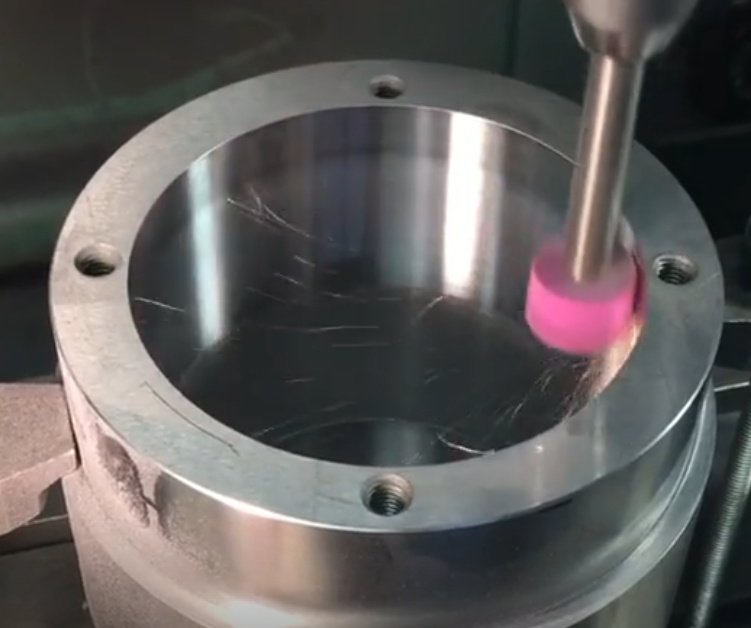
Metal grinding is a precision material-removal process that uses abrasive grains to cut, shape, deburr, blend, or finish metal parts. In manufacturing, it is used after casting, forging, welding, laser cutting, milling, turning, heat treatment, or additive manufacturing to achieve dimensional accuracy, controlled surface roughness, tight geometry, and functional edge conditions.
For engineers, buyers, and production teams, the search intent behind “metal grinding” is usually practical: which grinding method is suitable, what tolerance and surface finish are realistic, how to avoid grinding burn or chatter, and how to specify the process without adding unnecessary cost. This guide covers the key process types, wheel selection, machining parameters, inspection methods, and procurement considerations used in real metalworking environments.
What Is Metal Grinding?
Metal grinding removes material through thousands of small cutting edges on an abrasive wheel, belt, disc, stone, or mounted point. Unlike conventional machining with a defined cutting edge, grinding uses abrasive grains such as aluminum oxide, silicon carbide, cubic boron nitride, or diamond. Each grain forms microscopic chips as it passes over the workpiece.
Grinding is often selected when a part needs one or more of the following:
- Tighter dimensional tolerance than milling, turning, sawing, or flame cutting can economically provide
- Improved surface finish for sealing, sliding, bearing, or cosmetic requirements
- Removal of weld bead, scale, oxide, burrs, heat-treat distortion, or casting flash
- Controlled flatness, roundness, cylindricity, runout, or parallelism
- Finishing of hardened steel, tool steel, carbide, stainless steel, titanium, and nickel alloys
Common Metal Grinding Processes
The right grinding process depends on the part geometry, stock removal, material hardness, tolerance, required surface finish, production volume, and whether the operation is manual or CNC-controlled.
Surface Grinding
Surface grinding produces flat, parallel, or angular surfaces using a rotating grinding wheel and a reciprocating or rotary table. It is widely used for plates, blocks, dies, fixtures, mold components, shims, precision spacers, and machine ways.
Typical applications include grinding tool steel after heat treatment, correcting plate flatness, and finishing precision reference surfaces. With a rigid machine, suitable coolant, and proper dressing, surface grinding can hold fine flatness and parallelism over moderate part sizes.
Cylindrical Grinding
Cylindrical grinding machines finish external diameters, shoulders, tapers, and journals. The workpiece rotates between centers or in a chuck while the grinding wheel removes material from the outside diameter.
This process is common for shafts, pins, rollers, hydraulic rods, spindles, bearing seats, and hardened components requiring tight roundness, surface finish, and runout control.
Internal Grinding
Internal grinding, also called ID grinding, finishes bores, bearing fits, internal tapers, and precision sleeves. Because the grinding wheel is smaller and less rigid than in OD grinding, process stability, wheel speed, dressing, and coolant access are especially important.
Centerless Grinding
Centerless grinding supports the workpiece between a grinding wheel, regulating wheel, and work rest blade. It is efficient for high-volume production of round bars, pins, bushings, needles, fasteners, rollers, and medical components.
There are three common methods: through-feed centerless grinding for simple cylindrical parts, in-feed grinding for shoulders or profiles, and end-feed grinding for tapered parts.
Belt Grinding and Disc Grinding
Belt grinding and disc grinding are often used for weld blending, deburring, edge radiusing, oxide removal, scale removal, and cosmetic surface finishing. They are less dimensionally precise than cylindrical or surface grinding but are highly productive for fabrication, stainless steel finishing, and large welded assemblies.
Creep-Feed Grinding
Creep-feed grinding removes deep material in a slow pass using a porous wheel, high-pressure coolant, and a rigid machine. It can replace milling or broaching for slots, turbine components, aerospace alloys, and hardened forms where high material removal rate and complex profiles are required.
Grinding Abrasives, Wheel Bonds and Consumables
Grinding performance is strongly affected by the abrasive grain, bond type, wheel grade, structure, grit size, dressing method, and coolant. A poor wheel choice can cause burn, loading, poor finish, short wheel life, or dimensional drift even on a high-quality machine.
| Abrasive | Best-Fit Metals | Common Uses |
|---|---|---|
| Aluminum oxide | Carbon steel, alloy steel, tool steel, stainless steel | General-purpose precision grinding, surface grinding, cylindrical grinding |
| Zirconia alumina | Steel, stainless steel, cast iron | Aggressive belt grinding, weld removal, heavy stock removal |
| Ceramic alumina | Hardened steel, stainless steel, heat-resistant alloys | High-productivity grinding with controlled self-sharpening |
| Silicon carbide | Cast iron, non-ferrous metals, brass, bronze, aluminum with correct wheel design | Toolroom work, non-ferrous grinding, brittle materials |
| CBN | Hardened steel, bearing steel, superalloys | Precision production grinding, long wheel life, tight size control |
| Diamond | Carbide, ceramics, composites, non-ferrous alloys | Carbide tool grinding, hard brittle materials, high wear resistance |
Wheel bond also matters. Vitrified bonds offer high form holding and porosity for precision grinding. Resin bonds provide shock resistance and are common in cut-off, snagging, and heavy-duty operations. Metal bonds are often used with diamond or CBN wheels where wheel life and profile retention are critical.
How grit size affects surface finish and stock removal
Coarse grits, such as 24 to 60 mesh, remove material quickly but leave a rougher finish. Medium grits, such as 80 to 120 mesh, balance productivity and finish. Fine grits, such as 150 mesh and above, can improve surface roughness but may generate more heat if the wheel loads or dulls. The best selection depends on metal type, wheel speed, dressing condition, coolant delivery, and target Ra.
Typical Tolerances and Surface Finishes
Grinding is chosen when dimensional accuracy and surface integrity matter. However, achievable results vary by machine condition, part rigidity, material, thermal stability, fixture design, wheel selection, and operator control. The values below are typical production ranges, not universal guarantees.
| Grinding Process | Typical Dimensional Capability | Typical Surface Roughness | Common Geometry Controls |
|---|---|---|---|
| Surface grinding | ±0.005 to ±0.025 mm | Ra 0.2 to 1.6 µm | Flatness, parallelism, thickness |
| Cylindrical OD grinding | ±0.0025 to ±0.013 mm | Ra 0.1 to 0.8 µm | Roundness, cylindricity, runout |
| Internal grinding | ±0.005 to ±0.025 mm | Ra 0.2 to 1.6 µm | Bore size, taper, concentricity |
| Centerless grinding | ±0.0025 to ±0.013 mm | Ra 0.1 to 0.8 µm | Diameter, roundness, straightness |
| Belt grinding | Process-dependent | Ra 0.4 to 3.2 µm | Blend quality, edge radius, cosmetic finish |
In high-precision applications, a drawing may specify Ra, Rz, lay direction, roundness, perpendicularity, total indicated runout, or maximum stock removal after heat treatment. For sealing surfaces, bearing journals, and sliding fits, surface finish and geometry are often more important than size alone.
Metal Grinding Parameters That Affect Quality
Grinding quality is controlled by the interaction of wheel speed, work speed, infeed, crossfeed, depth of cut, dressing interval, spark-out time, coolant concentration, and machine stiffness. Changing one variable can improve productivity but increase risk elsewhere.
Wheel Speed
Higher wheel speed can improve finish and productivity, but excessive speed may increase heat and wheel stress. Wheel speed must remain within the manufacturer’s rated maximum operating speed.
Work Speed
Work speed affects chip thickness, roundness, and heat generation. In cylindrical grinding, too high a work speed may create chatter or lobing; too low a speed may increase localized heat.
Depth of Cut and Infeed
A deeper cut increases material removal rate but can cause deflection, burn, poor geometry, and faster wheel wear. Finishing passes often use lighter infeed and spark-out to stabilize size and improve surface quality.
Dressing and Truing
Dressing exposes sharp abrasive grains and restores wheel cutting action. Truing corrects wheel geometry. A dull or loaded wheel rubs instead of cutting, increasing heat and risk of metallurgical damage.
Coolant and Lubrication
Coolant controls heat, flushes chips, reduces wheel loading, and improves surface integrity. For precision grinding, nozzle placement, pressure, flow rate, filtration, and concentration are as important as coolant chemistry.
Engineering example: reducing grinding burn on hardened steel
A production line grinding 58 to 62 HRC bearing steel showed temper burn after increasing infeed to reduce cycle time. The corrective plan included opening the wheel structure, dressing more frequently, reducing final infeed, improving coolant nozzle alignment, and adding a spark-out pass. Scrap caused by burn dropped from about 6% to below 1% over three production batches, while cycle time remained 12% shorter than the original baseline.
Common Metal Grinding Defects and Root Causes
Grinding defects are usually process-related rather than random. A reliable troubleshooting approach evaluates wheel condition, fixturing, coolant, machine vibration, stock allowance, part hardness, and inspection method.
| Defect | Likely Causes | Corrective Actions |
|---|---|---|
| Grinding burn | Dull wheel, insufficient coolant, excessive infeed, poor wheel grade | Dress wheel, improve coolant delivery, reduce heat input, select more open wheel |
| Chatter marks | Machine vibration, unbalanced wheel, poor work support, excessive wheel wear | Balance wheel, check bearings, improve fixturing, adjust speeds |
| Poor surface finish | Coarse grit, wheel loading, incorrect dressing, unstable setup | Use finer grit, dress properly, improve rigidity, optimize coolant |
| Taper or out-of-round | Misalignment, thermal growth, part deflection, incorrect center condition | Align machine, control temperature, verify centers, add support |
| Burr formation | Ductile material, aggressive feed, insufficient edge control | Use controlled wheel path, add deburring, specify edge break or radius |
| Wheel loading | Soft or gummy metals, wrong abrasive, inadequate coolant | Select appropriate wheel, use sharper dressing, improve chip flushing |
For critical parts, grinding burn should not be judged only by visual discoloration. Nital etch inspection, Barkhausen noise testing, microhardness checks, or metallographic analysis may be required to detect rehardened layers, tempered zones, or tensile residual stress.
Grinding Different Metals
Each metal family responds differently to grinding. The same wheel and settings that work for hardened steel may perform poorly on aluminum, stainless steel, titanium, or cast iron.
Carbon Steel and Alloy Steel
Steel is commonly ground with aluminum oxide or CBN wheels. Hardened steel requires careful thermal control to prevent burn, residual tensile stress, and surface cracking. For bearing seats, shafts, and gears, roundness and surface integrity are key acceptance criteria.
Stainless Steel
Stainless steel tends to work-harden and retain heat. Sharp abrasives, controlled pressure, suitable coolant, and avoiding excessive dwell are important. For food, medical, and architectural parts, grinding must also consider surface cleanliness, passivation, and directional grain finish.
Aluminum and Non-Ferrous Metals
Aluminum can load a conventional wheel quickly. Process choices may include specialized abrasive belts, coated abrasives, wax or lubricant, non-loading wheel structures, or machining before final finishing. Contamination control is important when grinding aluminum near ferrous metals.
Cast Iron
Cast iron is generally grindable but abrasive. Dust collection and coolant filtration matter because graphite and cast particles can affect machine cleanliness and surface quality. Silicon carbide and aluminum oxide are both used depending on grade and application.
Titanium and Nickel Alloys
Titanium and nickel-based alloys have low thermal conductivity and can generate high grinding temperatures. Ceramic abrasives, CBN in selected cases, high-pressure coolant, conservative infeed, and close wheel monitoring are commonly used to maintain surface integrity.
Metal Grinding in the Machining Workflow
Grinding is rarely an isolated operation. It is usually planned around CNC milling, turning, heat treatment, welding, EDM, broaching, honing, lapping, coating, or assembly. Early process planning reduces rework and prevents tolerance stack-up problems.
A typical precision machining workflow may look like this:
- Rough machine the blank by milling or turning, leaving controlled grinding stock.
- Heat treat the component if hardness, wear resistance, or strength is required.
- Stress relieve or stabilize the part if distortion risk is high.
- Finish grind critical datums, diameters, bores, shoulders, or sealing surfaces.
- Inspect size, geometry, surface roughness, and any metallurgical requirements.
- Apply deburring, cleaning, coating, plating, passivation, or final assembly as specified.
Grinding stock allowance must be realistic. Too little stock may leave heat-treat distortion, scale, or prior machining marks. Too much stock increases cycle time, heat input, wheel wear, and cost. For many hardened steel precision components, finish grinding stock per side may range from approximately 0.05 to 0.30 mm, depending on part size and distortion risk.
How Buyers and Engineers Should Specify Metal Grinding
A clear grinding specification helps suppliers quote accurately, select the right process, and avoid over-processing. The drawing or purchase requirement should define functionally important features rather than asking for the finest possible finish everywhere.
Important details to provide include:
- Material grade, hardness range, heat treatment condition, and coating requirements
- Critical dimensions, tolerances, datums, and geometric dimensioning and tolerancing requirements
- Required surface roughness, such as Ra, Rz, or bearing-area parameters if applicable
- Flatness, parallelism, roundness, cylindricity, concentricity, or runout requirements
- Maximum allowable burr, edge break, chamfer, or radius requirements
- Cosmetic requirements, grain direction, discoloration limits, and visible scratch limits
- Inspection method, sampling plan, certification needs, and traceability requirements
- Annual volume, batch size, delivery expectations, and whether repeatability is more important than lowest unit cost
From a purchasing perspective, the lowest grinding quote may not be the best total-cost option if it results in more inspection time, rejected parts, assembly fit issues, or unstable delivery. For engineered components, process capability, documented inspection, wheel control, coolant maintenance, and operator experience can be more valuable than a small unit-price difference.
Inspection and Quality Control for Metal Grinding
Grinding quality must be verified with suitable measurement tools. Calipers are not enough for precision grinding. Depending on the feature, inspection may require micrometers, bore gauges, air gauges, roundness testers, CMMs, surface roughness testers, optical comparators, gauge blocks, dial indicators, or custom fixtures.
For production grinding, quality control often includes:
- First-article inspection before full production release
- In-process checks for size drift caused by wheel wear or thermal growth
- Surface roughness measurement with a calibrated profilometer
- Wheel dressing records and machine setup sheets
- Coolant concentration, pH, contamination, and filtration monitoring
- Statistical process control for high-volume diameter grinding
- Final inspection reports, material certificates, and heat-treatment certificates when required
For critical aerospace, automotive, medical, hydraulic, and tooling parts, inspection should include both dimensional results and evidence that the grinding process did not damage the surface layer. This is especially important for fatigue-loaded parts, bearing surfaces, and high-hardness components.
Cost Drivers in Metal Grinding
The cost of metal grinding is influenced by more than machine time. Buyers can often reduce cost by aligning tolerances and finishes with actual functional needs.
| Cost Driver | Why It Matters | How to Control It |
|---|---|---|
| Tolerance tightness | Tighter tolerance requires slower feeds, more spark-out, and more inspection | Specify tight tolerances only on functional features |
| Surface finish | Fine finishes may need finer wheels, extra passes, or secondary finishing | Match Ra or Rz to sealing, sliding, or cosmetic requirements |
| Material hardness | Hard or heat-resistant alloys increase wheel wear and thermal risk | Plan stock allowance and wheel selection early |
| Part geometry | Thin walls, long shafts, and interrupted cuts are harder to hold | Use proper supports, fixtures, and realistic tolerances |
| Inspection requirements | Full dimensional reports and special tests add time | Define required measurements and sampling clearly |
| Batch size | Setup time dominates low-volume work; automation benefits high volume | Group similar parts and standardize specifications where possible |
In production environments, cycle time reductions of 10% to 25% are often possible through wheel optimization, coolant improvement, dressing strategy, and fixture design. However, aggressive parameter changes should be validated by inspection data, not only by short-term output.
Safety and Environmental Considerations
Metal grinding generates sparks, hot particles, abrasive dust, metal fines, noise, and rotating-wheel hazards. Safe operation requires wheel inspection, correct mounting, guarding, personal protective equipment, spark control, dust collection, and coolant management.
Important safety practices include:
- Check grinding wheels for cracks, damage, and correct speed rating before mounting.
- Use machine guards and follow the wheel manufacturer’s maximum operating speed.
- Wear eye protection, face protection, hearing protection, gloves where appropriate, and respiratory protection when dust exposure requires it.
- Control sparks near flammable materials, especially when grinding steel or stainless steel.
- Use proper dust extraction for dry grinding and maintain coolant filtration for wet grinding.
- Separate aluminum dust from ignition sources because fine aluminum particles can present combustion risk under certain conditions.
Environmental management may include coolant recycling, mist collection, sludge handling, abrasive waste control, and compliance with workplace exposure limits. These factors are increasingly important for aerospace, automotive, medical, and high-volume metal fabrication suppliers.
Key Takeaways
Metal grinding is a critical manufacturing process for achieving accurate dimensions, controlled surfaces, and reliable part performance. The best results come from matching the grinding method, abrasive, wheel bond, coolant, dressing strategy, and inspection plan to the material and functional requirements.
For engineers and buyers, the most practical approach is to specify what the part must do: tolerance, surface finish, geometry, hardness condition, edge quality, inspection method, and production volume. When these requirements are clear, grinding can deliver repeatable precision without unnecessary cost or avoidable quality risk.