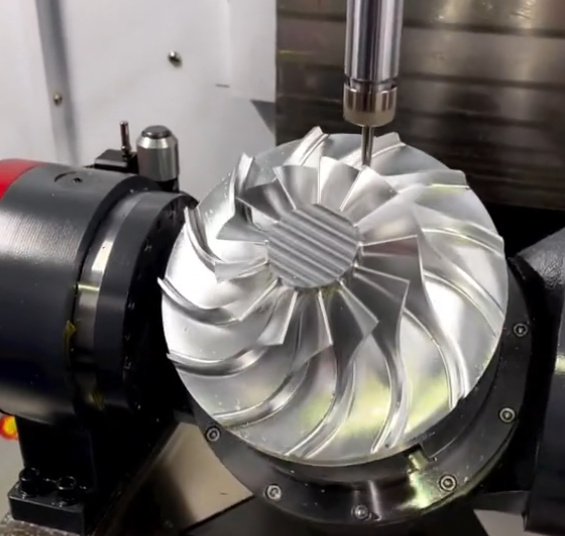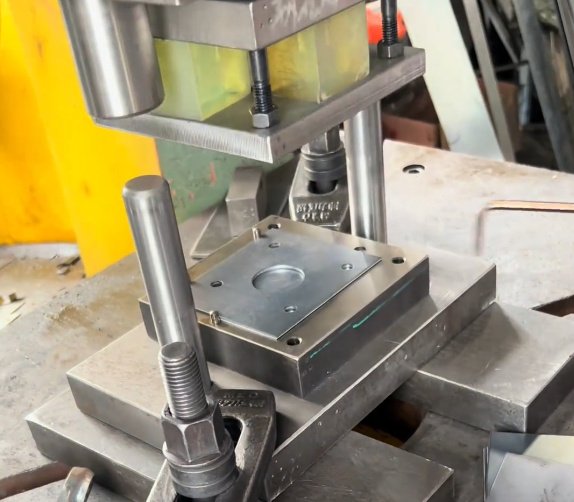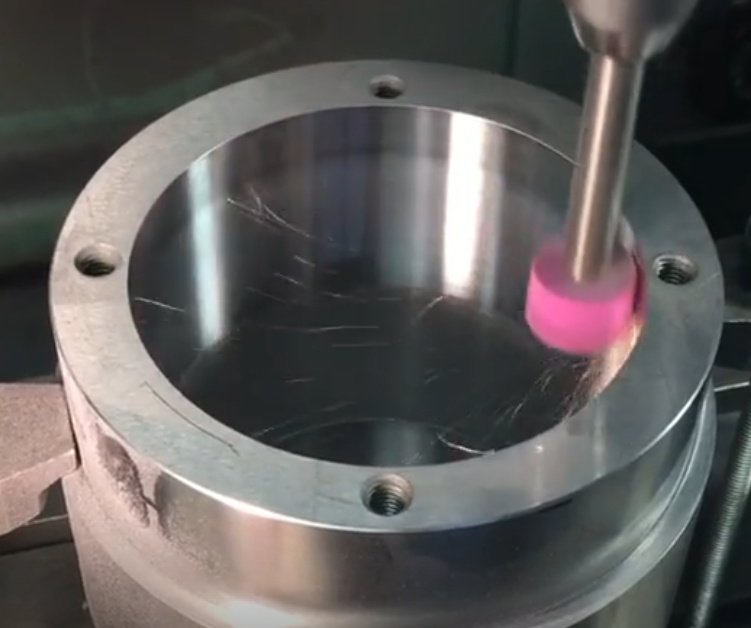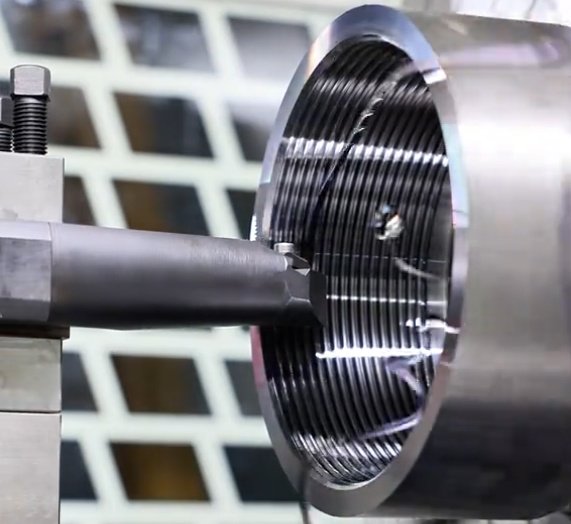
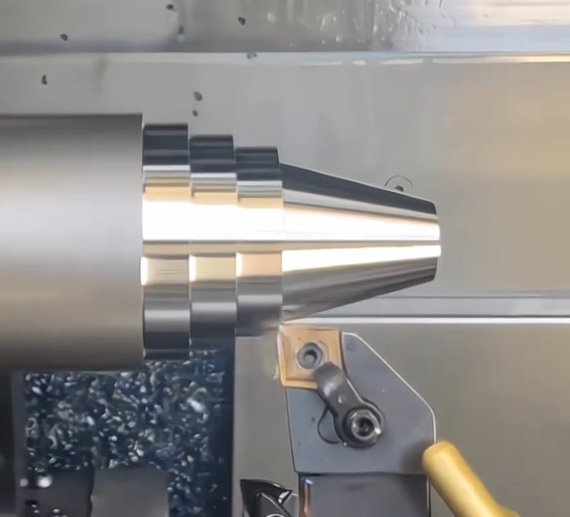
Metal turning is a subtractive machining process used to produce round, cylindrical, conical and threaded components by rotating a metal workpiece while a cutting tool removes material. It is one of the most widely used manufacturing methods for shafts, pins, bushings, spacers, couplings, valve components, hydraulic fittings, fasteners and precision prototypes.
For engineers, buyers and product developers, the value of turning is not only its speed but also its ability to hold repeatable diameters, concentric features and fine surface finishes. Modern CNC turning centers can combine facing, OD turning, ID boring, grooving, threading, drilling, reaming and live-tool milling in one setup, reducing handling error and improving production consistency.
What Is Metal Turning?
Metal turning is performed on a lathe or CNC turning center. The workpiece is clamped in a chuck, collet or between centers and rotates around its axis. A stationary or driven cutting tool moves along programmed paths to remove chips and create the required geometry.
Metal turning is best suited for axisymmetric parts, especially components where round features, tight diameters, shoulders, grooves, tapers or threads are critical. Unlike milling, where the cutting tool rotates, turning relies primarily on workpiece rotation. This makes it efficient for producing accurate circular profiles with excellent concentricity.
Common Turning Operations
- Facing: Creating a flat end surface perpendicular to the part axis.
- OD turning: Reducing or finishing the outside diameter.
- ID boring: Enlarging and finishing internal diameters.
- Drilling and reaming: Producing accurate holes along the centerline.
- Grooving: Cutting internal or external grooves for O-rings, snap rings or relief features.
- Threading: Producing external or internal threads, including metric, UNC, UNF, NPT and custom profiles.
- Parting: Separating the finished component from bar stock.
- Taper turning: Creating angled or conical surfaces.
- Knurling: Forming a textured grip surface.
CNC Turning vs Manual Turning
Manual turning is useful for repair work, one-off modifications and simple prototypes. CNC turning is preferred when dimensional repeatability, complex toolpaths, production speed and traceability are required.
| Factor | Manual Turning | CNC Turning |
|---|---|---|
| Best use | Repair, simple one-off parts, low complexity | Prototypes, production, tight tolerance parts |
| Repeatability | Operator dependent | High, typically controlled by program and setup |
| Complexity | Limited for multi-feature parts | Supports grooves, threads, tapers, live-tool features |
| Cycle time | Slower for repeat batches | Faster for repeatable production |
| Inspection control | Manual measurement based | Can integrate in-process probing and SPC |
For production purchasing, CNC turning usually provides a lower part cost when order quantities increase because setup time is distributed across more parts and toolpaths are repeatable. For very small repair jobs, manual turning may still be economical.
Materials Used in Metal Turning
Turning can machine a wide range of metals, but machinability, heat generation, tool wear and chip formation vary significantly by material. Material selection affects cutting speed, insert grade, coolant strategy, inspection plan and final cost.
| Material | Typical Turned Parts | Machining Notes |
|---|---|---|
| Aluminum 6061, 7075 | Spacers, housings, sleeves, instrument parts | Fast cutting, good finish, risk of built-up edge if tooling is poor |
| Stainless steel 303, 304, 316 | Medical parts, fittings, shafts, food equipment components | Work hardening risk; sharp tools and stable coolant are important |
| Carbon steel 1018, 1045 | Drive shafts, pins, bushings, mechanical hardware | Good general machinability; may require heat treatment or coating |
| Alloy steel 4140, 4340 | High-strength shafts, couplings, power transmission parts | Hardness strongly affects tool life and cycle time |
| Brass C360 | Fittings, electrical contacts, bushings, valve parts | Excellent machinability and chip breaking |
| Copper | Electrical connectors, heat transfer components | Ductile and gummy; requires optimized rake and chip control |
| Titanium Grade 5 | Aerospace fasteners, medical implants, high-performance shafts | Low thermal conductivity; requires rigid setup and controlled cutting parameters |
Machinability should be reviewed before finalizing a drawing because a material that looks ideal mechanically may be expensive to turn if it causes rapid insert wear, long cycle times or unstable chip evacuation.
Material selection note for buyers
If two materials meet the same strength, corrosion and temperature requirements, the more machinable option can reduce unit cost and lead time. For example, 303 stainless steel generally machines more easily than 304 stainless steel, while 316 stainless steel is often selected when corrosion resistance is more important than machining speed.
Typical Tolerances and Surface Finish in Metal Turning
Metal turning can achieve tight dimensional accuracy, but tolerance capability depends on part geometry, machine rigidity, tool condition, material behavior, thermal stability and inspection method. A practical tolerance should match the functional requirement rather than simply being as tight as possible.
| Feature Type | Common Turning Capability | Engineering Consideration |
|---|---|---|
| General turned diameter | ±0.05 mm to ±0.025 mm | Suitable for many mechanical fit and location features |
| Precision diameter | ±0.012 mm or tighter with controlled process | May require stable temperature, finishing pass and additional inspection |
| Concentricity/runout | Often within 0.02 mm to 0.05 mm depending on setup | Improved by machining related diameters in one setup |
| Surface finish | Ra 3.2 µm to Ra 0.8 µm typical; finer possible | Controlled by feed rate, nose radius, insert condition and material |
| Thread accuracy | Class-dependent | Requires correct pitch, flank angle, root clearance and gauge verification |
For high-volume production, turning tolerance should be validated using capability data such as Cp and Cpk. A feature that measures within tolerance on a prototype may still be unsuitable for production if the process is not statistically stable.
Engineering Design Guidelines for Turned Metal Parts
Design for manufacturability has a direct impact on turning cost, delivery time and quality. Small changes to a drawing can reduce tool changes, improve chip evacuation and prevent scrap.
- Use standard stock sizes where possible to reduce roughing time.
- Avoid unnecessarily tight tolerances on non-critical diameters.
- Add relief grooves for shoulders, threads and grinding transitions when required.
- Specify realistic inside corner radii that match common insert nose radii.
- Keep long slender shafts within practical length-to-diameter ratios to reduce chatter.
- Machine critical concentric features in a single setup when possible.
- Define surface finish only where function requires it, such as bearing seats or sealing surfaces.
- Use chamfers or radii to remove sharp edges and improve assembly safety.
The most common drawing issue in turned parts is over-tolerancing. A blanket ±0.01 mm tolerance may increase inspection time, tool wear and scrap without improving product function. A better approach is to assign tight tolerances only to bearing fits, sealing diameters, thread interfaces or locating shoulders.
Example: reducing chatter on a long shaft
A 12 mm diameter stainless steel shaft with a 180 mm turned length has a 15:1 length-to-diameter ratio, which is prone to vibration. Practical improvements include using a tailstock or steady rest, reducing depth of cut, using sharper positive-rake tooling, adding intermediate support, or redesigning the part with a larger diameter where function allows.
Real Engineering Problems Solved by Metal Turning
Metal turning is often selected because it solves practical manufacturing problems involving fit, rotation, sealing and repeatability. The examples below reflect common production challenges faced by machine shops and OEM engineering teams.
Case 1: Improving Concentricity on a Pump Shaft
A pump shaft required two bearing journals, a threaded end and a seal diameter. The original process used separate setups for rough turning, threading and finish turning, producing runout between 0.06 mm and 0.09 mm. By finishing the bearing journals and seal diameter in one CNC turning setup between centers, measured runout was reduced to approximately 0.018 mm, improving assembly consistency and reducing rejected shafts.
Case 2: Reducing Cycle Time on an Aluminum Spacer
An aluminum 6061 spacer required facing, drilling, boring and OD chamfering. The initial process used manual handling between machines and averaged 4.8 minutes per part. After moving the operation to a CNC turning center with bar feeding and optimized tooling, cycle time dropped to 2.1 minutes per part. For a batch of 5,000 pieces, this represented more than 225 machine hours saved before inspection and setup considerations.
Case 3: Controlling Surface Finish on a Stainless Sealing Diameter
A 316 stainless steel valve component required a sealing surface of Ra 0.8 µm. Early production showed inconsistent finish due to work hardening and insert wear. The solution used a dedicated finishing pass, high-pressure coolant, a sharper finishing insert and controlled tool life replacement. Surface finish stabilized between Ra 0.55 µm and Ra 0.75 µm during the validated production run.
Metal Turning Cost Drivers
Turning cost is influenced by more than material price. A low-cost raw material can become expensive if it requires slow feeds, frequent insert changes or extensive inspection. Buyers should evaluate the complete manufacturing route.
| Cost Driver | Why It Matters | How to Optimize |
|---|---|---|
| Material type and diameter | Affects raw material cost and metal removal time | Select near-net stock size and machinable grades |
| Tolerances | Tight tolerances require slower finishing and more inspection | Apply tight tolerances only to functional features |
| Surface finish | Fine finishes may require additional passes or polishing | Specify Ra values only where needed |
| Part length and rigidity | Long, thin parts increase vibration risk | Use support features, redesign geometry or allow process supports |
| Threading and grooves | Special profiles may require dedicated tooling | Use standard thread forms and groove widths when possible |
| Batch quantity | Setup time is divided across parts | Consolidate orders when demand is predictable |
| Inspection requirements | CMM, thread gauges and documented reports add time | Match inspection level to risk and application |
For procurement teams, the lowest quoted unit price is not always the lowest total cost. Scrap risk, late delivery, missing material certificates, inadequate thread inspection or inconsistent surface finish can create downstream assembly delays that exceed the savings from a cheaper machining source.
What information improves turning quotes?
A complete RFQ should include a 2D drawing, 3D model, material grade, tolerance requirements, surface finish requirements, quantity, annual demand estimate, heat treatment, plating or passivation requirements, inspection documentation and any critical-to-function features. Marking critical dimensions helps the supplier plan tooling and quality control correctly.
Quality Control for Turned Metal Components
Reliable metal turning requires quality control before, during and after machining. Inspection should focus on the features that affect assembly, performance and safety.
- Incoming material verification: Confirms alloy grade, hardness and certification when required.
- First article inspection: Validates setup before full production.
- In-process measurement: Checks critical diameters, lengths and tool wear trends.
- Thread gauging: Uses go/no-go gauges, pitch measurement or optical inspection for critical threads.
- Surface roughness testing: Confirms Ra values for sealing, sliding or bearing surfaces.
- Runout and concentricity checks: Important for rotating shafts and multi-diameter components.
- Final inspection report: Documents measured values and confirms drawing compliance.
For safety-critical sectors such as aerospace, medical devices, energy equipment and hydraulic systems, inspection may also include material traceability, process validation, PPAP, CMM reports, hardness testing, passivation verification or coating thickness measurement.
How to Choose a Metal Turning Supplier
Selecting a turning supplier should be based on process capability, equipment, engineering support and quality systems. A capable supplier will review drawings before production and identify risks such as chatter-prone geometry, unrealistic tolerances, difficult materials or features that require secondary operations.
- Confirm CNC lathe capacity, including maximum turning diameter, length and bar feeder capability.
- Check whether the shop supports live tooling, sub-spindle work, Swiss turning or multi-axis turning if complex features are required.
- Ask how critical dimensions are measured and documented.
- Review experience with the target material, especially stainless steel, titanium, hardened steel or copper alloys.
- Evaluate whether the supplier can handle finishing operations such as anodizing, passivation, black oxide, plating, heat treatment or grinding.
- Confirm packaging requirements for precision surfaces and threaded parts.
- Assess lead time stability, communication quality and engineering feedback.
A strong turning supplier acts as a manufacturing partner, not just a machine shop. The best results usually come from early collaboration between design engineers, buyers and machinists before tolerances, material and production volumes are locked.
Conclusion: When Metal Turning Is the Right Manufacturing Choice
Metal turning is the right choice when a part depends on accurate diameters, roundness, concentricity, threads, grooves, shoulders or high-quality rotational surfaces. It supports both prototype and production manufacturing and can deliver excellent repeatability when the design, material, tooling and inspection plan are aligned.
For engineers, the key is to define functional requirements clearly and avoid unnecessary complexity. For buyers, the key is to compare suppliers based on capability, quality control and total manufacturing risk rather than price alone. When applied correctly, CNC metal turning produces reliable, scalable and cost-effective components for industrial equipment, medical devices, automotive systems, aerospace assemblies, electronics and fluid control applications.