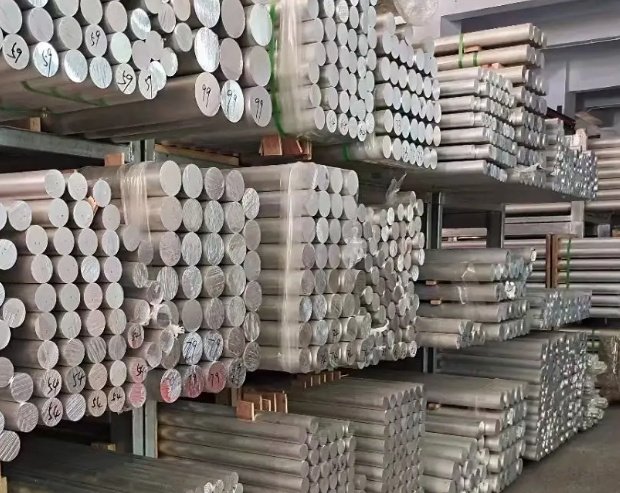
6105 aluminum is a heat-treatable 6000-series aluminum-magnesium-silicon alloy developed for extruded structural profiles that require better strength than 6063 while retaining good extrudability, corrosion resistance and surface finishing capability. It is commonly specified as Al 6105, al alloy 6105, Aluminum 6105, AA6105 or EN AW-6105 depending on the market and standard system.
For engineers, buyers and fabricators, the main search intent behind Aluminum 6105 is usually practical: determine whether it is strong enough, whether it extrudes cleanly, how it compares with 6061 or 6063, what tempers are available, and what risks appear during machining, welding, anodizing or procurement. This page addresses those decisions with property ranges, comparison tables and processing notes.
What Is Al 6105?
Al 6105 belongs to the Al-Mg-Si family of precipitation-hardenable aluminum alloys. Magnesium and silicon form Mg2Si strengthening precipitates during heat treatment, giving the alloy a useful balance of strength, dimensional stability and manufacturability.
Compared with architectural 6063, al alloy 6105 generally provides higher mechanical strength. Compared with 6061, it is often easier to extrude into complex shapes and may offer more efficient production for medium-strength profiles. These characteristics make Aluminum 6105 especially attractive for solar mounting rails, transportation profiles, ladders, platforms, brackets, frames and general industrial extrusions.
6105 Aluminum Chemical Composition
The composition below represents typical published limits for 6105 aluminum. Actual ranges should be confirmed against the purchase standard, such as ASTM B221, EN 573, EN 755 or a customer-specific material specification.
| Element | Typical Range or Maximum, wt.% | Function in Alloy |
|---|---|---|
| Aluminum | Balance | Base metal; provides low density and corrosion resistance |
| Silicon | 0.60 - 1.00 | Combines with magnesium for precipitation hardening; improves extrusion response |
| Magnesium | 0.45 - 0.80 | Main strengthening element in Mg2Si phase |
| Iron | 0.35 max. | Common impurity; excess iron can reduce ductility and surface quality |
| Copper | 0.10 max. | Usually limited to preserve corrosion resistance |
| Manganese | 0.10 max. | May influence grain structure and strength |
| Chromium | 0.10 max. | Can support grain control in limited amounts |
| Zinc | 0.10 max. | Controlled impurity |
| Titanium | 0.10 max. | Grain refiner |
| Other elements | Each 0.05 max.; total 0.15 max. | Residual control |
Typical Mechanical and Physical Properties
Mechanical properties of Aluminum 6105 depend strongly on temper, extrusion geometry, wall thickness, quenching rate and aging practice. The following values are typical reference ranges for extruded products, not a substitute for certified mill test reports.
| Property | 6105-T5 Typical Value | 6105-T6 Typical Value | Engineering Meaning |
|---|---|---|---|
| Ultimate tensile strength | 230 - 260 MPa | 250 - 290 MPa | Resistance to final tensile failure |
| 0.2% yield strength | 190 - 220 MPa | 220 - 250 MPa | Useful for load-bearing profile design |
| Elongation | 8 - 12% | 7 - 10% | Formability and fracture tolerance indicator |
| Brinell hardness | Approximately 70 - 80 HB | Approximately 75 - 85 HB | Surface indentation resistance |
| Density | 2.70 g/cm3 | 2.70 g/cm3 | About one-third the density of carbon steel |
| Elastic modulus | Approximately 69 GPa | Approximately 69 GPa | Stiffness; similar across most aluminum alloys |
| Thermal expansion | Approximately 23 - 24 μm/m·K | Approximately 23 - 24 μm/m·K | Important for long rails and outdoor assemblies |
| Thermal conductivity | Approximately 160 - 180 W/m·K | Approximately 150 - 170 W/m·K | Useful for heat dissipation but lower than pure aluminum |
Design note: stiffness is not significantly improved by choosing 6105 over 6061 or 6063 because elastic modulus is nearly the same. Strength may improve, but deflection is usually controlled by profile geometry, moment of inertia and span length.
6105-T5 vs 6105-T6: Which Temper Should Be Used?
The most common tempers for Al 6105 extrusions are T5 and T6. T5 is cooled from an elevated-temperature shaping process and artificially aged. T6 is solution heat treated and artificially aged, usually delivering higher strength but requiring tighter process control.
| Temper | Main Advantage | Typical Limitation | Best-Fit Applications |
|---|---|---|---|
| 6105-T5 | Good extrusion productivity, stable dimensional control and reliable strength | Lower strength than T6 | Solar rails, medium-duty frames, ladders, industrial profiles |
| 6105-T6 | Higher tensile and yield strength | More sensitive to quench uniformity, distortion and cost | Higher-load brackets, transport structures, profiles requiring increased yield margin |
Engineer and buyer perspective: when T5 is better than T6
T6 is not automatically the best choice. If the profile is long, thin-walled or dimensionally sensitive, 6105-T5 may reduce straightness problems, twisting and post-heat-treatment handling risk. For a solar rail or conveyor frame, a stable T5 extrusion with optimized cross-section can be more economical than a T6 profile that requires added straightening, tighter inspection and longer lead time.
Aluminum 6105 vs 6063, 6061, 6005A and 6082
Alloy selection often depends on whether the project values extrusion complexity, strength, surface finish, weldability, availability or cost. The table below summarizes common engineering trade-offs.
| Alloy | Relative Strength | Extrudability | Surface Finish / Anodizing | Typical Reason to Choose It |
|---|---|---|---|---|
| 6105 | Medium to medium-high | Good to very good | Good | Balanced choice for structural extrusions needing better strength than 6063 |
| 6063 | Low to medium | Excellent | Excellent | Architectural profiles, decorative trim, complex thin-wall sections |
| 6061 | Medium-high | Moderate | Good, but usually less decorative than 6063 | General structural parts, machined components, plates and bars |
| 6005A | Medium to medium-high | Good | Good | Rail, vehicle, platform and profile applications in European specifications |
| 6082 | High among 6000-series alloys | Lower than 6063 and often lower than 6105 | Moderate to good | Higher-strength structural applications, especially where plate or bar is required |
Practical selection rule: use 6063 when appearance and complex extrusion dominate, 6061 or 6082 when higher general structural strength is the priority, and 6105 when an extruded profile needs a strong balance of manufacturability, strength and corrosion resistance.
Processing, Fabrication and Surface Treatment
Extrusion
Aluminum 6105 is primarily used as an extrusion alloy. It supports hollow, semi-hollow and solid profiles, although final feasibility depends on circumscribed circle diameter, wall thickness ratio, tongue ratio, die design and press capacity. For structural extrusions, designers should avoid abrupt wall transitions, deep unsupported tongues and unnecessary mass concentration because these features can cause die lines, tearing, sink marks or uneven quenching.
Machining
Al 6105 machines well in T5 and T6 tempers using carbide tools, high cutting speed and adequate chip evacuation. Compared with softer tempers, aged 6105 produces more stable chips and better dimensional repeatability. For tight-tolerance CNC parts, buyers should specify straightness, twist, cut-length tolerance and any post-machining anodizing allowance.
Welding
6105 aluminum can be welded by MIG or TIG processes. Common filler choices include 4043 for good fluidity and reduced crack sensitivity, or 5356 where higher as-welded strength and color matching after anodizing may be more important. Like other heat-treatable 6000-series alloys, strength in the heat-affected zone may decrease after welding.
Bending and Forming
Forming is easier in softer or under-aged conditions and more restrictive in T5 or T6. If bending is required after extrusion, the minimum bend radius should be validated with trial parts. Sharp bends across hard tempers may cause edge cracking, especially in profiles with non-uniform wall thickness.
Anodizing, Powder Coating and Corrosion Resistance
6105 has good atmospheric corrosion resistance and is suitable for anodizing and powder coating. For architectural appearance, lot-to-lot billet chemistry, extrusion parameters and surface handling should be controlled to reduce color variation, streaking and die line visibility.
Procurement perspective: processing details to include on a drawing or RFQ
- Alloy and temper: for example, Aluminum 6105-T5 or 6105-T6.
- Applicable standard: ASTM B221, EN 755, EN 573 or project-specific specification.
- Profile drawing with wall thickness, critical dimensions and tolerance class.
- Mechanical property requirement and whether mill test certificates are mandatory.
- Surface condition: mill finish, anodized thickness, powder coating grade or pre-treatment.
- Length tolerance, straightness, twist, packing method and acceptable cosmetic limits.
Common Applications of Al Alloy 6105
Al alloy 6105 is most valuable where a profile must be extruded efficiently while still carrying meaningful load. Common applications include:
- Solar photovoltaic mounting rails, clamps, splice bars and support frames
- Truck, trailer, rail and bus extrusions
- Industrial platforms, walkways, guardrails and ladder components
- Machine frames, conveyor structures and automation equipment profiles
- Electrical and thermal management housings where moderate conductivity is useful
- Marine-adjacent and outdoor frames when protected by anodizing or coating
- Custom hollow and semi-hollow profiles requiring moderate structural strength
Engineering Example: Solar Rail Strength and Deflection
A common engineering problem is selecting a rail alloy for a rooftop solar installation. Suppose a 2.4 m aluminum rail span must support distributed wind and snow loading. If the rail geometry is unchanged, replacing 6063-T5 with 6105-T5 may increase yield-strength margin, but deflection will remain nearly unchanged because both alloys have an elastic modulus of about 69 GPa.
| Material Condition | Typical Yield Strength | Elastic Modulus | Expected Effect |
|---|---|---|---|
| 6063-T5 | Approximately 145 - 170 MPa | Approximately 69 GPa | Good extrudability and appearance, lower yield margin |
| 6105-T5 | Approximately 190 - 220 MPa | Approximately 69 GPa | About 20 - 45% higher yield strength range, similar deflection |
| 6105-T6 | Approximately 220 - 250 MPa | Approximately 69 GPa | Higher strength margin, but may require tighter processing control |
Data-driven result: if stress is the limiting factor, 6105 can allow a safer design margin or potential weight optimization. If deflection is the limiting factor, increasing section moment of inertia is usually more effective than changing from 6063 to 6105 alone.
Real-world design implication for solar and outdoor frames
For long outdoor extrusions, thermal expansion can be significant. A 6 m Aluminum 6105 rail exposed to a 50°C temperature swing may change length by roughly 7 mm using a thermal expansion coefficient near 23.5 μm/m·K. Slot design, splice clearance and fastener strategy should account for this movement to prevent noise, buckling, seal damage or clamp loosening.
Advantages and Limitations of Aluminum 6105
| Advantages | Limitations |
|---|---|
| Higher strength than 6063 in many tempers | Not as universally stocked as 6061 or 6063 in some regions |
| Good extrudability for structural profiles | Strength depends strongly on quench and aging control |
| Good corrosion resistance in atmospheric environments | Welded heat-affected zones may lose strength |
| Suitable for anodizing and powder coating | Decorative finish may not equal premium 6063 architectural quality |
| Good balance of strength, weight and manufacturability | Deflection is not improved versus other aluminum alloys of similar modulus |
How to Specify and Source 6105 Aluminum
To avoid ambiguity, specify more than just “Aluminum 6105.” A complete material line should include alloy, temper, product form, standard, surface condition and inspection requirements. For example: “AA 6105-T5 extruded profile, ASTM B221, mill finish, mechanical properties certified, cut to 3000 mm ±1.0 mm.”
Buyer-focused recommendation: request a mill test certificate showing chemistry, tensile strength, yield strength, elongation and temper. For critical profiles, also require dimensional inspection, straightness records and surface acceptance criteria before shipment.
Key questions before purchasing
- Is the design controlled by strength, stiffness, appearance, corrosion resistance or cost?
- Is 6105-T5 sufficient, or is 6105-T6 required for the safety factor?
- Will the part be welded, bent, machined, anodized or powder coated after extrusion?
- Are there long-span deflection limits that require cross-section redesign?
- Is the supplier experienced with the required wall thickness, die complexity and tolerance class?
Summary
Aluminum 6105 is a practical 6000-series extrusion alloy for engineers and buyers who need a stronger alternative to 6063 without moving fully to alloys that may be harder to extrude. It offers good corrosion resistance, reliable surface treatment options, useful mechanical properties in T5 and T6 tempers, and strong suitability for solar rails, transportation profiles, industrial frames and structural extrusions.
The best use of Al 6105 is not simply choosing a stronger alloy; it is matching alloy, temper, profile geometry, heat treatment, finishing and inspection requirements to the actual engineering load case. When specified correctly, al alloy 6105 can deliver a highly efficient combination of weight reduction, manufacturability and structural performance.