
Hastelloy Machining Services
Hastelloy machining requires more than standard CNC capacity. These nickel-based superalloys are selected for chemical resistance, high-temperature stability and severe-service reliability, but they are also known for rapid work hardening, abrasive tool wear, low thermal conductivity and high cutting forces. Our Hastelloy CNC machining services focus on stable process control, correct tooling strategy and verified dimensional accuracy for production parts, prototypes and replacement components.
- Fast prototype & low MOQ support
- Tight tolerance up to +0.002mm
- Surface finishing available
- Engineering review before production
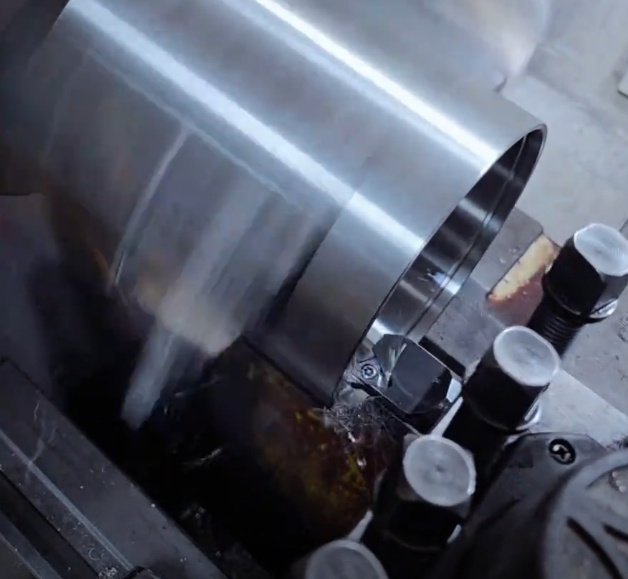
CNC Machining Capabilities for Hastelloy Parts
We machine Hastelloy components for chemical processing, oil and gas, aerospace, marine, pharmaceutical equipment, pollution control systems and high-corrosion industrial assemblies. Typical parts include valve bodies, pump components, seal glands, manifolds, sleeves, bushings, nozzles, reactor fittings, instrumentation parts, heat-resistant brackets and custom CNC components used in chloride, acid and elevated-temperature environments. Our Hastelloy machining services include CNC milling, CNC turning, drilling, boring, threading, tapping, reaming, profiling and finishing operations for complex nickel alloy components. Depending on geometry, parts may be produced from bar stock, plate, billet, forged blanks, cast blanks or customer-supplied material.
Precision Milling
- Multi-axis CNC milling for complex geometries.
- Tight tolerances as tight as ±0.002mm and fine surface finishes.
- Suitable for prototypes and mass production.
CNC Turning
- High-speed turning for shafts, rods, and cylindrical parts.
- Thread cutting, grooving, and facing operations.
- Supports both small and large batch production.
Drilling, Tapping & Boring
- CNC drilling for holes of all sizes and depths.
- Threading and tapping for assemblies.
- High repeatability for precision alignment.
Multi-Axis Machining
- 4-axis and 5-axis machining for intricate parts.
- Reduced setups and improved accuracy.
- Ideal for aerospace, automotive, and medical components.
Secondary Operations
- Deburring, grinding, tapping, honing, keyways, broaching support.
- Specialized processes for hard-to-machine metals.
- Used when critical surfaces, fit, or assembly requirements exceed standard machining
CNC Prototyping
- Rapid CNC prototyping to test designs quickly.
- Small batch to full-scale production runs.
- Flexible workflow to meet tight deadlines.
Engineering Problems We Solve in Hastelloy Machining
Rapid insert failure during C276 turning
A valve trim component in Hastelloy C276 experienced notch wear before the first piece was complete. The original process used light finishing passes that rubbed the surface and created a hardened layer. By increasing feed enough to maintain chip formation, reducing dwell, changing insert geometry and controlling depth of cut, tool life improved from fewer than 2 parts per edge to 7-9 parts per edge in a stable production run.Burr formation on intersecting holes
A chemical processing manifold required intersecting drilled passages with no loose burrs. Standard drilling created heavy breakout burrs inside the cross-holes. A revised sequence using pilot control, staged drilling, CNC deburring paths and borescope inspection reduced internal rework time by approximately 40% and improved inspection consistency.Flatness drift after heavy milling
A plate-style Hastelloy C22 component lost flatness after roughing because heat and clamping stress were not balanced. The machining plan was revised with symmetrical stock removal, stress-relief pauses between operations, improved fixture support and a controlled finishing pass. Final flatness variation was reduced from 0.18 mm to less than 0.05 mm across the inspected surface.Inconsistent thread quality in blind holes
A blind threaded feature in Hastelloy X caused tap wear and occasional tool breakage. The process was converted to thread milling with controlled coolant and a verified thread gauge plan. Scrap risk decreased because thread size could be adjusted by CNC offset rather than depending on a single tap condition.
Hastelloy Grades We Commonly Machine
Different Hastelloy grades behave differently in the cut. Grade selection also affects coolant strategy, surface finish expectations, tool wear pattern and deburring difficulty. The table below summarizes common machining considerations.
| Hastelloy Grade | Common Use | Machining Notes |
|---|---|---|
| Hastelloy C276 | Chemical processing, flue gas desulfurization, sour gas, acid service | One of the most requested grades; high toughness and work hardening require rigid fixturing and conservative speed selection. |
| Hastelloy C22 | Chloride environments, pharmaceutical and chemical equipment | Excellent corrosion resistance; careful toolpath planning helps reduce burrs and maintain sealing surfaces. |
| Hastelloy B2 | Hydrochloric acid service and reducing environments | Generally machined with positive rake tools and continuous chip formation control. |
| Hastelloy B3 | Improved thermal stability compared with B2 in corrosive service | Requires attention to heat input and surface integrity for corrosion-critical components. |
| Hastelloy X | High-temperature aerospace and gas turbine components | Heat-resistant behavior increases tool temperature; carbide and ceramic strategies may be evaluated by geometry. |
| Hastelloy G30 / G35 | Phosphoric acid, nitric acid and mixed acid systems | Surface finish and edge condition are often important for corrosion and cleanability requirements. |
What Makes Hastelloy Difficult to Machine?
Hastelloy is a family of nickel-based alloys commonly strengthened with molybdenum, chromium, iron, cobalt or tungsten. Grades such as C276, C22, B2, B3 and X are engineered to resist pitting, crevice corrosion, oxidation, reducing acids or high-temperature degradation. The same metallurgical properties that make the material valuable in service also create machining challenges.
- Low thermal conductivity: heat stays concentrated at the cutting edge instead of flowing into the chip, increasing tool temperature.
- High strength at temperature: Hastelloy does not soften easily during cutting, so cutting forces remain high.
- Rapid work hardening: rubbing, light cuts or dwell marks can harden the surface and damage the next pass.
- Abrasive alloying elements: molybdenum, chromium and tungsten can accelerate flank wear and notch wear.
- Tendency to burr: ductility and toughness often create heavy burrs at edges, holes and grooves.
For this reason, successful Hastelloy machining depends on sharp tools, rigid setups, positive cutting action, adequate chip evacuation, controlled feeds and coolant delivery that reaches the cutting zone. In practice, work hardening must be prevented rather than corrected, because once a hardened layer forms, tool life and dimensional stability can decline quickly.
Process Control: Cutting Tools, Coolant and Workholding
| Process Area | Common Practice | Engineering Purpose |
|---|---|---|
| Tooling | Sharp carbide tools, positive rake geometry, wear-resistant coatings | Reduces cutting pressure and delays notch wear. |
| Coolant | Flood coolant, through-tool coolant or high-pressure coolant when geometry allows | Controls heat, improves chip evacuation and reduces built-up edge. |
| Feeds and speeds | Conservative surface speed with sufficient feed to cut under the work-hardened layer | Prevents rubbing and maintains predictable chip formation. |
| Workholding | Rigid fixtures, soft jaws, custom nests or vacuum-free mechanical clamping | Minimizes vibration and protects high-value material. |
| Toolpath | Constant engagement milling, smooth entry and exit, no dwell at corners | Limits thermal shock and reduces localized hardening. |
| Deburring | Controlled manual, mechanical or micro-deburring methods | Maintains edge quality without damaging sealing surfaces. |
Typical machining parameter considerations
Published cutting data for Hastelloy varies by grade, hardness, tool manufacturer, coolant delivery and machine rigidity. In many CNC applications, shops use lower surface speeds than stainless steel while maintaining enough chip load to avoid rubbing. Final parameters should be validated on the actual grade, setup and feature geometry rather than copied from a generic chart.
Tolerances, Surface Finish and Inspection
Hastelloy parts often serve in assemblies where leakage, corrosion resistance, temperature cycling or chemical exposure makes dimensional reliability critical. We support precision machining requirements for sealing faces, bores, grooves, threaded ports, flatness-critical surfaces and mating features.
- Typical CNC milling and turning tolerances can be held to drawing requirements when geometry and material condition allow.
- Critical bores, counterbores and sealing diameters can be inspected with bore gauges, air gauges, CMM or calibrated measuring equipment.
- Surface finish requirements such as Ra 0.8 μm to Ra 3.2 μm may be achievable depending on feature access, grade and operation type.
- Deburring and edge break requirements are controlled to avoid crevice points, loose burrs or damaged sealing areas.
- First article inspection, in-process checks and final inspection can be documented for production lots.
For corrosion-duty parts, surface integrity is more than appearance. Excessive smearing, embedded contamination, sharp tool marks or overheated surfaces can affect how the component performs in chemical service. We evaluate the machining sequence to help preserve functional surfaces.
Design Guidance for Machined Hastelloy Components
- Avoid extremely sharp internal corners: add practical radii where the design permits to improve tool access and reduce cutting stress.
- Specify only necessary tight tolerances: over-tolerancing Hastelloy can significantly increase finishing time and inspection cost.
- Use thread milling for difficult threads: especially in blind holes, large threads or expensive near-finished components.
- Allow realistic edge breaks: define burr limits and edge conditions clearly for sealing, handling or assembly requirements.
- Identify sealing and corrosion-critical surfaces: mark surfaces that require controlled finish, no scratches or special handling.
- Consider stock condition: forged, cast, hot-rolled and annealed stock may machine differently and influence final stability.
Recommended drawing notes for Hastelloy parts
Useful notes may include material grade and specification, heat condition, required mill certificate, surface finish callouts, passivation or cleaning requirements if applicable, edge break limits, burr acceptance criteria, inspection datum scheme and whether substitute nickel alloys are allowed. Clear notes reduce purchasing ambiguity and help preserve the intended corrosion performance.
Quality Documentation and Material Traceability
Many Hastelloy components are used in regulated or high-liability systems, so documentation is part of the manufacturing requirement. We can support material and inspection documentation based on purchase order and drawing requirements.
- Material certificates and heat lot traceability
- Dimensional inspection reports
- First article inspection reports when required
- CMM inspection for complex profiles and true position requirements
- Surface finish measurement for critical areas
- Thread gauge and plug gauge verification
- Production lot records for repeat CNC machining orders
For high-risk applications, single-source traceability from material receipt to final inspection helps reduce uncertainty and supports long-term maintenance, replacement and compliance records.
Industries and Applications
| Industry | Typical Machined Hastelloy Parts | Performance Requirement |
|---|---|---|
| Chemical processing | Valve bodies, nozzles, reactor fittings, manifolds | Resistance to acids, chlorides and aggressive media |
| Oil and gas | Sleeves, seals, downhole components, instrumentation parts | Sour service, high pressure and corrosion resistance |
| Aerospace | Heat shields, brackets, turbine-related components | Strength and oxidation resistance at elevated temperature |
| Marine | Fastening components, pump parts, corrosion-resistant fittings | Saltwater and chloride resistance |
| Pharmaceutical and clean process | Fittings, flow components, custom machine parts | Cleanability, surface finish and chemical compatibility |
| Environmental systems | Scrubber parts, flue gas components, spray nozzles | Resistance to mixed corrosive gases and condensates |
Hastelloy Machining Compared With Stainless Steel and Titanium
| Material | Machining Behavior | Common Reason for Selection |
|---|---|---|
| 316 Stainless Steel | Easier than Hastelloy; can still work harden | General corrosion resistance and cost balance |
| Duplex Stainless Steel | Higher strength than austenitic stainless; moderate difficulty | Chloride stress corrosion resistance and strength |
| Titanium Grade 5 | Low thermal conductivity and springiness; different tool wear pattern | High strength-to-weight ratio and biocompatibility |
| Inconel 625 / 718 | Difficult nickel alloy machining; heat and work hardening concerns | High-temperature strength, oxidation resistance and fatigue performance |
| Hastelloy C276 / C22 | Difficult; requires careful heat, burr and tool wear control | Severe corrosion resistance in chemical environments |
When should Hastelloy be considered instead of stainless steel?
Hastelloy should be considered when the service environment includes strong acids, chlorides, mixed chemical media, localized corrosion risk or elevated temperatures that exceed the reliable capability of stainless steel. Final material selection should be based on the chemical concentration, temperature, pressure, exposure time and applicable industry standards.
Information Needed for Accurate Hastelloy CNC Machining Planning
Accurate planning for Hastelloy machining depends on complete engineering data. The most useful information includes the 2D drawing, 3D CAD model, alloy grade, material specification, heat condition, required quantity, critical tolerances, surface finish requirements, inspection documentation and any special cleaning or packaging requirements.
- Preferred CAD formats: STEP, IGES, Parasolid, SolidWorks, NX or other neutral 3D files
- Preferred drawing formats: PDF with tolerances, notes and revision control
- Material information: Hastelloy grade, ASTM/ASME/AMS specification if applicable, heat treatment or annealed condition
- Functional requirements: sealing surfaces, pressure boundaries, corrosion-critical areas and mating components
- Inspection requirements: CMM report, first article, certificate of conformance, material test report or customer-specific format
The strongest Hastelloy machining outcomes come from aligning design intent, material condition, CNC strategy and inspection criteria before metal is cut. In high-value nickel alloy parts, early engineering review can prevent tool failure, scrap, rework and delivery delays.