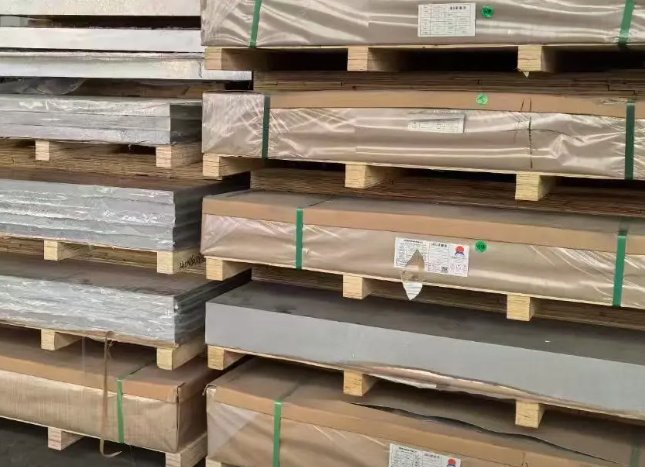
3004 Aluminum, also written as Al 3004 or al alloy 3004, is a non-heat-treatable aluminum-manganese alloy strengthened primarily by cold working. It belongs to the 3xxx series and is widely selected when engineers need a practical balance of formability, moderate strength, corrosion resistance and high-volume manufacturability.
Aluminum 3004 is especially important in beverage can bodies, closure stock, roofing sheet, siding, storage tanks, lighting components, pressure-formed parts and painted coil applications. Compared with 3003 aluminum, 3004 normally provides higher strength because it contains magnesium in addition to manganese. Compared with 5xxx marine alloys such as 5052, it is usually easier to deep draw in can-making operations but has lower resistance to severe marine exposure.
What Is 3004 Aluminum?
3004 aluminum is an Al-Mn-Mg wrought aluminum alloy. It cannot be strengthened by heat treatment like 6061 or 7075. Instead, its mechanical properties are controlled by rolling reduction, strain hardening and partial annealing. Common commercial product forms include sheet, coil, strip, plate, painted coil and slit coil.
| Item | Information |
|---|---|
| Alloy family | 3xxx aluminum-manganese series |
| Main strengthening method | Cold working / strain hardening |
| Heat treatable | No |
| Typical product forms | Sheet, coil, strip, plate, painted aluminum coil |
| Common tempers | O, H12, H14, H16, H18, H19, H32, H34, H36, H38 |
| Typical standards | ASTM B209, EN 485, AMS and customer-specific mill standards depending on region and product |
Typical Chemical Composition of Al 3004
The defining chemistry of al alloy 3004 is the combination of manganese and magnesium. Manganese improves strength and grain structure, while magnesium increases work-hardening response and tensile strength. Exact composition limits should be verified against the applicable standard and purchase specification.
| Element | Typical range, weight % | Engineering relevance |
|---|---|---|
| Aluminum | Balance | Provides low density, corrosion resistance and high recyclability |
| Manganese | 1.0 - 1.5 | Improves strength and controls recrystallized grain structure |
| Magnesium | 0.8 - 1.3 | Raises strength and work-hardening capacity |
| Iron | Up to about 0.7 | Affects ductility, surface quality and formability if excessive |
| Silicon | Up to about 0.3 | Can influence formability and surface response |
| Copper | Up to about 0.25 | May influence strength and corrosion behavior |
| Zinc | Up to about 0.25 | Usually controlled as a minor element |
Values above are typical industry ranges and are not a substitute for a certified mill test report. For regulated packaging, food-contact or pressure applications, buyers should request full chemical certification, temper verification and applicable compliance documentation.
3004 Aluminum Mechanical Properties by Temper
Mechanical properties of 3004 aluminum vary significantly by temper. Soft O temper provides maximum ductility, while H18 and H19 tempers provide higher strength with reduced elongation. For forming-intensive parts, specifying only the alloy is not enough; the temper, thickness tolerance and forming direction also matter.
| Temper | Tensile strength, MPa | Yield strength, MPa | Elongation, % | Typical use |
|---|---|---|---|---|
| O | 150 - 200 | 60 - 90 | 15 - 25 | Deep forming, spinning, severe bending |
| H12 | 170 - 215 | 120 - 160 | 6 - 12 | Moderate forming with improved strength |
| H14 | 190 - 240 | 145 - 190 | 4 - 10 | General sheet metal and panels |
| H16 | 220 - 270 | 175 - 220 | 3 - 7 | Stiffer formed components |
| H18 | 250 - 290 | 220 - 260 | 2 - 5 | High-strength sheet where limited forming is required |
| H19 | 270 - 310 | 240 - 280 | 1 - 4 | Beverage can body stock and high-speed production |
| H34 | 210 - 260 | 150 - 210 | 4 - 10 | Pre-painted coil, roofing, siding and building sheet |
3004-H19 is commonly associated with beverage can body stock because it can reach high strength after controlled rolling while still supporting the drawing and ironing process. However, the final performance depends on earing control, lubrication, surface cleanliness, gauge consistency and tool condition.
Physical Properties and Design Values
Aluminum 3004 shares many physical characteristics with other wrought aluminum alloys: low density, good thermal conductivity, good electrical conductivity and a naturally protective oxide film. These values make it suitable for lightweight structures, heat-dissipating parts and corrosion-resistant sheet products.
| Property | Typical value | Design implication |
|---|---|---|
| Density | About 2.72 g/cm³ | Approximately one-third the density of carbon steel |
| Melting range | About 630 - 655°C | Relevant for brazing, heat exposure and recycling |
| Elastic modulus | About 69 GPa | Deflection is often higher than steel at the same geometry |
| Thermal conductivity | Approximately 160 - 180 W/m·K | Useful for heat transfer, cookware and lighting housings |
| Electrical conductivity | About 37 - 42% IACS | Good but lower than high-purity electrical aluminum |
| Corrosion resistance | Good in atmospheric and mildly chemical environments | Can be improved with coating, anodizing or painting |
3004 Aluminum vs 3003, 3104, 5052 and 6061
Many searches for Aluminum 3004 are comparison-driven. Engineers and buyers often want to know whether 3004 can replace 3003, 3104, 5052 or 6061. The answer depends on strength target, forming severity, corrosion environment, joining method and cost tolerance.
| Alloy | Main difference from 3004 | Advantages | Limitations | Typical decision point |
|---|---|---|---|---|
| 3003 | Lower magnesium content; generally lower strength | Excellent formability, broad availability, economical | Lower strength than 3004 in comparable tempers | Use 3003 for easier forming; use 3004 when higher strength is needed |
| 3104 | Similar can-stock alloy with optimized chemistry for containers | Excellent performance in beverage can bodies | Often more specialized supply chain | Use 3104 when can-making specifications require it; use 3004 for broader sheet and coil applications |
| 5052 | Higher magnesium content; stronger corrosion resistance in marine environments | Better marine corrosion resistance and fatigue behavior | Can be less suitable for some high-speed deep drawing operations | Use 5052 for marine panels and fuel tanks; use 3004 for can bodies, roofing and formed packaging |
| 6061 | Heat-treatable Al-Mg-Si alloy | High strength after T6 heat treatment, good machinability | Lower formability in T6; different welding strength behavior | Use 6061 for machined structural parts; use 3004 for formed sheet and coil |
A useful rule is that 3004 sits between easy-forming 3003 and higher-corrosion-resistance 5052. It is not a direct substitute for heat-treated structural alloys where minimum yield strength is the controlling design requirement.
Buyer and engineer view: when 3004 is the better choice
Choose Al 3004 when the part is produced from sheet or coil, needs better strength than 3003, and must still support drawing, bending, roll forming or coating. Typical buying priorities include consistent gauge, flatness, surface cleanliness, coil ID, edge condition, paint compatibility and mill test certification.
Avoid specifying 3004 only by name. A complete order should include alloy, temper, thickness, width, tolerance standard, surface finish, coating requirement if any, coil weight, packaging method and inspection criteria.
Key Applications of Aluminum 3004
The most recognized use of al alloy 3004 is beverage can body stock, but the alloy is also used across construction, packaging and general industrial fabrication. Its combination of strength and formability makes it valuable where thin-gauge metal must survive forming without tearing.
- Beverage cans: can bodies, drawn and ironed containers, light-gauge packaging stock.
- Building products: roofing sheet, siding, rain gutters, pre-painted aluminum coil and architectural panels.
- Storage and transport: tanks, pressure-formed housings, liquid containers and insulation jacketing.
- Lighting and electrical: lamp bases, reflectors, fixtures and heat-dissipating sheet components.
- Cookware and household products: formed pans, appliance panels and stamped consumer goods.
- HVAC and general fabrication: duct components, formed covers, panels and rolled sheet metal parts.
In building applications, 3004-H34 and similar tempers are often selected for coated coil because they combine panel stiffness, corrosion resistance and formability during roll forming. In packaging, surface quality and lubricant control can be as important as nominal tensile strength.
Processing, Forming, Welding and Machining
3004 aluminum is usually processed as sheet or coil, so its manufacturing behavior is dominated by rolling, blanking, forming, drawing, ironing, coating and finishing. The alloy is weldable by conventional aluminum welding methods, but the designer should account for softened heat-affected zones because 3004 is strain-hardened rather than precipitation-hardened.
Forming and Deep Drawing
Deep drawing and ironing performance is one of the strongest reasons to specify 3004. In can manufacturing, small changes in texture, earing, lubrication and gauge can create large differences in scrap rate. For general forming, O and H12 tempers offer better ductility, while H16 to H19 provide higher strength with reduced bendability.
- Use larger bend radii for harder tempers to reduce cracking risk.
- Confirm grain direction for visible bends, stamped panels and tight radii.
- Control edge burrs after slitting or blanking because burrs can initiate tearing.
- Use compatible lubricants for deep drawing, spinning and ironing operations.
Welding and Joining
3004 can be joined by TIG welding, MIG welding, resistance welding, mechanical fastening, clinching, adhesive bonding and seaming. Filler alloy selection depends on service environment, color match, crack sensitivity and strength requirements. For welded assemblies, final strength near the weld may be lower than the cold-worked base metal because welding locally anneals the material.
Machining
Machinability is fair but not as strong as free-machining alloys. Harder tempers generally cut cleaner than O temper. Sharp tools, positive rake geometry, suitable coolant and chip evacuation help reduce built-up edge. For precision machined parts, 6061-T6 is often a better choice; for formed sheet with minor trimming or drilling, 3004 is practical.
Surface Finishing
Aluminum 3004 can be painted, chemically converted, lacquered, anodized in some applications and coated for food or beverage packaging. For pre-painted coil, surface cleanliness, pretreatment chemistry and bake cycle should be matched to the coating system.
Real engineering issue: reducing cracking in roll-formed 3004-H34 panels
A typical failure mode in 3004-H34 architectural panels is edge cracking during tight roll forming. In one practical troubleshooting approach, the manufacturer increased the inside bend radius from approximately 1.0t to 1.5t, specified a lower burr height after slitting, and aligned the most severe bends more favorably relative to rolling direction.
The result was a measurable reduction in edge splits during production trials. Although exact results depend on tooling and material lot, this type of process correction commonly reduces scrap by addressing three root causes at once: excessive local strain, burr-driven crack initiation and unfavorable grain direction.
Corrosion Resistance and Environmental Performance
3004 aluminum has good general corrosion resistance in atmospheric environments due to its stable aluminum oxide film. It performs well in roofing, siding, packaging and interior industrial environments. For marine splash zones, strongly alkaline cleaners, chloride-heavy exposure or galvanic contact with dissimilar metals, additional corrosion control is recommended.
Protective strategies include organic coating, anodizing where appropriate, conversion coating, isolation from steel fasteners, controlled drainage and avoidance of stagnant electrolyte traps. Correct alloy selection plus surface protection is more reliable than relying on nominal corrosion resistance alone.
| Condition | Risk | Recommended action |
|---|---|---|
| Outdoor architectural exposure | Weathering, staining, coating breakdown | Use painted or coated coil and specify pretreatment quality |
| Marine or chloride-rich atmosphere | Pitting and accelerated surface attack | Consider 5052 or enhanced coating systems |
| Contact with carbon steel | Galvanic corrosion when wet | Use isolation washers, sealants or compatible fasteners |
| Food or beverage contact | Product interaction or flavor change | Use approved internal coatings and packaging-grade specifications |
Product Forms, Tolerances and Procurement Notes
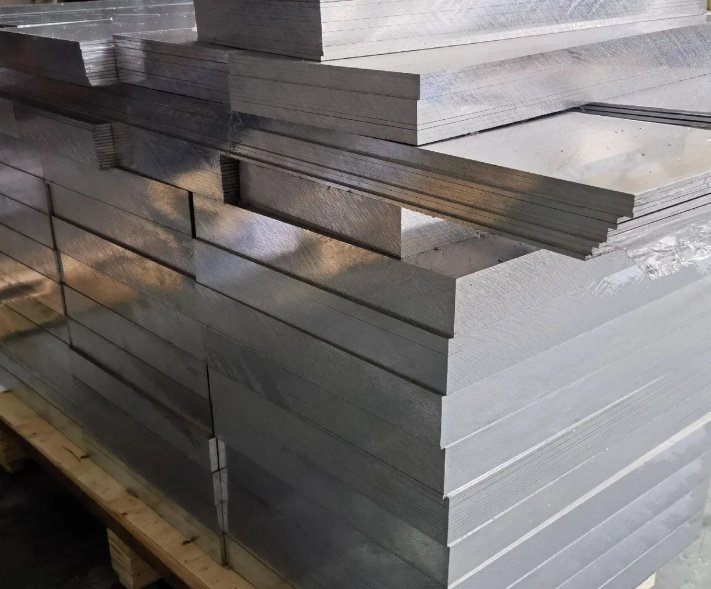
3004 aluminum is commonly purchased as coil or sheet. Coil is preferred for stamping, roofing, siding, can stock and automated production lines. Sheet is preferred for fabrication, prototyping, panels and lower-volume manufacturing. The procurement challenge is not just finding Aluminum 3004, but matching the material condition to the production process.
| Specification item | Why it matters | Typical buyer note |
|---|---|---|
| Temper | Controls strength and ductility | Do not substitute H14 for H34 or H19 without forming approval |
| Thickness and tolerance | Affects weight, forming load and final stiffness | Request actual mill tolerance, not only nominal gauge |
| Width and edge condition | Influences blanking yield and crack risk | Specify slit edge, trimmed edge, burr limit and camber if critical |
| Surface finish | Affects painting, appearance and forming lubrication | Define mill finish, coated, embossed, brushed or pre-painted condition |
| Flatness and coil set | Important for panels and automated feed lines | State flatness requirements for visible or precision parts |
| Certification | Confirms chemistry and mechanical properties | Require mill test certificate and standard compliance |
Procurement checklist for engineers and purchasing teams
- Confirm whether the application needs 3004, 3004-H34, 3004-H19 or another exact temper.
- Request chemical composition and mechanical properties on the mill test report.
- Define sheet or coil dimensions, ID, OD, maximum coil weight and packaging method.
- Specify surface requirements such as oil level, paint system, protective film or food-grade coating.
- Ask for sample coils or trial sheets before switching from 3003, 3104, 5052 or 6061.
- Validate forming performance under actual production speed, tooling and lubricant conditions.
Engineering Advantages and Limitations
The main advantage of Al 3004 is its balanced performance in high-volume formed sheet products. It provides higher strength than 3003 while remaining suitable for deep drawing and roll forming. It is also lightweight, recyclable and compatible with modern coating systems.
| Strengths | Limitations |
|---|---|
| Higher strength than 3003 in comparable conditions | Not heat treatable; strength cannot be increased by T6 aging |
| Good formability for sheet and coil operations | Hard tempers have limited elongation and tighter bend limits |
| Good atmospheric corrosion resistance | Not the best choice for aggressive marine exposure |
| Good coating, painting and packaging compatibility | Surface defects can strongly affect visible panels and can stock |
| Efficient lightweight alternative to steel in many panels | Lower elastic modulus than steel means deflection must be checked |
Never substitute alloy and temper by name alone. A part designed for 3004-H19 can behave very differently if supplied in H14 or O temper. Likewise, a part designed for 5052 may fail corrosion requirements if changed to 3004 without environmental validation.
Summary: When to Specify 3004 Aluminum
Specify 3004 aluminum when the application requires a non-heat-treatable sheet or coil alloy with better strength than 3003, good formability, good corrosion resistance and compatibility with coating or high-speed forming processes. It is especially appropriate for beverage cans, roofing, siding, formed packaging, storage components and painted aluminum coil.
For best results, define the exact alloy, temper, thickness, tolerance, surface finish and certification requirements. If the application involves deep drawing, tight bending, marine exposure, welding or food contact, validate Aluminum 3004 with production-representative samples and application-specific testing before full-scale release.