
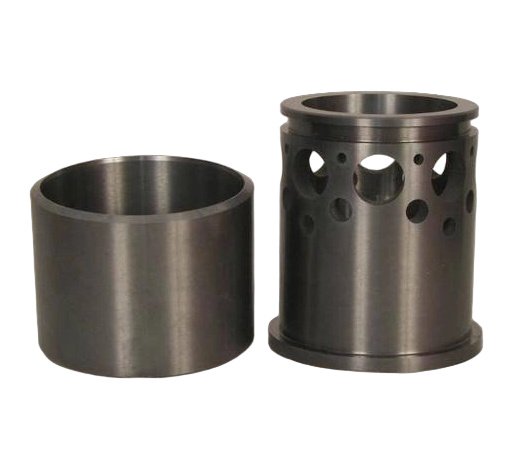
Tribaloy is a family of high-performance wear-resistant alloys used where conventional stainless steels, nickel alloys and many carbide-strengthened cobalt alloys lose dimensional control under sliding wear, galling, heat or corrosive media. The name is often associated with cobalt-base grades such as Tribaloy T-400 and Tribaloy T-800, although some related grades use different base systems.
Tribaloy is not a single generic metal; it is a group of proprietary alloys engineered around a hard intermetallic Laves phase dispersed in a cobalt-rich or nickel-containing matrix. This microstructure gives Tribaloy its distinctive combination of metal-to-metal wear resistance, hot hardness, seizure resistance and chemical stability in difficult service environments.
What Is Tribaloy?
Tribaloy alloys are hardfacing and engineering alloys designed for severe tribological conditions. In materials engineering, “tribology” refers to friction, lubrication and wear. Tribaloy was developed for applications where adhesive wear, galling, fretting, erosion-corrosion or sliding contact can rapidly damage softer or less stable alloys.
The key metallurgical feature is the presence of a hard Laves phase, commonly described in cobalt grades as a complex molybdenum-silicon-rich intermetallic phase within a cobalt-chromium matrix. Unlike Stellite alloys, which mainly rely on chromium carbides or tungsten carbides for hardness, Tribaloy relies heavily on intermetallic hard phases.
- Base alloy system: commonly cobalt-chromium-molybdenum-silicon for T-400 and T-800.
- Primary strengthening phase: hard Laves intermetallic phase rather than conventional carbide-only strengthening.
- Typical service purpose: sliding wear resistance, anti-galling performance and dimensional stability at elevated temperature.
- Common product forms: castings, powder, welding rod, PTA overlay powder, thermal spray powder, sleeves, bushings, valve components and precision machined parts.
Common Tribaloy Grades and How They Differ
Exact chemistry should always be confirmed from the material test report and supplier datasheet because Tribaloy is proprietary and production routes vary. The grades below are the ones most frequently discussed in engineering and procurement specifications.
| Grade | General alloy type | Typical engineering reason for selection | Common considerations |
|---|---|---|---|
| Tribaloy T-400 | Cobalt-molybdenum-chromium-silicon Laves-phase alloy | Excellent metal-to-metal wear and galling resistance, especially under poorly lubricated sliding contact | Hard and relatively brittle compared with ductile cobalt alloys; machining and welding procedures require planning |
| Tribaloy T-800 | Cobalt alloy with higher chromium content than T-400 | Improved corrosion and oxidation resistance compared with T-400 in many high-temperature environments | Often selected when wear resistance must be balanced with hot corrosion or oxidizing service |
| Tribaloy T-900 and related grades | Specialized Laves-phase wear alloy systems, sometimes specified for more corrosion-sensitive environments | Used where a project specification calls for a particular proprietary grade and verified supplier capability | Availability, lead time and exact composition should be checked early in sourcing |
In practice, T-400 is often evaluated when the dominant failure mode is galling or sliding wear, while T-800 is often reviewed when oxidation, chromium-supported corrosion resistance or hot service is more important. Both can outperform many conventional stainless steels in sliding contact, but neither should be selected solely by hardness number.
Key Properties Engineers Specify
Tribaloy materials are specified for a combination of hardness, wear resistance, anti-seizure behavior and high-temperature stability. Their performance depends on grade, product form, dilution during overlay, heat history, surface finish and mating material.
- Hardness: many Tribaloy products are supplied in a high-hardness condition suitable for wear parts. Exact hardness varies by grade and manufacturing process.
- Wear resistance: strong resistance to adhesive wear, sliding wear and metal pickup under boundary lubrication or dry-contact conditions.
- Anti-galling behavior: galling resistance is one of the main reasons engineers evaluate Tribaloy for valve trim, bushings and wear sleeves.
- Hot hardness: Laves-phase alloys maintain useful hardness at temperatures where many steels soften.
- Corrosion resistance: chromium-containing grades provide useful resistance in many industrial media, although they are not universal corrosion alloys.
- Oxidation resistance: T-800 is commonly favored over T-400 when oxidation resistance is a major part of the service condition.
- Low ductility compared with stainless steel: the hard intermetallic structure improves wear resistance but reduces tolerance for impact and sharp stress concentrations.
Engineering note: why hardness alone can be misleading
Two alloys with similar Rockwell hardness can behave very differently in sliding wear. Tribaloy’s advantage often comes from its intermetallic Laves phase and cobalt-based matrix, not just from a high hardness reading. For design validation, review actual wear test data, contact pressure, mating material, lubrication, temperature and corrosion environment.
Tribaloy vs Stellite, Hastelloy and Carbide-Faced Alloys
Tribaloy is often compared with Stellite, Hastelloy, tungsten carbide coatings and hard chrome alternatives. The right choice depends on the failure mechanism, not simply the alloy family name.
- Tribaloy vs Stellite: Stellite alloys are cobalt-chromium wear alloys commonly strengthened by carbides. Tribaloy relies more heavily on Laves intermetallic phases, making it particularly strong in galling and adhesive sliding wear.
- Tribaloy vs Hastelloy: Hastelloy grades are primarily corrosion-resistant nickel alloys. They may be superior in aggressive chemical corrosion but usually do not match Tribaloy in severe sliding wear.
- Tribaloy vs tungsten carbide: tungsten carbide coatings can provide extreme abrasion resistance, but Tribaloy may perform better where metal-to-metal galling, impact sensitivity, thermal cycling or corrosion compatibility must be balanced.
- Tribaloy vs hard chrome: hard chrome offers surface hardness and low friction, but environmental restrictions, coating cracks and thickness limits often push engineers toward thermal spray, PTA or cobalt alloy alternatives.
For mixed wear modes, engineers often test Tribaloy against Stellite 6, Stellite 12, tungsten carbide-cobalt, nickel-chromium-boron-silicon hardfacing alloys and nitrided stainless steels before final specification.
Applications Where Tribaloy Adds Value
Tribaloy is most valuable when a part must maintain geometry under sliding contact, heat and chemically active environments. It is usually chosen for critical parts where downtime, seizure, leakage or dimensional loss is more expensive than the alloy itself.
- Valve seats, balls, plugs, gate surfaces, stems and trim components
- Pump sleeves, bushings, seal rings, bearing surfaces and wear rings
- Hot gas path wear pads, aerospace or turbine-related sliding components where qualified
- Extrusion dies, guide surfaces and forming tools exposed to adhesive wear
- Oil and gas components exposed to sliding wear, corrosion and high contact stress
- Chemical processing equipment requiring a combination of corrosion and wear resistance
- Glass, plastics, food-processing and packaging equipment where abrasive or adhesive wear is costly
Buyer perspective: when Tribaloy is worth the premium
Tribaloy is rarely the lowest-cost material by weight. It becomes commercially attractive when it prevents repeated part replacement, reduces seizure risk, protects mating components or extends maintenance intervals in severe service. Procurement teams should compare total cost of ownership, machining cost, coating yield, lead time and inspection requirements rather than only raw material price.
Forms, Manufacturing Routes and Surface Engineering
Tribaloy can be supplied as cast components, wrought or near-net-shape items depending on grade availability, welding consumables, powder for thermal spray, and powder for plasma transferred arc hardfacing. The chosen route affects cost, thickness, dilution, surface finish, bond strength and repairability.
- Cast components: suitable for complex wear parts where bulk Tribaloy properties are required, but casting design should account for brittleness and shrinkage control.
- PTA hardfacing: plasma transferred arc overlay can deposit Tribaloy on steel or nickel alloy substrates with controlled thickness and metallurgical bonding.
- Laser cladding: can reduce heat input and dilution compared with some arc processes, useful for precision repair or localized wear surfaces.
- Thermal spray coatings: HVOF, plasma spray and related processes can apply Tribaloy powders for wear-resistant surfaces, although coating porosity and bond requirements must be specified.
- Weld overlay: weld procedures must manage cracking sensitivity, preheat, dilution, cooling rate and base metal compatibility.
For overlay and cladding work, dilution control is critical. Excessive dilution from the substrate can reduce the intended Laves-phase fraction, change corrosion behavior and lower wear performance. This is why qualified weld procedure specifications, sample coupons and cross-section inspection are often used for critical parts.
Procurement checkpoint for powders and overlays
For Tribaloy powder or hardfaced parts, specify grade, powder size distribution, manufacturing method, substrate alloy, target overlay thickness, maximum dilution if applicable, hardness range, surface finish, acceptance standard for cracks or pores, and whether the part requires post-machining or grinding. Ask for a certificate of conformance and, when needed, chemistry and hardness results from the same production lot.
CNC Machining Tribaloy: Practical Guidance
CNC machining of Tribaloy is possible, but it is significantly more demanding than machining carbon steel, 316 stainless steel or many nickel alloys. The hard Laves phase is abrasive to cutting tools, while the cobalt alloy matrix can generate high cutting forces and heat. Planning machining allowance, fixturing and finishing methods early can prevent scrap and schedule delays.
Tooling and setup
- Use a rigid CNC machine, short tool overhang and stable workholding to reduce vibration and edge chipping.
- Carbide tooling may be used for some operations, but coated carbide, ceramic, CBN or PCD-related strategies may be evaluated depending on cut type and grade.
- Avoid aggressive interrupted cuts when possible, because hard intermetallic particles can accelerate notch wear or tool edge failure.
- Use conservative cutting speed and feed trials instead of copying parameters from stainless steel or Inconel jobs.
- Maintain effective coolant delivery or use a validated dry-machining strategy where thermal shock to the tool must be avoided.
- Leave suitable stock for grinding, honing, lapping or EDM when tight tolerances and low roughness are required.
Finishing and inspection
Tribaloy parts often require finish grinding, cylindrical grinding, surface grinding, honing or lapping to achieve precision bearing surfaces and valve sealing faces. Electrical discharge machining can be useful for complex profiles, although recast layer control and surface integrity should be inspected for fatigue- or corrosion-critical service.
Recommended inspection items include dimensional tolerance, surface roughness, hardness, coating or overlay thickness, crack inspection, bond quality where relevant, and verification that no excessive heat checking or grinding burn has been introduced.
Specification, Quality Control and Sourcing Considerations
Because Tribaloy performance is highly dependent on grade, form and processing route, purchase documents should be more detailed than a simple material name. A precise specification reduces disputes over chemistry, hardness, coating thickness and finish quality.
- State the exact grade, such as Tribaloy T-400 or Tribaloy T-800, and the acceptable equivalent only if engineering has approved it.
- Define whether the requirement is bulk alloy, casting, wrought stock, weld overlay, PTA overlay, laser cladding or thermal spray coating.
- Request chemistry certification, heat or lot traceability, hardness range and applicable supplier datasheet revision.
- Specify substrate material for overlays and coatings, including any preheat or post-processing requirements.
- Define acceptance criteria for cracks, porosity, lack of fusion, dilution, thickness variation and surface finish.
- Clarify final machining responsibility, because Tribaloy machining cost can be a major part of the finished component price.
Buyer checklist before issuing an RFQ
Include part drawing, grade, form, quantity, tolerance class, surface finish, inspection standard, required certification, operating temperature, media, wear mode, mating material and whether qualification samples are required. If the supplier is machining the part, provide finish geometry and clarify whether the quoted price includes grinding, EDM, lapping, inspection reports and packaging for finished surfaces.
Limitations and Design Risks
Tribaloy is a high-value wear solution, but it is not suitable for every mechanical design. Its strength in sliding wear comes with reduced ductility and greater sensitivity to impact, tensile stress concentration and thermal shock than many softer engineering alloys.
- Brittleness: avoid thin unsupported edges, sharp internal corners and impact-loaded geometry.
- Cracking risk in overlays: hardfacing processes require qualified parameters and inspection, especially on complex substrates.
- Machining difficulty: tool wear, grinding time and EDM requirements can increase finished-part cost.
- Availability: certain grades, powder sizes or forms may have long lead times compared with stainless steel or common nickel alloys.
- Corrosion limits: Tribaloy is wear-resistant, but it should not automatically replace purpose-designed corrosion alloys in highly aggressive acids or chloride environments without testing.
- Mating material selection: using a hard Tribaloy surface against an unsuitable counterface may move wear to the mating component.
Design review questions for engineers
Before finalizing Tribaloy, confirm the dominant wear mode, contact pressure, sliding speed, lubrication condition, operating temperature, corrosive media, allowable leakage or clearance change, impact exposure, mating material and repair plan. If the part is safety-critical, use application-specific testing rather than relying only on supplier literature.
References and Standards Context
Tribaloy grades are proprietary materials, so engineering specifications typically rely on supplier datasheets, certified material test reports and application-specific qualification tests rather than one universal ASTM material standard. For technical background and specification development, useful reference categories include:
- ASM Handbook resources on cobalt-base alloys, wear-resistant alloys, hardfacing and tribology.
- Supplier datasheets for Tribaloy T-400, T-800 and related grades, including nominal chemistry, hardness and processing notes.
- AWS and ISO documents relevant to welding, cladding, thermal spraying and procedure qualification when Tribaloy is applied as an overlay or coating.
- Company-specific valve, pump, aerospace, oil and gas, or chemical processing specifications that define approved grades, qualification testing and inspection criteria.
For ranking material options, Tribaloy should be evaluated as a specialized Laves-phase wear alloy rather than a general-purpose corrosion alloy or a simple hard coating. Its best use cases are severe sliding, galling and high-temperature wear applications where the cost of failure is high and the design can accommodate a hard, relatively low-ductility material.