
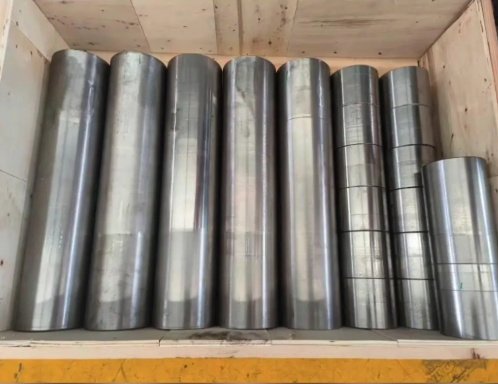
MP35N is a premium cobalt-nickel-chromium-molybdenum alloy engineered for applications where high strength, excellent corrosion resistance, fatigue performance, and reliability are required in severe environments. Known by the UNS designation R30035, MP35N is commonly used in medical devices, aerospace hardware, oil and gas equipment, marine components, high-performance springs, fasteners, shafts, and precision CNC machined parts.
For engineers, buyers, and manufacturers, MP35N alloy is often selected when conventional stainless steels, titanium alloys, or nickel alloys cannot deliver the required combination of strength, biocompatibility, chloride resistance, and long-term mechanical stability.
What Is MP35N?
MP35N is an age-hardenable and work-strengthenable superalloy developed for demanding service conditions. Its name reflects its approximate composition family: cobalt, nickel, chromium, and molybdenum. The alloy is nonmagnetic in the annealed condition and can reach very high tensile strength levels through cold working and aging treatment.
The alloy is valued because it combines the corrosion resistance of high-performance nickel-cobalt alloys with strength levels that may exceed many precipitation-hardened stainless steels. It is especially useful where pitting corrosion, crevice corrosion, stress corrosion cracking, and fatigue failure are design concerns.
MP35N Chemical Composition
MP35N is typically specified according to recognized aerospace, medical, or industrial standards. Composition limits may vary slightly by product form and specification, but the alloy is generally based on the following elements.
| Element | Typical Role in MP35N |
|---|---|
| Cobalt | Contributes high strength, hot strength, and stability in demanding environments. |
| Nickel | Improves corrosion resistance, toughness, and overall alloy stability. |
| Chromium | Supports passivation and resistance to oxidation, pitting, and general corrosion. |
| Molybdenum | Enhances resistance to chloride corrosion, crevice corrosion, and reducing environments. |
| Iron, Titanium, Manganese, Silicon, Carbon | Controlled residual or minor elements depending on specification requirements. |
Because MP35N is commonly used in regulated industries, chemical composition should be confirmed against the applicable standard, mill test report, and customer drawing requirements.
Key Mechanical and Physical Properties of MP35N
The performance of MP35N depends strongly on product form, cold work level, heat treatment, and final processing route. In general, the alloy offers a rare balance of strength, ductility, fatigue resistance, and corrosion resistance.
- High tensile strength after cold working and age hardening
- Excellent fatigue strength for springs, wire forms, shafts, and implantable components
- Good ductility compared with many high-strength alloys
- Outstanding resistance to chloride-containing and sour environments
- Good resistance to stress corrosion cracking
- Nonmagnetic behavior in many conditions
- Good biocompatibility when processed under medical-grade requirements
Typical property ranges are often determined by AMS, ASTM, ISO, or customer specifications rather than by a single universal data point. For design-critical use, engineers should rely on certified test data from the actual heat and product form.
Common MP35N Standards and Specifications
MP35N material may be supplied as bar, wire, strip, sheet, plate, forgings, tubing, or precision machined components. Commonly referenced specifications include aerospace, medical, and industrial standards.
- UNS R30035 for alloy identification
- AMS 5844 for corrosion and heat-resistant alloy bars, forgings, and rings
- AMS 5845 for wire applications
- ASTM F562 for wrought cobalt-nickel-chromium-molybdenum alloy used in surgical implants
- ISO 5832-6 for implantable cobalt-nickel-chromium-molybdenum alloy in medical applications
- NACE MR0175 / ISO 15156 considerations for sour oil and gas environments, when applicable
Specification selection matters because medical implant stock, aerospace bar, cold-worked wire, and sour-service components may require different controls for chemistry, mechanical properties, cleanliness, traceability, and testing.
Corrosion Resistance in Severe Environments
One of the most important reasons to choose MP35N is its corrosion resistance in aggressive media. The combination of chromium and molybdenum helps the alloy maintain a protective passive film, while nickel and cobalt support stability and strength.
MP35N performs well in many chloride-containing environments and is often considered for seawater exposure, brine, body fluids, downhole oilfield service, and chemical processing conditions. It also has strong resistance to stress corrosion cracking compared with many high-strength stainless steels.
For sour gas applications, NACE compliance should be evaluated based on hardness, heat treatment, cold work level, environment, and the relevant edition of NACE MR0175 / ISO 15156. The alloy selection should be verified by qualified corrosion engineers when hydrogen sulfide, high chloride concentration, low pH, or elevated temperature is present.
Heat Treatment, Cold Working, and Strengthening
MP35N obtains its highest strength through a combination of cold work and aging. The alloy can be supplied in annealed, cold-worked, age-hardened, or other condition-specific forms depending on the intended application.
Cold working increases dislocation density and raises strength. Subsequent aging improves mechanical properties further by promoting microstructural changes that increase resistance to deformation. This is why wire, bar, and strip products can be tailored for springs, fasteners, medical leads, and high-load precision parts.
Heat treatment should be performed under controlled conditions. For medical and aerospace components, temperature uniformity, atmosphere control, lot traceability, and post-treatment mechanical testing are important to ensure repeatable performance.
Engineering note: why MP35N condition must be specified clearly
Two MP35N parts made from the same alloy chemistry can have very different strength, elongation, hardness, and fatigue behavior if their cold work and aging history are different. Drawings and purchase orders should identify the required specification, product form, condition, tensile properties, hardness limits, and any special testing requirements.
CNC Machining MP35N: Practical Manufacturing Considerations
MP35N can be CNC machined into precision components, but it is not a free-machining alloy. Its high strength, work-hardening behavior, toughness, and cobalt-nickel base require careful process control. Shops familiar with Inconel, cobalt alloys, titanium, and precipitation-hardened stainless steels are usually better prepared to machine MP35N successfully.
The main machining challenges include tool wear, heat generation, work hardening, burr formation, and maintaining dimensional accuracy on tight-tolerance features. Effective CNC machining of MP35N often depends on rigid fixturing, sharp cutting tools, stable tool paths, and appropriate coolant delivery.
CNC Turning
For MP35N turning, carbide tooling is commonly used. Positive geometry inserts, controlled feed rates, and consistent depth of cut help avoid rubbing and excessive work hardening. Interrupted cuts should be minimized when possible because they can accelerate tool edge failure.
CNC Milling
In milling operations, high-rigidity toolholding and stable engagement are important. Trochoidal milling, adaptive clearing, and controlled radial engagement may improve tool life by reducing heat concentration. Coolant pressure and chip evacuation are especially important for small pockets, slots, and medical or aerospace features.
Drilling, Tapping, and Micro-Machining
Drilling MP35N requires attention to chip control and tool geometry. Peck drilling may be useful for deep holes, but excessive dwelling should be avoided. Tapping can be difficult in high-strength conditions, so thread milling or forming methods may be considered depending on geometry, specification, and part function.
For miniature medical components, CNC machining MP35N may require fine-grain carbide tools, validated deburring methods, and careful surface integrity inspection. Excessive heat or mechanical damage at the surface can affect fatigue life and corrosion performance.
Buyer and manufacturing checklist for MP35N machined parts
- Confirm the exact MP35N standard, such as AMS 5844, AMS 5845, ASTM F562, or ISO 5832-6.
- Specify material condition, including annealed, cold-worked, aged, or final strength requirement.
- Request full material traceability and mill test reports for regulated industries.
- Define critical tolerances, surface roughness, passivation, cleaning, and inspection criteria.
- Discuss tool access, burr control, hole depth, thin walls, and distortion risk before production.
- Confirm whether the supplier has experience machining cobalt-nickel alloys or comparable superalloys.
Surface Finish, Passivation, and Cleaning
Surface condition is important for MP35N because many applications rely on fatigue strength, corrosion resistance, and cleanliness. Precision components may require polishing, electropolishing, passivation, ultrasonic cleaning, or validated cleaning processes depending on industry requirements.
For medical devices, cleaning and surface finishing must control residues, embedded tooling particles, burrs, and surface defects. For aerospace and oilfield service, surface integrity may be critical around threads, grooves, radii, and high-stress transitions.
When MP35N parts are machined after final strengthening, surface damage should be minimized. When parts are machined before aging, dimensional changes during heat treatment should be considered in the process plan.
Major Applications of MP35N
MP35N is used in applications where failure is expensive, dangerous, or unacceptable. Its combination of high strength and corrosion resistance makes it suitable for long-life components exposed to mechanical load and aggressive environments.
Medical and Implantable Devices
MP35N is widely used in medical applications because it offers strength, corrosion resistance, and biocompatibility under appropriate standards. Typical uses include orthopedic cables, cardiovascular leads, implantable device components, guidewires, surgical instruments, and precision implant hardware.
Aerospace Components
Aerospace applications may include fasteners, springs, retaining rings, pins, shafts, and high-strength hardware. MP35N is attractive where corrosion resistance, fatigue performance, and reliability under vibration or cyclic loading are important.
Oil and Gas Equipment
In downhole and subsea environments, MP35N may be used for springs, valve components, fasteners, seals, wireline tools, and sour-service hardware. Its resistance to chloride stress corrosion and sour environments can make it a candidate alloy for severe well conditions.
Marine, Chemical, and High-Performance Industrial Uses
MP35N is also used in marine hardware, chemical processing equipment, high-strength shafts, sensors, pressure instruments, and corrosion-resistant precision assemblies.
MP35N vs Stainless Steel, Titanium, Inconel, and Elgiloy
Material selection depends on the required balance of strength, corrosion resistance, weight, cost, manufacturability, and regulatory compliance. MP35N is not always the lowest-cost option, but it may reduce risk when a standard alloy is not sufficient.
- Compared with 316L stainless steel, MP35N offers much higher achievable strength and better resistance in many chloride environments.
- Compared with 17-4 PH stainless steel, MP35N generally provides stronger corrosion resistance and better performance in many severe environments.
- Compared with titanium alloys, MP35N is denser but can provide excellent strength, fatigue resistance, and wear-related advantages in some designs.
- Compared with Inconel alloys, MP35N is often chosen when very high strength, spring properties, or specific medical and sour-service requirements are needed.
- Compared with Elgiloy, MP35N occupies a similar high-performance cobalt alloy category, but final selection depends on standards, spring requirements, corrosion media, and supplier availability.
Procurement perspective: when MP35N is worth the premium
MP35N is often justified when the cost of failure is high, when field replacement is difficult, or when regulatory and performance requirements demand proven material behavior. Buyers should evaluate total lifecycle cost rather than only raw material price, especially for implants, aerospace hardware, subsea parts, and sour-service components.
How to Specify MP35N for Reliable Sourcing
A clear MP35N specification reduces sourcing risk, machining delays, and nonconformance issues. The purchase documentation should identify the alloy, standard, product form, condition, mechanical properties, testing requirements, and inspection expectations.
Recommended specification details include:
- Alloy name and UNS number: MP35N / UNS R30035
- Applicable standard: AMS, ASTM, ISO, NACE-related requirement, or customer specification
- Product form: bar, wire, strip, sheet, plate, tubing, forging, or machined part
- Material condition: annealed, cold-worked, aged, or strength level
- Mechanical properties: tensile strength, yield strength, elongation, hardness, fatigue requirement if needed
- Dimensional requirements and tolerances
- Surface finish, passivation, cleaning, and packaging requirements
- Traceability, mill test report, inspection report, and certificate requirements
For critical applications, traceable MP35N material should be purchased from qualified sources with documented heat numbers, test results, and compliance to the required specification.
Limitations and Design Considerations
Although MP35N is a high-performance alloy, it is not the ideal material for every project. Designers should account for density, material cost, machining difficulty, lead time, and specification availability. The alloy’s strength can be an advantage in service but a challenge during manufacturing.
Potential limitations include:
- Higher raw material cost than stainless steel and many titanium alloys
- More difficult CNC machining than common engineering metals
- Possible long lead times for specific sizes, forms, or certified conditions
- Need for controlled heat treatment and processing to reach target properties
- Strict documentation requirements in medical, aerospace, and oilfield applications
Early coordination between design engineering, procurement, material suppliers, and CNC machining suppliers can prevent redesign, excessive scrap, and production delays.
Conclusion: Why MP35N Remains a Critical Engineering Alloy
MP35N is a specialized high-strength alloy for applications that require more than ordinary corrosion-resistant metals can provide. Its cobalt-nickel-chromium-molybdenum chemistry, ability to be cold worked and aged, and proven performance in medical, aerospace, marine, and oilfield environments make it one of the most capable alloys for demanding components.
When properly specified, processed, and inspected, MP35N can deliver exceptional strength, fatigue resistance, corrosion resistance, and long-term reliability. For CNC machined parts, successful results depend on material condition, tooling strategy, surface integrity, and supplier experience with high-performance superalloys.