
Monel Machining Services
- Fast prototype & low MOQ support
- Tight tolerance up to +0.002mm
- Surface finishing available
- Engineering review before production
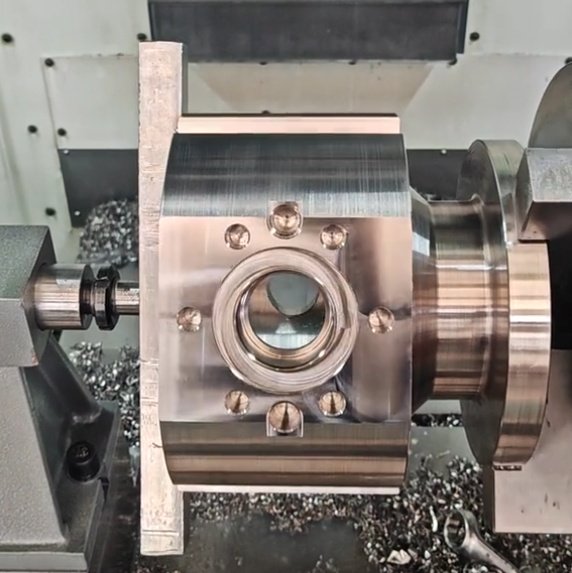
Monel CNC Machining Capabilities
Monel machining services require more than standard CNC programming because Monel nickel-copper alloys combine corrosion resistance, toughness, low thermal conductivity and a strong tendency to work harden. For marine hardware, valve components, pump shafts, fasteners, instrumentation parts and oilfield equipment, the machining strategy must control heat, chip formation, tool pressure and surface integrity at the same time. CNC milling Monel is used for manifolds, brackets, valve bodies, plates, pockets, slots and precision faces. The most reliable milling processes use climb milling where possible, sharp carbide end mills and toolpaths that maintain consistent chip thickness. CNC turning Monel is common for shafts, rings, bushings, threaded fittings, sealing faces, flanges and instrumentation components. The turning setup must maintain cutting pressure high enough to form a chip but not so aggressive that it causes deflection, chatter or excessive insert wear.
Precision Milling
- Multi-axis CNC milling for complex geometries.
- Tight tolerances as tight as ±0.002mm and fine surface finishes.
- Suitable for prototypes and mass production.
CNC Turning
- High-speed turning for shafts, rods, and cylindrical parts.
- Thread cutting, grooving, and facing operations.
- Supports both small and large batch production.
Drilling, Tapping & Boring
- CNC drilling for holes of all sizes and depths.
- Threading and tapping for assemblies.
- High repeatability for precision alignment.
Multi-Axis Machining
- 4-axis and 5-axis machining for intricate parts.
- Reduced setups and improved accuracy.
- Ideal for aerospace, automotive, and medical components.
Secondary Operations
- Deburring, grinding, tapping, honing, keyways, broaching support.
- Specialized processes for hard-to-machine metals.
- Used when critical surfaces, fit, or assembly requirements exceed standard machining
CNC Prototyping
- Rapid CNC prototyping to test designs quickly.
- Small batch to full-scale production runs.
- Flexible workflow to meet tight deadlines.
What Makes Monel Difficult to Machine?
Monel is not “hard” in the same way as hardened tool steel, but it is challenging because it resists cutting forces and stores heat at the cutting edge. During interrupted cuts, thin-wall machining or deep drilling, the alloy can smear, gall, harden locally and shorten tool life quickly.
- Work hardening: rubbing or light feeds can create a harder surface layer before the next tool pass.
- Low thermal conductivity keeps heat concentrated at the insert or end mill edge.
- High ductility can produce long stringy chips that interfere with surface finish and automation.
- Nickel-rich chemistry increases adhesion, built-up edge and tool notch wear.
- Monel K500 adds precipitation hardening, increasing strength and cutting load compared with Monel 400.
Successful Monel CNC machining therefore depends on rigid fixturing, sharp positive-rake tools, sufficient feed per tooth, stable coolant delivery and a process plan that avoids unnecessary dwell marks.
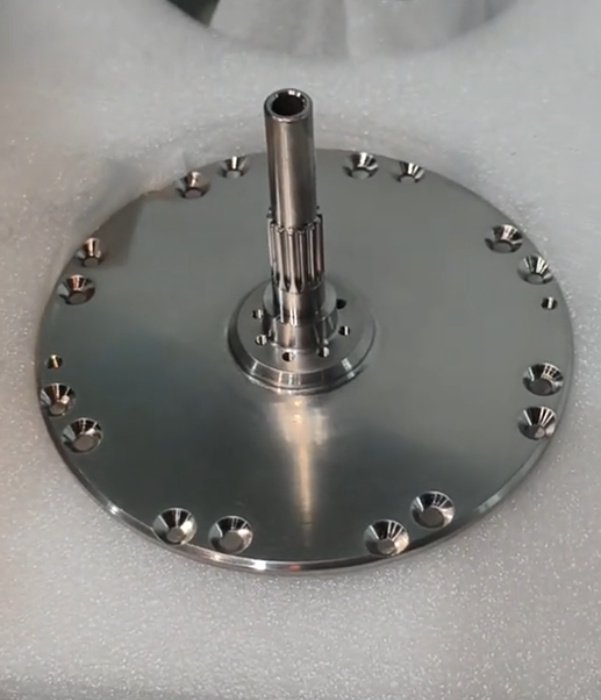
Monel Alloys Commonly Used in CNC Machined Parts
| Alloy | Typical Use | Machining Notes | Common Standards and Forms |
|---|---|---|---|
| Monel 400 | Marine fittings, valve seats, pump components, chemical processing parts | Good corrosion resistance and toughness; prone to work hardening if feeds are too light | ASTM B164 bar, ASTM B127 plate, UNS N04400 |
| Monel K500 | Shafts, springs, fasteners, sour-service components, high-strength marine parts | Higher strength after aging; requires conservative cutting data and rigid setups | ASTM B865 bar, QQ-N-286, UNS N05500 |
| Monel R405 | Automatic screw machine parts, fittings, bushings, small turned parts | Free-machining grade with sulfur addition; improved chip control versus Monel 400 | ASTM B164, UNS N04405 |
Material certification, heat condition and product form matter. A Monel K500 component in age-hardened condition can behave very differently from annealed Monel 400, even if the geometry appears similar.
Tolerances, Surface Finish and Feature Capability
Precision Monel components can be machined to tight tolerances when the design, workholding and inspection plan are aligned. Typical achievable tolerances for CNC machined Monel parts may include ±0.025 mm for selected critical milled or turned features, while broader tolerances are often more economical for non-critical geometry.
| Feature Type | Common Capability Range | Key Risk | Recommended Control |
|---|---|---|---|
| Turned diameters | ±0.013-0.025 mm on controlled features | Heat growth, tool wear, shaft deflection | In-process gauging and stable finishing allowance |
| Milled pockets | ±0.025-0.050 mm depending on depth and access | Corner tool pressure and chip recutting | Adaptive roughing and separate finishing tool |
| Drilled and reamed holes | H7/H8 possible with correct process | Work hardening and drill wander | Pilot control, coolant-through tools and reaming allowance |
| Threads | 2A/2B or metric class fit depending on print | Galling, crest burrs, pitch distortion | Thread milling, controlled lubrication and thread gauges |
| Sealing faces | Ra 0.8-1.6 µm commonly achievable | Built-up edge and micro-tearing | Sharp finishing insert and verified surface measurement |
The most economical drawings distinguish between functional dimensions and general dimensions. Applying tight tolerances everywhere on a Monel component can increase cycle time, inspection cost and tool consumption without improving performance.
Engineering Controls That Improve Monel Machining Results
A robust Monel machining process is built around repeatability. The objective is not only to make one accurate part, but to keep dimensions, surface finish and tool wear predictable over the full batch.
- Tooling strategy: use sharp carbide, positive rake angles, suitable coatings and short gauge lengths to reduce cutting force.
- Coolant strategy: use abundant coolant, high-pressure delivery when possible and chip evacuation paths for pockets and holes.
- Toolpath strategy: avoid dwell, minimize rubbing, maintain consistent chip load and prevent repeated passes over hardened skin.
- Fixturing strategy: support thin sections to reduce vibration and prevent distortion after unclamping.
- Inspection strategy: verify critical features after roughing and finishing, especially on high-value Monel K500 parts.
In one representative Monel 400 valve-seat machining study, changing from a light finishing pass that rubbed the bore to a sharper tool with higher feed and controlled radial engagement reduced visible smearing and stabilized bore size variation from approximately 0.045 mm to less than 0.018 mm across a short production run. Results vary by geometry, but the lesson is consistent: Monel usually responds better to controlled cutting than to cautious rubbing.
Design for Manufacturability in Monel CNC Parts
- Use generous internal radii where possible to allow stronger tools and smoother toolpaths.
- Avoid deep narrow slots unless required for function.
- Specify realistic surface finish only where the surface has sealing, fatigue or flow requirements.
- Keep thin walls supported by design features or allow intermediate stress-relief operations if necessary.
- Use thread depths that match actual load requirements rather than excessive engagement length.
Example: deep threaded holes in Monel
Deep tapped holes in Monel are susceptible to chip packing, galling and tap breakage. Thread milling can reduce risk because it creates smaller chips, lowers torque and allows better control of pitch diameter. For blind holes, thread milling also helps avoid work hardening at the hole bottom from repeated tapping pressure.
Inspection and Quality Documentation for Monel Machined Parts
Inspection for Monel machined components may include first article inspection, dimensional reports, material certification review, hardness checks, surface roughness measurement and thread gauging. For critical service parts, traceability from certified raw material to finished component is essential.
- Material traceability: heat number, alloy grade, product form and applicable ASTM or customer specification.
- Dimensional inspection using CMM, optical measurement, micrometers, bore gauges and height gauges.
- Surface finish verification for sealing faces, bearing surfaces and flow paths.
- Thread inspection with calibrated plug, ring or pitch diameter measurement methods.
- Visual inspection for burrs, galling, smeared material, chatter and handling marks.
For Monel K500, hardness and heat treatment condition may need confirmation because mechanical strength and machinability depend strongly on aging condition. When parts are used in marine, chemical or oil and gas environments, cleanliness and contamination control should also be defined.
Applications of Monel CNC Machined Components
Monel machined parts are selected where corrosion resistance, strength and durability justify higher material and machining cost. The alloy family performs well in seawater, brine, hydrofluoric acid environments, alkaline media and many chemical-processing conditions, although final material selection should always be verified against the actual service environment.
| Industry | Typical Monel Parts | Why Monel Is Used |
|---|---|---|
| Marine and offshore | Fasteners, pump shafts, bushings, valve trim, fittings | Resistance to seawater corrosion and biofouling-related attack |
| Oil and gas | Instrumentation bodies, sour-service hardware, sleeves, couplings | Strength and corrosion resistance in demanding fluid environments |
| Chemical processing | Valve seats, nozzles, connectors, pump components | Resistance to selected acids, alkalis and process chemicals |
| Aerospace and defense | High-strength pins, fittings, specialty hardware | Mechanical reliability and corrosion resistance |
| Power and energy | Heat-exchanger hardware, sensor housings, flow-control parts | Performance in wet, corrosive or high-integrity systems |
Common Monel Machining Problems and Practical Solutions
| Problem | Likely Cause | Practical Solution |
|---|---|---|
| Rapid tool wear | Excessive heat, abrasive work-hardened surface, incorrect insert grade | Reduce speed, increase coolant effectiveness, use sharper geometry and avoid rubbing passes |
| Stringy chips | Ductile material and unsuitable chipbreaker | Adjust feed, use chipbreaker inserts and apply high-pressure coolant where possible |
| Chatter on thin walls | Low stiffness, excessive tool overhang or aggressive engagement | Improve support, use lighter radial engagement and machine symmetrical stock where possible |
| Thread galling | High friction and poor lubrication during tapping or assembly | Use thread milling, proper lubricant and controlled thread fit |
| Poor surface finish | Built-up edge, dull tool, chip recutting or unstable finishing pass | Use a sharp finishing tool, improve chip evacuation and maintain a real cutting feed |
Why Monel parts often cost more than stainless steel parts
Monel raw material is typically more expensive than common stainless steels, and the machining process often requires slower cutting speeds, higher tool consumption and more careful inspection. The cost difference is usually driven by material value, cycle time, tool wear, scrap risk and documentation requirements.
Monel Machining Compared with Stainless Steel and Inconel
Monel, stainless steel and Inconel are often grouped as corrosion-resistant alloys, but they machine differently. Monel is usually more difficult than free-machining stainless steels because of adhesion and work hardening, but it is generally less heat-resistant than many Inconel grades. Inconel often requires even more conservative speeds due to high-temperature strength, while Monel’s main machining concerns are ductility, chip control and built-up edge.
- Compared with 303 stainless steel, Monel is usually slower to machine and less forgiving.
- Compared with 316 stainless steel, Monel may show stronger adhesion and stringier chips.
- Compared with Inconel 625 or 718, Monel often permits higher productivity, but still requires nickel-alloy machining discipline.
- Compared with brass or bronze, Monel requires much more rigid tooling and process control.
Information Needed to Evaluate a Monel Machined Part
- 2D drawing with tolerances, datums, thread callouts and surface finish requirements.
- 3D CAD model in STEP, Parasolid or similar manufacturing format.
- Required alloy grade such as Monel 400, Monel K500 or Monel R405.
- Material specification, heat treatment condition and certification requirements.
- Expected annual volume, batch size and revision control requirements.
- Special inspection requirements such as CMM report, material test report or first article inspection.
When Monel K500 should be reviewed carefully before machining
Monel K500 should be reviewed carefully when the part has thin walls, tight bores, deep threads or long slender turned features. The higher strength of age-hardened K500 increases cutting force, and residual stress can influence dimensional stability after heavy material removal.