
Superalloy Machining Services
- Fast prototype & low MOQ support
- Tight tolerance up to +0.002mm
- Surface finishing available
- Engineering review before production
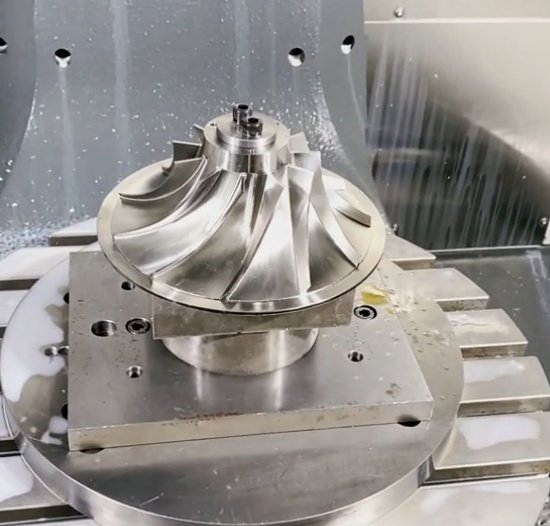
Superalloy CNC Machining Capabilities
Superalloy components are produced with a combination of machining processes selected according to geometry, stock condition, tolerance, material hardness and production volume. Multi-axis CNC platforms are commonly used to reduce setups and improve feature-to-feature accuracy.
Precision Milling
- Multi-axis CNC milling for complex geometries.
- Tight tolerances as tight as ±0.002mm and fine surface finishes.
- Suitable for prototypes and mass production.
CNC Turning
- High-speed turning for shafts, rods, and cylindrical parts.
- Thread cutting, grooving, and facing operations.
- Supports both small and large batch production.
Drilling, Tapping & Boring
- CNC drilling for holes of all sizes and depths.
- Threading and tapping for assemblies.
- High repeatability for precision alignment.
Multi-Axis Machining
- 4-axis and 5-axis machining for intricate parts.
- Reduced setups and improved accuracy.
- Ideal for aerospace, automotive, and medical components.
Secondary Operations
- Deburring, grinding, tapping, honing, keyways, broaching support.
- Specialized processes for hard-to-machine metals.
- Used when critical surfaces, fit, or assembly requirements exceed standard machining
CNC Prototyping
- Rapid CNC prototyping to test designs quickly.
- Small batch to full-scale production runs.
- Flexible workflow to meet tight deadlines.
What Makes Superalloy Machining Different?
Superalloys are engineered to retain mechanical properties at elevated temperatures, often above 650°C. The same properties that make them valuable in turbines, combustors, valves and downhole tools also make them difficult to machine. Low thermal conductivity concentrates heat at the cutting edge, while high strength, carbide-forming elements and nickel-rich matrices accelerate tool wear.
The main machining challenge is work hardening. If a tool rubs instead of cutting, the surface can harden quickly, increasing cutting forces and causing premature insert failure, poor surface finish, dimensional drift or microcracking. Effective superalloy machining relies on rigid setups, sharp tooling, controlled feeds, optimized coolant delivery and stable chip formation.
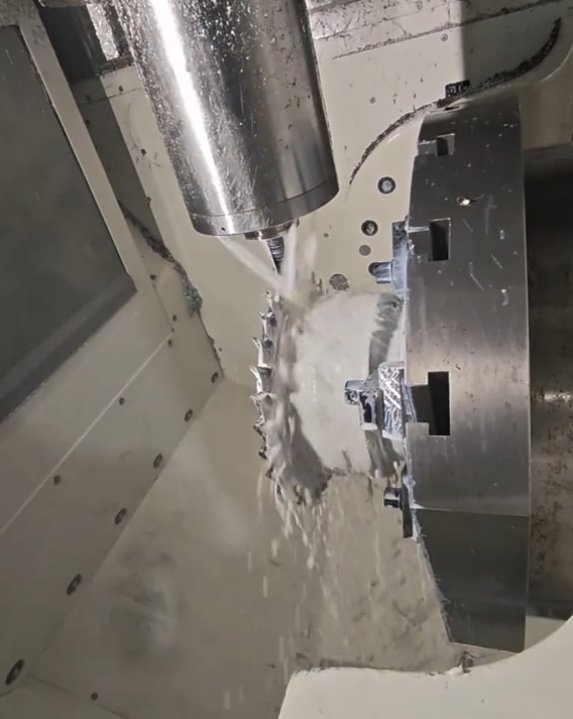
Superalloys Commonly Machined
Material behavior varies significantly by grade, heat treatment and hardness. Aged Inconel 718, for example, is usually more demanding than solution-annealed Inconel 625, while cobalt-based alloys such as Haynes 188 or L-605 require careful control of heat and tool pressure.
| Material Family | Common Grades | Typical Applications | Machining Notes |
|---|---|---|---|
| Nickel-based superalloys | Inconel 718, 625, 600, 725, X-750 | Turbine hardware, aerospace brackets, oil and gas components, heat exchangers | High strength and low thermal conductivity; requires sharp tools and controlled cutting temperatures |
| Nickel-molybdenum alloys | Hastelloy C-276, C-22, B-2 | Chemical processing, valves, corrosion-resistant fittings, reactor components | Excellent corrosion resistance; gummy behavior can affect chip evacuation and finish |
| Cobalt-based superalloys | Haynes 188, L-605, Stellite alloys | Hot-section aerospace parts, wear components, valve seats | Abrasive and heat-resistant; tool wear monitoring is critical |
| High-temperature nickel alloys | Waspaloy, Rene 41, Rene 80 | Compressor and turbine components, fasteners, rings | Often age-hardened; rigid workholding and conservative parameters are required |
| Nickel-copper alloys | Monel 400, K-500 | Marine parts, pump shafts, sour-service components | Can be tough and ductile; benefits from positive rake geometry and chip control |
Typical Tolerances, Surface Finishes and Feature Sizes
Achievable tolerances depend on alloy, part size, wall thickness, feature access, fixturing, inspection method and heat treatment condition. The figures below represent typical manufacturing targets for precision CNC superalloy components, not universal guarantees.
| Requirement | Typical Capability Range | Important Considerations |
|---|---|---|
| CNC milled dimensions | ±0.025 mm to ±0.075 mm | Thin walls, deep pockets and long cycle heat buildup may require wider tolerances |
| CNC turned diameters | ±0.010 mm to ±0.050 mm | Roundness and concentricity depend on workholding and length-to-diameter ratio |
| Ground diameters or faces | ±0.005 mm to ±0.015 mm | Often used for bearing fits, sealing surfaces and precision shafts |
| Surface finish after CNC machining | Ra 0.8 µm to Ra 3.2 µm | Finishing passes, tool condition and coolant control strongly affect results |
| Surface finish after grinding or lapping | Ra 0.1 µm to Ra 0.8 µm | Used when sealing, sliding or fatigue-sensitive surfaces require refinement |
| Small drilled holes | Approximately 0.5 mm and above | Depth-to-diameter ratio and coolant access determine feasibility |
For critical parts, the most realistic tolerance plan is based on documented inspection, datum structure, GD&T requirements, measurement uncertainty and the part’s functional surfaces.
Engineering Controls for Reliable Superalloy Machining
- Rigid fixturing to reduce vibration and prevent chatter marks on high-value material.
- High-pressure coolant or targeted coolant delivery to remove heat from the cutting zone.
- Carbide, ceramic or CBN tooling selected according to operation, alloy and hardness.
- Positive cutting geometry to reduce rubbing and minimize work-hardened layers.
- Adaptive toolpaths and trochoidal milling for controlled engagement in roughing operations.
- Tool life monitoring to prevent edge breakdown before critical finishing passes.
- Intermediate stress relief or process planning when distortion risk is high.
- Dedicated deburring methods to avoid edge tearing, embedded media or surface damage.
Engineering issue: work-hardened surfaces after interrupted cutting
Interrupted cuts in nickel alloys can harden the surface if the tool dwells or re-enters without sufficient chip load. Corrective actions include increasing feed per tooth within tool limits, using sharper inserts, avoiding dwell marks and programming smooth lead-in and lead-out movements.
Engineering issue: heat-related dimensional drift
Superalloys retain heat during machining. Long cycle times and heavy roughing passes may cause dimensional growth during inspection. A stable process may include roughing and finishing separation, coolant temperature management, rest periods before final passes and in-process probing.
Engineering issue: burrs on small holes and intersecting features
High-nickel alloys can form tough burrs that are difficult to remove after assembly-critical holes or cross-drilled passages are machined. Burr control should be designed into the machining plan using tool sequencing, controlled breakthrough, back deburring tools or abrasive flow methods where appropriate.
Applications for Superalloy CNC Machined Parts
Superalloy parts are specified when components must resist creep, fatigue, corrosion, pressure, oxidation or wear. CNC machining is commonly used for low-volume prototypes, qualification builds, replacement parts and production components where cast, forged or additive blanks require precision finishing.
- Aerospace engine brackets, housings, rings, seals, combustor hardware and hot-section components.
- Industrial gas turbine nozzles, vanes, spacers, shrouds and retaining hardware.
- Oil and gas valve components, downhole tools, seal carriers, pump shafts and sour-service fittings.
- Chemical processing manifolds, reactor parts, flanges, impellers and corrosion-resistant hardware.
- Marine and defense components exposed to saltwater, high load or thermal cycling.
- Medical and scientific equipment where strength, biocompatibility or temperature resistance is required.
- Power generation components used in heat exchangers, turbines and high-pressure assemblies.
Quality Assurance and Inspection
Superalloy components are often used in regulated or safety-critical systems, so machining quality must be supported by traceability and measurement discipline. Inspection planning should address both dimensional requirements and material integrity.
- CMM inspection for complex profiles, datum structures and GD&T verification.
- Optical and vision measurement for small features, edge breaks and profiles.
- Surface roughness testing for sealing faces, bearing journals and fatigue-sensitive surfaces.
- Hardness verification when heat treatment or material condition is part of the specification.
- Material certificates for alloy grade, heat number and chemical composition traceability.
- First article inspection reports for aerospace or qualification-stage components.
- Non-destructive testing coordination, including dye penetrant, ultrasonic or radiographic inspection when required.
Inspection frequency should reflect the part’s risk profile. Prototype parts may require complete dimensional reports, while repeat production may use first-off inspection, in-process checks and final sampling based on capability data.
Real Engineering Examples and Measurable Results
Process development for superalloys often begins with one or two unstable features: a deep pocket, thin wall, tight bore, small threaded hole or interrupted cut. The following examples show typical improvements that can be achieved through CNC process control. Results vary by machine, alloy batch, tooling and geometry.
| Part Scenario | Initial Problem | Process Change | Measured Result |
|---|---|---|---|
| Inconel 718 aerospace bracket with thin ribs | Wall deflection up to 0.18 mm after roughing | Added balanced roughing, semi-finish stock control and final light climb-milling passes | Final wall variation reduced to 0.04 mm across measured rib sections |
| Hastelloy C-276 valve component | Tool wear caused bore taper beyond tolerance after 12 parts | Introduced tool life limit, high-pressure coolant and separate finishing insert | Stable bore tolerance maintained over 40-piece production lot |
| Waspaloy ring with tight sealing face | Ra exceeded 1.6 µm after turning due to heat and edge wear | Reduced finishing engagement, used sharper geometry and added post-turn grinding | Sealing face improved to Ra 0.4 µm to Ra 0.6 µm |
| Inconel 625 manifold with intersecting drilled ports | Internal burrs affected flow path cleanliness | Changed drilling sequence, added controlled breakthrough and targeted deburring | Visual borescope inspection accepted with no loose burrs detected |
Design Guidelines for Machined Superalloy Components
Design choices strongly affect cost, lead time and manufacturability. When possible, superalloy parts should be designed to reduce unnecessary tool reach, avoid extremely thin unsupported walls and use tolerances that match functional needs rather than default tight limits.
- Use generous internal radii where function allows, because sharp corners require small tools and longer cycle times.
- Avoid deep narrow slots unless EDM or specialized tooling is acceptable.
- Keep wall thickness consistent to reduce distortion during roughing and finishing.
- Specify critical surfaces clearly, including datum references, perpendicularity, flatness and surface finish.
- Allow practical edge break requirements instead of undefined “remove all sharp edges” notes on complex features.
- Confirm thread standards, inspection method and go/no-go gage requirements before production.
- Consider near-net-shape forgings, castings or additive blanks when material removal would be excessive.
The best machining strategy is usually determined by geometry, alloy condition and feature accessibility. Early review of drawings, 3D models and material specifications can prevent preventable cost drivers such as inaccessible radii, unrealistic surface finishes or inspection conflicts.
How Superalloy Machining Differs from Stainless Steel Machining
Many superalloys resemble stainless steel in corrosion resistance, but machining behavior is not the same. Nickel-based alloys usually conduct heat poorly and maintain strength at temperatures where stainless steels soften. This increases cutting temperature and mechanical load at the tool edge.
| Factor | Stainless Steel Machining | Superalloy Machining |
|---|---|---|
| Heat dissipation | Moderate, depending on grade | Often poor, with heat concentrated near the cutting edge |
| Tool wear | Manageable with standard carbide in many cases | Accelerated wear, notching and edge chipping are common |
| Cutting strategy | Broader parameter window | Narrower window requiring more controlled feeds, speeds and engagement |
| Work hardening | Present in austenitic grades | Often more severe, especially with rubbing or dwell |
| Cost drivers | Material, feature complexity and tolerance | Material cost, tool life, cycle time, inspection and scrap risk |
Choosing a Superalloy Machining Supplier
A capable supplier should understand both CNC programming and material behavior. The lowest machine-hour rate may not be the lowest total cost if tool life, scrap risk, inspection gaps or dimensional instability are not controlled. For high-value superalloy parts, supplier evaluation should focus on process maturity.
- Experience with specific grades such as Inconel 718, Inconel 625, Hastelloy C-276 or Waspaloy.
- Ability to machine prototypes and repeat production with consistent documentation.
- 5-axis milling, CNC turning, mill-turn, EDM and grinding access where geometry requires it.
- Understanding of GD&T, datum strategy, surface integrity and inspection planning.
- Material traceability and support for certification requirements.
- Defined tool life management and in-process inspection for critical features.
- Capability to advise on manufacturability before material is purchased or released.
Superalloy machining rewards disciplined planning, stable machines and controlled material removal. When the process is engineered correctly, CNC machining can produce accurate, repeatable and inspection-ready components for some of the most demanding operating environments in aerospace, energy, chemical processing and advanced industrial systems.