
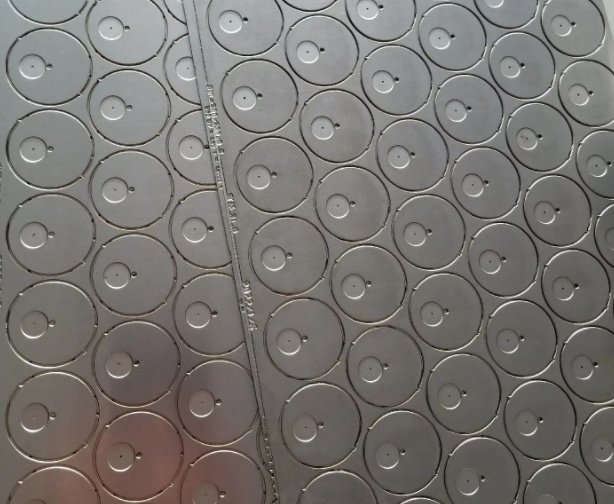
Titanium chemical milling removes precise amounts of material from complex geometries without introducing mechanical stress or thermal distortion. The process selectively dissolves titanium using hydrofluoric acid-based etchants, achieving tolerances as tight as ±0.05 mm on aircraft skins, forgings, and engine components. This guide covers proven etchant formulations, process controls, and qualification protocols used by Boeing, Airbus, and GE Aviation suppliers.
Why Chemical Milling Replaces Mechanical Machining for Titanium
Titanium's poor machinability—low thermal conductivity, high chemical reactivity with cutting tools, and rapid work hardening—makes conventional milling expensive and distortion-prone for thin-walled structures. Chemical milling eliminates these constraints by dissolving material uniformly across large surface areas. Key advantages include:
- No cutting forces inducing distortion on sections below 1.5 mm thickness
- Simultaneous material removal from both sides of sheet and skin panels
- Weight reduction of 15–30% on aerospace structural components
- Complete alpha case removal without mechanical damage to substrate
- Surface finish control down to 32 μin Ra on critical faces
The Boeing 787 Dreamliner and 777X programs rely extensively on chemically milled titanium fuselage panels, engine pylons, and nacelle structures. The F-35 Joint Strike Fighter incorporates chemically milled titanium bulkheads throughout its airframe. Aerospace chemical milling services report titanium representing 25.8% of total market volume, with demand growing at 7.1% annually through 2034.
Etchant Chemistry and Reaction Mechanisms
The HF-HNO₃ System
Titanium chemical milling universally employs hydrofluoric acid with nitric acid additions. The fundamental reactions proceed as:
Ti + 6HF → H₂TiF₆ + 2H₂↑
Pure HF etching produces hydrogen gas evolution and rough, nodular surface finishes. Nitric acid serves as an oxidizer, converting the reaction to:
3Ti + 4HNO₃ + 18HF → 3H₂TiF₆ + 4NO↑ + 8H₂O
This oxidizing pathway eliminates hydrogen embrittlement risks while increasing material removal rates and improving surface smoothness.
Etch Rate Data by Concentration
Controlled testing on Grade 2 commercially pure titanium at 43.3°C (110°F) establishes quantitative relationships between etchant composition and removal rate:
| HF Concentration | HNO₃ Concentration | Etch Rate (μm/min) | Etch Rate (mils/min) | Surface Ra (μin) |
|---|---|---|---|---|
| 3% | 0% | 8.92 | 0.351 | Nodular, rough |
| 3% | 10% | 24.51 | 0.965 | — |
| 3% | 15% | 27.08 | 1.066 | — |
| 4.21% | 20% | 40.59 | 1.598 | — |
| 5% | 0% | 16.61 | 0.654 | — |
| 5% | 10% | 35.53 | 1.399 | 112.3 |
| 5% | 15% | 51.13 | 2.013 | — |
| 5% | 20% | 53.1 | 2.09 | 34.7 |
| 10% | 10% | 120.6 | 4.75 | 120.82 |
| 10% | 20% | 203.3 | 8.0 | 39.54 |
Critical findings from the data:
- Nitric acid addition increases etch rate by 175–280% at 10% HNO₃ versus HF-only solutions
- Etch rate improvement plateaus above 10% HNO₃; 15–20% HNO₃ provides marginal gains with erratic control
- Surface roughness decreases significantly with HNO₃ presence: 5% HF + 20% HNO₃ produces Ra 34.7 μin versus nodular roughness with HF alone
- 10% HF solutions generate white titanium oxide surface deposits that resist removal
Recommended formulation for controllable titanium chemical milling: 3–5% HF with 10% HNO₃ at 40–50°C, delivering 25–55 μm/min removal rates with reproducible surface quality.
Ti-6Al-4V Alloy Considerations
Alpha-beta titanium alloys etch differently than commercially pure grades. The aluminum-stabilized alpha phase dissolves more readily than the vanadium-rich beta phase, creating micro-roughening at grain boundaries. Etch rates for Ti-6Al-4V typically run 15–25% slower than CP-Titanium Grade 2 due to:
- Beta phase resistance to HF attack
- Intermetallic Ti₃Al particle formation at grain boundaries
- Higher oxygen content (0.15–0.20%) reducing chemical reactivity
Aerospace processors compensate by increasing HF concentration to 6–8% for Ti-6Al-4V while maintaining 10–15% HNO₃. Etch rate targets for Ti-6Al-4V structural skins range 20–35 μm/min at 45°C.
Process Equipment and Tank Design
Etchant Delivery Systems
Industrial chemical milling employs either immersion tanks or spray etchers. Spray systems (Chemcut 2315 configuration) achieve superior uniformity on large panels:
- Top and bottom spray bars with 80° full cone nozzles at 2.07 bar (30 psi)
- Oscillation rate: 30 sweeps per minute perpendicular to travel direction
- Flow rate: 2.84 L/min per nozzle
- Effective etch chamber length: 533 mm for single-pass processing
Immersion tanks suit batch processing of smaller forgings and brackets. Tank construction requires:
- Polypropylene or PVDF lining (minimum 5 mm thickness)
- External steel reinforcement for tanks exceeding 2,000 L
- Sloped bottoms (2–3°) with sump drainage for sludge removal
- Exhaust ventilation at 100 fpm face velocity with scrubber systems
Temperature Control
Exothermic etching reactions raise bath temperature 5–15°C above ambient during production runs. Temperature control maintains etch rate consistency within ±5%:
- Immersion tanks: titanium immersion heaters or external PTFE heat exchangers
- Spray systems: in-line temperature control with chilled water heat exchangers
- Operating range: 40–50°C (104–122°F) for most aerospace applications
Temperature excursions above 55°C accelerate etch rate unpredictability and increase hydrogen absorption risks. Automated cooling loops with PID control prevent thermal runaway.
Masking and Selective Etching
Photoresist Masking for Precision Features
Photochemical machining of titanium requires maskants compatible with HF-HNO₃ chemistry. Standard maskant systems include:
- Screen-printed vinyl or neoprene: 0.2–0.5 mm thickness, applied by silkscreen; suitable for features >1.5 mm
- Photoresist films: Dry-film photoresist (38–75 μm) laminated to cleaned titanium, exposed through phototools, developed in carbonate solutions
- Cut-and-peel tapes: Rubber-based adhesive tapes for simple geometric patterns on low-volume production
Maskant adhesion represents the primary failure mode. Surface preparation requires:
- Vapor degreasing in perchloroethylene or n-propyl bromide
- Alkaline cleaning (NaOH + surfactant, 60°C, 3–5 minutes)
- Acid pickle (10% HCl, 30 seconds) to activate surface
- DI water rinse to <50 μS/cm conductivity
- Forced air drying at 60°C
Undercutting—lateral etching beneath maskant edges—limits minimum feature size to approximately 1.5× material thickness for titanium. A 3.0 mm thick forging requires 4.5 mm minimum spacing between etched features.
Stop-Off Methods
Partial etching of large components requires stop-off protection on non-etched surfaces. Plastisol coatings (PVC-based) withstand 8–12 hours HF exposure. Stop-off application thickness: 1.0–1.5 mm with 24-hour cure at ambient temperature. Verification: spark testing at 5,000 V detects pinholes before etching.
Alpha Case Removal Applications
High-temperature exposure during forging, heat treatment, or welding creates alpha case—an oxygen-enriched, brittle surface layer on titanium alloys. Alpha case depth typically ranges 25–200 μm depending on temperature and atmosphere exposure time. The layer exhibits:
- Microhardness: HV 500–700 (versus HV 300–330 for base Ti-6Al-4V)
- Reduced ductility: elongation <2% in alpha case versus 14% base material
- Crack initiation susceptibility under fatigue loading
Chemical milling provides the preferred alpha case removal method because mechanical grinding or machining introduces residual stress and risks crack propagation into sound material.
- Metallographic sectioning to measure alpha case depth per ASTM E3
- Microhardness traverse (HV 0.5) from surface inward to identify case boundary
- Chemical milling at 25–40 μm/min removal rate
- Intermediate hardness verification after 50% nominal removal
- Final verification: hardness within 10% of base material specification
Aerospace OEMs including Boeing, GE Aviation, and Pratt & Whitney mandate complete alpha case removal on all flight-critical titanium components. Specification limits typically require case depth <0.075 mm (0.003 in) or complete elimination.
Aerospace Specifications and Qualification
OEM Process Specifications
Titanium chemical milling for aerospace requires approval to stringent OEM specifications. Major programs include:
| OEM | Specification | Scope |
|---|---|---|
| Boeing | BAC 5842 | Chemical milling of titanium alloys |
| Boeing | BAC 5753 | Cleaning and descaling of titanium |
| GE Aviation | P1TF98 (PPS 2.026) | Chemical milling of titanium alloys and alpha case removal |
| GE Aviation | P4TF3 (PPS 2.067) | Cleaning, acid etching, and descaling of titanium alloys |
| Pratt & Whitney | PWA 108 | Chemical milling (titanium and superalloys) |
| Airbus | AIPS 09-03-001 | Chemical milling of aluminum (titanium referenced) |
| Lockheed Martin | Various program specs | Titanium structural component processing |
Supplier qualification requires NADCAP accreditation for chemical processing (AC7108 checklist), AS9100 quality system certification, and OEM-specific source approval. First article inspection includes full chemistry, mechanical property testing, and metallographic verification of alpha case elimination.
Process Control Documentation
Aerospace chemical milling mandates detailed process control records:
- Etchant titration: HF and HNO₃ concentration every 4 hours of production
- Metal content monitoring: dissolved titanium <80 g/L to prevent rate degradation
- Temperature logs: continuous recording with alarm at ±3°C deviation
- Etch depth verification: witness pads or ultrasonic thickness measurement every panel
- Surface finish inspection: profilometry on 100% of critical surfaces
Quality Validation and Testing
Hydrogen Embrittlement Prevention
HF-based etching introduces atomic hydrogen into titanium, with absorption risk increasing at low HNO₃ concentrations and temperatures above 50°C. Prevention measures include:
- Maintaining HNO₃/HF ratio ≥2:1 by volume to ensure oxidizing conditions
- Vacuum degassing at 650–700°C for 2 hours if hydrogen content exceeds 80 ppm
- Stainless steel cathodic protection during etching (sacrificial anode configuration)
Hydrogen content verification per ASTM E1447 (inert gas fusion) on qualification lots. Rejection threshold: 125 ppm for Ti-6Al-4V flight-critical components.
Intergranular Attack and End-Grain Pitting
Improper etchant balance causes intergranular attack (IGA)—preferential dissolution at grain boundaries creating surface networks. End-grain pitting occurs on forged or extruded sections where grain boundaries intersect surfaces. Detection methods:
- Metallographic examination at 200× magnification per ASTM E407
- Fluorescent penetrant inspection (FPI) per ASTM E1417
- Surface roughness mapping to identify localized pitting (Ra >64 μin in affected zones)
IGA remediation requires reduced HF concentration (2–3%) with increased etch time, or addition of etch inhibitors (0.5–1.0 g/L sodium fluorosilicate).
Dimensional Verification
Chemical milling achieves thickness tolerances dependent on starting gauge and etch depth:
| Starting Thickness | Etch Depth | Final Tolerance | Verification Method |
|---|---|---|---|
| 6.35 mm (0.250 in) | 0.5–1.0 mm | ±0.075 mm | Ultrasonic thickness (5 MHz probe) |
| 3.18 mm (0.125 in) | 0.25–0.5 mm | ±0.050 mm | Ball micrometer + profilometry |
| 1.59 mm (0.063 in) | 0.1–0.25 mm | ±0.038 mm | EDDY current or laser micrometer |
Witness pads—unetched reference areas on each panel—provide direct thickness comparison. Aerospace specifications typically require witness pad measurement at 4 corners and center of each processed panel.
Environmental Controls and Waste Management
Exhaust and Fume Scrubbing
HF and NOₓ emissions require engineered controls:
- Wet scrubber systems with caustic recirculation (NaOH, pH 10–12)
- Stack monitoring for HF at <3 ppm (OSHA PEL: 3 ppm TWA)
- Nitric acid mist control via mesh pad demisters
- Emergency shower and calcium gluconate gel stations within 10 m of etch stations
Effluent Treatment
Spent etchant contains dissolved titanium (TiF₆²⁻), excess HF, and nitrate. Treatment sequence:
- Calcium hydroxide addition to precipitate CaF₂ and Ca₃(PO₄)₂ (if phosphoric acid present)
- pH adjustment to 8.5–9.0 with lime slurry
- Clarification and sludge dewatering
- Filtrate nitrate removal via ion exchange or biological denitrification
- Final pH adjustment to 6.0–9.0 before discharge
Fluoride discharge limits: <4 mg/L (US EPA). Sludge containing CaF₂ requires TCLP testing for hazardous waste classification; non-hazardous sludge may landfill after stabilization.
Common Defects and Troubleshooting
White Oxide Formation on Ti-6Al-4V
White powdery deposits (hydrated titanium oxide) indicate excessive HF concentration (>8%) or low HNO₃ ratio. The oxide layer stops further etching locally, creating uneven material removal. Remediation: dilute bath to 5% HF / 10% HNO₃, add 2–3 g/L ammonium bifluoride to complex excess fluoride, and increase agitation to 15% solution turnover per hour.
Etch Rate Drift During Production
Gradual etch rate decrease (10–20% over 8-hour shift) results from titanium metal accumulation and fluoride depletion. Metal content >60 g/L Ti forms TiF₆²⁻ complexes that buffer free HF. Correction: bleed and feed 15% bath volume per shift with fresh etchant, or implement continuous filtration with activated alumina columns to remove dissolved metals.
Maskant Lifting and Edge Bleed
Maskant separation from substrate edges causes uncontrolled etching and part rejection. Root causes: inadequate surface activation (skip acid pickle step), maskant cure time <24 hours, or etchant temperature >55°C weakening adhesive. Prevention: verify surface energy >38 dynes/cm after cleaning, extend cure to 48 hours for neoprene maskants, and install automatic temperature interlocks.
Alternative Etchant Systems
Fluoride-Free Formulations
Environmental and safety pressures drive development of HF alternatives. Evaluated systems include:
- Ammonium bifluoride (ABF): 15–20% ABF + 10% HNO₃ achieves 30–40% of HF etch rate; reduced toxicity but slower processing
- Peroxide-sulfuric acid: 10% H₂SO₄ + 5% H₂O₂ at 60°C etches CP-Titanium at 3–5 μm/min—suitable for light descaling only
- Molten salt baths: NaOH-NaNO₃ at 400°C for heavy scale removal; requires specialized equipment and post-treatment neutralization
Current aerospace specifications (BAC 5842, PPS 2.026) do not qualify fluoride-free chemistries for flight-critical components. ABF systems see limited use in non-structural medical device processing where HF exposure risks outweigh cycle time penalties.
Process Economics and Cost Structure
Titanium chemical milling cost drivers include etchant consumption, labor for masking/inspection, and waste treatment. Representative costs for Ti-6Al-4V aerospace skin panel (1.2 m × 2.4 m, 0.5 mm removal depth):
- Etchant: $45–65 per panel (HF + HNO₃ consumption, including metal saturation losses)
- Masking labor: $80–120 per panel (photoresist application, exposure, development)
- Process labor: $60–90 per panel (loading, etching, rinsing, stripping)
- Quality inspection: $40–60 per panel (thickness, FPI, surface finish)
- Waste treatment: $25–35 per panel (fluoride precipitation, sludge disposal)
Total: $250–370 per panel. Compared to 5-axis CNC machining of equivalent geometry ($800–1,200 per panel including fixture amortization), chemical milling delivers 65–70% cost reduction for thin-walled, large-area titanium components.
Conclusion
Titanium chemical milling remains indispensable for aerospace manufacturing where large, thin-walled components require precise material removal without mechanical distortion. The HF-HNO₃ etchant system, optimized at 3–5% HF with 10% HNO₃ at 40–50°C, delivers controllable removal rates of 25–55 μm/min with surface finishes suitable for flight-critical applications. Success depends on rigorous process control—etchant titration, temperature management, and hydrogen embrittlement prevention—backed by NADCAP-accredited quality systems meeting Boeing BAC 5842 and GE Aviation PPS 2.026 specifications. Organizations implementing these protocols achieve alpha case removal to <0.075 mm depth, dimensional tolerances of ±0.05 mm, and 65% cost savings versus conventional machining for applicable geometries.