
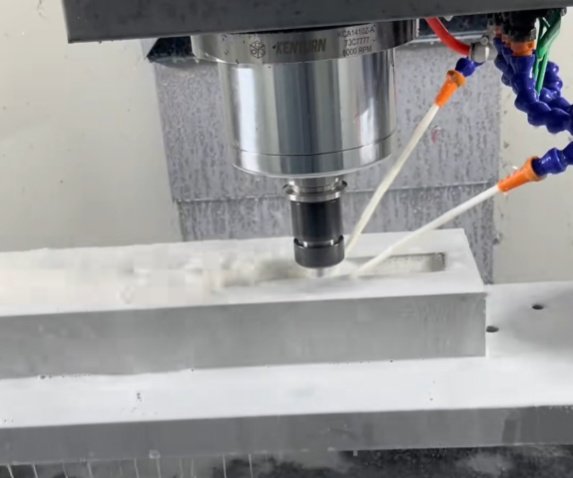
Hastelloy machining services in the USA deliver precision-engineered nickel-based superalloy components for industries where corrosion resistance, high-temperature stability, and structural integrity are non-negotiable. From CNC-turned Hastelloy C276 valve bodies to 5-axis milled Hastelloy X turbine combustors, American machine shops combine advanced multi-axis CNC technology, ceramic and CBN tooling, and ISO-certified quality systems to machine alloys that conventional shops cannot handle. With Hastelloy X exhibiting a machinability rating of just 16 percent that of 1112 steel, selecting a domestic specialist with proven superalloy expertise is critical to avoiding work hardening, tool failure, and dimensional drift.
Why Hastelloy Demands Specialized CNC Machining
Hastelloy alloys are nickel-molybdenum-chromium superalloys engineered for extreme chemical and thermal environments. Their exceptional properties—corrosion resistance in oxidizing and reducing acids, high-temperature strength up to 2,200°F (1,204°C) in Hastelloy X, and resistance to pitting and stress corrosion cracking—come at a machining cost.
The primary machining challenges include:
- Work hardening: Hastelloy work-hardens rapidly under cutting forces, transforming the surface layer into a harder, more abrasive phase that accelerates tool wear.
- Low thermal conductivity: Heat concentrates at the cutting zone rather than dissipating through the chip or workpiece, raising temperatures that degrade tool edges and distort tolerances.
- High strength at elevated temperatures: Hastelloy C276 maintains a tensile strength of 860 MPa and yield strength of 350 MPa even under aggressive cutting conditions.
- Abrasive carbide particles: The alloy microstructure contains hard intermetallic phases that cause notching and crater wear on standard carbide inserts.
These factors make Hastelloy machining a specialized discipline. General-purpose machine shops often struggle with excessive tool wear, poor surface finishes, and out-of-tolerance parts when attempting Hastelloy without process-specific expertise.
Key Hastelloy Grades Machined in the USA
American machining services typically work with four primary Hastelloy grades, each selected for specific environmental demands:
| Alloy Grade | UNS Number | Key Properties | Typical Machined Components |
|---|---|---|---|
| Hastelloy C276 | N10276 | Broad corrosion resistance; resists pitting, crevice corrosion, and chloride SCC | Reactor vessels, heat exchangers, valve bodies, pump impellers, flue gas desulfurization components |
| Hastelloy C22 | N06022 | Enhanced oxidizing acid resistance; superior to C276 in mixed-acid environments | Chemical reactor internals, pharmaceutical process equipment, bleaching plant digesters |
| Hastelloy X | N06002 | Exceptional oxidation resistance to 2,200°F; high-temperature creep resistance | Jet engine combustors, transition ducts, spray bars, furnace rolls, afterburner components |
| Hastelloy B-2 | N10665 | Superior hydrochloric acid resistance at all concentrations and temperatures | Acid-resistant piping, chemical reactor vessels, herbicide production equipment |
Grade selection directly impacts machining strategy. C276 and C22 require aggressive coolant strategies to manage heat in the cutting zone, while Hastelloy X demands tooling optimized for high-temperature strength retention rather than corrosion resistance.
CNC Machining Processes for Hastelloy Components
Precision Turning and Boring
CNC turning of Hastelloy demands rigid machine tools with high torque at low spindle speeds. For Hastelloy C276 rough turning, PVD-coated carbide inserts (comparable to KC5025 grade) operate at surface speeds of 25–55 SFM with feed rates of 0.010–0.020 IPR and depths of cut between 0.080–0.200 inches.
Finish turning pushes speeds to 55–110 SFM with reduced depths of 0.015–0.040 inches. Through-tool coolant delivery at 70–100 bar (1,000–1,500 psi) is standard practice to evacuate chips and suppress temperatures. For aerospace-certified components, CBN finishing inserts can achieve surface speeds up to 900 SFM—more than double carbide capability—dramatically reducing cycle time while maintaining Ra 32 or better surface finishes.
5-Axis Milling and Complex Geometry Machining
Multi-axis CNC milling addresses Hastelloy components with intricate geometries such as impellers, turbine blades, and manifold blocks. Trochoidal toolpaths with light radial engagement (5–15 percent of cutter diameter) and high axial depth leverage chip-thinning effects to reduce cutting forces and heat generation.
Recommended milling parameters for Hastelloy C276 using solid carbide end mills include:
- Cutting speed: 50–100 SFM for carbide tooling
- Feed per tooth: 0.002–0.004 inches
- Axial depth: 1.5–2.0× tool diameter
- Radial depth: 5–10 percent of tool diameter
- Coolant: High-pressure coolant (HPC) or minimum quantity lubrication (MQL) with through-spindle delivery
Drilling and Tapping
Drilling Hastelloy requires carbide-tipped or solid carbide drills with TiAlN coatings. Surface speeds of 30–35 SFM and feed rates of 0.004 inches per revolution prevent work hardening at the hole entrance.
Threading is typically performed via thread milling rather than tapping, as thread mills offer better chip control and reduce the risk of tap breakage in high-strength nickel alloys. Single-point threading with sharp TiAlN inserts at 15–30 SFM using multiple passes ensures accurate pitch diameter without tearing the thread form.
Micro-EDM and Non-Traditional Machining
For microholes and features below 0.020 inches in diameter, micro-electrical discharge machining (μ-EDM) bypasses the mechanical cutting forces that cause work hardening. Research demonstrates that brass electrodes achieve lower wear rates than tungsten carbide when drilling 8:1 aspect ratio microholes in Hastelloy, producing more precise holes with reduced taper.
Tooling and Coolant Strategies That Drive Results
Successful Hastelloy machining in the USA relies on tooling and coolant combinations specifically validated for nickel superalloys:
Tooling Materials:
- Whisker-reinforced ceramic inserts (e.g., 670-grade) for roughing forged surfaces and heavy stock removal performed dry
- PVD-coated fine-grain carbide with TiAlN or AlCrN coatings for general turning and milling
- CBN inserts for high-speed finishing operations where surface integrity is critical
- Solid carbide end mills with variable helix geometries to minimize chatter and harmonic vibration
Coolant Systems:
- High-pressure coolant (HPC): 70–100 bar through-tool delivery for turning and drilling
- Minimum quantity lubrication (MQL): Nanofluid-augmented lubrication using graphene-enhanced coolants has demonstrated measurable reductions in cutting temperature and surface roughness compared to conventional flood cooling
- Directed jet cooling: Targeted flood coolant for grooving and parting operations
Tool life in Hastelloy machining is typically measured in minutes rather than hours. A well-optimized process might achieve 15–25 minutes of cutting time per carbide edge in roughing operations, while CBN finishing inserts can extend to 45–60 minutes at elevated speeds.
Industries Served by US Hastelloy Machining Services
Chemical Processing and Petrochemical
Hastelloy C276 dominates chemical plant equipment due to its resistance to wet chlorine gas, sulfuric acid, hydrochloric acid, and phosphoric acid. Machined components include reactor vessel flanges, heat exchanger tube sheets, diaphragm valve bodies, and pump impellers. US machine shops serving this sector often hold ASME certifications and fabricate to NACE MR0175/ISO 15156 standards for sour service environments.
Aerospace and Gas Turbines
Hastelloy X is the alloy of choice for combustor cans, transition ducts, and afterburner components in jet engines and industrial gas turbines. These parts require tight tolerances on wall thickness (often ±0.005 inches) and surface finishes that minimize stress concentrations under thermal cycling.
Pharmaceutical and Food Processing
Hastelloy C22 and C276 components meet FDA and 3-A Sanitary Standards for process equipment exposed to aggressive cleaning chemistries (CIP/SIP cycles with caustic and acidic solutions). Machined parts include storage tank fittings, valve trim, and sensor housings requiring electropolished Ra 20 or better surface finishes.
Marine and Offshore Oil & Gas
Seawater corrosion resistance makes Hastelloy C276 suitable for subsea valve components, riser fittings, and platform hardware. Sour gas service components—exposed to hydrogen sulfide at high partial pressures—require HIC-tested material and machining processes that preserve the alloy's resistance to sulfide stress cracking.
Nuclear and Power Generation
Hastelloy X serves in high-temperature reactor systems and boiler components where creep resistance and oxidation stability over 10,000+ hour service lives are mandatory. Machined parts include heat exchanger headers, bellows, and structural honeycombs.
Quality Assurance and Certification Standards
Leading Hastelloy machining services in the USA maintain certifications that align with end-user industry requirements:
- ISO 9001:2015 for general quality management systems
- AS9100D for aerospace component manufacturing
- ISO 13485 for medical device components
- NADCAP accreditation for special processes (heat treatment, welding, NDT)
- ITAR registration for defense-related aerospace work
Material traceability is non-negotiable. Reputable shops source Hastelloy bar and forgings from Haynes International or authorized distributors, providing mill test reports (MTRs) with chemical composition, mechanical properties, and heat treatment records. First Article Inspection (FAI) per AS9102 and in-process CMM verification ensure dimensional compliance on critical features.
Cost Factors and Lead Time Considerations
Hastelloy machining costs reflect material expense and process complexity. Hastelloy C276 bar stock typically costs 8–12× more than 316 stainless steel on a per-pound basis. Machining adds further premium due to:
- Tool consumption: Carbide and ceramic insert costs can represent 15–25 percent of total job cost
- Machine time: Conservative cutting speeds extend cycle times 3–5× compared to aluminum or mild steel
- Setup complexity: Multi-operation jobs requiring turning, milling, and EDM demand advanced CAM programming and fixture design
- Inspection rigor: Superalloy components often require penetrant inspection, radiography, or ultrasonic testing
Typical lead times for custom Hastelloy machined components in the USA range from 4–8 weeks for prototype quantities to 8–16 weeks for production lots, depending on material availability and processing complexity. Shops with in-house raw material inventory and 5-axis capabilities can compress these timelines for urgent aerospace or chemical plant shutdown requirements.
Selecting a Hastelloy Machining Partner in the USA
When evaluating domestic Hastelloy machining services, prioritize shops that demonstrate:
- Documented superalloy experience: Request case studies or references for Hastelloy C276, C22, or X components in your specific industry
- Advanced equipment: 5-axis CNC mills with through-spindle coolant, rigid CNC lathes with live tooling, and CMM inspection capability
- Material expertise: Understanding of solution-annealed vs. age-hardened conditions, and how heat treatment affects machinability and final properties
- Process control: Statistical process control (SPC) data, tool life monitoring, and documented parameter sheets for repeatability
- Geographic coverage: Facilities located in industrial corridors (Texas Gulf Coast, Great Lakes region, California) with established supply chains for raw material and secondary processes
Shops with decades of Hastelloy experience—some serving American industry since the 1940s—have developed proprietary techniques for managing work hardening and thermal distortion that newer entrants have not yet validated.
Conclusion
Hastelloy machining services in the USA occupy a critical niche in advanced manufacturing. The combination of nickel superalloy metallurgy, demanding application environments, and tight quality requirements means that only specialized CNC machine shops can deliver components that perform reliably over decades of service. Whether the project involves a Hastelloy C276 valve body for a Texas refinery, a Hastelloy X combustor liner for a jet engine program, or a C22 pharmaceutical reactor fitting, partnering with a domestic specialist ensures access to the tooling expertise, process discipline, and certification infrastructure required for mission-critical superalloy components.