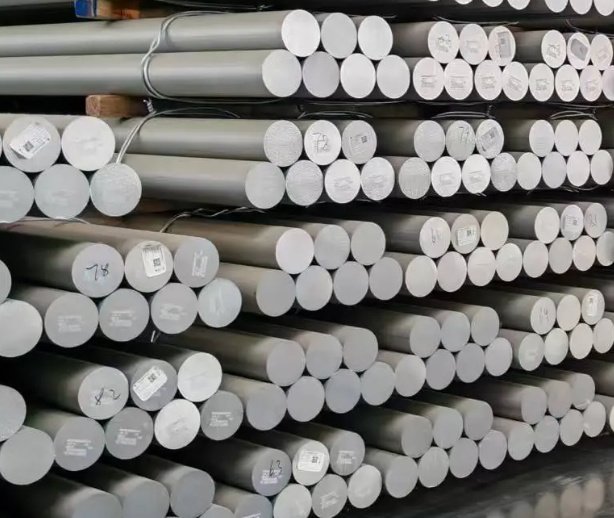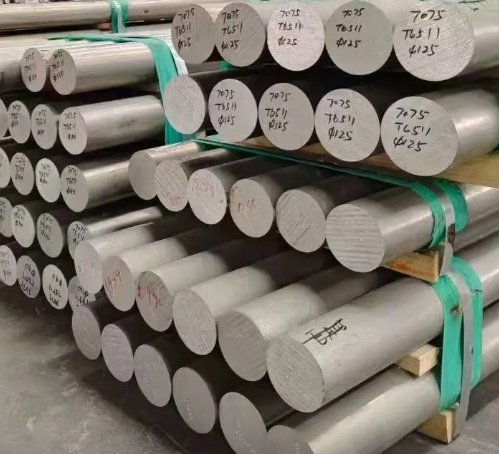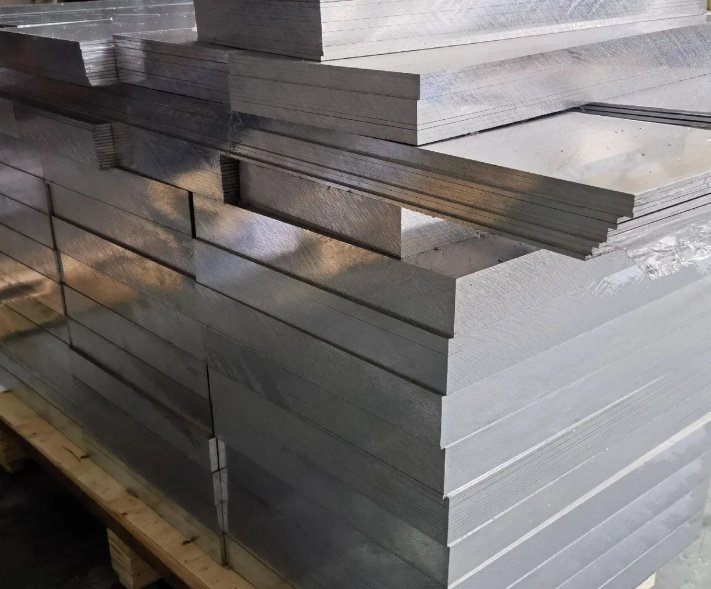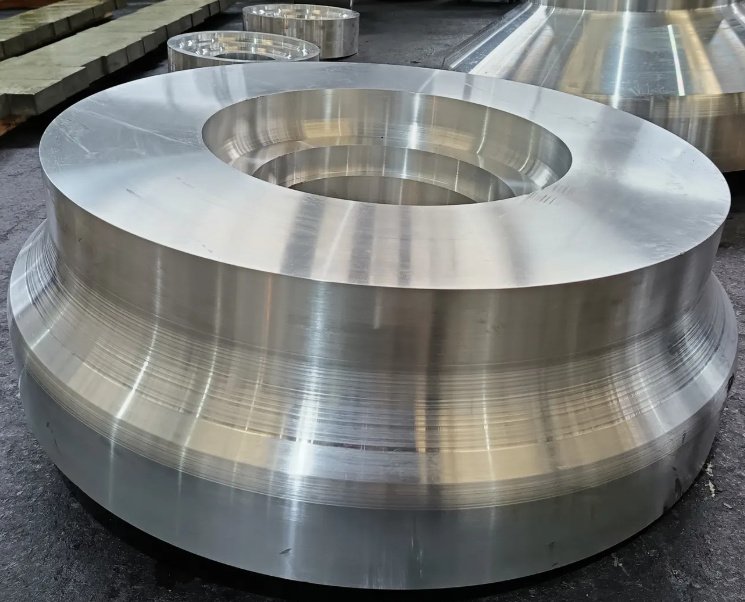
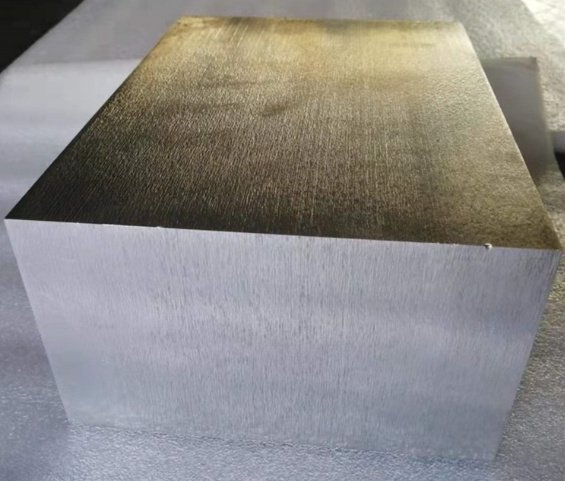
Aluminum 2195 is a high-strength aluminum-copper-lithium alloy developed for weight-critical aerospace structures, especially cryogenic propellant tanks and welded launch vehicle hardware. Also written as al alloy 2195 or Al 2195, it combines low density, high specific strength, good cryogenic performance, and improved stiffness compared with conventional 2xxx and 7xxx aluminum alloys.
For engineers, buyers, and fabricators, the key reason to evaluate Aluminum 2195 is simple: it can reduce structural mass while maintaining high load-bearing capability. In real aerospace tankage programs, replacing legacy 2219 aluminum with 2195 aluminum-lithium plate has been associated with meaningful mass reduction, improved payload efficiency, and better fracture-resistant welded structures when processing is tightly controlled.
What Is Aluminum 2195?
Aluminum 2195 is an Al-Cu-Li alloy strengthened primarily by copper and lithium additions, with magnesium, silver, and zirconium used to improve precipitation hardening response, thermal stability, grain structure, and damage tolerance. It belongs to the 2xxx series aluminum family but is often discussed separately because lithium additions reduce density and increase elastic modulus.
The alloy was developed for demanding aerospace applications where the design driver is not only tensile strength but also specific strength, fracture toughness, weldability, fatigue performance, and cryogenic compatibility. Typical product forms include plate, sheet, extrusions, forgings, and friction stir welded assemblies.
Typical Chemical Composition of Al Alloy 2195
The following composition ranges are representative of common 2195 aluminum specifications. Exact limits depend on the governing standard, mill source, and product form.
| Element | Typical Range, wt.% | Engineering Function |
|---|---|---|
| Aluminum | Balance | Base metal for low density and corrosion-resistant oxide formation |
| Copper | 3.7-4.3 | Primary strengthening element through precipitation hardening |
| Lithium | 0.8-1.2 | Reduces density and increases elastic modulus |
| Magnesium | 0.25-0.80 | Improves age-hardening response and strength |
| Silver | 0.25-0.60 | Promotes strengthening precipitates and improves thermal stability |
| Zirconium | 0.08-0.16 | Controls recrystallization and grain structure |
| Iron + Silicon | Usually tightly limited | Impurity control for toughness and fatigue performance |
Lithium is the signature addition. Each 1 wt.% lithium can reduce aluminum alloy density by roughly 3% and raise elastic modulus by approximately 6%, although final properties depend on full chemistry, temper, product thickness, and thermomechanical processing.
Mechanical and Physical Properties
Properties of 2195 aluminum vary by temper, plate thickness, orientation, and heat treatment. The most common aerospace tempers are T8, T87, and related stress-relieved conditions. The values below are representative engineering ranges, not a substitute for certified mill test reports.
| Property | Typical Value or Range | Why It Matters |
|---|---|---|
| Density | About 2.69-2.71 g/cm³ | Lower mass than many conventional aerospace aluminum alloys |
| Elastic Modulus | About 76-80 GPa | Higher stiffness than standard aluminum grades |
| Ultimate Tensile Strength | Approximately 520-590 MPa in high-strength tempers | Supports thin-gauge, load-bearing structural design |
| Yield Strength | Approximately 470-560 MPa in high-strength tempers | Important for tank wall, panel, and frame sizing |
| Elongation | Commonly 5-10% depending on product and direction | Affects forming margin and damage tolerance |
| Fracture Toughness | Temper and orientation dependent | Critical for cryogenic tanks and fail-safe aerospace structures |
| Service Behavior at Cryogenic Temperature | Generally favorable | Relevant to liquid hydrogen and liquid oxygen tank structures |
In aerospace design, the most valuable metric is often not absolute strength but specific strength: strength divided by density. This is where Aluminum 2195 can outperform heavier legacy materials even when processing cost is higher.
Aluminum 2195 vs 2219, 2024, 7075, and 2198
Selection should be made by application, not by strength alone. The table below compares common engineering reasons to choose or avoid each alloy.
| Alloy | Relative Strength | Density / Weight | Weldability | Typical Use Case | Comparison with Al 2195 |
|---|---|---|---|---|---|
| 2195 | Very high | Low for aluminum due to lithium | Good with controlled welding, especially friction stir welding | Cryogenic tanks, launch vehicle structures, high-performance aerospace panels | Best when weight reduction, stiffness, and welded aerospace performance justify premium cost |
| 2219 | Medium to high | Higher than 2195 | Excellent fusion weldability | Rocket tanks, high-temperature aerospace structures | More established and easier to weld, but heavier and generally lower in specific strength |
| 2024 | High | Standard aluminum density | Poor fusion weldability | Aircraft skins, ribs, fatigue-loaded sheet structures | More common and economical, but less suitable for welded cryogenic tanks |
| 7075 | Very high | Standard aluminum density | Poor weldability | Highly stressed aircraft fittings and machined parts | High strength, but not preferred for welded pressure or cryogenic tank structures |
| 2198 | High | Low | Application dependent | Aircraft fuselage sheet and damage-tolerant structures | Often considered for sheet-dominated airframe structures rather than large welded tanks |
Compared with 2219 aluminum, al alloy 2195 typically offers lower density and higher strength. Compared with 7075 aluminum, it offers better suitability for welded aerospace structures. Compared with 2024 aluminum, it provides a stronger weight-saving path for specialized cryogenic or launch vehicle applications, but with higher material and process-control requirements.
Engineering interpretation: when is 2195 better than 2219?
2195 is usually favored when the program value of mass reduction is high, such as launch vehicles, spacecraft tankage, and upper-stage structures. 2219 may remain preferable when proven fusion welding, broader availability, lower cost, or legacy qualification is more important than maximum weight savings.
Aerospace Applications and Real Engineering Value
Aluminum 2195 is strongly associated with advanced launch vehicle tank structures because it performs well in thin-wall, high-load, cryogenic environments. It has been used in large welded aerospace hardware where a small percentage reduction in structural mass can translate into substantial payload or performance benefits.
- Cryogenic liquid hydrogen and liquid oxygen tanks
- Launch vehicle domes, barrels, rings, and stiffened panels
- Friction stir welded tank sections
- High-specific-strength aerospace structural plate
- Weight-critical spacecraft and defense structures
A typical engineering result from switching from a conventional Al-Cu tank alloy to 2195 aluminum-lithium material is a structural weight saving in the range of several percent to over 10%, depending on design allowables, weld efficiency, panel geometry, and inspection requirements. In launch vehicle structures, even a 5-10% tank mass reduction can be commercially significant because every kilogram saved in structure may improve payload margin or mission flexibility.
Welding, Joining, and Heat Treatment Considerations
Welding is one of the most important topics for Al 2195. The alloy can be welded, but it demands tighter procedure control than many conventional aluminum alloys. Fusion welding may be used in some cases, but friction stir welding is often preferred for large aerospace structures because it produces a solid-state joint with reduced porosity, lower distortion, and improved repeatability.
Key welding and joining considerations include:
- Control of heat input to reduce overaging and strength loss in the heat-affected zone
- Proper tool design and travel speed for friction stir welding
- Post-weld inspection for voids, kissing bonds, root flaws, and surface defects
- Use of qualified welding procedures and statistically supported design allowables
- Consideration of post-weld aging or thermal exposure when required by specification
Heat treatment is also critical. 2195 aluminum relies on precipitation hardening, and its final properties are sensitive to solution treatment, quenching, stretching or stress relief, and artificial aging. Incorrect thermal history can reduce yield strength, fracture toughness, or corrosion resistance.
Common production problem: weld strength does not match design allowables
A frequent engineering issue is reduced strength in the weld nugget or heat-affected zone after joining. Corrective actions may include revising friction stir welding parameters, controlling plate temper before welding, improving clamping stiffness, verifying tool wear, and validating post-weld thermal exposure. For aerospace parts, the solution should be supported by tensile tests, bend tests, metallography, and nondestructive inspection.
Machining, Forming, and Fabrication Guidance
Machining Aluminum 2195 is practical with carbide tooling and modern high-speed machining strategies, but it should not be treated as a generic aluminum plate. Its high strength, precipitation-hardened microstructure, and residual stress behavior require attention to fixturing, toolpath planning, and dimensional control.
Machining Recommendations
- Use sharp carbide tools with polished flutes to reduce built-up edge.
- Apply stable workholding to minimize chatter in thin-wall parts.
- Use climb milling where machine rigidity allows.
- Control heat with suitable coolant or mist systems to protect dimensional stability.
- Use roughing and stress-relief strategies for large plate-derived parts.
- Verify final dimensions after thermal equalization, especially for precision aerospace components.
Forming and Bending
Formability depends strongly on temper. High-strength aged tempers have limited bendability compared with annealed or solution-treated conditions. For formed parts, engineers often specify intermediate forming conditions followed by final aging, or they design larger bend radii to reduce cracking risk.
Surface Treatment and Corrosion Control
Like other copper-containing aluminum alloys, 2195 should be protected when exposed to aggressive environments. Conversion coatings, anodizing systems compatible with the application, primers, sealants, and controlled storage practices are commonly used. Galvanic compatibility should be reviewed when 2195 contacts carbon fiber composites, stainless steel, titanium, or dissimilar aluminum alloys.
For machined aerospace hardware, surface integrity matters. Scratches, tool marks, corrosion pits, and handling damage can become fatigue initiation sites, especially in pressure-containing or cyclically loaded structures.
Procurement Notes for Engineers and Buyers
Buying Aluminum 2195 is different from buying commodity aluminum plate. It is a specialty aerospace alloy, so purchasers should confirm availability, certification, minimum order quantity, lead time, and whether the supplier can provide the exact temper and product form required by the drawing.
- Confirm alloy designation, temper, thickness, width, length, and grain direction.
- Request mill test reports with chemical composition and mechanical properties.
- Specify ultrasonic inspection if required for thick plate or critical structures.
- Check aerospace standards, customer specifications, and revision levels.
- Clarify whether material will be welded, formed, machined, or cryogenically tested.
- Evaluate total cost by finished-part performance, not just raw plate price.
For high-value structures, procurement should be coordinated with design engineering, manufacturing engineering, welding engineering, and quality assurance. A lower quoted material price may not be economical if it causes poor machinability, excessive residual stress, missing traceability, or unqualified weld performance.
Buyer checklist before releasing a purchase order
- Is the required temper clearly stated?
- Are mechanical properties required in L, LT, and ST directions?
- Is fracture toughness or fatigue data required by the design authority?
- Is ultrasonic inspection required?
- Will the material be friction stir welded or fusion welded?
- Are export control, aerospace traceability, or domestic sourcing rules applicable?
Advantages and Limitations of Aluminum 2195
| Advantages | Limitations |
|---|---|
| Lower density than conventional aluminum-copper alloys | Higher material cost and less commodity availability |
| High specific strength for aerospace structures | Processing window is narrower than standard alloys |
| Good cryogenic structural potential | Properties are highly dependent on temper and welding procedure |
| Suitable for friction stir welded tank structures | Requires strict inspection and qualification for critical applications |
| Higher stiffness than many standard aluminum alloys | Forming can be limited in high-strength tempers |
The best use case for 2195 aluminum is not general fabrication. It is a performance alloy for programs where weight, stiffness, cryogenic behavior, and qualified joining performance justify more demanding sourcing and manufacturing controls.
How to Specify Aluminum 2195 Correctly
A practical engineering specification should define more than the alloy number. For reliable procurement and production, include product form, temper, applicable standard, thickness tolerance, inspection class, mechanical property direction, heat treatment condition, and any joining or post-processing assumptions.
A clear material callout may include:
- Alloy: Aluminum 2195 or al alloy 2195
- Temper: T8, T87, T851, or other drawing-approved condition
- Product form: plate, sheet, extrusion, forging, or custom blank
- Inspection: mill certification, ultrasonic testing, dimensional inspection
- Performance requirements: tensile strength, yield strength, elongation, fracture toughness, fatigue, or cryogenic testing
- Manufacturing route: machining, forming, friction stir welding, fusion welding, or heat treatment after fabrication
If the part will be welded, the material specification should be aligned with the welding procedure specification. If the part will be heavily machined, residual stress and grain orientation should be reviewed early. If the part will operate at cryogenic temperature, design allowables should come from qualified data, not room-temperature assumptions alone.
In summary, Aluminum 2195 is a premium aluminum-lithium aerospace alloy designed for high specific strength, reduced mass, and demanding structural performance. When compared with 2219, 2024, 7075, and related Al-Li grades, its strongest value appears in welded, weight-critical, cryogenic, and launch vehicle structures. Correct material selection, qualified processing, and disciplined inspection are essential to capturing the full benefit of Al 2195.