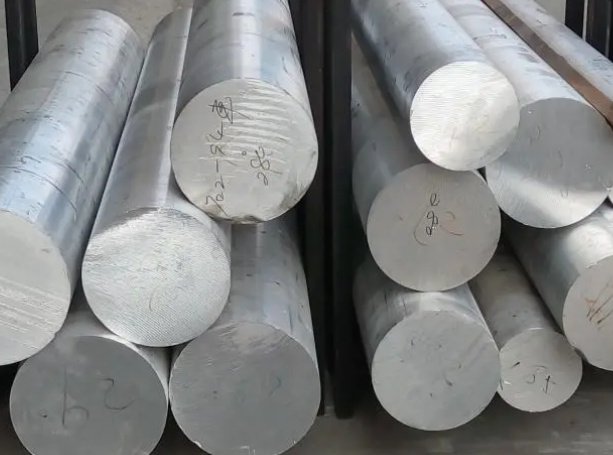
4043 Aluminum is an aluminum-silicon alloy best known as one of the most widely used aluminum welding filler metals. In commercial specifications, it is commonly supplied as ER4043 welding wire, rods, spools and cut-length TIG filler. The alloy is valued for its silicon content, good fluidity, reduced hot-cracking tendency and smooth weld appearance on many 5xxx, 6xxx and cast aluminum base materials.
For engineers, buyers and fabrication teams, the key search intent behind Al 4043 is usually practical: confirm whether it is the right filler alloy, compare it with ER5356 or ER4047, verify chemistry limits, understand welding behavior, and avoid field problems such as cracking, poor anodized color match or strength mismatch.
What Is 4043 Aluminum?
4043 Aluminum is an Al-Si filler alloy containing approximately 4.5% to 6.0% silicon. The added silicon lowers the melting range, improves molten puddle flow and helps reduce shrinkage cracking during aluminum welding. It is not normally selected as a structural wrought plate or bar alloy in the same way as 6061, 5052 or 7075; instead, it is primarily used as a joining alloy.
Common product forms include MIG wire, TIG rod, straight lengths, coils and spooled wire for robotic welding. The alloy is also referenced as ER4043 under AWS A5.10/A5.10M filler metal classifications. In purchasing documents, equivalent wording may include al alloy 4043, aluminum alloy 4043, ER4043, AWS 4043 or AlSi5 filler metal.
4043 Aluminum Chemical Composition
The following composition range is commonly associated with ER4043 aluminum filler metal. Exact limits should be verified against the purchase specification, mill certificate or welding code requirement.
| Element | Typical Limit or Range | Role in Al 4043 |
|---|---|---|
| Aluminum | Balance | Base metal of the alloy |
| Silicon | 4.5% - 6.0% | Improves fluidity, lowers melting range and reduces cracking tendency |
| Iron | 0.80% max | Controlled impurity; excessive iron can affect ductility |
| Copper | 0.30% max | Controlled to limit corrosion and cracking sensitivity |
| Manganese | 0.05% max | Trace element control |
| Magnesium | 0.05% max | Kept low because Mg can affect fluidity and cracking behavior |
| Zinc | 0.10% max | Controlled impurity |
| Titanium | 0.20% max | Can contribute to grain refinement in controlled amounts |
The defining feature of Aluminum 4043 is its silicon level. Compared with magnesium-rich fillers such as ER5356, the silicon-bearing weld pool wets the joint more easily and typically produces a flatter, smoother bead profile.
Key Physical and Mechanical Properties
4043 Aluminum filler metal is selected more for weldability than for maximum tensile strength. Its properties depend on wire chemistry, welding process, base metal, heat input, dilution, joint design and post-weld condition.
| Property | Typical Value or Engineering Range | Practical Meaning |
|---|---|---|
| Density | About 2.68 g/cm³ | Similar lightweight behavior to other aluminum alloys |
| Melting range | About 573 - 632°C, or 1065 - 1170°F | Lower than many base aluminum alloys, supporting good flow |
| Electrical conductivity | Moderate for aluminum filler metals | Relevant for bus bars and electrical assemblies where weld conductivity matters |
| Weld metal tensile strength | Often around 120 - 180 MPa depending on procedure and base alloy | Usually lower than ER5356 but adequate for many 6xxx and casting welds |
| Ductility | Moderate | Good enough for many fabrication joints, but not the first choice where high ductility is required |
| Heat treatability | Non-heat-treatable filler alloy | Strength is not significantly increased by precipitation hardening of the filler itself |
When welded to heat-treatable base alloys such as 6061-T6, the heat-affected zone normally loses strength compared with the original T6 temper. This loss is controlled by the base alloy metallurgy and heat input, not only by the filler metal.
Where 4043 Aluminum Is Used
Aluminum 4043 is used in applications where weldability, puddle control and resistance to weld cracking are more important than maximum as-welded strength. Common uses include:
- Welding 6061, 6063 and other 6xxx series aluminum extrusions
- Joining aluminum castings, especially Al-Si casting alloys
- Automotive brackets, housings, frames and repair welds
- Heat exchanger components and aluminum fabrications
- General MIG and TIG welding of aluminum sheet, tube and extrusions
- Robotic welding where bead appearance and process stability matter
- Repair work where crack sensitivity must be minimized
The alloy is especially useful when welding crack-sensitive base materials. Its lower melting range and high fluidity help fill the joint with less shrinkage stress than many higher-strength filler metals.
4043 Aluminum vs 5356, 4047 and 6061
Choosing al alloy 4043 is often a comparison decision. The best filler depends on base metal, service temperature, anodizing requirement, corrosion environment and required mechanical performance.
| Material | Main Alloying Concept | Strength | Weldability | Best-Fit Use |
|---|---|---|---|---|
| 4043 Aluminum | Al-Si, about 5% silicon | Moderate | Excellent flow and low cracking tendency | General 6xxx welding, castings, smooth beads |
| ER5356 | Al-Mg, about 5% magnesium | Higher than 4043 in many welds | Good, but less fluid than 4043 | Marine fabrications, 5xxx alloys, higher strength joints |
| ER4047 | Al-Si, about 12% silicon | Moderate | Very high fluidity, very low melting range | Brazing-like flow, leak-tight joints, cast repair |
| 6061 Aluminum | Al-Mg-Si base alloy | High in T6 temper | Needs suitable filler such as 4043 or 5356 | Extrusions, plate, structural components |
4043 vs 5356: ER4043 usually gives a smoother bead, better wetting and lower crack sensitivity. ER5356 usually provides higher as-welded strength and better color match after anodizing, but it may be less suitable for elevated-temperature service above about 65°C in some stress-corrosion-sensitive applications involving magnesium-bearing weld metal.
4043 vs 4047: ER4047 has more silicon, so it flows even more freely and has a lower melting range. It can be advantageous for leak-tight joints and cast repair, but it may not be necessary for general fabrication where ER4043 already provides adequate fluidity and a more common supply chain.
4043 vs 6061: 6061 is a structural base alloy; 4043 is primarily a filler alloy. They are not direct substitutes. A common engineering pairing is 6061 base metal welded with ER4043 filler.
Welding Performance and Processing Guidance
4043 Aluminum performs well in both gas metal arc welding and gas tungsten arc welding. It is commonly supplied as ER4043 MIG wire and ER4043 TIG rod. For most applications, pure argon shielding gas is used, while argon-helium mixtures may be selected for thicker sections or higher travel speeds.
MIG Welding with ER4043
MIG welding with ER4043 benefits from stable wire feeding, proper liner selection and good oxide removal. Aluminum wire is soft compared with steel wire, so a U-groove drive roll, clean liner and correct contact-tip size help reduce bird-nesting and burnback.
- Use direct current electrode positive for standard MIG welding.
- Remove aluminum oxide mechanically or chemically before welding.
- Keep wire dry and clean to reduce porosity risk.
- Use push gun angle rather than drag technique for cleaner shielding coverage.
- Control heat input to limit distortion and heat-affected-zone softening.
TIG Welding with ER4043
TIG welding with Aluminum 4043 provides excellent puddle control and is widely used for repair, precision fabrication and cast aluminum welding. Alternating current TIG with proper balance control helps break up the refractory aluminum oxide layer.
For castings, pre-cleaning is critical. Oil, machining coolant and oxide trapped in porous cast aluminum can cause porosity even when the filler metal is correct. In many repair shops, controlled preheating in the range of about 100 - 200°C is used for thick or contaminated castings to reduce thermal shock and drive off moisture.
Machining, Forming and Finishing Considerations
As a filler metal, al alloy 4043 is not usually machined as bulk stock. However, welded beads are often ground, machined or blended after fabrication. The silicon content can make the weld deposit feel slightly harder and more abrasive to cutting tools than pure aluminum weld metal.
- Use sharp carbide tools for machining weld beads where dimensional cleanup is required.
- Avoid excessive grinding heat that can smear aluminum and load abrasives.
- Expect a different anodized color than the base metal, especially on 6xxx aluminum.
- Use proper cleaning before finishing because silicon-rich welds may etch differently.
Real Engineering Issues Solved by Al 4043
One common production issue is centerline cracking when welding 6061 extrusions using an unsuitable filler or excessive restraint. Switching to Al 4043 often reduces cracking because silicon improves weld pool fluidity and narrows the brittle solidification range compared with many base-metal dilution conditions.
In a typical fabrication comparison, a 6061-T6 assembly welded with ER4043 may show smoother bead toe transition and fewer crater cracks than a poorly matched filler procedure. In controlled shop trials, teams often evaluate results using measurable criteria such as X-ray porosity rate, visual crack count, bend-test results, leak-test pass rate and rework hours per 100 welded parts.
For example, in cast aluminum repair, replacing an overly stiff filler with 4043 Aluminum can reduce post-weld grinding and rework because the puddle wets casting edges more easily. The result is not only cosmetic; smoother toe geometry can reduce local stress concentration when the joint is cyclically loaded.
Buyer and engineer notes for purchasing 4043 Aluminum filler
When buying ER4043 wire or rod, specify diameter, spool size, AWS classification, temper or delivery condition if applicable, lot traceability and certificate requirements. For automated welding, also check cast and helix consistency, surface finish, wire cleanliness and packaging moisture control. Low-cost wire with poor feedability can increase downtime even if the nominal chemistry is correct.
Advantages and Limitations of 4043 Aluminum
Aluminum 4043 is a strong general-purpose choice, but it is not universal. The following advantages and limitations should be considered before specifying it.
| Category | Advantage | Limitation |
|---|---|---|
| Weldability | Excellent fluidity and reduced hot cracking | Can be too fluid for some vertical or overhead work without parameter control |
| Strength | Adequate for many general aluminum welds | Lower strength than ER5356 in many applications |
| Appearance | Smooth, bright weld bead before finishing | Poorer anodized color match; weld may turn gray after anodizing |
| Crack resistance | Good resistance on many 6xxx alloys and castings | Not suitable for every aluminum alloy family |
| Availability | Widely stocked in MIG and TIG sizes | Special diameters or certified lots may require lead time |
Do not select 4043 solely by habit. Confirm base alloy compatibility, service temperature, finishing requirement and design strength. For marine or anodized architectural components, another filler may be more suitable depending on the specification.
When not to use 4043 Aluminum
4043 may be a poor fit where the weld must closely match the base metal after clear anodizing, where higher as-welded strength is required, or where the applicable welding code specifies another filler. It is also not intended as a direct replacement for structural aluminum plate, bar or extrusion alloys.
Base Metal Compatibility
4043 Aluminum is commonly used with many 6xxx series alloys and aluminum castings. It can also be used with selected 3xxx and 5xxx materials depending on the application, but filler selection should always follow engineering rules, code requirements and service conditions.
| Base Material | Compatibility with ER4043 | Engineering Note |
|---|---|---|
| 6061 | Very common | Good crack resistance; lower strength than some 5356 welds |
| 6063 | Very common | Used for extrusions, frames and architectural fabrications |
| 356 cast aluminum | Common | Good match for Al-Si castings and repair welds |
| 3003 | Often usable | Check required strength and forming after welding |
| 5052 | Application dependent | ER5356 is often preferred for 5xxx alloys, especially when strength or color match matters |
| 7075 | Generally not recommended for fusion welding | High-strength 7xxx alloys are crack-sensitive and often require alternate joining methods |
Quality Control, Defects and Troubleshooting
Even when the correct filler is selected, weld quality depends on preparation and process control. Typical defects in Aluminum 4043 welds include porosity, lack of fusion, oxide inclusions, crater cracking and excessive penetration variation.
- Porosity: Often linked to moisture, hydrocarbon contamination, poor gas shielding or contaminated castings.
- Lack of fusion: Common when oxide is not removed or heat input is too low.
- Crater cracks: Prevent with crater fill, slope-down control and avoiding abrupt arc termination.
- Burn-through: Control with travel speed, backing support, pulse settings and joint fit-up.
- Gray anodized welds: Expected because silicon-rich weld metal responds differently during anodizing.
A practical inspection plan may include visual inspection, dye penetrant testing, radiography for critical castings, macro-etch cross sections during procedure qualification and destructive bend tests for production approval.
Production data to track when qualifying Al 4043
Useful metrics include wire feed speed stability, arc-on time, porosity count per weld length, tensile test results, bend-test pass rate, leak-test failure rate, rework minutes per assembly and contact-tip life. Tracking these values before and after filler changes helps separate true alloy performance from machine setup or operator variation.
Standards, Specifications and Ordering Terms
4043 Aluminum filler metal is commonly specified under AWS A5.10/A5.10M as ER4043. Other industry or customer specifications may apply for aerospace, automotive, pressure-containing components or certified structural work. Always confirm the governing document before procurement.
Common ordering details include:
- Classification: ER4043
- Product form: MIG wire, TIG rod, coil or straight length
- Diameter: common sizes include 0.8 mm, 0.9 mm, 1.0 mm, 1.2 mm, 1.6 mm, 2.4 mm and 3.2 mm depending on process
- Packaging: spool, drum, tube, box or moisture-protected package
- Documentation: certificate of analysis, lot traceability, RoHS or customer-specific compliance when required
- Application data: base alloy, thickness, welding process, shielding gas and inspection level
The most reliable specification practice is to identify both the filler classification and the base metal being welded. For example, “ER4043 filler wire for welding 6061-T6 aluminum extrusion” is more useful than “4043 wire” alone.
Summary: Is 4043 Aluminum the Right Choice?
4043 Aluminum is one of the most practical and widely used aluminum filler alloys for general fabrication, 6xxx series welding and cast aluminum repair. Its Al-Si chemistry gives it excellent flow, lower crack sensitivity and a clean weld profile. It is often the right choice when the priority is stable welding performance rather than maximum weld strength or perfect anodized color matching.
Choose Al 4043 when you need dependable weldability, smooth bead appearance and strong resistance to hot cracking on compatible aluminum base metals. Compare it carefully with ER5356 when strength, marine exposure or anodized finish appearance is important, and compare it with ER4047 when even higher silicon content and greater fluidity are required.