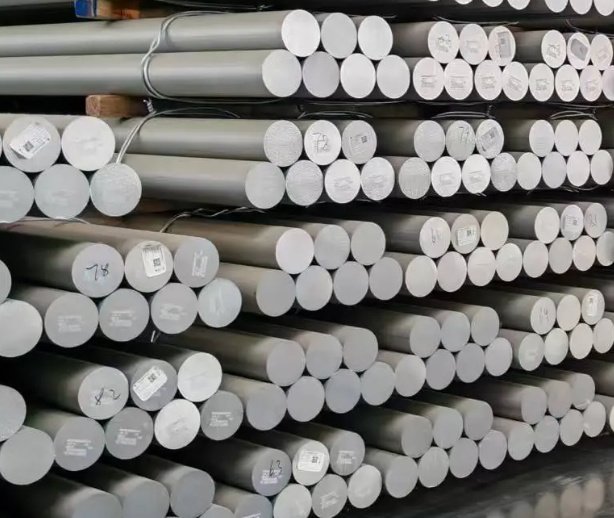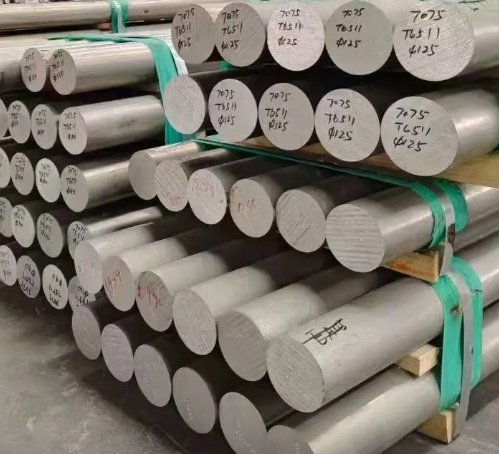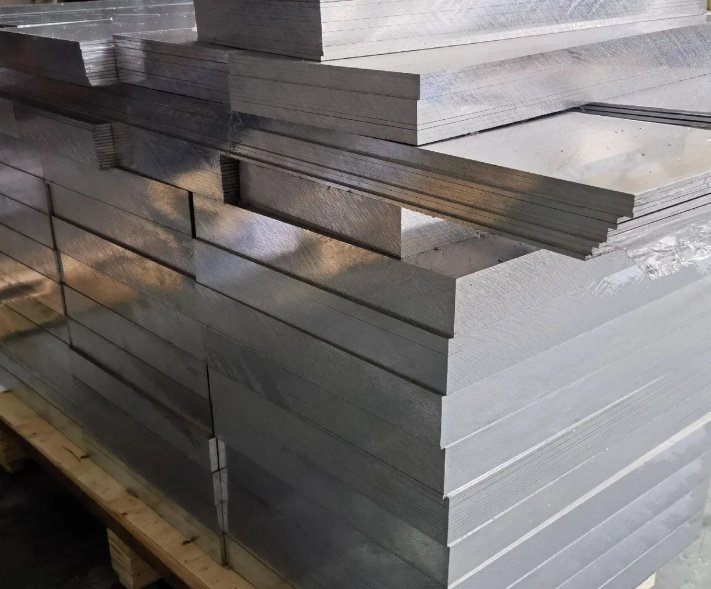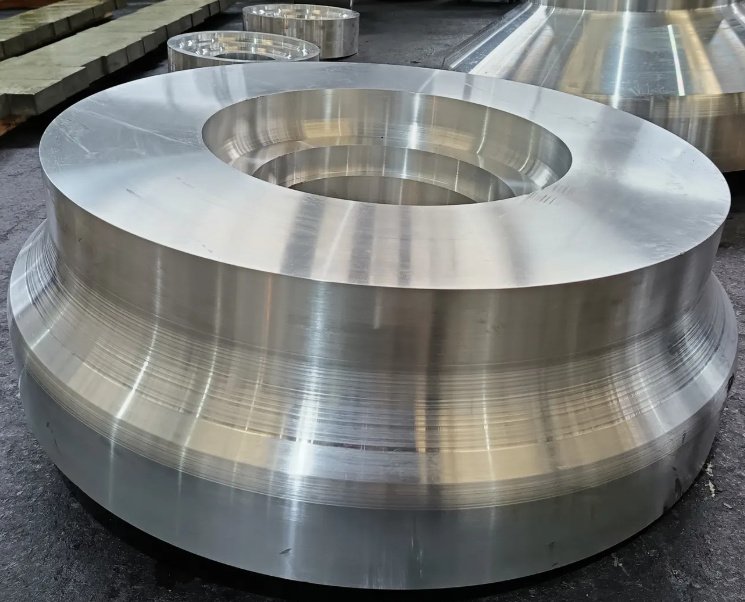
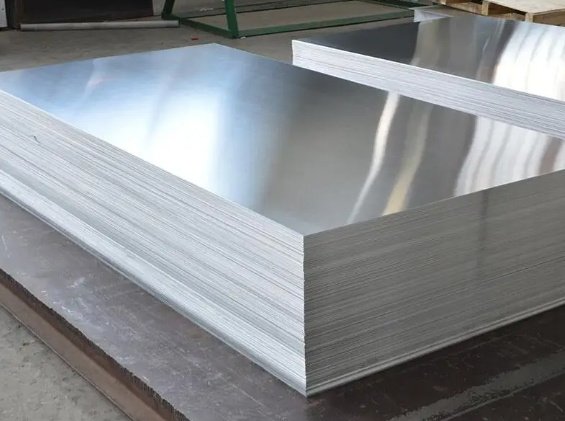
4047 Aluminum is a high-silicon aluminum alloy commonly selected for brazing, welding filler metal, leak-tight joints, thin-wall heat exchangers, and applications that require excellent fluidity during melting. Also searched as Al 4047, al alloy 4047, or Aluminum 4047, this material is valued because its 11%–13% silicon content lowers the melting range and improves flow compared with many general-purpose aluminum alloys.
This page is written for engineers, fabricators, and technical buyers who need a practical answer: what 4047 aluminum is, when it outperforms 4043 or 6061, how it behaves during welding and brazing, and what should be checked before procurement.
What Is 4047 Aluminum?
Aluminum 4047 is an aluminum-silicon alloy in the 4xxx series. It is not usually chosen as a high-strength structural alloy; instead, it is widely used where melting behavior, joint filling, castability, and dimensional stability during thermal joining matter more than base-metal strength.
The alloy is often specified as sheet, strip, foil, brazing clad layer, wire, rod, or welding filler. In filler applications, 4047 is commonly associated with ER4047 or similar aluminum-silicon filler classifications, depending on the applicable standard and product form.
- Alloy family: 4xxx aluminum-silicon alloy
- UNS designation: commonly referenced as A94047
- Primary alloying element: silicon
- Typical silicon range: 11.0%–13.0%
- Heat treatment response: generally non-heat-treatable as a standalone alloy
- Common use: brazing, welding filler, cladding, leak-tight assemblies, and cast repair
4047 Aluminum Chemical Composition
The defining feature of al alloy 4047 is its high silicon level. Silicon reduces melting temperature, improves molten flow, and decreases solidification shrinkage. Exact limits should always be verified against the purchase specification, mill certificate, ASTM/EN/JIS standard, or welding wire classification being used.
| Element | Typical Range or Maximum, wt.% | Engineering Relevance |
|---|---|---|
| Silicon, Si | 11.0–13.0 | Improves fluidity, lowers melting range, reduces shrinkage |
| Iron, Fe | 0.8 max | Can affect ductility and intermetallic formation |
| Copper, Cu | 0.30 max | Higher copper may reduce corrosion resistance |
| Manganese, Mn | 0.15 max | Minor control element |
| Magnesium, Mg | 0.10 max | Low magnesium helps maintain brazing behavior |
| Zinc, Zn | 0.20 max | Impurity control |
| Titanium, Ti | 0.20 max | May support grain refinement depending on product route |
| Aluminum, Al | Balance | Base metal |
In brazing sheet, 4047 may be used as a clad layer over a core alloy such as 3003, 6951, or another aluminum alloy selected for strength, corrosion behavior, or thermal conductivity.
Key Properties of Aluminum 4047
The properties below are typical engineering reference values. They can vary with product form, temper, manufacturing route, thickness, grain structure, and test standard. For final design, use certified data from the actual supplier lot.
| Property | Typical Value | Design Interpretation |
|---|---|---|
| Density | About 2.66 g/cm³ | Lightweight compared with copper, brass, and steel |
| Melting range | Approximately 577–582 °C | Narrow melting range supports brazing and controlled joining |
| Thermal conductivity | Typically around 130–150 W/m·K | Useful for heat transfer assemblies, depending on temper and condition |
| Coefficient of thermal expansion | Lower than many low-silicon aluminum alloys | Improves dimensional stability in thermal cycles |
| Electrical conductivity | Moderate for aluminum alloys | Not normally selected as a primary conductor alloy |
| Corrosion resistance | Generally good in many atmospheric environments | Application-specific validation is needed for chloride or galvanic exposure |
| Strength | Lower than structural alloys such as 6061-T6 | Often used as filler or cladding rather than load-bearing base metal |
The narrow melting range is a major reason engineers choose 4047 instead of a broader-freezing filler. A smaller solidification interval can reduce hot cracking tendency and improve joint fill in carefully controlled welding or brazing processes.
4047 Aluminum vs 4043, 6061 and 3003
Many searches for 4047 Aluminum are comparison-driven. The most common decision is whether to use 4047 or 4043 as a filler, or whether 4047 can replace a structural alloy such as 6061. The answer depends on whether the requirement is joint flow, strength, machinability, anodized appearance, or base-metal performance.
| Alloy | Main Character | Typical Advantage | Typical Limitation | When to Choose |
|---|---|---|---|---|
| 4047 | High-silicon Al-Si alloy | Excellent flow, low melting range, reduced shrinkage | Lower structural strength than 6xxx alloys | Brazing, welding filler, sealing, thin joints, cast repairs |
| 4043 | Medium-silicon Al-Si filler alloy | Common, versatile, good weldability | Wider melting range and less silicon than 4047 | General aluminum welding, especially 6xxx base metals |
| 6061 | Heat-treatable Al-Mg-Si structural alloy | Good strength, machinability, extrudability | Weld zone can lose T6 strength without post-weld treatment | Frames, plates, machined parts, structural components |
| 3003 | Al-Mn non-heat-treatable alloy | Good formability and corrosion resistance | Lower strength than 6061 | Heat exchanger cores, sheet metal, tanks, brazed assemblies |
Compared with 4043, al alloy 4047 usually provides better fluidity and a narrower melting interval. Compared with 6061, it is not a strength substitute; it is more often a joining, cladding, or filler solution.
Buyer and engineer note: choosing 4047 versus 4043 filler
If the project involves tight joint clearance, leak-tight sealing, thin aluminum parts, or cast aluminum repair, 4047 can be favored because the higher silicon content improves flow. If color match after anodizing is important, test panels are recommended because high-silicon weld metal may anodize darker than the surrounding base metal.
Common Applications of Al 4047
Al 4047 is most valuable where molten alloy behavior affects part quality. It is often selected by manufacturers of thermal systems, automotive components, electronics housings, and aluminum assemblies requiring consistent joints.
- Aluminum brazing sheet and clad strip
- Heat exchangers, radiators, evaporators, condensers, and charge-air coolers
- Welding filler wire for selected aluminum base metals
- Repair of aluminum-silicon castings
- Leak-tight joints in thin-wall aluminum assemblies
- Furnace brazing, torch brazing, induction brazing, and controlled-atmosphere brazing
- Laser welding or precision joining where filler flow control is needed
- Electronic packaging and housings requiring thermal management
In heat exchanger production, 4047 cladding can melt and flow into fin-to-tube or plate-to-plate interfaces while the core alloy retains shape. This is why 4047 is frequently discussed with brazing sheet, controlled atmosphere brazing, flux brazing, and vacuum brazing.
Processing, Fabrication and Machining Guidance
Processing behavior is a key search intent for Aluminum 4047. The alloy is generally easy to melt and flow, but its high silicon content also affects machining, forming, anodizing, and weld appearance.
Welding and Brazing
4047 is widely used as filler metal because it wets and fills well when the joint is properly cleaned, fluxed where required, and controlled for temperature. Joint clearance, oxide removal, heat input, and base-metal compatibility have a strong influence on final quality.
- Clean oxide and contaminants before joining.
- Use proper joint clearance; overly wide gaps can consume filler and reduce strength.
- Control heat input to avoid base-metal distortion, burn-through, or excessive silicon-rich phases.
- Use a compatible filler classification and confirm whether the application requires AWS, ASTM, EN, or customer-specific approval.
Machining
The high silicon content can improve dimensional stability but may increase tool wear compared with softer aluminum alloys. Carbide tooling, sharp cutting edges, adequate chip evacuation, and suitable coolant are commonly used for consistent surface finish.
Practical machining considerations include:
- Use carbide or diamond-coated tools for long production runs.
- Avoid built-up edge by maintaining proper speed, feed, and lubrication.
- Expect a different chip behavior than 6061 or 3003 due to silicon particles.
- Validate surface roughness if sealing faces or thermal interfaces are required.
Forming and Heat Treatment
4047 is not typically strengthened by precipitation heat treatment in the same way as 6061-T6. Formability depends on product form and temper. When used as a clad layer, the core alloy often controls forming behavior, while the 4047 layer controls brazing performance.
Surface Finishing and Anodizing
Aluminum 4047 can be anodized, but high silicon content may produce a darker or gray appearance compared with lower-silicon aluminum alloys. If a cosmetic anodized finish is required, prototype samples should be processed before approving production.
Manufacturing note: typical real-world processing issue
A common issue in brazed aluminum assemblies is incomplete fillet formation. In many cases the root cause is not the alloy itself but insufficient surface preparation, poor joint gap control, inadequate flux distribution, or uneven furnace temperature. Because 4047 has a narrow melting range near 577–582 °C, furnace uniformity and dwell time must be controlled carefully to melt the clad layer without overheating the core.
Engineering Performance: Problems 4047 Helps Solve
Engineers often specify 4047 aluminum to solve manufacturing and reliability problems rather than to maximize tensile strength. Typical problems include hot cracking, poor filler flow, porosity, leakage, and inconsistent brazed joints.
| Problem | Why It Happens | How 4047 Helps | Verification Method |
|---|---|---|---|
| Hot cracking in welded joints | Wide freezing range and shrinkage stress | High silicon content can reduce cracking sensitivity in suitable joints | Weld procedure qualification and cross-section inspection |
| Leakage in brazed heat exchangers | Poor wetting, blocked flow, contamination, or inadequate filler | Good molten flow improves fillet formation when process control is correct | Helium leak test, pressure decay, burst test |
| Distortion in thin aluminum assemblies | Excess heat input and uneven thermal expansion | Lower melting range supports reduced thermal exposure compared with many base alloys | Dimensional inspection before and after brazing |
| Inconsistent cast aluminum repair | Base casting porosity, oxide films, and poor filler compatibility | Al-Si filler chemistry is often compatible with aluminum-silicon castings | Dye penetrant, radiography, machining trial |
As a data-oriented example, 4047’s melting interval is often only about 5 °C, while a common filler such as 4043 has a broader melting range. This difference can improve flow predictability in brazing and precision joining, although final performance still depends on cleanliness, joint design, thermal cycle, and base alloy.
Specification, Forms and Procurement Checks
When sourcing Aluminum 4047, buyers should define more than just the alloy number. Product form, temper, dimensional tolerance, surface condition, coil width, wire diameter, cladding ratio, and certification requirements can change performance in production.
| Item to Specify | Why It Matters |
|---|---|
| Alloy designation | Confirm 4047, ER4047, clad 4047 layer, or customer-specific chemistry |
| Product form | Sheet, strip, foil, wire, rod, powder, clad material, or preform |
| Temper | Controls handling, forming, and fabrication response |
| Thickness or diameter tolerance | Critical for brazing filler volume, wire feed stability, and joint consistency |
| Surface condition | Oxide, oil, scratches, and contamination affect brazing and welding quality |
| Applicable standard | May include ASTM, AWS, AMS, EN, ISO, or customer drawing requirements |
| Certification | Mill test report, chemical analysis, mechanical data, RoHS/REACH, or traceability |
Purchasing note: questions to resolve before ordering
- Is the requirement for base metal, welding filler, brazing filler, or clad layer?
- Does the drawing require exact chemistry limits or only an alloy designation?
- Will the part be anodized, painted, brazed, welded, machined, or pressure tested?
- Is lot traceability required for automotive, aerospace, electronics, or pressure components?
- Are sample coupons needed for brazing trials or weld procedure qualification?
Design Limits and Best Practices
4047 is highly useful, but it should not be treated as a universal replacement for structural aluminum alloys. Its value is strongest in joining and filler applications. For load-bearing designs, the engineer should evaluate the strength of the full assembly, including base metal, heat-affected zone, filler metal, and post-processing condition.
Recommended best practices include:
- Use certified composition and lot traceability for critical applications.
- Perform trial brazing or welding before scaling production.
- Validate corrosion performance in the actual service environment.
- Check anodized color match if appearance matters.
- Confirm compatibility with base alloys such as 6061, 6063, 3003, 5052, or Al-Si castings.
- Use metallographic cross-sections to verify fillet formation, voids, penetration, and diffusion behavior.
For most projects, Aluminum 4047 is best specified when the success of the part depends on reliable molten flow, controlled brazing behavior, reduced shrinkage, and compatibility with aluminum-silicon joining systems.
Summary
4047 Aluminum is a high-silicon aluminum alloy designed for flow, joining, and thermal processing performance. It is especially relevant for brazing sheet, welding filler wire, heat exchangers, cast aluminum repair, and precision aluminum assemblies. Compared with 4043, it offers higher silicon content and better flow; compared with 6061, it is less structural but much more suitable as a filler or brazing alloy.
The practical selection rule is simple: choose 4047 when the application needs controlled melting, strong filler flow, and reduced hot-cracking risk; choose structural alloys such as 6061 when strength and machining of the base component are the primary requirements.