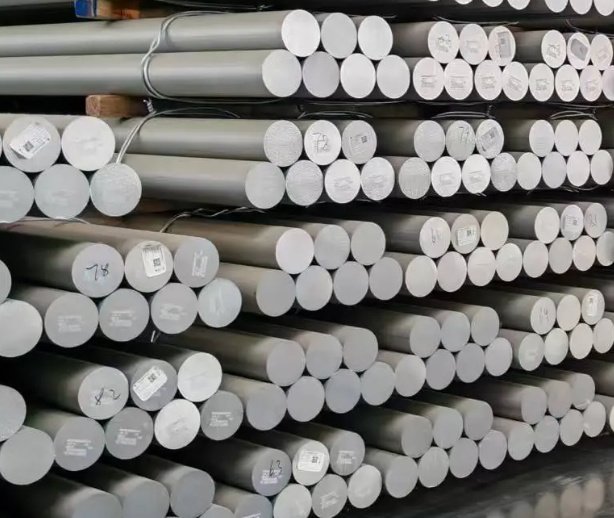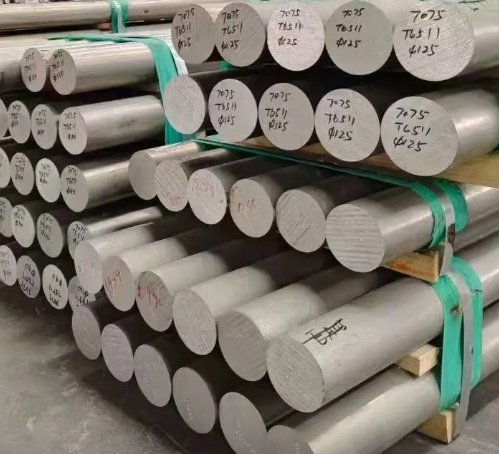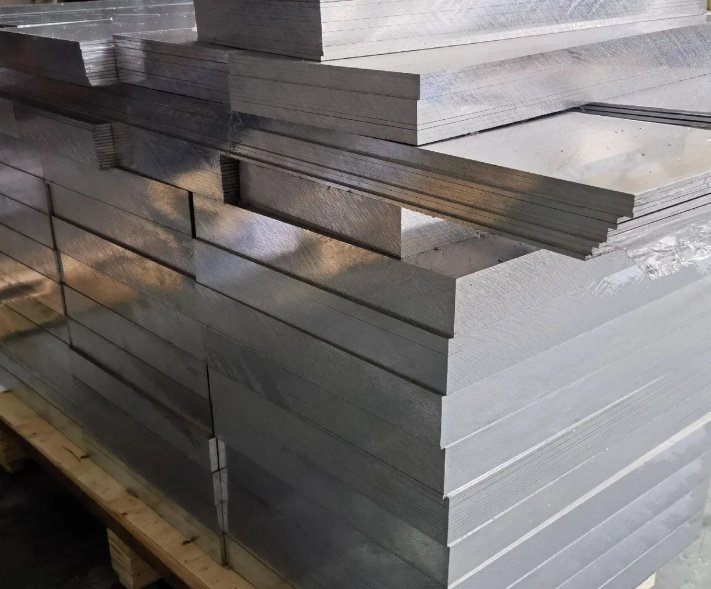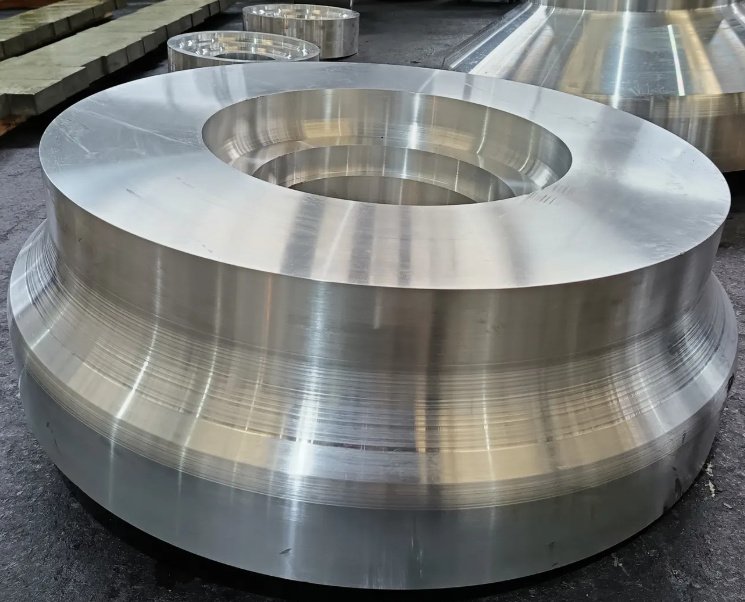
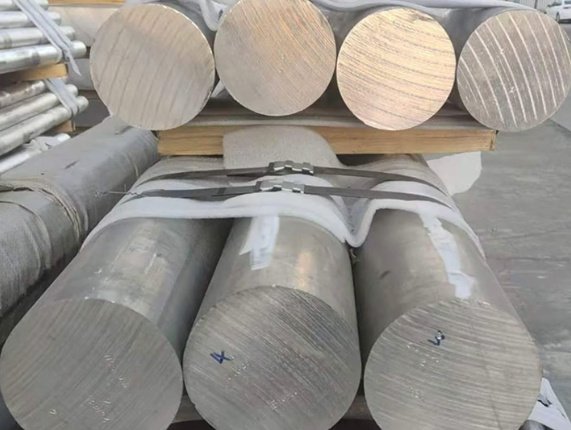
6013 Aluminum is a heat-treatable 6xxx-series aluminum alloy designed for applications that need a higher strength level than 6061 while retaining useful corrosion resistance, formability and fatigue performance. Also written as Al 6013 or al alloy 6013, it belongs to the aluminum-magnesium-silicon-copper family and is commonly evaluated for aerospace sheet, transportation structures, machined components, skins, brackets and lightweight panels.
The alloy is often selected when engineers want a practical balance between strength, damage tolerance, manufacturability and weight reduction. Compared with many conventional 6xxx alloys, Aluminum 6013 contains a controlled copper addition that improves precipitation hardening response. Compared with 2xxx alloys such as 2024, it can provide better corrosion resistance and easier fabrication in many environments, although final performance always depends on temper, product form, thickness, processing route and applicable specification.
What Is 6013 Aluminum?
6013 is an Al-Mg-Si-Cu alloy developed to deliver medium-to-high strength in a weldable and formable aluminum system. In the 6xxx series, magnesium and silicon form Mg2Si strengthening precipitates during artificial aging. Copper further modifies precipitation behavior and raises mechanical strength, making Aluminum 6013 stronger than standard 6061 in many T6 or T651 conditions.
In practical engineering terms, 6013 is used where 6061 may be slightly under-strength but 2024 or 7075 may introduce cost, corrosion or fabrication penalties. Typical product forms include sheet, plate, extrusions and forged or machined stock, depending on supplier capability and certification requirements.
Typical Chemical Composition of Al 6013
The following composition ranges are representative of common industry limits for 6013 aluminum alloy. Always confirm the governing standard, mill certificate and customer drawing before releasing material for production.
| Element | Typical Range, wt.% | Engineering Role |
|---|---|---|
| Aluminum, Al | Balance | Base metal providing low density and corrosion-resistant oxide film |
| Magnesium, Mg | 0.8 - 1.2 | Combines with silicon for age-hardening response |
| Silicon, Si | 0.6 - 1.0 | Forms Mg2Si precipitates and supports strength development |
| Copper, Cu | 0.6 - 1.1 | Increases strength and precipitation hardening response |
| Manganese, Mn | 0.2 - 0.8 | Improves grain structure and mechanical stability |
| Iron, Fe | Up to 0.5 | Controlled impurity; excessive levels may reduce ductility |
| Zinc, Zn | Up to 0.25 | Residual or controlled minor element |
| Chromium, Cr | Up to 0.10 | May contribute to grain control depending on specification |
| Titanium, Ti | Up to 0.10 | Grain refinement during casting |
Mechanical Properties and Physical Data
The values below are typical engineering references for 6013 in common artificially aged tempers. They are not a substitute for certified test results. Thickness, quench rate, cold work, aging cycle and orientation can significantly affect tensile properties, fracture toughness and fatigue performance.
| Property | Typical Value or Range | Notes |
|---|---|---|
| Density | About 2.70 - 2.72 g/cm3 | Comparable with other structural aluminum alloys |
| Ultimate tensile strength, T6/T651 | Approximately 380 - 420 MPa | Product-form dependent |
| Yield strength, T6/T651 | Approximately 330 - 370 MPa | Often higher than 6061-T6 |
| Elongation | About 8 - 15% | Varies with gauge, temper and orientation |
| Modulus of elasticity | About 69 - 71 GPa | Similar to most wrought aluminum alloys |
| Thermal conductivity | Moderate for a heat-treated aluminum alloy | Usually lower than pure aluminum and some lower-alloy 6xxx grades |
| Corrosion resistance | Good to very good in many atmospheric conditions | Better than many 2xxx alloys, but protective finishing may still be required |
A useful design interpretation is that al alloy 6013 can reduce part weight or section thickness compared with lower-strength 6xxx alternatives when stiffness is not the controlling requirement. Because the modulus of aluminum alloys is broadly similar, geometry still drives stiffness; strength increases do not automatically reduce deflection.
6013 Aluminum vs 6061, 2024 and 7075
Alloy selection is rarely based on tensile strength alone. Engineers usually compare yield strength, corrosion resistance, formability, fatigue life, cost, availability, weldability and certification pathway. The table below summarizes typical selection differences.
| Alloy and Temper | Typical Yield Strength | Corrosion Resistance | Fabrication Behavior | Best-Fit Use Case |
|---|---|---|---|---|
| 6013-T6/T651 | About 330 - 370 MPa | Good to very good | Good machinability and formability; heat-treatable | Higher-strength 6xxx structures, aerospace sheet, brackets, panels |
| 6061-T6 | About 240 - 280 MPa | Very good | Excellent general fabrication and welding | General structural frames, fixtures, welded assemblies |
| 2024-T3/T351 | About 300 - 350 MPa | Fair unless clad or protected | Good fatigue strength but more corrosion-sensitive | Aircraft skins, fatigue-critical structures, riveted assemblies |
| 7075-T6/T651 | About 480 - 520 MPa | Moderate; stress-corrosion concerns in some tempers | High strength, lower weldability, more demanding processing | Highly loaded aerospace, defense and performance components |
Compared with 6061, 6013 typically offers a meaningful strength increase while keeping many 6xxx-series advantages. Compared with 2024, it can provide a more corrosion-tolerant option for certain sheet and panel applications. Compared with 7075, it is not a maximum-strength alloy, but it may be easier to fabricate and more forgiving where corrosion, forming or cost is important.
Applications of Aluminum 6013
Aluminum 6013 is considered where engineers need higher strength than standard 6xxx alloys without moving fully into the corrosion and processing compromises of high-copper 2xxx or high-zinc 7xxx alloys. Common and potential uses include:
- Aerospace sheet, fuselage panels, access panels and lightly to moderately loaded aircraft structures
- Transportation and automotive structural parts requiring strength-to-weight optimization
- Machined brackets, frames, mounting plates and precision structural components
- Riveted or mechanically fastened panels where fatigue and corrosion must be balanced
- Marine-adjacent or outdoor components when suitable surface protection is specified
- High-performance sporting goods, equipment housings and lightweight fixtures
In many cases, the practical value of Al 6013 is not a single maximum property, but the ability to combine moderate-to-high static strength, stable forming behavior, reasonable surface finish and competitive weight efficiency.
Machining, Forming and Fabrication Guidance
6013 is generally machinable using carbide tooling, rigid fixturing and effective chip evacuation. Like other heat-treated aluminum alloys, it benefits from sharp cutting edges, controlled built-up edge and sufficient lubrication or coolant when surface finish and dimensional tolerance are important.
Machining Recommendations
- Use polished or aluminum-specific carbide tools to reduce built-up edge.
- Apply high spindle speed with suitable feed to maintain chip thickness and avoid rubbing.
- Control clamping distortion in thin sheet, plate pockets and large machined panels.
- Consider stress-relieved tempers such as T651 for plate when flatness after machining is critical.
- Deburr carefully because aluminum edges can smear, especially after aggressive cutting.
Forming and Bending
Forming performance depends strongly on temper. Annealed or solution-treated conditions generally form more easily than peak-aged T6. If tight bend radii are required, engineers should validate bend orientation relative to rolling direction, thickness, minimum radius and post-form heat treatment response.
Welding and Joining
6013 is part of the 6xxx family and can be joined by common aluminum welding and mechanical fastening methods, but welded strength in the heat-affected zone may be reduced compared with the parent T6 condition. For structural weldments, confirm filler selection, post-weld heat treatment feasibility, distortion control and design allowables.
Engineering note: when machining thin 6013 panels
Thin aerospace-style panels can move after heavy material removal because residual stress is redistributed. A typical mitigation plan is to use stress-relieved plate, rough-machine both sides symmetrically, allow intermediate stress relaxation when necessary, then finish-machine with reduced stock removal. In production trials, this approach can reduce flatness correction time and scrap risk compared with one-sided aggressive pocketing.
Heat Treatment, Tempers and Surface Finishing
As a heat-treatable alloy, 6013 obtains strength through solution heat treatment, quenching and artificial aging. Common designations may include T4, T6 and T651 depending on product form and standard. T4 offers better forming potential, while T6 or T651 is used when higher final strength is required.
| Temper | General Character | Typical Engineering Reason to Select |
|---|---|---|
| T4 | Solution heat-treated and naturally aged | Improved forming before final aging or assembly |
| T6 | Solution heat-treated and artificially aged | Higher strength and hardness |
| T651 | Solution heat-treated, stress-relieved by stretching and artificially aged | Better dimensional stability for plate machining |
Surface finishing options include anodizing, chemical conversion coating, painting, priming, shot peening and protective sealants. Because 6013 contains copper, finishing quality and corrosion protection should be validated for the actual environment, especially in salt spray, galvanic contact or aircraft maintenance conditions.
Buyer note: documents commonly requested with 6013 aluminum
For certified procurement, buyers often request a mill test certificate, chemical composition report, mechanical test report, heat/lot traceability, temper confirmation, dimensional inspection record and applicable standard reference. Aerospace or transportation programs may also require first article inspection, ultrasonic testing for plate, grain direction marking and restricted-substance documentation.
Corrosion, Fatigue and Real Engineering Trade-Offs
6013 is valued for a balanced corrosion-strength profile. It is not immune to corrosion, but in many atmospheric applications it can be easier to protect than 2024 because its chemistry is less dominated by copper. The natural aluminum oxide layer provides baseline protection, while anodizing, conversion coating and paint systems improve durability.
Fatigue performance depends on surface condition, stress concentration, fastener holes, residual stress, corrosion exposure and load spectrum. In riveted panels or machined brackets, a polished radius, controlled hole quality and proper deburring can matter as much as alloy selection. For fatigue-critical service, use project-specific allowables rather than relying only on nominal tensile strength.
Example engineering outcome: replacing 6061-T6 with 6013-T6
In a bracket controlled primarily by yield strength, a move from 6061-T6 with a typical yield strength near 276 MPa to 6013-T6 with a typical yield strength around 340 MPa may provide roughly a 20% or greater yield-strength margin, depending on certified data. However, if the bracket is stiffness-limited, the same substitution may not reduce deflection because both alloys have nearly the same elastic modulus. This is why engineering review should separate strength-limited, stiffness-limited and fatigue-limited design cases.
Procurement Checklist for Engineers and Technical Buyers
Specifying 6013 aluminum correctly helps avoid mismatched temper, excessive lead time or nonconforming mechanical properties. The most important purchasing variables are product form, temper, standard, thickness tolerance, flatness, surface condition and inspection level.
- Define the exact alloy name: 6013, Al 6013 or Aluminum 6013.
- State product form: sheet, plate, extrusion, bar or custom machined blank.
- Specify temper: T4, T6, T651 or drawing-specific condition.
- Confirm applicable standards such as ASTM, SAE AMS, EN or customer specification where relevant.
- Request mechanical properties by orientation if design allowables require it.
- Identify surface condition: mill finish, anodized, conversion coated, painted or protected film.
- Check grain direction, minimum bend radius and flatness requirements before nesting or machining.
- Confirm traceability and certification level for aerospace, rail, automotive or defense work.
Supplier evaluation note: avoiding costly substitutions
6061 is more widely stocked than 6013, so substitution pressure can occur when lead time is tight. A substitution should not be accepted based only on the phrase “6xxx aluminum.” Compare yield strength, temper, corrosion exposure, joining method, fatigue requirement and drawing approval authority. If the drawing explicitly calls for al alloy 6013, an alternate alloy typically requires engineering sign-off.
When 6013 Aluminum Is the Right Choice
6013 is a strong candidate when a design needs more strength than 6061, better corrosion practicality than many 2xxx alloys and easier fabrication than ultra-high-strength 7xxx choices. It fits applications where structural efficiency, machinability, formed panel performance and long-term durability must be considered together.
The alloy is usually not the lowest-cost or most universally available aluminum option, and it is not a direct replacement for 7075 where maximum strength is mandatory. Its value is strongest in balanced designs: panels, brackets, machined components and lightweight structures where strength, corrosion resistance and manufacturability must all meet engineering targets.
Key Technical References to Verify
For final design or purchasing decisions, verify 6013 aluminum data against the controlling specification and certified mill documents. Common reference sources include Aluminum Association alloy registrations, ASTM wrought aluminum standards, SAE AMS aerospace material specifications, EN aluminum product standards, supplier datasheets and internal company material allowables.
Published values should be treated as preliminary screening data. Certified material test reports, production qualification tests and application-specific corrosion or fatigue validation are required when the component has safety, aerospace, pressure, transportation or regulated-service responsibility.