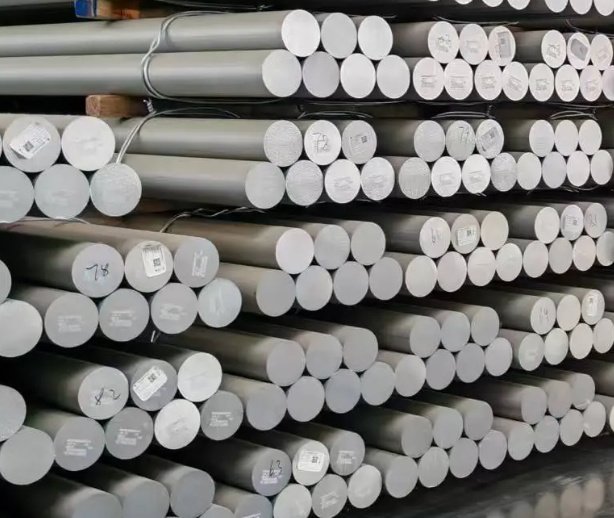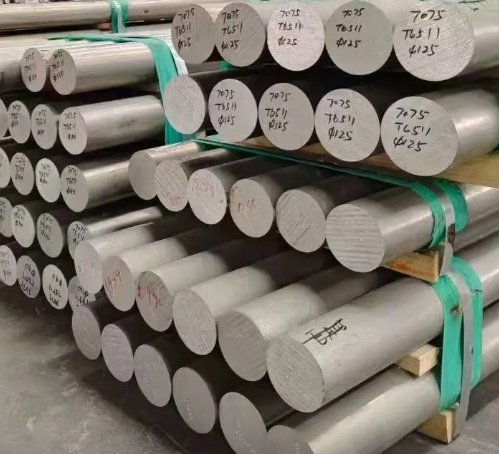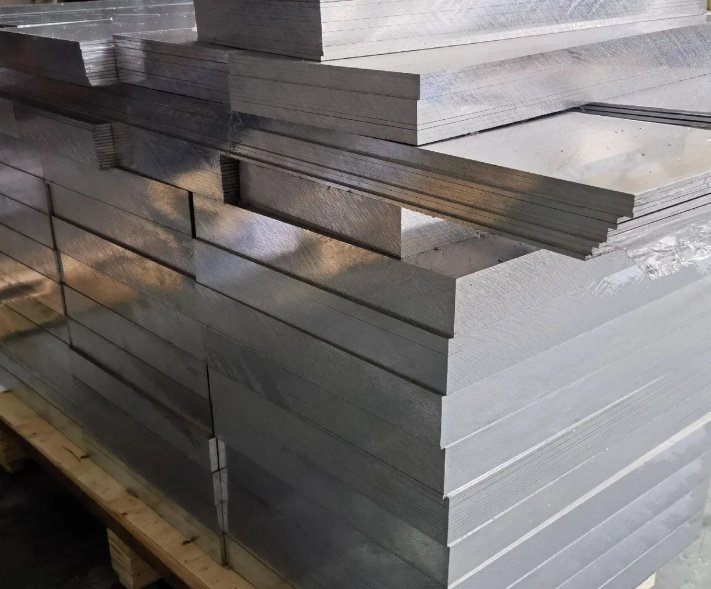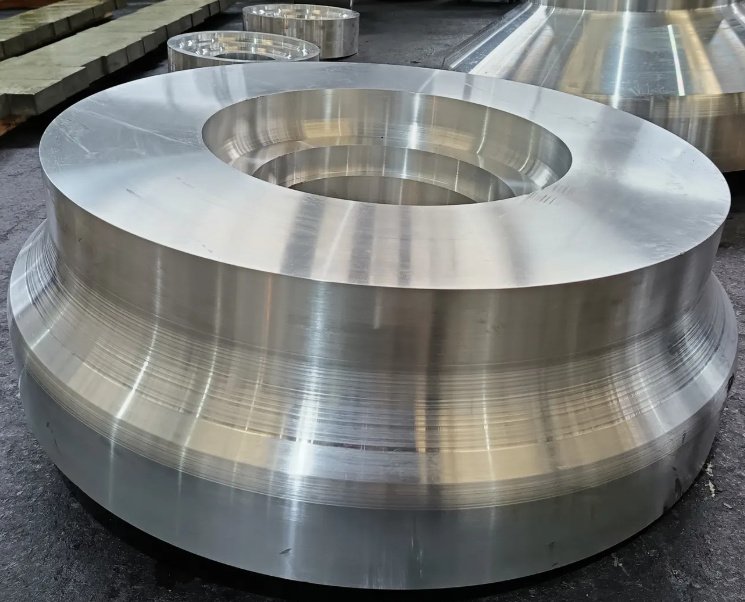
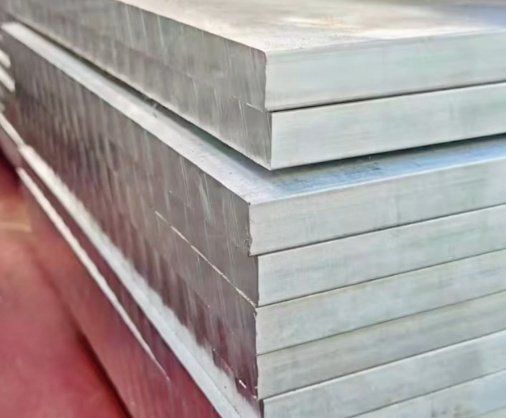
Aluminum 7449 is a high-strength, heat-treatable aluminum-zinc-magnesium-copper alloy developed for demanding aerospace structures where strength, fracture toughness, stress-corrosion resistance and weight reduction must be balanced. It belongs to the 7xxx aluminum family and is commonly supplied as thick plate in overaged tempers such as T7651 or T7951 for structural applications.
Searchers comparing al alloy 7449 with 7050, 7075 or 7150 are usually trying to answer one practical question: can the alloy deliver higher static strength without sacrificing damage tolerance, corrosion performance or machining stability? In many aerospace and high-performance engineering programs, Al 7449 is evaluated precisely because it can provide an attractive strength-to-weight advantage over conventional thick-plate aluminum alloys.
Quick Definition: What Is Aluminum 7449?
Aluminum alloy 7449 is an Al-Zn-Mg-Cu-Zr alloy designed for high-strength structural use. Compared with general-purpose 7075, it is more specialized for thick sections and aerospace-grade plate requirements. Compared with 7050, it is often selected when designers need a higher strength level while still maintaining useful fracture toughness and resistance to stress-corrosion cracking.
- Alloy family: 7xxx aluminum, age-hardenable.
- Main strengthening elements: zinc, magnesium and copper.
- Grain control element: zirconium, used to improve recrystallization resistance.
- Typical product form: thick plate, aerospace plate, machined structural stock.
- Common tempers: T7651, T7951, T7351 depending on property balance and producer capability.
- Typical applications: wing structures, fuselage frames, ribs, bulkheads, high-load machined parts and structural tooling components.
Chemical Composition of 7449 Aluminum Alloy
The performance of 7449 comes from a relatively high zinc content combined with magnesium and copper. These elements form strengthening precipitates during artificial aging. Zirconium helps control grain structure, which is important for thick plate toughness, dimensional stability and resistance to recrystallization.
| Element | Typical Range, wt.% | Engineering Role |
|---|---|---|
| Aluminum | Balance | Base metal, low density and good machinability |
| Zinc | About 7.5-8.7 | Primary strength contributor in 7xxx alloys |
| Magnesium | About 1.8-2.7 | Combines with zinc for age-hardening response |
| Copper | About 1.4-2.1 | Improves strength and precipitation hardening |
| Zirconium | About 0.05-0.15 | Grain structure control and recrystallization resistance |
| Iron + Silicon | Controlled low levels | Impurity control for toughness and fatigue performance |
Why composition control matters for buyers
For aerospace-grade Aluminum 7449, chemistry alone is not enough. Plate performance also depends on ingot quality, homogenization, rolling practice, solution heat treatment, quench control, stretching and aging. Buyers should request mill certificates showing alloy, temper, thickness, heat/lot number, mechanical test direction and applicable specification.
Typical Mechanical and Physical Properties
Actual values depend on product form, thickness, temper, test direction and the producer’s qualification route. The following figures are representative engineering ranges for plate and should not replace certified minimums, MMPDS allowables or project-specific qualification data.
| Property | Representative Value or Range | Design Relevance |
|---|---|---|
| Density | About 2.84 g/cm³ | Low mass for aircraft and weight-sensitive structures |
| Elastic modulus | About 71-72 GPa | Similar stiffness to other aluminum aerospace alloys |
| Ultimate tensile strength | Often about 530-590 MPa, temper and direction dependent | Supports high-load static design |
| Yield strength | Often about 490-550 MPa, temper and direction dependent | Important for gauge reduction and load-bearing sections |
| Elongation | Typically about 6-11% | Indicates ductility and forming/machining tolerance |
| Fracture toughness | Moderate to high for a high-strength 7xxx alloy | Critical for damage-tolerant aerospace structures |
| Corrosion behavior | Improved in overaged tempers versus peak-aged high-strength 7xxx alloys | Relevant for SCC, exfoliation and service durability |
The most important engineering trade-off is that higher strength tempers may reduce toughness or corrosion resistance, while more overaged tempers generally improve stress-corrosion resistance at some cost to peak tensile strength. This is why the chosen temper is as important as the alloy number.
Aluminum 7449 vs 7050, 7075 and 7150
Many projects evaluate 7449 only after comparing it with established aerospace alloys. The table below summarizes typical selection logic. Exact decisions should be based on certified data, part geometry, fatigue spectrum, environment and inspection requirements.
| Alloy | Main Advantage | Common Limitation | Typical Selection Reason |
|---|---|---|---|
| Aluminum 7449 | Very high strength with useful toughness in aerospace plate | Less widely available than 7075 or 7050; tighter sourcing control needed | Weight saving in high-load machined structures and thick plate applications |
| 7050 | Excellent thick-section performance and strong SCC resistance | May have lower strength than 7449 in comparable design cases | Conservative aerospace structures requiring proven thick-plate behavior |
| 7075 | High strength, broad availability and mature supply chain | Peak-aged tempers can have lower SCC resistance and toughness | General aerospace, defense and tooling where availability matters |
| 7150 | High-strength aerospace alloy with good property balance | Availability and specification limits vary by product form | Aircraft upper wing structures and high-compression components |
When 7449 Can Outperform 7050
In a strength-driven part, such as a machined rib, spar cap or high-compression plate component, al alloy 7449 may allow a thinner section than 7050 while maintaining similar load capacity. A practical engineering evaluation may show a mass reduction of roughly 3-6% when geometry is strength-controlled rather than stiffness-controlled. If the part is stiffness-critical, however, the modulus is nearly the same as other aluminum alloys, so weight savings may be smaller.
When 7075 May Still Be the Better Choice
If the component is not fracture-critical, not exposed to severe corrosive environments and does not require thick-section aerospace qualification, 7075 can be more economical and easier to source. For maintenance, prototypes, fixtures and non-flight parts, availability may outweigh the performance advantage of Al 7449.
Tempers and Heat Treatment: T7651, T7951 and T7351
7449 is normally purchased in a certified temper rather than heat treated by a general machine shop. The thermal history is tightly controlled because quench rate, aging time and stretching determine final strength, residual stress, toughness and corrosion resistance.
| Temper | General Character | Typical Engineering Use |
|---|---|---|
| T7651 | Overaged and stress-relieved by stretching | High strength with improved SCC resistance compared with peak-aged conditions |
| T7951 | Special overaged/stabilized condition, producer dependent | Used where a refined balance of strength, toughness and corrosion resistance is required |
| T7351 | More overaged, stress-relieved by stretching | Selected where stress-corrosion resistance is prioritized over maximum strength |
Temper selection rule of thumb
Choose a higher-strength temper when static strength controls the design. Choose a more overaged temper when SCC resistance, exfoliation resistance or long-term durability controls the design. For flight hardware, the selected temper must match the drawing, material specification and approved design allowables.
Machining Aluminum 7449: Practical Guidance for CNC Shops
Machining performance is a major reason engineers specify Al 7449 plate for monolithic aerospace parts. Like other high-strength aluminum alloys, it can be milled efficiently using sharp carbide tools, high spindle speeds, aggressive chip evacuation and stable workholding. However, thick plate parts may still distort if residual stress is not managed.
Recommended Machining Practices
- Tooling: Use polished, high-helix carbide end mills designed for aluminum to reduce built-up edge.
- Cutting speed: High-speed machining is common; shops often operate in the hundreds of meters per minute depending on tool diameter, rigidity and coolant strategy.
- Feed strategy: Maintain chip load to avoid rubbing; light radial engagement and high feed can improve tool life and surface finish.
- Coolant: Flood coolant or minimum-quantity lubrication can help control chip welding and thermal growth.
- Roughing sequence: Remove material symmetrically from both sides when possible to reduce distortion.
- Stress relief: For heavily pocketed parts, consider intermediate stress-relief planning, rest machining and inspection after roughing.
- Inspection: Measure flatness and key datums after roughing and finishing, especially in thin-wall aerospace parts.
Typical Machining Challenge: Distortion After Pocketing
A common issue occurs when a thick Aluminum 7449 plate is machined into a thin-wall rib with deep pockets. Even with a stretched temper such as T7651, unbalanced stock removal can release residual stress and move the part outside tolerance. A production solution often includes leaving 1.0-2.5 mm semi-finish stock, roughing both sides, allowing thermal stabilization, then finishing datums and pockets in a balanced sequence.
Real Engineering Example: Weight Reduction in a Machined Aerospace Rib
Consider a machined rib originally designed in 7050-T7451 plate. The part is primarily strength-controlled, not stiffness-controlled, and the critical margins are compression yield and bearing strength around fastener zones. During redesign, engineers evaluate Aluminum 7449 in an overaged aerospace temper.
| Design Item | 7050-T7451 Baseline | 7449 Candidate | Result |
|---|---|---|---|
| Nominal plate density | About 2.83 g/cm³ | About 2.84 g/cm³ | Density difference is negligible |
| Yield strength assumption | Lower than 7449 candidate in the selected section | Approximately 5-10% higher, subject to certified data | Potential gauge reduction |
| Part mass after redesign | 100% baseline | About 94-97% of baseline | Approximate 3-6% mass saving where strength controls |
| Manufacturing impact | Established machining process | Similar CNC approach, but new qualification required | Process validation needed |
The example shows why Al 7449 is attractive but also why material substitution is not automatic. If stiffness, fatigue crack growth, bearing bypass, corrosion environment or fastener joint behavior controls the design, the final benefit may be lower than a simple tensile-strength comparison suggests.
Procurement and Quality Checklist for Engineers and Buyers
Buying 7449 aluminum should be treated as a controlled engineering purchase, not just a commodity plate order. Aerospace programs usually require full traceability, qualified sources and documented compliance with the drawing and specification.
- Confirm exact alloy designation: Aluminum 7449, not a substitute 7xxx alloy.
- Confirm temper, such as T7651 or project-specific requirement.
- Check plate thickness, width, length and grain direction.
- Request mill test certificate with tensile properties by test direction when applicable.
- Verify ultrasonic inspection class if the part is fracture-critical or thick-section critical.
- Confirm applicable standards, such as aerospace material specifications, customer specifications or ASTM/EN requirements where relevant.
- Review fracture toughness, SCC, exfoliation and fatigue data if the design is damage-tolerant.
- Specify surface condition, protective packaging and storage requirements to prevent corrosion before machining.
- Ask whether the plate has lot-level traceability and whether original mill documentation is available.
Buyer risk: confusing availability with equivalence
A supplier may offer 7075, 7050 or 7475 as an easier-to-source alternative, but these alloys are not automatically equivalent to al alloy 7449. Substitution must be approved by the responsible engineer and supported by design allowables, corrosion data, fatigue data and manufacturing validation.
Applications of Al 7449
Al 7449 is most relevant where a high-value structure benefits from a measurable strength-to-weight improvement. It is not typically chosen for low-cost fabrication, decorative parts or simple commercial sheet applications. Its value is strongest in engineered parts where material performance affects payload, aircraft range, service life or structural margin.
- Aircraft wing components: spars, ribs, stringers, covers and compression-loaded elements.
- Fuselage structures: frames, bulkheads and machined reinforcement members.
- High-load machined plate parts: monolithic aerospace components with deep pockets and thin walls.
- Defense and space structures: weight-sensitive assemblies requiring high specific strength.
- Motorsport and high-performance engineering: specialized components where aerospace-grade stock and traceability are justified.
Limitations and Design Considerations
Although 7449 aluminum offers excellent performance potential, it is not the best alloy for every application. Designers should evaluate the full service environment and manufacturing route before specifying it.
- Weldability: Like most high-strength 7xxx Al-Zn-Mg-Cu alloys, it is generally not selected for fusion-welded primary structures.
- Corrosion protection: Protective finishing, sealing, anodizing strategy or primer systems may be required depending on the environment.
- Forming: It is primarily used as plate or machined stock; severe forming is not its main advantage.
- Cost and lead time: It can be more expensive and less available than 7075 or 7050.
- Qualification burden: Aerospace use may require approved allowables, source qualification and customer-specific testing.
Conclusion: When Aluminum 7449 Is the Right Material
Aluminum 7449 is best suited to high-strength, weight-sensitive, machined aerospace structures where conventional alloys such as 7050 or 7075 do not provide the desired combination of strength, toughness and corrosion resistance. Its greatest value appears in thick plate and monolithic machined components where a small improvement in material performance can translate into measurable mass savings or improved structural margin.
For engineers, the key is to evaluate the alloy and temper together, compare certified data rather than generic values, and validate machining stability before production release. For buyers, the priority is traceability, correct temper, mill certification and specification compliance. Used in the right design environment, Aluminum 7449 can be a high-performance solution for demanding structural applications.