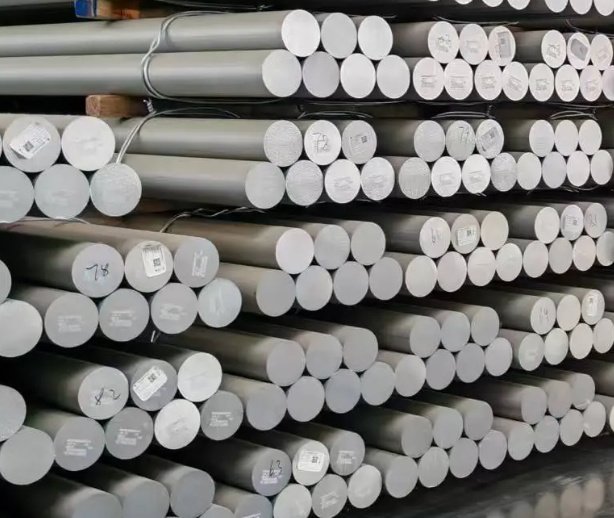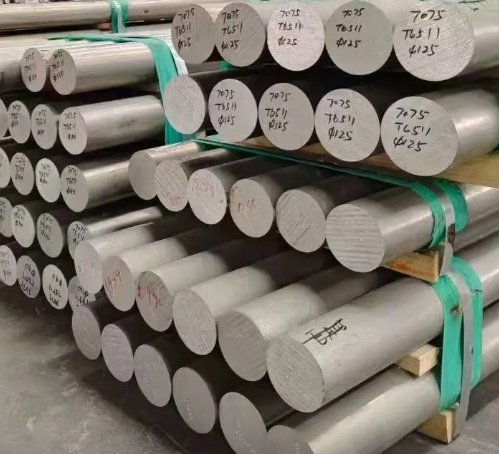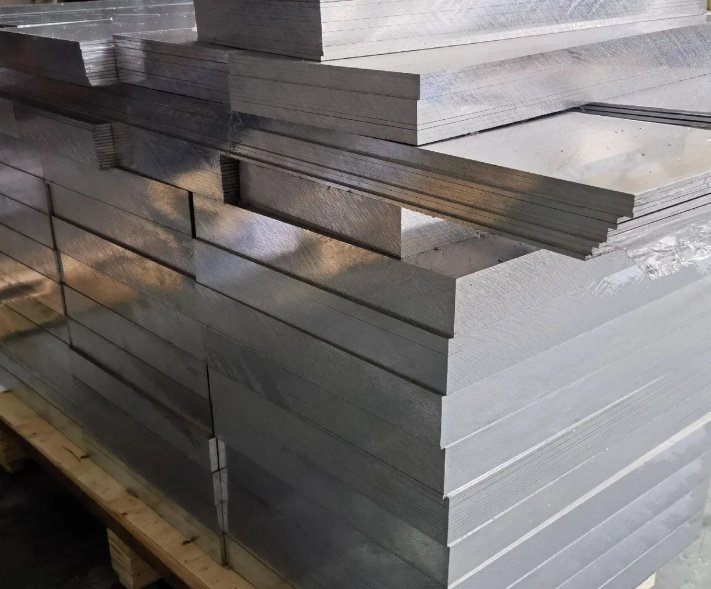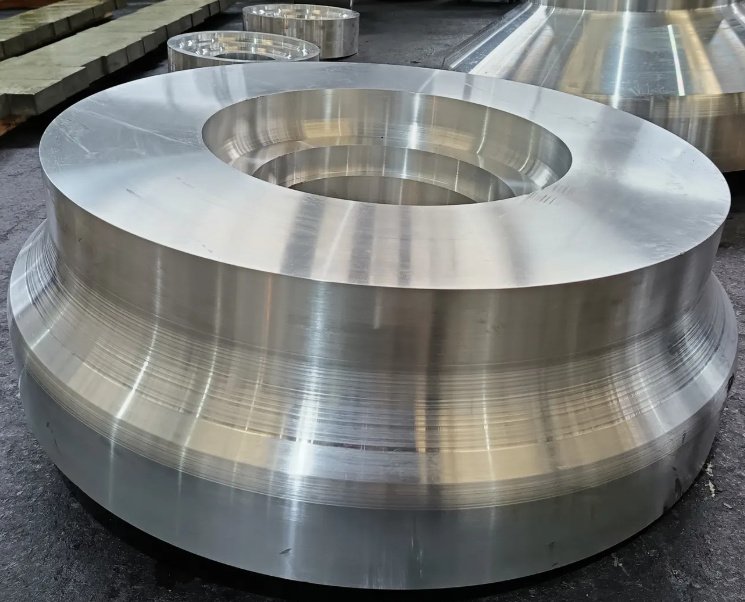
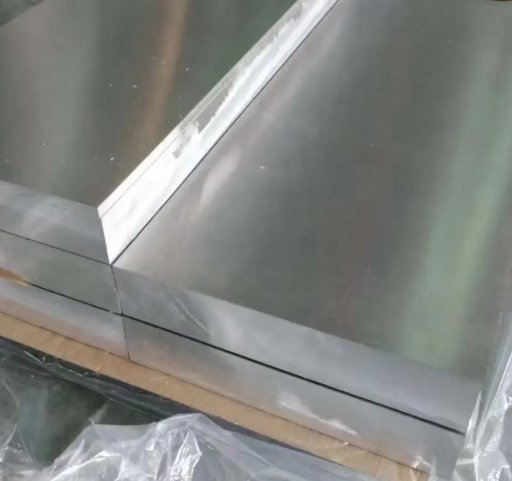
Aluminum 7475 is a heat-treatable 7xxx-series aluminum alloy developed for applications that need high strength, improved fracture toughness, and better resistance to stress-corrosion cracking than many conventional high-strength aluminum grades. Engineers and buyers often search for al alloy 7475 or Al 7475 when specifying aerospace plate, aircraft structural components, fatigue-critical machined parts, or high-performance tooling where 7075 may not provide enough damage tolerance.
In practical terms, 7475 aluminum is a refined, tighter-impurity version of the zinc-magnesium-copper aluminum alloy family. Its controlled iron and silicon levels help increase toughness, especially in thick plate and stretched tempers such as T7351 and T761.
What Is Aluminum 7475?
Aluminum 7475 is a high-fracture-toughness 7xxx aluminum alloy based on aluminum-zinc-magnesium-copper chemistry. Compared with general-purpose structural aluminum alloys, it is selected less for simple tensile strength and more for the combination of strength, crack growth resistance, corrosion performance, and fatigue tolerance.
The alloy is commonly supplied as plate, sheet, and sometimes forged or machined stock. It is widely associated with aerospace structures, wing skins, fuselage components, pressure bulkheads, helicopter parts, and other parts where controlled crack propagation is important.
| Attribute | Typical Description |
|---|---|
| Alloy series | 7xxx aluminum, Al-Zn-Mg-Cu system |
| Primary strengthening mechanism | Precipitation hardening after solution heat treatment and aging |
| Common product forms | Plate, sheet, aerospace stock, machined blanks |
| Common tempers | T651, T7351, T761, T7651 depending on specification and thickness |
| Key engineering advantage | Higher fracture toughness and SCC resistance than many 7075 selections |
| Density | Approximately 2.81 g/cm³ |
Chemical Composition and Metallurgical Meaning
The performance of 7475 aluminum comes from its zinc-magnesium-copper strengthening system and its low impurity limits. Lower iron and silicon content reduces brittle constituent particles, which can otherwise initiate cracks and reduce damage tolerance in thick aerospace plate.
| Element | Typical Range or Limit, wt.% | Engineering Role |
|---|---|---|
| Zinc, Zn | 5.2 - 6.2 | Main precipitation-strengthening element |
| Magnesium, Mg | 1.9 - 2.6 | Forms strengthening MgZn2-type precipitates |
| Copper, Cu | 1.2 - 1.9 | Improves strength and precipitation response |
| Chromium, Cr | 0.18 - 0.25 | Controls grain structure and recrystallization |
| Iron, Fe | Usually 0.12 max | Restricted to improve toughness |
| Silicon, Si | Usually 0.10 max | Restricted to reduce brittle particles |
| Manganese, Mn | Usually 0.06 max | Controlled impurity/addition |
| Titanium, Ti | Usually 0.06 max | Grain refinement control |
| Aluminum, Al | Balance | Base metal |
Composition limits can vary slightly by standard, country, mill route, and product form. For procurement, the purchase order should reference the required standard, temper, thickness, inspection level, and certificate requirements rather than relying only on a generic composition table.
Mechanical Properties by Temper
Mechanical properties of Aluminum 7475 depend heavily on temper, thickness, grain direction, quench rate, and test orientation. T7351 and T7651 are often chosen when stress-corrosion cracking resistance and fracture toughness matter more than maximum tensile strength.
| Temper | Ultimate Tensile Strength | Yield Strength | Elongation | Typical Engineering Priority |
|---|---|---|---|---|
| 7475-T651 | Approx. 500 - 550 MPa | Approx. 430 - 500 MPa | Approx. 7 - 11% | High strength with stress-relieved plate condition |
| 7475-T7351 | Approx. 455 - 500 MPa | Approx. 380 - 430 MPa | Approx. 8 - 13% | Damage tolerance, SCC resistance, fracture toughness |
| 7475-T761 | Approx. 500 - 540 MPa | Approx. 440 - 490 MPa | Approx. 7 - 10% | Balanced strength and corrosion resistance |
| 7475-T7651 | Approx. 490 - 535 MPa | Approx. 420 - 475 MPa | Approx. 7 - 11% | Stress-relieved plate with improved SCC resistance |
Values above are representative engineering ranges, not design allowables. For aircraft, pressure vessels, safety-critical defense parts, or certified structures, final design values should come from the governing material specification, MMPDS, CMH-17, OEM drawings, or validated test data.
Temper selection note for engineers
T6-type tempers generally provide higher tensile strength, while overaged tempers such as T73, T7351, T76, and T7651 improve resistance to stress-corrosion cracking and exfoliation corrosion. For thick plate, stretched stress-relieved tempers reduce machining distortion and residual stress, which can be more valuable than a small increase in tensile strength.
Aluminum 7475 vs 7075, 7050 and 2024
Many searches for 7475 aluminum come from engineers comparing it with 7075 aluminum. In short, 7075 is often easier to source and may deliver higher peak strength in T6/T651, while 7475 is commonly preferred when best-value aerospace plate means better toughness, crack tolerance, and reduced risk in thick or fatigue-sensitive parts.
| Alloy | Strength Level | Fracture Toughness | Corrosion/SCC Resistance | Machinability | Best-Fit Applications |
|---|---|---|---|---|---|
| 7475 | High | Very good among 7xxx alloys | Good in overaged tempers | Good | Aerospace plate, fatigue-critical structures, damage-tolerant parts |
| 7075 | Very high | Moderate to good, depending on temper | Lower in T6; improved in T73/T76 | Excellent | General high-strength machined components, fixtures, aircraft fittings |
| 7050 | High | Very good in thick sections | Very good in T74/T76-type tempers | Good | Thick aerospace plate, bulkheads, frames, landing gear support structures |
| 2024 | Medium to high | Good | Fair; often clad or protected | Good | Aircraft skins, fatigue-sensitive sheet, riveted structures |
| 6061 | Medium | Moderate | Good | Good | General structures, frames, welded assemblies, commercial parts |
7475 vs 7075: the practical decision
If the design is governed mainly by static tensile strength, 7075-T651 may be the more common choice. If the design is governed by crack growth, inspection interval, residual strength, stress-corrosion risk, or thick-plate performance, 7475-T7351 or 7475-T7651 may provide a better engineering margin.
7475 vs 7050: thick plate and supply considerations
7050 is also a high-toughness aerospace alloy and is frequently used in thick plate. 7475 may be selected where the drawing, qualification history, or specific toughness requirement points to the alloy. Availability, lead time, mill minimums, and certified test reporting can decide the final sourcing route.
Engineering Example: Why Toughness Can Matter More Than Strength
A simplified fracture mechanics comparison shows why buyers should not evaluate Al 7475 only by tensile strength. Suppose a flat plate contains a through crack, the geometry factor is assumed as 1.0, and the applied tensile stress is 240 MPa. Using the simplified relationship K = Yσ√(πa), the critical crack half-length is:
| Material Condition | Assumed Plane-Strain Fracture Toughness KIC | Estimated Critical Crack Half-Length | Relative Crack Tolerance |
|---|---|---|---|
| 7075-T651, representative lower-toughness case | 26 MPa√m | Approx. 3.7 mm | Baseline |
| 7475-T7351, representative high-toughness case | 40 MPa√m | Approx. 8.8 mm | About 2.4 times higher crack half-length |
This is a simplified calculation, not a certified design method. However, it illustrates why 7475-T7351 is attractive in damage-tolerant structures: a lower nominal yield strength can still be acceptable if the alloy allows larger detectable cracks before unstable fracture.
Machining, Forming, Heat Treatment and Joining
Aluminum 7475 machines well when tooling, fixturing, and stress relief are properly managed. Like other high-strength 7xxx alloys, it can distort if large volumes of material are removed from one side of a plate, especially in thin-wall aerospace pockets.
CNC machining guidance
- Use sharp carbide tools, polished flutes, and efficient chip evacuation to reduce built-up edge.
- Prefer high spindle speed with appropriate chip load rather than rubbing cuts.
- For thin pockets, rough both sides symmetrically where possible to reduce distortion.
- Leave semi-finish stock and allow stress relaxation before final finishing on precision parts.
- Use flood coolant or minimum quantity lubrication when heat control and surface finish are critical.
- Specify grain direction if strength, fatigue, or fracture toughness differs by longitudinal, long-transverse, or short-transverse orientation.
Forming and bending
7475 is not a highly formable alloy in peak-aged tempers. Sheet may be formed more successfully in softer or solution-treated conditions, followed by controlled aging where allowed by the specification. Minimum bend radius must be verified by temper, thickness, and grain direction.
Welding and joining
Aluminum 7475 is not normally selected for fusion welding because high-strength 7xxx alloys are susceptible to hot cracking and strength loss in the heat-affected zone. Mechanical fastening, riveting, bolting, adhesive bonding, or hybrid joining is usually preferred in aerospace structures.
Surface treatment
Common surface protection methods include chemical conversion coating, anodizing, primer systems, paint, sealants, and corrosion-inhibiting compounds. Because 7xxx aluminum can be sensitive to exfoliation and SCC in severe environments, surface treatment should match the exposure condition, galvanic contacts, and maintenance interval.
Machining problem: thin-wall distortion after pocketing
A common engineering issue is a 7475-T7351 plate pocketed to a thin aerospace rib or panel. If 70% to 85% of the stock is removed from one side, residual stress can release and cause bow or twist. Practical controls include stress-relieved temper selection, balanced material removal, intermediate thermal stabilization when permitted, vacuum or custom soft jaws, and final finishing after roughing stresses have redistributed.
Applications of 7475 Aluminum
The main value of 7475 aluminum appears in applications where high strength alone is not enough. Designers choose it when inspection reliability, fracture toughness, fatigue behavior, and corrosion resistance under stress influence the life-cycle cost of the component.
- Aircraft wing skins and structural panels
- Fuselage components and pressure-loaded structures
- Bulkheads, ribs, frames, and machined aerospace plate parts
- Helicopter rotorcraft structural components
- Defense and high-performance transportation components
- Fatigue-critical machined parts requiring certified plate stock
- Tooling, test fixtures, and structural prototypes where high stiffness-to-weight ratio is needed
For non-aerospace users, the alloy can be valuable when part failure would be dominated by cracking rather than simple yielding. However, the premium cost and more specialized availability must be justified against alternatives such as 7075, 7050, or 6061.
Procurement and Specification Checklist
Buyers should treat Aluminum 7475 as a specification-driven material, not a generic aluminum plate. Correct purchasing language reduces substitution risk, inspection delays, and nonconforming material reports.
| Purchase Item | Why It Matters |
|---|---|
| Alloy and temper | Example: 7475-T7351 plate; temper changes strength, SCC resistance, and toughness. |
| Product form and thickness | Plate, sheet, or blank thickness affects property requirements and availability. |
| Applicable standard | Use the drawing or contract requirement, such as ASTM, AMS, EN, or OEM specification. |
| Grain direction | Important for fracture toughness, fatigue, and machined-part layout. |
| Certification package | Mill test certificate, heat number, chemical analysis, mechanical test results, and traceability. |
| Ultrasonic inspection | Often relevant for aerospace plate and critical machined components. |
| Surface condition | Sawn, machined, PVC-coated, plate surface, or inspected surface requirements affect cost. |
| Substitution rules | 7075, 7050, or 2024 should not be substituted unless engineering approval is documented. |
For critical components, require lot-specific certificates and confirm that the testing orientation matches the drawing. Longitudinal tensile values alone may not satisfy requirements for short-transverse toughness or stress-corrosion performance.
Standards, Design Data and Documentation
Common documentation routes for 7475 aluminum include aerospace material specifications, aluminum association alloy designations, mill certifications, customer drawings, and industry design handbooks. Depending on product form and temper, relevant references may include ASTM B209-type sheet and plate requirements, AMS specifications for 7475 products, EN AW-7475 designations, and aerospace design allowables from approved sources.
In regulated projects, the material description should be traceable from the drawing to the purchase order, certificate of conformity, heat/lot number, test report, and receiving inspection record. This is especially important when the component will be machined from plate and the finished part no longer carries original mill markings.
Limitations and When Not to Use 7475
7475 is not the best aluminum alloy for every design. It is relatively expensive, not ideal for welded assemblies, and may be less available than 6061 or 7075 through general metal distributors. It also requires proper corrosion protection in aggressive environments.
- Choose 6061 when weldability, corrosion resistance, cost, and general fabrication are more important than maximum strength.
- Choose 7075 when very high strength, excellent machinability, and broad availability are priorities, and damage tolerance is less limiting.
- Choose 7050 when thick-section aerospace plate performance and SCC resistance are specified by the design authority.
- Choose 2024 when fatigue performance in sheet or clad aircraft structures is the established design basis.
A key procurement rule is to avoid substituting 7075 for 7475 without engineering approval. The alloys may look similar in a strength table, but fracture toughness, impurity control, corrosion behavior, and qualification history can be materially different.
Key Takeaways for Engineers and Buyers
- Aluminum 7475 is a high-strength, high-toughness 7xxx alloy used mainly in aerospace and fatigue-critical structures.
- Compared with 7075, it is often selected for improved fracture toughness and damage tolerance rather than maximum tensile strength.
- T7351 and T7651 tempers are important when stress-corrosion cracking resistance and dimensional stability matter.
- Machining is generally good, but thin-wall parts need residual-stress and distortion control.
- Procurement should specify alloy, temper, product form, thickness, standard, grain direction, inspection level, and certificate requirements.
- Certified design values must come from the applicable aerospace specification, handbook, or approved test program.