
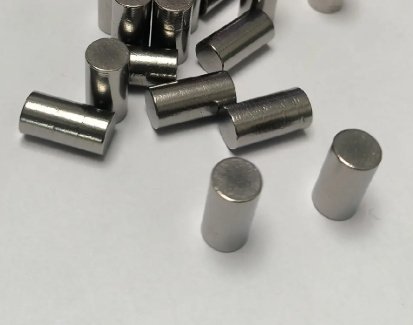
ASTM F75 is a cobalt-chromium-molybdenum alloy specification widely associated with cast surgical implant components, orthopedic devices, and high-wear medical applications. Often described as cast CoCrMo implant alloy, it is valued for its combination of corrosion resistance, wear resistance, biocompatibility, and mechanical stability in demanding body-fluid environments.
For engineers, medical device manufacturers, and procurement teams, ASTM F75 is usually selected when a component requires excellent resistance to sliding wear, fretting, and corrosion while maintaining dimensional integrity after casting and precision machining. The alloy is commonly referenced alongside Co-28Cr-6Mo, UNS R30075, and ISO 5832-4-type cobalt alloy requirements, although the applicable standard and revision must always be verified for each regulated project.
What Is ASTM F75?
ASTM F75 is the Standard Specification for Cobalt-28 Chromium-6 Molybdenum Alloy Castings and Casting Alloy for Surgical Implants. It defines chemical composition, quality expectations, and material requirements for a cobalt-based alloy primarily intended for implantable medical devices.
The alloy belongs to the CoCrMo family. Chromium contributes passivation and corrosion resistance, molybdenum improves resistance to localized corrosion and strengthens the alloy, while cobalt provides the structural base with good hot strength and wear performance.
In practical sourcing language, ASTM F75 is commonly requested as:
- ASTM F75 cobalt chrome alloy
- CoCrMo casting alloy
- Co-28Cr-6Mo medical alloy
- UNS R30075 cobalt alloy
- Cobalt chromium molybdenum implant material
- Cast cobalt chrome surgical implant alloy
ASTM F75 Chemical Composition
The defining feature of ASTM F75 is its cobalt-chromium-molybdenum chemistry. The exact limits depend on the current standard revision and customer drawing requirements, so certified suppliers should always provide a material test report, heat number, and compliance statement.
Typical ASTM F75 chemistry includes cobalt as the balance, chromium at approximately 27–30%, and molybdenum at approximately 5–7%. Controlled residual elements may include carbon, nickel, iron, manganese, silicon, nitrogen, phosphorus, and sulfur. Carbon content is especially important because it influences carbide formation, hardness, castability, and wear behavior.
Chemical compliance should be confirmed by lot-specific testing, especially for implantable devices where traceability, cleanliness, and documented conformity are critical to regulatory review and production release.
Key Material Properties of ASTM F75
ASTM F75 is selected less for low density or easy machinability and more for its robust performance in aggressive biological and mechanical environments. Its properties are particularly useful where implant components experience repeated motion, contact stress, and exposure to chloride-containing fluids.
Corrosion Resistance
Chromium enables the formation of a stable passive oxide film on the alloy surface. This passive layer helps protect ASTM F75 against general corrosion and contributes to long-term performance in physiological environments. Molybdenum further improves resistance to localized attack such as pitting and crevice corrosion.
Wear Resistance
ASTM F75 is known for excellent wear resistance compared with many stainless steels and titanium alloys. This makes it suitable for articulating or sliding surfaces, especially where polished surfaces and controlled geometry are required.
Biocompatibility
CoCrMo alloys have a long history in surgical implant applications. ASTM F75 is used because it can meet stringent medical material expectations when produced, processed, cleaned, and documented correctly. Biocompatibility, however, is not determined by alloy designation alone; it also depends on surface condition, manufacturing route, finishing, sterilization compatibility, and final device validation.
Strength and Hardness
Cast ASTM F75 provides high strength and hardness relative to many implant metals. These characteristics are useful for load-bearing components, but they also increase manufacturing difficulty during cutting, drilling, milling, and finishing.
Common Applications of ASTM F75
ASTM F75 is most strongly associated with orthopedic and surgical implant components. It is often specified where a cast near-net-shape part can reduce material waste while still allowing final machining, grinding, and polishing to meet demanding tolerances.
Typical applications include:
- Hip implant femoral heads and acetabular-related components
- Knee implant femoral components
- Shoulder, ankle, and other joint replacement components
- Dental implant-related components and prosthetic structures
- Spinal implant components requiring high wear and corrosion resistance
- Medical tooling and surgical instruments in selected high-wear use cases
- Custom castings that require subsequent CNC machining and polishing
ASTM F75 is not automatically interchangeable with every cobalt chrome alloy used in medical manufacturing. Drawings, regulatory files, mechanical property requirements, and manufacturing history should be reviewed before substitution.
ASTM F75 vs Other Cobalt Chrome Medical Alloys
ASTM F75 is frequently compared with wrought and forged CoCrMo grades. The most important distinction is manufacturing route. ASTM F75 is centered on castings and casting alloy, while other standards may cover wrought bar, forged material, or powder-based forms.
ASTM F75 vs ASTM F1537
ASTM F1537 generally covers wrought cobalt-28 chromium-6 molybdenum alloy for surgical implants. Wrought material typically offers more uniform microstructure and may provide improved fatigue-related performance compared with cast material, depending on processing and testing. ASTM F75, by contrast, is often selected for cast near-net-shape implant geometries.
ASTM F75 vs ASTM F799
ASTM F799 is associated with forged CoCrMo implant material. Forging can refine grain structure and improve certain mechanical properties. ASTM F75 may be preferred when casting offers design freedom, material efficiency, or established regulatory history for a specific component.
ASTM F75 vs Titanium Alloys
Titanium alloys such as Ti-6Al-4V are lighter and have a lower elastic modulus, but ASTM F75 usually provides superior wear resistance and higher hardness. In joint articulation or high-contact applications, cobalt chrome may be preferred, while titanium may be preferred for lower weight, osseointegration-focused designs, or reduced stiffness mismatch.
CNC Machining ASTM F75 CoCrMo Alloy
Although ASTM F75 is commonly supplied as a casting, many medical components still require CNC milling, CNC turning, drilling, thread machining, grinding, polishing, or 5-axis finishing. The alloy is challenging to machine because it is hard, tough, abrasive, and prone to work hardening.
CNC machining of ASTM F75 requires rigid setups, sharp tooling, controlled heat, and carefully selected cutting parameters. Poor tool engagement or rubbing can rapidly harden the surface, reduce tool life, and compromise dimensional accuracy.
Machining Challenges
- High cutting forces due to alloy strength and toughness
- Rapid tool wear caused by hard carbides and abrasive microstructure
- Work hardening during interrupted cuts or low-feed rubbing
- Heat concentration because cobalt alloys do not dissipate heat as easily as aluminum or some steels
- Difficulty achieving burr-free microfeatures without secondary finishing
- Strict surface finish requirements for implant-contact or articulating surfaces
Recommended CNC Machining Practices
For milling and turning ASTM F75, manufacturers commonly use premium carbide tools, rigid tool holders, positive cutting geometry where appropriate, and high-pressure coolant. Toolpaths should avoid dwell and minimize rubbing. Trochoidal milling, adaptive roughing, and stable chip evacuation can help reduce heat and tool load.
Finishing operations should account for medical device surface requirements, including roughness, edge condition, polishing allowance, and cleanliness. Where very fine surfaces are required, machining is often followed by grinding, lapping, buffing, electropolishing, passivation-related cleaning, or validated medical cleaning processes.
Engineering and procurement notes for CNC-machined ASTM F75 parts
When buying ASTM F75 machined components, confirm the casting route, heat treatment condition if applicable, drawing revision, tolerance class, surface roughness, inspection plan, and final cleaning requirements. Request lot traceability, chemical analysis, mechanical test data when required, and nonconformance control procedures. For implant projects, supplier capability in medical documentation is often as important as machining capability.
Surface Finish, Passivation and Cleanliness
Surface condition is critical for ASTM F75 components. The alloy’s corrosion and wear performance depends not only on chemistry but also on microstructure, surface roughness, polishing quality, contamination control, and post-processing validation.
Implant-related ASTM F75 parts may require controlled finishing operations to remove casting scale, machining marks, embedded tool particles, burrs, and surface defects. Highly polished cobalt chrome surfaces are common in joint replacement applications because surface roughness can affect wear behavior and debris generation.
Medical-grade cleanliness must be validated according to the device application, production environment, and regulatory pathway. A clean-looking part is not necessarily acceptable for implantation unless appropriate cleaning, inspection, packaging, and documentation controls are in place.
Quality Control and Certification Requirements
ASTM F75 components used in medical applications require strong material traceability and quality assurance. Buyers should expect documentation that links the part, casting lot, heat number, inspection records, and certification package.
Typical documentation may include:
- Material test report or certificate of conformance
- Chemical composition results
- Mechanical test data when specified
- Heat number and lot traceability
- Dimensional inspection report
- Surface finish measurement report
- Non-destructive testing records if required
- Cleaning and packaging records for medical components
- ISO 13485 supplier documentation where applicable
Buyer checklist for ASTM F75 material sourcing
Before placing an order, specify the ASTM F75 revision, part drawing, material condition, casting method, machining allowance, required certifications, inspection level, surface finish, packaging requirements, and regulatory documentation needs. If the part is for an implantable device, confirm that the supplier understands change control, traceability, validation, and record retention expectations.
Design Considerations for ASTM F75 Components
Designing with ASTM F75 requires balancing performance, manufacturability, cost, and regulatory risk. Because the alloy is harder to machine than stainless steel or titanium, early design-for-manufacturing review can reduce production issues.
Engineers should consider casting shrinkage, machining allowance, minimum wall thickness, fillet radii, surface finish zones, datum strategy, tool accessibility, inspection access, and polishing direction. Avoid unnecessary deep pockets, sharp internal corners, and thin unsupported features unless they are essential to the device function.
For articulating surfaces, geometry and surface finish should be controlled tightly. For porous or coated implant structures, compatibility between substrate preparation and coating process must be validated. For components requiring holes, threads, or precision tapers, machining trials may be needed to optimize tool life and repeatability.
Engineering perspective: when ASTM F75 is a strong choice
ASTM F75 is a strong candidate when the design benefits from cast near-net-shape manufacturing, high wear resistance, cobalt chrome corrosion performance, and a proven medical alloy history. It may be less attractive when the primary priorities are low weight, very easy machining, or maximum fatigue strength from wrought processing. In those cases, compare ASTM F75 with ASTM F1537, ASTM F799, titanium alloys, or stainless implant alloys.
Limitations and Risk Factors
ASTM F75 is a high-performance alloy, but it is not the simplest or lowest-cost metal to process. Its machining difficulty can increase lead time, tooling cost, and finishing complexity. Cast microstructure must also be controlled to avoid defects that could affect mechanical properties or surface integrity.
Potential risk factors include:
- Casting defects such as porosity, inclusions, or shrinkage if process control is poor
- Tool wear and dimensional drift during CNC machining
- Surface contamination from inappropriate tooling or finishing media
- Inadequate polishing for wear-critical surfaces
- Insufficient documentation for regulated medical applications
- Incorrect substitution with a similar but non-equivalent CoCrMo alloy
Material selection should be tied to the final device requirement, not only to alloy reputation. The same ASTM F75 designation can perform differently depending on casting quality, heat treatment, machining, finishing, and inspection control.
How to Specify ASTM F75 on a Drawing or Purchase Order
A clear specification reduces disputes between buyers, foundries, CNC machine shops, and medical device manufacturers. The purchase order should identify ASTM F75, the applicable standard revision, part number, drawing revision, quantity, required condition, and all additional testing or certification requirements.
A practical ASTM F75 purchase specification may include:
- Material: ASTM F75 CoCrMo alloy, latest approved revision or specified revision
- Manufacturing route: casting, investment casting, or cast blank for machining
- Required CNC machining operations and tolerances
- Surface finish requirements by functional zone
- Deburring and edge break requirements
- Polishing, cleaning, and passivation-related requirements if applicable
- Inspection standard, sampling plan, and critical dimensions
- Material certificate, heat number, and full traceability
- Packaging requirements for medical or precision components
Summary: Why ASTM F75 Remains Important
ASTM F75 remains one of the most recognized cobalt chrome specifications for cast surgical implant materials. Its value comes from the proven combination of CoCrMo chemistry, corrosion resistance, wear resistance, strength, and long-standing use in orthopedic and medical components.
For successful implementation, manufacturers must control the full production chain: alloy chemistry, casting integrity, CNC machining strategy, surface finishing, inspection, cleaning, and documentation. When specified and processed correctly, ASTM F75 is a reliable material choice for high-performance medical components where wear resistance, biocompatibility, and corrosion performance are essential.