
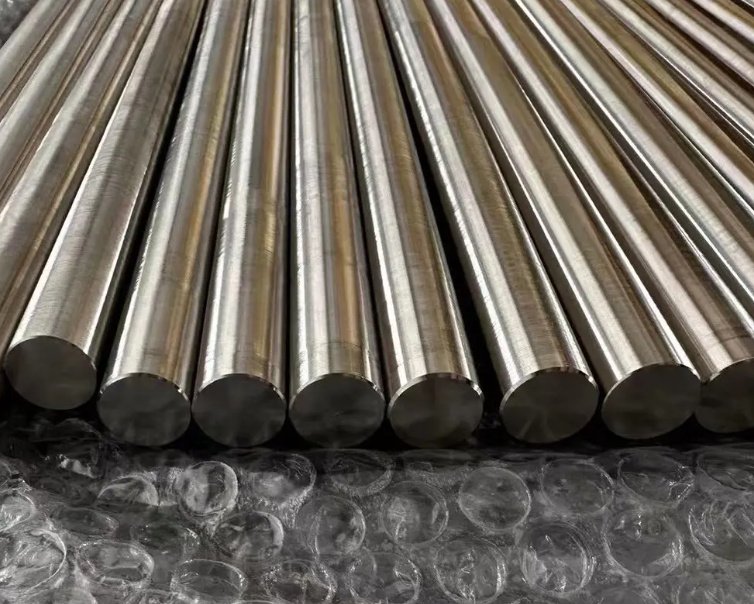
Stellite is a family of cobalt-based alloys engineered for severe wear, galling, corrosion and high-temperature service. In industrial search intent, “Stellite” usually refers to cobalt-chromium hardfacing alloys such as Stellite 6, Stellite 12, Stellite 21 and related cast, wrought, powder or welded products used in valves, cutting tools, bearings, turbine components and energy equipment.
The material is valued because it does not rely only on heat treatment for hardness. Instead, its performance comes from a cobalt-rich matrix strengthened by chromium, tungsten, molybdenum and hard carbides. This makes Stellite a preferred material when stainless steels, tool steels or nickel alloys fail by adhesive wear, erosion, hot corrosion or metal-to-metal sliding.
What Is Stellite?
Stellite is commonly described as a cobalt-chromium alloy system. The name is a registered trademark, but in engineering language it is often used generically to describe cobalt-base wear-resistant alloys. These alloys are supplied as castings, bar, plate, welding rod, powder for additive or thermal spray processes, and hardfaced overlays on cheaper substrates.
Unlike conventional steels, Stellite alloys generally contain little or no iron as the primary base element. Cobalt provides hot hardness and toughness, chromium provides oxidation and corrosion resistance, and elements such as tungsten, molybdenum and carbon create wear-resistant carbide phases.
Common descriptions associated with Stellite include:
- cobalt-based superalloy
- cobalt-chromium-tungsten alloy
- cobalt hardfacing alloy
- wear-resistant cobalt alloy
- hot corrosion resistant alloy
- galling-resistant valve seat material
- cobalt alloy overlay or cladding material
Composition and Metallurgical Characteristics
Most Stellite grades are based on cobalt with significant chromium, typically for corrosion resistance and carbide formation. Carbon content controls the volume of carbides and therefore strongly influences hardness, toughness and machinability. Tungsten and molybdenum improve solid-solution strengthening and high-temperature wear performance.
Typical alloying roles include:
- Cobalt: base matrix, hot strength, thermal fatigue resistance and galling resistance.
- Chromium: corrosion resistance, oxidation resistance and chromium carbide formation.
- Carbon: carbide volume control; higher carbon usually means higher hardness and lower ductility.
- Tungsten: hot hardness, abrasion resistance and strength at elevated temperature.
- Molybdenum: corrosion resistance and solid-solution strengthening, especially in grades such as Stellite 21.
- Nickel and iron: may appear in controlled amounts depending on grade and manufacturing route.
The microstructure usually consists of a cobalt-rich matrix with chromium-rich carbides and, in some grades, tungsten-rich carbides. This structure explains why Stellite is difficult to machine but highly resistant to sliding wear and erosion.
Key Stellite Grades and How They Differ
There is no single “best” Stellite grade. Selection depends on whether the part is exposed mainly to abrasion, impact, corrosion, heat, cavitation, erosion or galling. The most common grades are chosen according to a balance of hardness, toughness and corrosion resistance.
Stellite 6
Stellite 6 is the most widely used grade. It offers a balanced combination of wear resistance, corrosion resistance, weldability and hot hardness. It is common in valve seats, pump sleeves, cutting edges, extrusion screws, bearings and hardfaced overlays. Its typical hardness is often around the mid-30s to mid-40s HRC range depending on product form and processing.
Stellite 12
Stellite 12 generally has higher carbon and tungsten than Stellite 6, giving improved abrasion resistance and higher hardness. It is used where sliding wear and cutting-edge retention are more important than impact toughness. Applications include saw tips, cutting tools, wear plates and severe metal-to-metal contact surfaces.
Stellite 21
Stellite 21 is a lower-carbon cobalt-chromium-molybdenum alloy with better toughness and corrosion resistance than many high-carbon grades. It is less wear-resistant than Stellite 6 or 12 in some abrasive conditions, but it performs well in cavitation, hot corrosion and biomedical-style Co-Cr-Mo alloy environments.
Stellite 1 and High-Carbon Grades
Stellite 1 and similar high-carbon grades provide very high hardness and abrasion resistance. They are suitable for extreme wear but are more brittle and more difficult to machine. These grades are often considered when abrasive particles, sliding contact or edge wear dominate the failure mode.
For most buyers, Stellite 6 is the default starting point; Stellite 12 is considered when abrasion is more severe, while Stellite 21 is considered when toughness, corrosion resistance or cavitation resistance has higher priority.
Mechanical, Wear and Corrosion Performance
Stellite is specified because it maintains useful hardness and wear resistance in environments where many steels soften, gall or oxidize. Performance depends on grade, heat history, dilution during welding, surface finish, counterface material and operating temperature.
Wear Resistance
Stellite alloys resist several types of wear, including adhesive wear, abrasive wear, erosive wear and galling. In metal-to-metal contact, cobalt alloys often perform better than stainless steel because the cobalt matrix and carbides reduce seizure and material transfer. For laboratory comparison, engineers may reference test methods such as ASTM G65 for dry sand/rubber wheel abrasion or ASTM G99 for pin-on-disk wear testing, although actual field performance must be validated under service conditions.
Corrosion and Oxidation Resistance
Chromium provides resistance to oxidation and many corrosive media. Stellite is often used in steam, hot gases, seawater-adjacent equipment, petroleum valves and chemical processing components. However, it is not universally corrosion-proof. Strong reducing acids, specific chloride conditions and galvanic coupling can still require detailed compatibility review.
High-Temperature Behavior
Stellite retains hot hardness better than many ferrous alloys. This makes it useful for valve trim, hot cutting tools, glass forming components, turbine wear parts and engine-related components. The exact service temperature limit depends on grade, load, environment and whether the alloy is used as a bulk component or coating.
Manufacturing Forms: Cast, Wrought, Powder and Hardfacing
Stellite can be purchased as finished parts, semi-finished stock, powder or deposited overlay. The manufacturing route affects cost, dimensional tolerance, porosity, microstructure and lead time.
Cast Stellite
Cast Stellite is common for complex wear parts, valve components and near-net-shape geometries. Casting can reduce machining time, but it may require control of shrinkage, carbide segregation and non-destructive testing when parts are safety-critical.
Wrought Stellite
Wrought bar, plate or rod can provide more consistent structure and better mechanical reliability than some cast products. It is used where machining from solid stock is practical and where dimensional stability is important.
Stellite Hardfacing and Weld Overlay
Hardfacing applies Stellite only where wear resistance is needed, usually on a steel or stainless substrate. Common processes include gas tungsten arc welding, plasma transferred arc welding, laser cladding and oxy-acetylene deposition. Dilution control is critical because excessive mixing with the base metal can reduce cobalt alloy hardness and corrosion resistance.
Stellite Powder for Additive Manufacturing and Thermal Spray
Stellite powders are used in laser cladding, directed energy deposition, powder metallurgy and thermal spray processes such as HVOF. Powder particle size distribution, chemistry, oxygen content and flowability directly affect coating quality, porosity and bond strength.
Engineering note: choosing between solid Stellite and Stellite overlay
Solid Stellite is suitable when the entire component must resist wear, heat or corrosion, but it is expensive and difficult to machine. Overlay is usually more economical when only the surface experiences wear. Engineers should evaluate overlay thickness, base metal compatibility, weld dilution, residual stress, post-weld machining allowance and inspection requirements before choosing a route.
CNC Machining Stellite: Practical Guidance
CNC machining Stellite is challenging because the alloy work-hardens, contains hard carbides and has relatively low thermal conductivity compared with many steels. Tool wear, built-up edge, vibration and poor surface finish are common if the process is treated like ordinary stainless steel machining.
Successful Stellite machining requires rigidity, sharp tooling, controlled heat and conservative cutting parameters. Carbide tools are commonly used, while ceramic or CBN tooling may be considered for certain turning operations depending on grade, hardness and setup stability.
Turning and Boring
For turning Stellite, rigid workholding and a stable toolholder are essential. Positive rake carbide inserts can reduce cutting forces, while wear-resistant coatings may improve tool life. Interrupted cuts should be handled carefully because carbides in the alloy can chip the tool edge.
Milling
Milling Stellite requires attention to tool engagement and chip evacuation. Climb milling, high-rigidity fixtures and consistent feed are preferred. Light rubbing should be avoided because it can accelerate work hardening and reduce tool life.
Drilling and Tapping
Drilling is often one of the most difficult operations. Short, rigid drills, through-coolant where possible and peck cycles for chip control are useful. Tapping should be approached with caution; thread milling is often preferred for expensive components because it reduces tool breakage risk and improves control over thread quality.
Grinding and EDM
Grinding is common for final sizing and surface finish, especially on hardfaced Stellite overlays. EDM can be useful for complex features, but recast layer control and post-processing may be needed for fatigue-sensitive or corrosion-sensitive components.
CNC buyer note: information to send with a Stellite machining RFQ
For accurate quoting, provide the exact grade, product form, hardness range, drawing tolerances, required surface finish, heat treatment or overlay condition, inspection standard, quantity, and whether the part is cast, wrought or welded. If the part has Stellite only as a hardfaced layer, include overlay thickness, allowable dilution, machining stock and whether final grinding is required.
Applications by Industry
Stellite is used where downtime is expensive and where conventional alloys wear too quickly. The material cost is high, but it can be justified when it extends service life, improves sealing reliability or reduces maintenance frequency.
Valve and Flow Control
Valve seats, balls, gates, discs and trim components often use Stellite because it resists galling, erosion and hot corrosion. Power generation, oil and gas, petrochemical and steam systems are common markets. Stellite 6 overlay on stainless or alloy steel valve parts is especially common.
Aerospace and Gas Turbine Components
Aerospace applications use cobalt alloys for hot wear surfaces, bushings, seals and turbine-related components. Selection must account for operating temperature, oxidation, fatigue, coating compatibility and industry-specific qualification requirements.
Cutting Tools and Woodworking
Stellite has been used for saw teeth, knives and cutting edges because it maintains hardness and resists abrasive wear. In some modern applications, tungsten carbide or advanced tool steels compete with Stellite, but cobalt alloys remain useful where toughness and corrosion resistance are also needed.
Oil, Gas and Mining
Downhole tools, pump parts, sleeves, bearings and drilling-related components may use Stellite for erosion, slurry wear and sliding contact. In mining, it can be selected for hardfaced wear surfaces exposed to mineral abrasion.
Medical and Dental Context
Some cobalt-chromium-molybdenum alloys related to the Stellite family are used in medical and dental applications, although implantable materials are normally specified by dedicated standards such as ASTM F75 rather than by the industrial Stellite trade name alone.
Procurement and Specification Considerations
Purchasing Stellite is not only a material price decision. The largest cost drivers often include grade availability, machining difficulty, welding procedure qualification, inspection requirements and the amount of finishing required after hardfacing.
Important purchasing factors include:
- exact grade designation and equivalent UNS or specification reference when available
- chemical composition limits and certificate of analysis
- hardness range and test location
- cast, wrought, powder, overlay or finished-machined condition
- allowable porosity, cracking or weld defects
- dimensional tolerance after final machining or grinding
- surface finish and sealing surface requirements
- non-destructive testing, such as dye penetrant inspection or radiography when applicable
- traceability, heat number and mill test report requirements
The safest specification is performance-based and grade-specific. Instead of writing only “Stellite required,” engineers should identify the grade, manufacturing route, hardness, overlay thickness if applicable, inspection method and acceptance criteria.
Buyer perspective: how to reduce risk when sourcing Stellite parts
Ask suppliers whether they are providing genuine cobalt alloy material, a Stellite-equivalent alloy or a different hardfacing product. Confirm chemistry, hardness, deposition process, machining allowance and inspection records before production. For repeat parts, approve a first article and document the process route because changes in casting, welding dilution or machining method can change field performance.
Limitations and Alternatives
Stellite is powerful but not always the best answer. It is costly, dense, difficult to machine and may be limited by cobalt supply chain concerns. Some grades can be brittle under impact, and welded overlays can crack if procedure control is poor. Cobalt-containing dust and fumes also require appropriate industrial hygiene controls during grinding, welding and machining.
Potential alternatives include:
- Tungsten carbide: excellent abrasion resistance, often better for severe particle wear but more brittle.
- Nickel-based hardfacing alloys: useful for corrosion and moderate wear, sometimes more economical.
- Tool steels: lower cost and easier to heat treat, but weaker in hot corrosion and galling conditions.
- Hard chrome or thermal spray coatings: suitable for some surface wear applications, depending on thickness and environment.
- Ceramics: very hard and corrosion-resistant, but limited by brittleness and design constraints.
When comparing Stellite with alternatives, the key question is not which material is hardest. The better question is which material survives the complete operating environment: load, temperature, sliding speed, corrosion chemistry, impact, lubrication, particles and maintenance cycle.
Specification Checklist for Stellite Components
Before releasing a drawing, purchase order or machining RFQ, define the following items clearly:
- Stellite grade or cobalt alloy equivalent
- applicable standard, UNS number or supplier specification
- chemical composition and certification requirements
- required hardness and test method
- cast, wrought, powder, welded overlay or finished part condition
- overlay thickness, dilution limit and post-weld treatment if hardfaced
- CNC machining tolerances, grinding allowance and surface finish
- inspection requirements such as visual, dimensional, hardness, PMI or dye penetrant testing
- service environment, including temperature, media, load and wear mechanism
- packaging and traceability requirements for critical components
Stellite remains one of the most important material families for severe wear and hot corrosion service. When the grade, process route and machining plan are correctly specified, it can deliver long service life in demanding valves, tools, rotating equipment, aerospace parts and industrial wear components.