
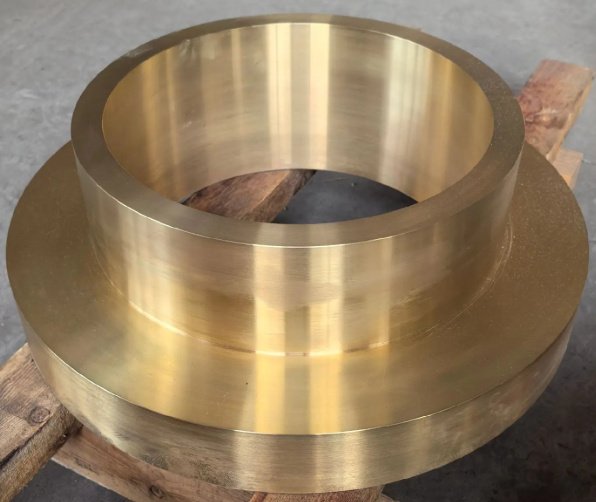
C110 copper, also known as C11000 copper, CDA 110 copper or electrolytic tough pitch copper, is one of the most widely used commercially pure copper materials. It is valued for very high electrical conductivity, high thermal conductivity, excellent ductility, good corrosion resistance and broad availability in sheet, plate, bar, rod, strip, wire and tube forms.
For engineers, CNC machine shops, electrical component manufacturers and industrial buyers, C110 is typically specified when conductivity, formability and cost-effective availability matter more than maximum machinability or oxygen-free purity. It is commonly used in bus bars, terminals, electrical connectors, heat spreaders, switchgear components, gaskets, stamped parts and precision-machined copper parts.
What Is C110 Copper?
C110 copper is a high-purity copper grade classified under UNS C11000. The material is commonly called ETP copper, meaning electrolytic tough pitch copper. It is produced from refined copper and contains a small, controlled amount of oxygen. In most commercial references, C110 contains a minimum copper content of approximately 99.90%, with silver counted as copper.
The “tough pitch” term refers to copper that has been deoxidized to a controlled oxygen level during refining. This oxygen content helps achieve excellent electrical conductivity, but it also means C110 is not the best choice for environments involving high-temperature exposure to hydrogen, where hydrogen embrittlement can become a risk.
Common Names, Standards and Product Forms
C110 is sold under several equivalent or closely related designations. In purchasing documents, drawings and material certificates, the most common names include UNS C11000, CDA 110, Alloy 110, ETP copper and electrolytic tough pitch copper.
| Category | Typical Reference | Notes |
|---|---|---|
| UNS designation | C11000 | Primary North American alloy designation |
| Common trade name | C110 copper / ETP copper | Frequently used by suppliers and machine shops |
| Sheet, strip and plate | ASTM B152 | Common specification for copper sheet, strip, plate and rolled bar |
| Bar, rod and shapes | ASTM B187 | Often used for electrical and machined copper parts |
| Seamless pipe and tube | ASTM B42, ASTM B75 or related standards | Specification depends on product form and application |
| Temper references | O, H01, H02, H04 and others | Temper strongly affects strength, hardness and forming behavior |
Because product form and temper influence mechanical performance, a complete material callout should include alloy, standard, form, temper, dimensions, tolerances and any conductivity or certification requirements.
C110 Copper Chemical Composition
The defining feature of C110 is its high copper content. Most specifications describe it as copper with silver included at a minimum of about 99.90%. Oxygen is intentionally present, commonly in the approximate range of 0.02% to 0.04%, although exact limits depend on the governing standard and producer.
| Element | Typical Content | Engineering Significance |
|---|---|---|
| Copper plus silver | 99.90% minimum, typical | Provides high electrical and thermal conductivity |
| Oxygen | Controlled residual amount | Acceptable for most electrical uses, but relevant for welding and hydrogen service |
| Other impurities | Very low | Excess impurities can reduce conductivity and formability |
When conductivity is a critical acceptance criterion, chemical composition alone is not enough. Buyers should specify conductivity testing, usually reported as % IACS, and request traceable mill test reports.
Key Physical, Electrical and Mechanical Properties
The main reason engineers choose UNS C11000 copper is its combination of high conductivity and practical manufacturability. C110 is typically rated at or near 100% IACS electrical conductivity in annealed condition, making it suitable for demanding current-carrying components.
| Property | Typical Value | Why It Matters |
|---|---|---|
| Density | Approximately 8.89 g/cm³ | Important for weight, cost and shipping calculations |
| Electrical conductivity | Approximately 100% IACS, condition dependent | Critical for bus bars, terminals and electrical contacts |
| Thermal conductivity | Approximately 390 W/m·K at room temperature | Useful for heat spreaders, thermal plates and cooling components |
| Melting point | About 1083°C / 1981°F | Relevant for brazing, soldering and thermal exposure |
| Elastic modulus | Approximately 110 to 130 GPa | Affects deflection and stiffness in electrical assemblies |
| Tensile strength | Varies widely by temper | Harder tempers provide higher strength but lower ductility |
| Corrosion resistance | Good in many atmospheric and water environments | Supports long service life in non-aggressive environments |
Mechanical properties should always be verified against the applicable standard and temper. Annealed C110 is soft and highly formable, while hard-drawn or cold-worked tempers offer higher tensile strength and hardness but reduced elongation.
CNC Machining C110 Copper
C110 can be CNC machined, but it is not considered a free-machining copper alloy. Compared with brass or tellurium copper, C110 is softer, more ductile and more prone to built-up edge, burr formation, tool loading and chip control issues. Successful machining depends on sharp tooling, rigid workholding, appropriate feeds and speeds, and effective coolant or lubrication.
Machinability Characteristics
C110 has relatively low machinability when compared with C360 brass or C145 tellurium copper. Its gummy cutting behavior can create long, stringy chips and smeared surfaces if tools are dull or cutting parameters are conservative in the wrong way. However, precision CNC machining of C110 copper is achievable for electrical components, heat transfer parts and custom copper prototypes when the process is optimized.
Tooling and Process Recommendations
- Use very sharp carbide tools or high-quality polished tools to reduce material adhesion.
- Apply positive rake geometry to lower cutting forces and improve chip formation.
- Use flood coolant, mist coolant or suitable cutting fluid to control heat and prevent built-up edge.
- Maintain rigid fixturing because copper can deform under excessive clamping pressure.
- Plan for deburring because C110 commonly produces edge burrs during milling, drilling and turning.
- For small holes, use sharp drills, peck cycles and coolant delivery to avoid chip packing.
- For fine surface finishes, consider a light finishing pass with stable tool engagement.
When to Consider a More Machinable Copper Alloy
If the part has very fine threads, deep micro-features, complex turned profiles or high-volume production requirements, a more machinable copper grade may reduce cycle time and scrap. C145 tellurium copper and C147 sulfur-bearing copper are often considered when machining efficiency is more important than using standard ETP copper.
Engineer and machine shop notes for C110 CNC parts
For machined C110 components, drawings should define critical edges, burr limits, flatness, conductivity, plating requirements and inspection datums. If the part is a current-carrying component, avoid over-specifying cosmetic surface finish where it does not affect electrical performance. If the part will be tin, nickel or silver plated, coordinate plating allowance with the machining tolerance stack-up.
Forming, Joining and Finishing Behavior
C110 copper is highly formable, especially in annealed temper. It can be stamped, blanked, bent, drawn and rolled into a wide range of electrical and industrial parts. For bus bars and terminals, bend radius, grain direction and temper selection are important to avoid cracking and excessive springback.
C110 is readily soldered and brazed. It can also be welded, but the oxygen content requires process control. In high-temperature hydrogen-containing atmospheres, C110 may suffer from hydrogen embrittlement because hydrogen can react with copper oxides and create internal steam pressure. For these conditions, oxygen-free copper grades such as C101 or C102 are often preferred.
Common finishes for C110 include bare copper, bright cleaning, passivation-type anti-tarnish treatments, tin plating, nickel plating and silver plating. Finish selection depends on contact resistance, corrosion exposure, solderability, wear resistance and assembly environment.
Typical Applications of C110 Copper
C110 is widely used where high electrical conductivity and thermal conductivity are required at a practical material cost. Its broad inventory availability also makes it attractive for both prototypes and production.
- Electrical bus bars: power distribution panels, switchgear, battery systems and industrial control cabinets.
- Connectors and terminals: stamped terminals, grounding clips, lugs and current-transfer parts.
- Heat transfer components: heat spreaders, thermal plates, cooling blocks and heat sink bases.
- CNC machined copper parts: custom electrical contacts, spacers, electrodes, clamps and precision conductive components.
- Industrial hardware: gaskets, washers, shims, fastener components and formed copper parts.
- Architectural and decorative items: panels, trim and corrosion-resistant exposed copper elements.
C110 Copper vs Other Copper Grades
Selecting the right copper alloy requires balancing conductivity, machinability, formability, joining requirements, service environment and cost. C110 is often the default choice for electrical conductivity, but it is not always the best material for every manufacturing process.
| Material | Primary Advantage | Compared with C110 |
|---|---|---|
| C101 oxygen-free electronic copper | Very high purity and excellent conductivity | Better for demanding vacuum, electronic and hydrogen-sensitive applications |
| C102 oxygen-free copper | Low oxygen content and high conductivity | Preferred where hydrogen embrittlement risk must be reduced |
| C145 tellurium copper | Much better machinability | Useful for high-volume CNC machining, with slightly lower conductivity |
| C147 sulfur-bearing copper | Improved machinability | Alternative for screw-machine parts and complex machined features |
| C360 brass | Excellent machinability and lower cost in many cases | Much lower electrical conductivity than C110 copper |
In simple terms, choose C110 for conductivity and general-purpose copper availability; choose oxygen-free copper for hydrogen-sensitive or high-purity applications; choose tellurium or sulfur-bearing copper when machining efficiency is the leading priority.
Procurement and Quality Considerations
For purchasing teams and engineers, C11000 copper material should be specified in a way that reduces ambiguity. A robust purchase specification can prevent incorrect temper, poor flatness, unsuitable surface condition or missing conductivity documentation.
Buyer checklist for ordering C110 copper
- Specify alloy designation: C110, C11000, CDA 110 or ETP copper.
- Identify the required standard, such as ASTM B152 for sheet or ASTM B187 for bar.
- Define product form, thickness or diameter, width, length and dimensional tolerances.
- State temper, such as annealed, quarter hard, half hard or hard, when applicable.
- Request mill test reports if conductivity, chemistry or traceability is required.
- Confirm surface condition, edge condition and flatness for bus bars or stamped parts.
- Clarify whether parts will be plated, soldered, brazed, welded or used in a heated environment.
Cost drivers for C110 copper parts
The main cost drivers include copper market price, form and thickness, temper, tolerances, required certifications, machining time, scrap rate, deburring requirements, surface finish and plating. For CNC machined C110 parts, the cost is often influenced more by cycle time and burr control than by raw material price alone.
Limitations and Design Risks
C110 is versatile, but it has important limitations. It is softer than many engineering alloys, so threads, sealing surfaces and high-wear features may deform if the design does not distribute load properly. For structural applications, its strength-to-weight ratio is usually less favorable than aluminum, steel or high-strength copper alloys.
The oxygen content is another key design consideration. While acceptable for most electrical and thermal applications, C110 should be reviewed carefully for high-temperature reducing atmospheres, vacuum brazing conditions, hydrogen service or critical welded assemblies. In these cases, C101 or C102 may be more appropriate.
How to Specify C110 Copper on an Engineering Drawing
A clear drawing callout improves supplier alignment and inspection consistency. A typical specification may include alloy, standard, temper, product form and any special requirements.
Example callout: Material: Copper Alloy C11000, ASTM B152, H02 temper, conductivity 100% IACS minimum where required, mill test report required.
For machined components, add dimensional tolerances, burr limits, plating notes, grain direction if relevant, and any flatness or conductivity zones that must be preserved after machining.
Summary: Why C110 Copper Remains a Standard Engineering Material
C110 copper remains a standard material because it combines high electrical conductivity, high thermal conductivity, good corrosion resistance, excellent formability and strong supply availability. It is a practical choice for bus bars, terminals, connectors, heat transfer components and many custom CNC machined copper parts.
Its main trade-offs are moderate-to-poor machinability compared with free-machining copper alloys, softness under mechanical load and limited suitability for hydrogen-sensitive high-temperature environments. When these factors are considered early, C110 can deliver reliable performance in electrical, thermal and industrial applications.