
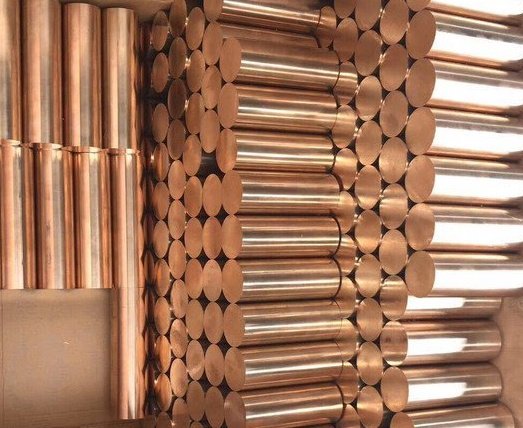
C172 metal material, commonly specified as UNS C17200, Alloy 25 or CuBe2, is the most widely used high-strength beryllium copper alloy. It combines copper-based electrical and thermal conductivity with strength levels that can approach some alloy steels after age hardening. For engineers, buyers and CNC machining teams, C172 is often selected when a component must provide fatigue resistance, spring performance, wear resistance, dimensional stability and corrosion resistance in a single material.
Search intent around “C172” usually falls into three practical needs: identifying what the material is, comparing its mechanical and physical properties, and deciding whether it is suitable for a machined, stamped, spring, connector or mold component. This article addresses those decisions with specification-oriented information that can be used for material selection, drawing review and supplier discussions.
What Is C172 Metal Material?
C172 is a precipitation-hardening copper alloy containing beryllium as the primary strengthening element. In commercial terminology it is known as C17200 beryllium copper, Alloy 25, BeCu 25 or CuBe2. The alloy is normally supplied in solution-annealed, cold-worked or age-hardened tempers, depending on whether the user needs formability, maximum strength or final machining stability.
Compared with ordinary copper, brass or phosphor bronze, C172 offers much higher tensile strength and spring endurance. Compared with stainless steel, it offers better electrical conductivity, better thermal conductivity and non-magnetic behavior. This makes it valuable in electrical contacts, RF connectors, precision springs, resistance welding components, injection mold inserts and aerospace hardware.
C17200 Chemical Composition and Common Designations
C17200 is a copper-beryllium alloy with small controlled additions that support precipitation hardening and property consistency. Typical composition ranges are defined by material standards and mill specifications; exact limits should always be confirmed against the purchase specification.
| Element | Typical Range or Limit | Role in the Alloy |
|---|---|---|
| Copper, Cu | Balance | Base metal providing conductivity, corrosion resistance and machinability |
| Beryllium, Be | About 1.8% to 2.0% | Primary precipitation-hardening element for high strength and hardness |
| Cobalt plus Nickel, Co + Ni | Commonly minimum controlled content | Improves age-hardening response and grain structure control |
| Iron, Fe | Limited residual | Controlled impurity to maintain performance and processability |
| Other elements | Limited by specification | Controlled for conductivity, strength and quality consistency |
Common equivalents and related names include UNS C17200, ASTM Alloy 25, CDA 172, CuBe2, CW101C in European usage, and high-strength beryllium copper. In procurement documents, using UNS C17200 plus the required temper and standard is more reliable than using “C172” alone.
Mechanical, Physical and Electrical Properties of C172
The properties of C172 depend strongly on temper, product form, section size, cold work and heat treatment. Solution-annealed material is relatively formable, while age-hardened material reaches very high strength and hardness. The values below are representative engineering ranges and should not replace certified mill test data.
| Property | Representative Range | Engineering Significance |
|---|---|---|
| Tensile strength | Approximately 690 to over 1380 MPa depending on temper | Enables compact springs, contacts and load-bearing conductive parts |
| Yield strength | High after age hardening; varies by form and temper | Important for spring set resistance and elastic performance |
| Hardness | Often about Rockwell C 36 to 45 in peak-aged conditions | Supports wear resistance, tooling inserts and durable contact surfaces |
| Electrical conductivity | Typically around 20% to 30% IACS in high-strength tempers | Higher than stainless steel, lower than pure copper |
| Thermal conductivity | Substantially higher than steels | Useful for heat extraction in molds, contacts and thermal components |
| Density | About 8.25 g/cm³ | Relevant for weight calculations and cost per finished part |
| Elastic modulus | About 125 to 131 GPa | Important for spring force, deflection and resonance calculations |
| Magnetic response | Non-magnetic | Suitable for instruments, sensors and electronic assemblies |
One reason C172 ranks highly in material selection is the balance of properties rather than a single maximum value. It provides high strength with useful conductivity, making it a preferred choice where steel is too resistive, pure copper is too soft, and brass or bronze lacks fatigue strength.
Tempers, Heat Treatment and Age Hardening
C172 is strengthened by precipitation hardening. The alloy may be supplied in solution-annealed condition for forming and then aged after fabrication, or supplied mill-hardened for direct machining and assembly. Selecting the right temper is one of the most important specification decisions.
Solution-Annealed Condition
Solution-annealed C172 offers better ductility and formability. It is commonly used when parts must be stamped, bent, deep drawn or heavily formed before final hardening. After forming, age hardening develops the required strength, hardness and spring properties.
Cold-Worked and Age-Hardened Tempers
Cold work before aging increases final strength. Strip and wire products are often supplied in tempers optimized for springs and electrical contacts. For CNC machined parts, pre-hardened bar or plate may reduce post-machining distortion but can be harder on tools.
Heat Treatment Control
Age-hardening temperature and time vary by product form and target property level. Over-aging may reduce strength but can improve conductivity and dimensional stability. Under-aging may leave strength below requirement. For critical parts, heat treatment should be controlled by a qualified process and verified by hardness, conductivity or tensile testing.
Engineer note: choosing between form-then-age and machine-from-aged stock
Use form-then-age when the geometry requires bending or spring forming that would crack or spring back excessively in the hardened condition. Use aged stock when dimensional stability, machining repeatability and shorter production routing are more important. For tight-tolerance CNC components, discuss whether final grinding, stress relief or finish machining after aging is required.
CNC Machining C172 Beryllium Copper
C172 can be CNC milled, turned, drilled, tapped, reamed and ground. Its machinability is generally better than many stainless steels but different from free-machining brass. Because hardened C172 has high strength and springiness, successful machining depends on rigid setups, sharp tools, controlled chip evacuation and appropriate coolant strategy.
CNC Milling and Turning Behavior
In milling, C172 benefits from carbide end mills with sharp cutting edges, stable workholding and conservative radial engagement for hardened material. In turning, positive rake tooling helps reduce cutting forces and improves finish. Chips may be stringy depending on temper and operation, so chip control geometry and coolant delivery matter.
Tooling and Cutting Fluid Considerations
Carbide tooling is commonly used for production CNC machining, while high-speed steel may be acceptable for low-volume or less demanding operations. Flood coolant or mist control can reduce heat, improve surface finish and extend tool life. Avoid rubbing and dwell, as work hardening and heat buildup can degrade dimensional accuracy.
Tolerances, Burrs and Surface Finish
C172 is often used in precision components, so burr control is important. Small holes, slots, connector features and spring contact profiles may require deburring, tumbling, brushing or secondary finishing. If the part will be age hardened after machining, tolerances should account for possible dimensional change.
The most important machining issue is safety. Beryllium-containing alloys are safe to handle as solid metal under normal conditions, but airborne dust, fumes or fine particulate from grinding, sanding, polishing, EDM recast removal or dry machining must be controlled. Shops should follow applicable occupational exposure limits, use local exhaust ventilation and apply wet methods or approved dust collection where needed.
Buyer note: what to ask a CNC supplier before ordering C172 parts
Confirm that the supplier has experience with beryllium copper, understands particulate control requirements, can maintain traceability to UNS C17200 material, and can document temper, heat treatment and inspection results. For high-reliability components, ask how the shop controls burrs, conductivity, hardness, dimensional change after aging and contamination from other copper alloys.
Applications of C172 Metal Material
C172 is selected where mechanical strength, conductivity, fatigue resistance and corrosion resistance must work together. It is especially common in components that repeatedly deflect, carry current, dissipate heat or resist wear.
- Electrical connectors and contacts: sockets, terminals, RF contacts, probe pins, battery contacts and EMI/RFI spring elements.
- Springs and diaphragms: precision springs, bellows, clips, washers and components requiring resistance to permanent set.
- Aerospace and defense hardware: non-magnetic, high-strength conductive components used in demanding environments.
- Plastic injection molds: cores, inserts and hot spots where thermal conductivity improves cooling and cycle time.
- Oil and gas equipment: non-sparking tools, pressure-related components and corrosion-resistant hardware where permitted by specification.
- Resistance welding: electrode holders, current-carrying fixtures and high-strength conductive tooling.
- Medical and instrumentation parts: precision non-magnetic components, subject to compliance and biocompatibility review.
In mold tooling, C172 is often compared with C17510, C17500 and other copper alloys. C172 typically provides higher hardness and strength, while some lower-beryllium or chromium-zirconium copper alloys may offer higher conductivity. The best choice depends on whether the design prioritizes wear resistance, heat transfer, polishability, cost or regulatory preference.
C172 Standards, Product Forms and Documentation
C172 is available as strip, sheet, plate, bar, rod, wire, tube, forgings and custom profiles. Product form matters because mechanical properties and tolerances are governed by different specifications. A robust material callout should define alloy, standard, form, temper, dimensions and required inspection documents.
| Specification Area | Examples Commonly Associated with C17200 | Why It Matters |
|---|---|---|
| UNS designation | UNS C17200 | Defines alloy identity and chemistry family |
| ASTM standards | ASTM B194, ASTM B196/B196M, ASTM B197/B197M and related product standards | Controls product form, temper and mechanical requirements |
| Aerospace standards | AMS specifications such as AMS 4533 or AMS 4650 where applicable | Used for aerospace-grade traceability and quality control |
| European designations | CuBe2, CW101C | Useful for international sourcing and drawing equivalency checks |
| Quality documents | Mill test certificate, certificate of conformity, heat lot traceability | Supports incoming inspection and regulated applications |
For drawings and purchase orders, avoid vague descriptions such as “beryllium copper” without alloy and temper. A clearer callout is “UNS C17200, ASTM B196/B196M, rod, specified temper, with mill test report,” adjusted to the actual product form and standard.
Advantages and Limitations of C172
C172 is a premium engineering copper alloy. Its advantages are significant, but the alloy is not always the lowest-cost or simplest option. Correct selection requires comparing performance requirements against cost, manufacturability, regulatory obligations and health-and-safety controls.
Key Advantages
- Very high strength for a copper-based alloy
- Excellent fatigue resistance for springs and cyclic contacts
- Good electrical and thermal conductivity compared with steels
- Non-magnetic behavior for sensitive instruments and electronics
- Good wear resistance and hardness after aging
- Good corrosion resistance in many industrial and atmospheric environments
- Suitable for precision CNC machining, stamping, forming and heat treatment routes
Potential Limitations
- Higher material cost than brass, bronze, pure copper and many steels
- Requires careful temper selection and heat treatment control
- Dust and fume controls are required for operations that create respirable beryllium particulate
- Lower conductivity than pure copper and some high-conductivity copper alloys
- May need regulatory review for certain consumer, medical or environmental applications
When the design only needs conductivity, pure copper or tellurium copper may be better. When it only needs corrosion resistance, stainless steel or bronze may be simpler. C172 becomes compelling when the component requires spring strength, fatigue life and conductivity in one alloy.
Procurement note: cost drivers for C17200 material
Price is influenced by beryllium copper market availability, product form, temper, thickness or diameter tolerance, certification level, minimum order quantity and whether the material is domestic, aerospace-approved or specialty processed. Buyers should compare total cost per finished part rather than raw material price alone, because C172 may reduce part size, improve service life or eliminate separate conductive inserts.
C172 vs. Common Alternative Materials
Material substitution should be based on functional requirements, not only cost. C172 is often compared with phosphor bronze, brass, stainless steel, copper alloys C17500 and C17510, and high-conductivity copper. Each alternative changes the balance of strength, conductivity, machinability and regulatory burden.
| Material | Compared with C172 | Typical Selection Logic |
|---|---|---|
| Phosphor bronze | Lower strength, often lower cost, good spring properties | Choose for moderate spring loads and lower-cost electrical contacts |
| Brass | Easier machining, lower strength and fatigue resistance | Choose for economical fittings, terminals and non-critical conductive parts |
| Stainless steel | Higher corrosion resistance in some media, much lower conductivity | Choose when conductivity is not important and corrosion dominates |
| C17510 beryllium copper | Higher conductivity, lower strength than C172 | Choose for resistance welding and thermal/electrical applications needing more conductivity |
| Pure copper | Much higher conductivity, much lower strength | Choose for bus bars, heat sinks and electrical parts with limited mechanical load |
How to Specify C172 for Reliable Manufacturing
A complete C172 specification reduces sourcing delays, machining surprises and inspection disputes. The most reliable approach is to define the alloy, standard, form, temper, mechanical requirements, conductivity requirements and documentation requirements before ordering material or releasing a drawing.
- Specify UNS C17200 rather than only “C172” or “beryllium copper.”
- Identify the applicable ASTM, AMS, EN or customer material standard.
- Define product form: strip, sheet, plate, bar, rod, wire or tube.
- State temper or condition, such as solution annealed, cold worked, age hardened or mill hardened.
- List hardness, tensile strength, yield strength or conductivity requirements when critical.
- Define heat treatment responsibility: mill, machine shop or final processor.
- Require material certificates and heat lot traceability for critical components.
- Include beryllium safety expectations for machining, grinding or finishing operations.
C17200 beryllium copper remains one of the most capable copper alloys for demanding mechanical and electrical applications. When specified with the correct temper, documented to the right standard and machined with proper controls, it can deliver long fatigue life, accurate spring response, reliable conductivity and excellent dimensional performance in precision components.