
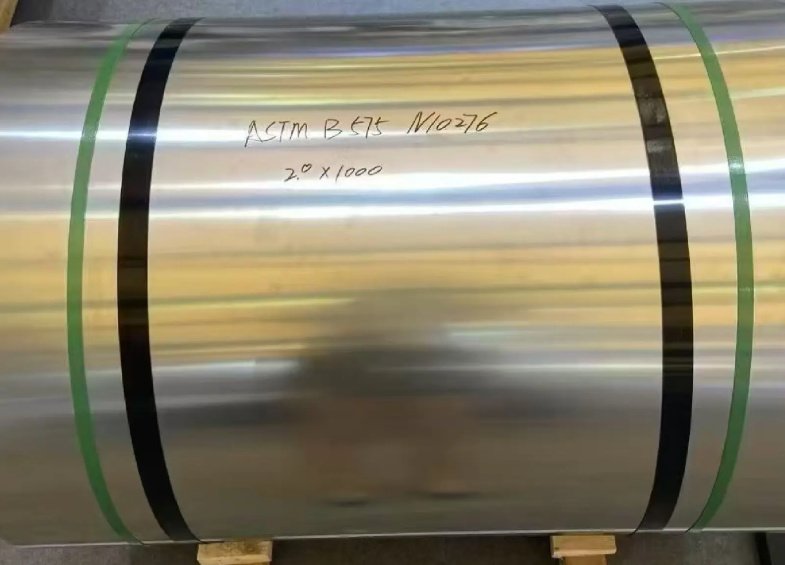
Hastelloy is a family of high-performance nickel-based alloys engineered for severe corrosion, high-temperature oxidation, and aggressive chemical processing environments. If you are planning to buy Hastelloy alloy materials, the most important purchasing decisions are grade selection, product form, applicable ASTM/ASME or AMS specification, certification level, quantity, lead time, and total delivered cost.
This guide explains how to compare common Hastelloy grades such as C276, C22, B2, B3, X, G30 and related nickel alloy materials, with practical guidance on sheet, plate, bar, pipe, tube, fittings, flanges, wire and forgings. It is written for engineers, buyers, fabricators, maintenance teams and project managers who need technically reliable material for chemical processing, oil and gas, marine, pollution control, aerospace, heat treatment and power applications.
What Is Hastelloy Alloy?
Hastelloy is a registered trade name historically associated with Haynes International, but the term is commonly used in industry to describe corrosion-resistant nickel alloy grades with high levels of molybdenum, chromium, iron, cobalt, tungsten or other alloying elements. These alloys are selected when stainless steels such as 304, 316L, duplex or super duplex cannot provide enough resistance to localized corrosion, reducing acids, oxidizing acids, chloride stress corrosion cracking or high-temperature attack.
The key reason buyers specify Hastelloy is reliable performance in highly corrosive media, including hydrochloric acid, sulfuric acid, phosphoric acid, wet chlorine, ferric chloride, seawater, sour gas, flue gas scrubber environments and mixed acid systems. Exact performance depends on alloy grade, temperature, concentration, contaminants, aeration, velocity and fabrication condition.
Popular Hastelloy Grades and Their Best Uses
Choosing the correct grade is the first step before requesting price. Many purchasing errors happen when a buyer asks only for “Hastelloy” without confirming the UNS number, specification, heat treatment condition or intended service environment.
| Grade | UNS Number | Typical Strengths | Common Applications |
|---|---|---|---|
| Hastelloy C276 | N10276 | Excellent resistance to reducing and oxidizing media; strong resistance to pitting, crevice corrosion and stress corrosion cracking | Chemical reactors, scrubbers, heat exchangers, evaporators, sour gas components, marine equipment |
| Hastelloy C22 | N06022 | Superior resistance to oxidizing chlorides and mixed acids; often chosen for severe chloride-containing environments | Pharmaceutical equipment, chemical piping, flue gas desulfurization systems, pickling systems |
| Hastelloy B2 | N10665 | Excellent resistance to hydrochloric acid and many reducing chemicals; limited resistance to oxidizing media | Hydrochloric acid service, vacuum furnaces, chemical process equipment |
| Hastelloy B3 | N10675 | Improved thermal stability compared with B2; strong performance in hydrochloric acid | Acid production, acid recovery, process vessels, heat exchangers |
| Hastelloy X | N06002 | High-temperature oxidation resistance and good fabricability | Gas turbine parts, furnace hardware, combustion cans, aerospace components |
| Hastelloy G30 | N06030 | Good resistance to phosphoric acid, nitric acid and oxidizing acid mixtures | Phosphoric acid production, fertilizer plants, chemical processing equipment |
For general corrosion service, C276 is often the most widely stocked and requested grade. For stronger oxidizing chloride resistance, C22 may be preferred. For hydrochloric acid in reducing conditions, B2 or B3 may be more suitable. For elevated-temperature oxidation rather than aqueous corrosion, Hastelloy X is commonly specified.
Quick grade selection note
Do not select a Hastelloy grade by price alone. Confirm the exact chemical environment, operating temperature, pressure, pH, chloride level, oxidizing contaminants, flow condition, welding requirement and applicable design code before buying material.
Hastelloy Product Forms You Can Buy
Hastelloy materials are supplied in multiple mill and fabricated forms. Availability varies by grade, size and country of origin. Standard forms are easier to source quickly, while non-standard thicknesses, large diameters, thin-wall tubing or custom forgings may require mill production.
Hastelloy Sheet and Plate
Sheet and plate are used for tanks, vessels, liners, heat exchanger components, ducting, trays, tube sheets and formed parts. Buyers should specify thickness, width, length, tolerance, surface finish, flatness, heat treatment condition and whether cutting, waterjet, plasma, laser or machining services are required.
Hastelloy Round Bar, Flat Bar and Hex Bar
Bars are commonly used for shafts, fasteners, valve stems, pump components, fittings, machined parts and structural elements in corrosive service. Important purchase details include diameter or dimensions, length, finish, straightness, ultrasonic testing requirements and whether the bar is hot finished, cold drawn or solution annealed.
Hastelloy Pipe, Tube and Tubing
Pipe and tube are specified for process lines, heat exchangers, condensers, instrumentation, reactors and transfer systems. Buyers must distinguish between pipe size and tube dimensions. Pipe is generally ordered by nominal pipe size and schedule, while tube is ordered by outside diameter and wall thickness.
Hastelloy Fittings, Flanges and Forgings
Elbows, tees, reducers, stub ends, weld neck flanges, slip-on flanges, blind flanges and custom forgings may be required for complete systems. Pressure rating, face type, bore, standard, heat number traceability and compatibility with the pipe specification are essential.
Hastelloy Wire, Welding Products and Fasteners
Wire, welding consumables, bolts, nuts, washers and threaded rod are used for assembly and fabrication. Welding filler metals should match the base material and service conditions. For example, ERNiCrMo-4 is commonly associated with C276 welding applications, while ERNiCrMo-10 is associated with C22.
Key ASTM, ASME and AMS Specifications
When buying Hastelloy alloy materials, specification control is critical. The purchase order should list the grade, UNS number, product form, governing standard and required certification. For pressure equipment, ASME compatibility and code compliance may be mandatory.
| Product Form | Frequently Used Specifications | What to Confirm |
|---|---|---|
| Sheet, plate and strip | ASTM B575, ASME SB-575 | Grade, thickness, annealed condition, surface finish, MTR availability |
| Rod, bar and wire | ASTM B574, ASME SB-574 | Diameter, finish, mechanical properties, straightness, heat treatment |
| Seamless pipe and tube | ASTM B622, ASME SB-622 | NPS or OD, schedule or wall, test requirements, hydrostatic or nondestructive testing |
| Welded pipe | ASTM B619, ASME SB-619 | Weld condition, radiography, solution annealing, pressure rating |
| Welded tube | ASTM B626, ASME SB-626 | Dimensional tolerance, weld bead condition, testing and inspection |
| Forgings | ASTM B564, ASME SB-564 | Forging shape, class, heat treatment, mechanical testing, ultrasonic examination |
| High-temperature aerospace materials | AMS specifications vary by grade and form | Revision level, aerospace approval, special testing and traceability |
For sour service in oil and gas, buyers may also need compliance with NACE MR0175 / ISO 15156. For European documentation, EN 10204 3.1 or 3.2 inspection certificates may be required. Always verify the latest standard revision and project specification before procurement.
Chemical Composition and Mechanical Properties
Hastelloy grades are nickel-based alloys, but each grade achieves corrosion or heat resistance through a different balance of chromium, molybdenum, tungsten, iron, cobalt and other elements. Chemical composition affects not only corrosion behavior but also weldability, thermal stability, machinability and price.
| Grade | Major Alloying Concept | Performance Emphasis |
|---|---|---|
| C276 | Nickel-molybdenum-chromium with tungsten | Broad corrosion resistance in reducing and oxidizing environments |
| C22 | Nickel-chromium-molybdenum with tungsten | Oxidizing chloride resistance and mixed acid performance |
| B2 | Nickel-molybdenum with very low carbon and silicon controls | Reducing acid resistance, especially hydrochloric acid |
| B3 | Nickel-molybdenum with improved stability | Hydrochloric acid resistance and better fabrication tolerance than B2 |
| X | Nickel-chromium-iron-molybdenum | High-temperature strength and oxidation resistance |
Mechanical properties such as tensile strength, yield strength, elongation and hardness depend on grade, product form, size and heat treatment. Most corrosion-resistant Hastelloy C-type materials are supplied in solution annealed condition to optimize corrosion resistance and fabricability.
Why mill test reports matter
A mill test report, often called an MTR or material test certificate, provides heat number traceability, chemical analysis, mechanical test results and the specification used for production. For critical projects, do not accept untraceable nickel alloy material.
Corrosion Resistance: Matching Grade to Environment
Hastelloy alloys are often specified because standard stainless steel fails by pitting corrosion, crevice corrosion, intergranular attack, stress corrosion cracking or general corrosion. However, no single nickel alloy is best for every environment.
- Hydrochloric acid: Hastelloy B2 and B3 are commonly considered for reducing hydrochloric acid service, but oxidizing contaminants can reduce suitability.
- Chloride-rich oxidizing media: Hastelloy C22 is often selected for severe chloride-containing oxidizing environments.
- Mixed chemical process streams: Hastelloy C276 is widely used because of its broad corrosion resistance.
- Wet chlorine and hypochlorite conditions: Grade selection must be confirmed carefully because temperature and oxidizing strength are decisive.
- Sulfuric and phosphoric acid: C276, G30 and other grades may be considered depending on concentration, temperature and impurities.
- Seawater and marine exposure: C276 and C22 may offer resistance to chloride-induced localized corrosion, but crevice design remains important.
- High-temperature oxidation: Hastelloy X is more relevant than C276 or C22 for many furnace and gas turbine environments.
The most reliable selection method is to use corrosion data from published sources, laboratory testing, field experience and engineering review. For critical service, coupon testing under actual operating conditions can reduce risk.
Hastelloy Pricing Guide: What Affects Cost?
Hastelloy pricing is typically higher than stainless steel, duplex stainless steel and many cobalt-free engineering alloys because of nickel, molybdenum, chromium and tungsten content, plus specialized melting, processing and testing requirements. Prices can change quickly because nickel and molybdenum are commodity-sensitive metals.
Buyers should evaluate total landed cost rather than unit price only. Cutting waste, minimum order quantity, certification, testing, freight, import duties, machining allowance and schedule risk can significantly affect the final project cost.
Major Price Drivers
- Grade: C276, C22, B3, G30 and X have different alloying costs and availability.
- Product form: Plate, bar, seamless tube, welded pipe, forgings and fittings have different production routes.
- Size and tolerance: Non-standard dimensions, tight tolerances and thick sections usually increase cost.
- Quantity: Stock lengths and full sheets may have better pricing than small cut pieces, but excess material can increase waste.
- Certification: EN 10204 3.1, 3.2, PED, NACE, PMI, ultrasonic testing or third-party inspection can add cost.
- Origin and brand: Domestic mill material, approved manufacturer lists and aerospace-approved sources may command premiums.
- Lead time: Urgent delivery from stock may cost more, while mill production may reduce unit price for large orders.
- Processing: Saw cutting, shearing, machining, beveling, waterjet cutting, heat treatment and pickling/passivation affect the quote.
Typical Price Positioning
Exact market prices should be requested from qualified suppliers, but in general, Hastelloy C276 and C22 are premium corrosion-resistant nickel alloys. B-series alloys can be highly specialized and may have limited stock availability. Hastelloy X pricing depends heavily on aerospace or high-temperature specification requirements. Seamless tubing and custom forgings often have higher cost per kilogram than plate or bar because of processing complexity and inspection requirements.
How to request an accurate Hastelloy quote
Provide grade, UNS number, product form, dimensions, quantity, specification, certification requirement, delivery location, required delivery date, surface condition, testing requirements and whether substitution is allowed. If the material is for pressure equipment or sour service, include the project specification.
How to Specify Hastelloy Materials on a Purchase Order
A clear purchase order reduces the risk of wrong material, missing certification, delays and rework. For engineered projects, vague descriptions such as “Hastelloy plate” or “C276 pipe” are not enough.
A better purchasing description is: Hastelloy C276 plate, UNS N10276, ASTM B575 / ASME SB-575, solution annealed, 10 mm x 1500 mm x 3000 mm, with EN 10204 3.1 MTR, PMI required. This gives the supplier enough information to confirm compliance, availability and pricing.
Recommended Purchase Order Checklist
- Grade name and UNS number
- ASTM, ASME, AMS, DIN, EN or project specification
- Product form: sheet, plate, bar, pipe, tube, flange, fitting, wire or forging
- Dimensions, tolerance and quantity
- Heat treatment condition and surface finish
- Mechanical testing, corrosion testing or hardness requirement
- Certification: MTR, EN 10204 3.1 or 3.2, third-party inspection
- Traceability requirement: heat number, lot number, marking and stamping
- PMI, ultrasonic testing, hydrostatic testing, radiography or dye penetrant testing if required
- Packing, export documentation, country of origin and delivery terms
Quality Verification Before Buying
Because Hastelloy materials are expensive and often used in critical service, quality verification should be part of procurement. The minimum requirement is traceable material with a valid mill test report. Additional checks may be necessary for high-risk applications.
- Review the MTR: Confirm heat number, chemical composition, mechanical properties and specification.
- Check markings: Material should be marked with grade, heat number, size and specification where practical.
- Use PMI testing: Positive material identification helps confirm alloy family and prevent mix-ups.
- Confirm condition: Solution annealed, pickled, cold worked or as-welded conditions can affect performance.
- Inspect dimensions: Verify thickness, OD, wall, length, flatness or straightness before fabrication.
- Confirm approved source: Regulated industries may require material from an approved manufacturer list.
Red flags when sourcing Hastelloy
Be cautious with unusually low prices, missing heat numbers, certificates that do not match markings, unclear country of origin, unverified substitutions, mixed lots without traceability, or suppliers unwilling to provide specification details.
Fabrication, Welding and Machining Considerations
Hastelloy alloys can be fabricated using many conventional methods, but they require proper procedures because nickel alloys work harden, retain heat and can be sensitive to contamination. Tooling, cutting speed, coolant, welding filler and heat input should be controlled.
Welding
Common welding processes include GTAW, GMAW, SMAW and SAW, depending on product form and project requirements. Cleanliness is critical. Sulfur, lead, zinc, copper and other contaminants can cause weld defects or hot cracking. Welding procedures should be qualified according to the applicable code, such as ASME Section IX when relevant.
Machining
Nickel alloys are generally more difficult to machine than carbon steel or austenitic stainless steel. Rigid setups, sharp tools, positive rake geometry, sufficient feed and suitable coolant help reduce work hardening and tool wear. Buyers ordering near-net shapes should include machining allowance.
Forming and Heat Treatment
C-type Hastelloy alloys are usually supplied solution annealed. Cold forming may be possible, but heavy forming can require intermediate annealing. Post-fabrication heat treatment should follow the grade-specific recommendation and project code.
Hastelloy vs Inconel, Monel and Stainless Steel
Hastelloy, Inconel, Monel and stainless steel are sometimes compared because all can be used in demanding environments, but they are not interchangeable. Hastelloy C-type alloys are usually chosen for severe chemical corrosion. Inconel alloys are often selected for high-temperature strength, oxidation and pressure service. Monel alloys, such as Alloy 400, are known for resistance to seawater, hydrofluoric acid and alkaline media. Stainless steels are cost-effective for less severe corrosion conditions.
| Material Family | Typical Advantage | Typical Limitation |
|---|---|---|
| Hastelloy C276 / C22 | Severe chemical corrosion and chloride resistance | High material cost and specialized sourcing |
| Inconel 600 / 625 / 718 | High-temperature strength, oxidation and pressure applications | Not always the best choice for reducing acid corrosion |
| Monel 400 / K500 | Seawater and selected chemical environments | Limited performance in strong oxidizing acids |
| 316L Stainless Steel | Good general corrosion resistance at lower cost | Vulnerable to pitting and crevice corrosion in aggressive chlorides |
| Duplex / Super Duplex Stainless Steel | Higher strength and chloride resistance than 316L | Temperature limits and less broad chemical resistance than many nickel alloys |
Lead Time, Stock Availability and Sourcing Strategy
Stock availability depends on grade, form and size. C276 plate, sheet, bar and pipe are generally more available than less common grades or custom dimensions. C22 is also widely sourced but may have fewer stock sizes in some regions. B3, G30 and Hastelloy X can require longer lead times depending on specification.
For urgent maintenance, buying from existing stock may be the only practical option. For capital projects, early procurement can reduce cost and improve documentation control. If the application allows alternatives, approved equivalents or compatible nickel alloys should be reviewed by engineering before quote comparison.
Useful sourcing strategy includes confirming dual certification, checking whether material is mill stock or distributor stock, reserving heat lots for large projects, and avoiding mixed heats when fabrication traceability is important.
Final Buying Recommendations
To buy Hastelloy alloy materials successfully, start with the service environment and specification rather than the lowest price. Confirm the grade by UNS number, choose the correct product form, require traceable certification, and verify compliance before fabrication. For critical chemical, pressure, sour gas, marine or high-temperature service, engineering approval and material testing can prevent costly failures.
The best purchasing outcome comes from aligning technical requirements with commercial realities: correct grade, correct specification, documented quality and realistic lead time. Whether you need Hastelloy C276 plate, C22 tubing, B3 bar, X sheet, G30 pipe or custom nickel alloy forgings, a complete specification will help suppliers quote accurately and deliver material that performs as expected.