
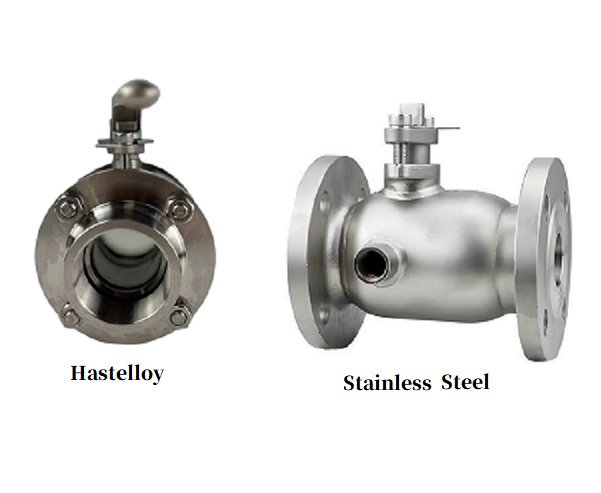
Hastelloy and stainless steel are both corrosion-resistant metal families, but they are engineered for different operating environments. Stainless steel is widely used because it offers a strong balance of corrosion resistance, formability, hygiene, availability, and cost. Hastelloy, a family of nickel-based superalloys, is selected when ordinary stainless steels cannot reliably withstand aggressive chemicals, high chloride levels, strong acids, or elevated-temperature corrosion.
The practical difference is simple: stainless steel is usually the economical default for general corrosion resistance, while Hastelloy is chosen for severe service where failure, downtime, contamination, or safety risk would cost far more than the alloy itself.
Quick Answer: Hastelloy vs Stainless Steel
Hastelloy generally provides much higher resistance to localized corrosion, acid attack, and high-temperature chemical environments than common stainless steels such as 304 and 316. Stainless steel, however, is significantly cheaper, easier to source, and sufficient for many food, architectural, pharmaceutical, marine, and light chemical applications.
- Choose Hastelloy for hydrochloric acid, sulfuric acid mixtures, wet chlorine, ferric chloride, seawater heat exchangers, flue gas desulfurization, and harsh chemical processing.
- Choose stainless steel for general fabrication, cleanability, moderate corrosion exposure, structural components, kitchen equipment, tanks, piping, and many sanitary systems.
- Consider duplex or super duplex stainless steel when chloride resistance must improve beyond 316 but project economics do not justify a nickel superalloy.
What Is Hastelloy?
Hastelloy is a trademarked family of high-performance nickel-based alloys originally developed for extreme corrosion and heat resistance. In industrial purchasing, the term is commonly associated with nickel-molybdenum and nickel-chromium-molybdenum alloys used in chemical processing, pollution control, oil and gas, marine, and high-temperature environments.
Common grades include Hastelloy C-276, C-22, B-3, G-30, and X. Each grade is optimized differently. For example, C-276 is widely recognized for resistance to oxidizing and reducing media, pitting, crevice corrosion, and stress corrosion cracking. C-22 often offers excellent resistance in oxidizing chloride environments. Hastelloy X is known more for high-temperature strength and oxidation resistance.
Many Hastelloy alloys contain high levels of nickel, molybdenum, chromium, and sometimes tungsten, cobalt, iron, or copper. The high nickel content helps resist stress corrosion cracking, while molybdenum and chromium improve resistance to pitting, crevice corrosion, and many industrial chemicals.
Common Hastelloy grades and typical identities
- Hastelloy C-276: UNS N10276; nickel-molybdenum-chromium alloy widely used for chemical processing and aggressive chloride-containing media.
- Hastelloy C-22: UNS N06022; nickel-chromium-molybdenum alloy with strong resistance to oxidizing chemicals and chloride-induced localized corrosion.
- Hastelloy B-3: UNS N10675; nickel-molybdenum alloy designed for excellent resistance to hydrochloric acid in many concentrations and temperatures.
- Hastelloy X: UNS N06002; nickel-chromium-iron-molybdenum alloy used for oxidation resistance and high-temperature strength.
What Is Stainless Steel?
Stainless steel is an iron-based alloy containing at least about 10.5% chromium. Chromium forms a thin, self-repairing passive oxide film on the surface, which gives stainless steel its corrosion resistance. Depending on the grade, stainless steel may also contain nickel, molybdenum, nitrogen, manganese, titanium, niobium, or other elements.
The most familiar stainless steels are austenitic grades such as 304 and 316. Grade 304 is widely used in general corrosion environments, while 316 includes molybdenum for improved chloride resistance. Other families include ferritic, martensitic, precipitation-hardening, duplex, and super duplex stainless steels.
316 stainless steel is not a direct substitute for Hastelloy in highly acidic or chloride-rich chemical service, but it can be an excellent choice for moderate marine, pharmaceutical, food, architectural, and process applications.
Common stainless steel grades and where they fit
- 304 stainless steel: General-purpose austenitic stainless steel for food equipment, architectural parts, tanks, and mild chemical exposure.
- 316 stainless steel: Molybdenum-bearing austenitic stainless steel with better chloride resistance than 304.
- 317L stainless steel: Higher molybdenum than 316L, used where improved pitting resistance is needed.
- 904L stainless steel: High-alloy austenitic stainless steel with nickel, molybdenum, and copper for sulfuric acid and chloride environments.
- Duplex 2205: Mixed austenitic-ferritic stainless steel with high strength and better chloride stress corrosion cracking resistance than 300-series grades.
- Super duplex 2507: High-chromium, high-molybdenum duplex stainless steel for severe chloride service, seawater systems, and oil and gas applications.
Key Differences Between Hastelloy and Stainless Steel
| Factor | Hastelloy | Stainless Steel |
|---|---|---|
| Base metal | Nickel-based superalloy family | Iron-based alloy family with at least about 10.5% chromium |
| Typical alloying elements | Nickel, molybdenum, chromium, tungsten, iron, cobalt depending on grade | Iron, chromium, nickel, molybdenum, carbon, manganese, nitrogen depending on grade |
| Corrosion resistance | Excellent in aggressive acids, chlorides, oxidizing and reducing media | Good to excellent in mild to moderately corrosive service; grade-dependent |
| Resistance to pitting and crevice corrosion | Very high, especially C-family alloys | Moderate for 304, better for 316, high for duplex and super duplex grades |
| Heat resistance | Excellent for selected grades such as Hastelloy X | Good for many grades; specialized heat-resistant stainless steels are available |
| Strength | High strength and good mechanical stability in demanding environments | Varies widely; duplex grades can exceed many austenitic stainless steels in yield strength |
| Fabrication | Weldable and machinable but requires more controlled procedures | Generally easier to form, weld, machine, and source |
| Cost | High material and fabrication cost | Lower cost and broad commercial availability |
| Best fit | Severe chemical, chloride, acid, and high-temperature corrosion service | General corrosion resistance, sanitary use, structural fabrication, moderate chemical service |
Corrosion Resistance: The Most Important Difference
The main reason engineers compare Hastelloy with stainless steel is corrosion performance. Stainless steel resists corrosion through chromium passivation, but that passive film can break down in chloride-rich, acidic, low-pH, stagnant, or high-temperature environments. Once the film fails, localized pitting or crevice corrosion can progress quickly.
Hastelloy alloys are designed to resist these failure modes more effectively. High nickel improves resistance to chloride stress corrosion cracking. Molybdenum and tungsten improve resistance to pitting and reducing acids. Chromium helps in oxidizing environments. This combination is why Hastelloy C-276 is commonly specified for aggressive chemical process equipment, scrubbers, evaporators, and reactors.
Pitting resistance equivalent number, or PREN, is often used to compare stainless steels in chloride service. It is commonly estimated as PREN = %Cr + 3.3 × %Mo + 16 × %N. While PREN is useful for stainless steel selection, it does not fully describe the corrosion behavior of nickel-based alloys in mixed-acid or complex chemical environments.
Where Stainless Steel Can Fail
Common stainless steels can experience pitting, crevice corrosion, intergranular corrosion, galvanic corrosion, and stress corrosion cracking. 304 stainless steel is particularly vulnerable in chloride environments. 316 performs better because of molybdenum, but it still has limits in warm seawater, strong acids, or stagnant chloride solutions.
Where Hastelloy Excels
Hastelloy performs well in many environments that challenge stainless steel, including hydrochloric acid, wet chlorine, chlorine dioxide, ferric and cupric chlorides, phosphoric acid, sulfuric acid mixtures, acidic brines, and oxidizing-reducing chemical combinations. This does not mean every Hastelloy grade resists every chemical; grade selection still depends on concentration, temperature, impurities, aeration, flow rate, and redox potential.
Mechanical Strength and Temperature Performance
Both material families can offer strong mechanical properties, but their behavior differs by grade. Austenitic stainless steels such as 304 and 316 are tough, ductile, and useful across a broad temperature range. Duplex stainless steels provide higher yield strength because of their mixed ferrite-austenite microstructure.
Hastelloy alloys are typically selected for combined mechanical and environmental resistance. In other words, their value is not only strength but strength retained in corrosive, hot, or chemically aggressive media. Some Hastelloy grades are also used where oxidation resistance, carburization resistance, or thermal stability is critical.
| Property | Hastelloy tendency | Stainless steel tendency |
|---|---|---|
| Ductility | Generally good, grade-dependent | Excellent for austenitic grades; moderate to high for many others |
| Yield strength | Good to high; depends on grade and product form | Moderate for 304/316; high for duplex and precipitation-hardening grades |
| Oxidation resistance | Excellent for selected high-temperature grades | Good for many grades; specialized heat-resistant grades improve performance |
| Low-temperature toughness | Often good, especially nickel-rich alloys | Excellent for austenitic stainless steels |
Fabrication, Welding, and Machining
Stainless steel is generally easier and more economical to fabricate. It is widely available as sheet, plate, bar, tube, pipe, fittings, fasteners, castings, and forgings. Fabricators are familiar with stainless steel forming, welding, polishing, and passivation procedures.
Hastelloy can also be welded and fabricated successfully, but it requires tighter control. Heat input, filler metal selection, joint cleanliness, work hardening, and contamination control matter. Nickel-based alloys may be more difficult to machine than common stainless steels because they can work-harden and generate heat at the cutting edge.
Using carbon steel tools or contaminated abrasives on stainless or Hastelloy surfaces can initiate corrosion problems. Dedicated tooling, clean work areas, proper pickling or passivation where appropriate, and qualified welding procedures are important for both materials.
Fabrication considerations that affect service life
- Use compatible filler metals and qualified welding procedures for the exact alloy grade.
- Avoid iron contamination from shared grinding wheels, wire brushes, or handling equipment.
- Control heat tint on stainless steel welds because chromium-depleted oxides can reduce corrosion resistance.
- Consider solution annealing or stress relief only when supported by the grade specification and service condition.
- Validate post-weld cleaning, pickling, passivation, or mechanical finishing requirements with project codes and corrosion data.
Cost and Availability
Stainless steel is typically far less expensive than Hastelloy. The price difference is driven by alloy content, especially nickel and molybdenum, as well as production volume, availability, fabrication complexity, and machining time. 304 and 316 stainless steels are commodity materials in many markets, while Hastelloy grades are specialty alloys with higher raw material and processing costs.
However, installed cost is not the same as lifecycle cost. Hastelloy can be the lower-cost choice when corrosion failure would cause shutdowns, leaks, product contamination, environmental release, or repeated replacement. In severe chemical service, selecting a cheaper alloy that fails prematurely can be more expensive than specifying the correct nickel alloy from the start.
Cost Factors to Compare
- Initial material price per kilogram or per pound
- Lead time and availability of plate, pipe, tube, fittings, flanges, and weld consumables
- Fabrication difficulty, machining time, and welding qualification requirements
- Inspection, non-destructive testing, and code compliance requirements
- Expected service life under real process conditions
- Cost of downtime, maintenance, replacement, cleaning, and safety risk
Applications: Where Each Material Is Commonly Used
Material selection should follow the environment, not the brand name. Stainless steel dominates applications where hygiene, moderate corrosion resistance, formability, and cost control matter. Hastelloy is more common where chemicals or temperatures exceed stainless steel limits.
Typical Hastelloy Applications
- Chemical reactors, pressure vessels, agitators, and process piping
- Heat exchangers exposed to chlorides, acids, or contaminated process streams
- Flue gas desulfurization systems and scrubbers
- Pickling equipment and acid handling systems
- Wet chlorine, chlorine dioxide, and hypochlorite environments
- Oil and gas sour service components where qualified by applicable standards
- Aerospace and gas turbine components for selected high-temperature grades
Typical Stainless Steel Applications
- Food and beverage processing equipment
- Pharmaceutical and bioprocessing systems
- Architectural panels, handrails, fasteners, and decorative components
- Water treatment systems and general industrial piping
- Marine hardware in moderate exposure, especially 316 stainless steel
- Kitchen equipment, sinks, work surfaces, and appliances
- Structural and pressure equipment where grade and code requirements are met
Hastelloy vs 304 Stainless Steel
304 stainless steel is the most widely used stainless grade. It is cost-effective, cleanable, easy to fabricate, and resistant to many atmospheric and mild chemical environments. Its main weakness is chloride exposure. In warm chloride environments, 304 may pit or suffer crevice corrosion.
Compared with 304 stainless steel, Hastelloy offers dramatically better resistance to many acids, chlorides, and mixed chemical environments. If the application involves strong acids, chlorides at elevated temperature, oxidizing salts, or corrosive process chemicals, 304 is usually not a suitable alternative to Hastelloy.
Hastelloy vs 316 Stainless Steel
316 stainless steel includes molybdenum, which improves pitting resistance compared with 304. It is commonly used in marine hardware, pharmaceutical equipment, coastal environments, chemical tanks, and food process systems. Still, 316 is not immune to chloride pitting or stress corrosion cracking.
Hastelloy is preferred over 316 when the service includes hydrochloric acid, ferric chloride, wet chlorine, hot seawater, acidic chloride solutions, or aggressive chemical mixtures. For moderately corrosive environments, 316 may deliver the best balance of performance and price. For severe environments, Hastelloy may provide the reliability margin needed.
How to Choose Between Hastelloy and Stainless Steel
A reliable material decision should be based on process chemistry, temperature, mechanical load, code requirements, fabrication route, and lifecycle economics. Avoid choosing solely by general labels such as “corrosion resistant” or “marine grade.” Those terms do not define performance in a specific chemical environment.
- Identify the exact environment: Include all chemicals, chloride content, pH, oxygen level, impurities, cleaning agents, and possible upset conditions.
- Define temperature and pressure: Corrosion rates and stress corrosion cracking risk often increase significantly with temperature.
- Check localized corrosion risk: Evaluate pitting, crevice corrosion, deposits, stagnant zones, gasket interfaces, and weld heat-affected areas.
- Compare candidate grades: Do not compare Hastelloy generically with stainless steel generically; compare C-276 vs 316L, C-22 vs 904L, or C-276 vs duplex 2205 based on data.
- Review fabrication constraints: Confirm welding consumables, heat treatment needs, machining capability, and inspection requirements.
- Use corrosion data: Consider published corrosion charts, laboratory immersion testing, electrochemical testing, or field coupons when service conditions are critical.
- Calculate lifecycle cost: Include procurement, fabrication, downtime, maintenance, replacement interval, safety, and environmental consequences.
The safest selection method is to match a specific alloy grade to a specific environment, then verify that choice against standards, vendor data, and real operating conditions.
Standards and Specifications to Know
Industrial buyers and engineers often specify Hastelloy and stainless steel by ASTM, ASME, EN, ISO, UNS, or NACE-related requirements. Exact standards depend on product form and service conditions. For example, plate, pipe, tubing, forgings, and fittings may fall under different ASTM specifications even when the alloy grade is the same.
Commonly referenced identifiers include UNS numbers such as N10276 for Hastelloy C-276, N06022 for Hastelloy C-22, S30400 or S30403 for 304 and 304L stainless steel, S31600 or S31603 for 316 and 316L stainless steel, S32205 or S31803 for duplex 2205, and S32750 for super duplex 2507.
For pressure equipment, ASME Boiler and Pressure Vessel Code requirements may apply. For sour oil and gas environments, NACE MR0175/ISO 15156 may be relevant. For sanitary applications, surface finish, cleanability, and hygienic design standards may matter as much as alloy composition.
Common Misconceptions
- “Stainless steel cannot rust.” Stainless steel can corrode if the passive film is damaged or the environment exceeds the grade’s limits.
- “316 stainless steel is marine-proof.” 316 is better than 304 in chloride exposure, but it can pit in warm, stagnant, or crevice-prone seawater conditions.
- “All Hastelloy grades perform the same.” Different Hastelloy alloys are designed for different combinations of acid resistance, oxidizing media, reducing media, and high-temperature service.
- “Higher cost always means better choice.” Hastelloy may be unnecessary in mild service where stainless steel can meet design life at much lower cost.
- “Corrosion charts are enough.” Charts are useful screening tools, but real systems include welds, crevices, deposits, temperature gradients, contaminants, and process upsets.
Final Verdict: Which Is Better?
Neither Hastelloy nor stainless steel is universally better. Hastelloy is better for severe corrosive environments, especially aggressive acids, chlorides, mixed oxidizing and reducing chemicals, and demanding high-temperature service. Stainless steel is better for most general-purpose applications because it is economical, available, easy to fabricate, and sufficiently corrosion resistant when the correct grade is selected.
For 304 vs 316 vs Hastelloy decisions, begin with the actual corrosion environment. If 304 is marginal because of chlorides, 316 or duplex stainless steel may solve the problem. If 316 is failing because of hot chlorides, acids, crevice corrosion, or stress corrosion cracking, Hastelloy C-276, C-22, or another nickel alloy may be the more reliable engineering choice.
The best material is the one that meets the required service life, safety margin, code compliance, fabrication needs, and lifecycle cost for the exact operating conditions.