
Nickel Machining Services
Nickel machining services support the production of high-performance components used in aerospace, electronics, chemical processing, energy, medical equipment, marine hardware and thermal management systems. Nickel and nickel-based alloys are selected when parts must resist corrosion, retain strength at elevated temperatures, maintain magnetic or controlled expansion properties, or perform reliably in aggressive operating environments.
- Fast prototype & low MOQ support
- Tight tolerance up to +0.002mm
- Surface finishing available
- Engineering review before production
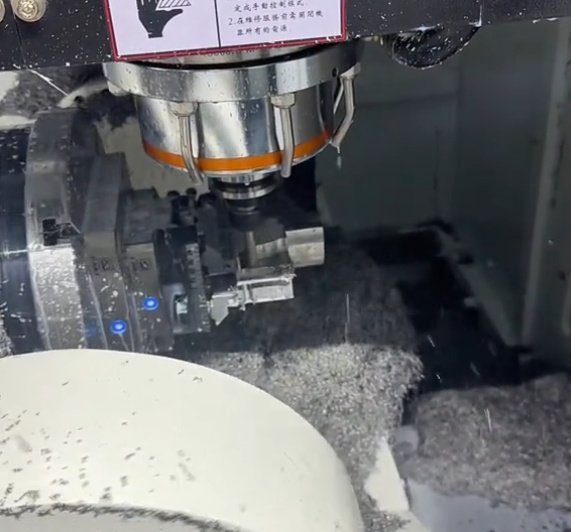
Nickel CNC Machining Capabilities
Nickel machining services support the production of high-performance components used in aerospace, electronics, chemical processing, energy, medical equipment, marine hardware and thermal management systems. Nickel and nickel-based alloys are selected when parts must resist corrosion, retain strength at elevated temperatures, maintain magnetic or controlled expansion properties, or perform reliably in aggressive operating environments. Machining nickel is not the same as machining aluminum or free-cutting stainless steel. Many nickel alloys generate high cutting forces, retain heat at the tool edge, work harden rapidly and produce tough, continuous chips. For accurate CNC nickel parts, success depends on rigid workholding, correct tool geometry, controlled feeds and speeds, coolant strategy, inspection planning and a clear understanding of the specific alloy grade. Nickel machining services usually cover both prototype and production machining of custom parts from wrought bar, plate, forged blanks, castings or near-net-shape stock. Depending on part geometry and material condition, the manufacturing route may include multi-axis milling, CNC turning, turn-mill machining, EDM support, grinding, deburring, cleaning and dimensional inspection
Precision Milling
- Multi-axis CNC milling for complex geometries.
- Tight tolerances as tight as ±0.002mm and fine surface finishes.
- Suitable for prototypes and mass production.
CNC Turning
- High-speed turning for shafts, rods, and cylindrical parts.
- Thread cutting, grooving, and facing operations.
- Supports both small and large batch production.
Drilling, Tapping & Boring
- CNC drilling for holes of all sizes and depths.
- Threading and tapping for assemblies.
- High repeatability for precision alignment.
Multi-Axis Machining
- 4-axis and 5-axis machining for intricate parts.
- Reduced setups and improved accuracy.
- Ideal for aerospace, automotive, and medical components.
Secondary Operations
- Deburring, grinding, tapping, honing, keyways, broaching support.
- Specialized processes for hard-to-machine metals.
- Used when critical surfaces, fit, or assembly requirements exceed standard machining
CNC Prototyping
- Rapid CNC prototyping to test designs quickly.
- Small batch to full-scale production runs.
- Flexible workflow to meet tight deadlines.
Main machining services types
CNC Milling Nickel Alloys
CNC milling nickel alloys requires a balanced approach: the tool must be sharp enough to shear the material cleanly, strong enough to resist edge chipping and supported by a machine setup that minimizes vibration. Nickel alloys do not dissipate heat quickly, so cutting heat often remains near the tool edge rather than flowing into the chip.Effective milling strategies include high-rigidity fixtures, short tool overhang, optimized radial engagement and consistent chip load. In many cases, climb milling is preferred because it reduces rubbing at the start of the cut and helps limit work hardening. Adaptive roughing can also help by controlling tool engagement, especially in Inconel, Monel and Hastelloy components.Carbide end mills with high-temperature coatings are commonly used for nickel alloy milling. Corner radii or chamfered cutting edges can improve tool strength in roughing operations. Coolant delivery should support both temperature control and chip evacuation. Finishing passes should remove enough material to cut below any work-hardened surface layer. Thin walls and pockets may require staged machining to control distortion. For tight-tolerance features, controlled finishing allowance is often more reliable than attempting to reach final size directly after heavy roughing. This is especially true when machining nickel parts with deep pockets, narrow ribs, interrupted cuts or high aspect-ratio walls.CNC Turning Nickel Components
CNC turning is widely used for nickel alloy rings, bushings, sleeves, shafts, nozzles, valve seats, threaded adapters and high-temperature fastening components. Turning nickel requires careful insert selection because notch wear, built-up edge and flank wear can change dimensions quickly during production.Rigid toolholding, adequate nose radius, constant surface speed control and high-pressure coolant can improve chip control. For many nickel alloys, light rubbing cuts are harmful because they increase work hardening. A more stable process normally uses a positive feed that allows the tool to shear rather than polish the material.Rough turning often uses tough carbide grades with wear-resistant coatings. Finish turning may require sharper positive-geometry inserts for improved surface quality. Grooving and parting operations need strong inserts and reliable coolant access. Internal turning and boring should minimize bar overhang to reduce chatter. Threading may require multiple spring passes or adjusted infeed strategy, depending on alloy and thread class.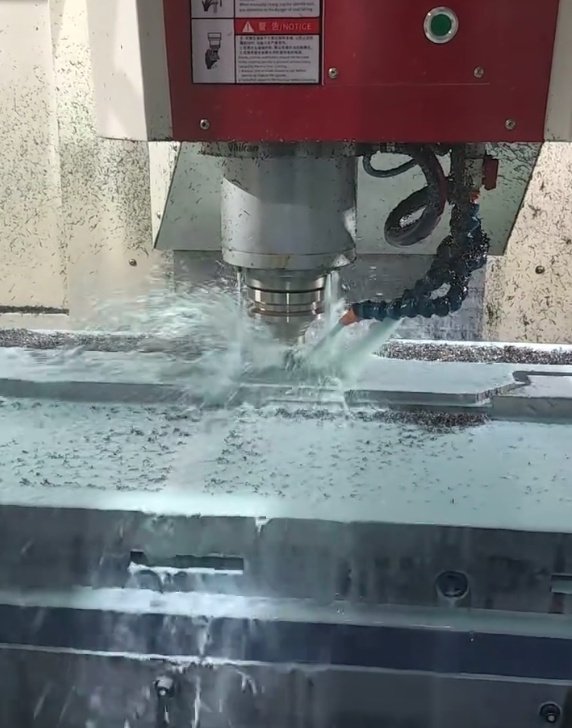
Nickel and Nickel Alloy Grades Commonly Machined
Search intent for nickel machining often includes several material families. “Nickel” may refer to commercially pure nickel, nickel-copper alloys, nickel-chromium superalloys or controlled-expansion nickel-iron alloys. Each grade behaves differently during machining.
| Material | Typical Use | Machining Considerations |
|---|---|---|
| Nickel 200 | Chemical processing, electrical components, corrosion-resistant hardware | Commercially pure nickel with good ductility; tends to form built-up edge and requires sharp tooling |
| Nickel 201 | High-temperature caustic service, electronics, thermal applications | Lower carbon version of Nickel 200; similar machinability with attention to heat control |
| Monel 400 | Marine components, pump shafts, valves, fittings | Nickel-copper alloy; tough chips and work hardening require positive cutting action |
| Monel K500 | High-strength marine and oilfield parts | Stronger than Monel 400; reduced tool life and higher cutting forces are common |
| Inconel 600 | Heat treatment fixtures, furnace parts, corrosion-resistant assemblies | Nickel-chromium alloy; heat concentration at the cutting edge must be managed |
| Inconel 625 | Aerospace, subsea, chemical and high-corrosion service | High strength and poor thermal conductivity; requires stable setups and high-performance carbide tools |
| Inconel 718 | Aerospace engine parts, energy components, high-load fasteners | Precipitation-hardened superalloy; often needs conservative parameters and staged roughing/finishing |
| Hastelloy C276 | Chemical processing, reactors, corrosion-resistant parts | Severe work hardening risk; tool engagement and chip evacuation are critical |
| Kovar | Glass-to-metal seals, electronics, sensor housings | Nickel-iron-cobalt alloy; dimensional stability and burr control are important |
Why the exact nickel alloy grade matters
Two nickel alloys can have similar corrosion resistance but very different machinability. For example, commercially pure Nickel 200 is ductile and gummy, while Inconel 718 is stronger, more abrasive and more heat resistant. A machining quote, process plan or tolerance review should always identify the alloy grade, heat treatment condition, required specification and any post-machining requirements.
Tolerances, Surface Finish and Feature Capability
Tolerance capability depends on alloy grade, part size, geometry, material condition, workholding access and inspection method. Nickel alloy parts can often be machined to precision tolerances, but the process must account for tool wear, heat, stress movement and burr control.
For many CNC nickel components, general tolerances may fall around ±0.005 in or ±0.13 mm, while tighter controlled features may be held closer when geometry and inspection access allow. Precision bores, bearing fits, sealing surfaces and datum-critical patterns may require dedicated finishing tools, in-process measurement or grinding support.
- Typical CNC milled surface finishes may range from Ra 1.6 to 3.2 µm depending on operation and alloy.
- Turned finishes can be improved with correct insert nose radius, feed rate and final pass stability.
- Reamed or bored holes may provide better roundness and size control than drilled holes alone.
- Thread quality depends on alloy hardness, tool condition, coolant and chip evacuation.
- Flatness and parallelism may require stress-relief planning or balanced material removal.
Where application risk is high, critical-to-function dimensions should be identified on the drawing so the machining and inspection plan can prioritize them. This is especially useful for nickel parts used in sealing, pressure containment, high-temperature assemblies and electrical contact systems.
Machining Challenges in Nickel and Nickel-Based Alloys
| Problem | Cause | Process Response |
|---|---|---|
| Work hardening | Tool rubbing, shallow cuts, interrupted engagement | Use positive chip load, sharp tools and finish passes that cut beneath hardened material |
| Short tool life | Heat concentration and abrasive alloying elements | Apply coated carbide, controlled speeds, coolant and planned tool-life management |
| Built-up edge | Ductile nickel smearing onto the cutting edge | Use sharp geometry, proper coolant and suitable surface speed |
| Chatter | High cutting forces, long tool overhang or flexible workpiece | Improve fixturing, shorten tool projection and adjust engagement strategy |
| Poor chip evacuation | Tough continuous chips and deep features | Use chipbreaker inserts, peck cycles, through-tool coolant or high-pressure coolant |
| Burr formation | Ductility and tool wear near exits or edges | Plan edge breaks, toolpath direction and secondary deburring operations |
Tooling, Coolant and Cutting Strategy
- Roughing: stable engagement, sufficient feed, tool strength and effective heat removal
- Semi-finishing: removal of work-hardened stock and preparation for final tolerance
- Finishing: sharp tools, predictable tool wear and controlled spring passes where necessary
- Drilling: rigid setup, peck strategy when needed and reliable coolant to the drill point
- Tapping: correct tap style, lubrication and thread-depth control to reduce breakage risk
Why nickel parts may need slower machining than aluminum
Nickel alloys usually have lower thermal conductivity and higher hot strength than aluminum. This means heat stays near the tool, the material resists deformation and cutting forces are higher. Even with modern CNC equipment, the best cycle time is the one that maintains tool life, dimensional stability and surface integrity.
Real Engineering Examples and Data-Based Results
| Part and Material | Initial Issue | Process Adjustment | Measured Result |
|---|---|---|---|
| Inconel 625 valve body, 5-axis milling | Chatter in deep pocket walls and inconsistent floor finish | Reduced tool overhang by 22%, changed to adaptive roughing and added a separate finishing allowance | Wall variation reduced from 0.18 mm to 0.06 mm; finish improved from approximately Ra 3.4 µm to Ra 1.8 µm |
| Monel 400 turned sleeve | Diameter drift after 35 to 45 parts due to insert wear | Introduced tool-life limit at 30 parts and modified finishing feed | Scrap rate reduced from 6.5% to below 1.5% over the next production run |
| Nickel 200 electrical contact | Burrs on thin edges after slot milling | Changed cutter geometry, adjusted toolpath exit direction and added controlled edge break | Manual deburring time reduced by approximately 40% while maintaining edge requirements |
| Kovar sensor housing | Leak-test failures linked to sealing surface variation | Added dedicated finish boring pass and controlled part temperature before inspection | Bore size Cpk improved from 1.12 to 1.58 in sampled production data |
Quality Control for CNC Nickel Parts
Quality control for nickel machined components should be matched to functional risk. Aerospace, chemical, marine, medical and electronic applications may require traceability, material certification, controlled inspection records or special handling. Standard CNC inspection may include first-article inspection, in-process checks and final dimensional verification.
- Material certificates for alloy grade, heat number and applicable standards
- Dimensional inspection using CMM, optical measurement, micrometers, bore gauges, height gauges and thread gauges
- Surface roughness measurement for sealing, sliding or fatigue-sensitive features
- Inspection of threads, keyways, slots, pockets, counterbores and datum structures
- Visual inspection for burrs, tool marks, discoloration, handling damage and edge condition
- Process documentation for production repeatability and revision control
For demanding projects, inspection planning before machining helps prevent disputes after production. Datum selection, tolerance interpretation, measurement temperature and gauge access should be reviewed before parts are cut, especially when nickel components have complex geometry or tight GD&T requirements.
Design Guidelines for Easier Nickel Machining
Design for manufacturability can significantly improve lead time, cost and quality in nickel parts. Because nickel alloys are expensive and machining time can be high, avoid features that add cycle time without improving function.
- Use generous internal radii where possible instead of sharp internal corners.
- Avoid unnecessarily deep narrow pockets that require long-reach tools.
- Specify tight tolerances only on functional dimensions.
- Provide realistic thread depths, especially in small blind holes.
- Allow access for deburring and inspection of critical edges.
- Consider stress movement when removing large amounts of stock from plate or bar.
- Define surface finish requirements only where they affect sealing, wear, fatigue or assembly.
A drawing that separates functional requirements from general preferences allows the machining process to focus on what truly matters. For example, a sealing face may need a controlled surface finish and flatness, while a non-contact external surface may only need standard machined finish.
Applications of Nickel Machined Parts
CNC nickel machining is used where ordinary metals cannot meet the combination of corrosion resistance, temperature capability, strength and stability required by the application. The same alloy may appear in several industries, but the machining requirements can differ depending on tolerance, surface finish and certification.
- Aerospace: turbine-related hardware, high-temperature brackets, sensor housings and fastener components
- Chemical processing: valve components, fittings, pump parts, nozzles and corrosion-resistant housings
- Marine and offshore: Monel shafts, sleeves, seawater-resistant fittings and instrumentation parts
- Electronics: Nickel 200 contacts, Kovar packages, thermal components and glass-to-metal seal parts
- Energy: high-temperature fixtures, fuel-system parts, downhole components and heat-resistant hardware
- Medical and laboratory equipment: corrosion-resistant precision components and specialty instrument parts
How to Evaluate a Nickel Machining Supplier
A capable nickel machining supplier should understand both CNC process control and nickel alloy behavior. The lowest quoted machining price may not produce the best total result if tool wear, scrap, inspection gaps or delivery risk are not considered.
- Experience with the exact nickel alloy or a closely related alloy family
- Ability to machine both prototype and repeat production quantities
- Knowledge of CNC milling, CNC turning, drilling, tapping and finishing methods for difficult alloys
- Process planning for work hardening, heat, burrs and dimensional movement
- Inspection capability aligned with drawing tolerances and GD&T requirements
- Clear communication about material certification, revision control and quality documentation
The best sourcing decision is usually based on manufacturability, risk control and repeatability, not only hourly rate. Nickel alloys are costly materials, and stable machining processes help protect both material value and part performance.