
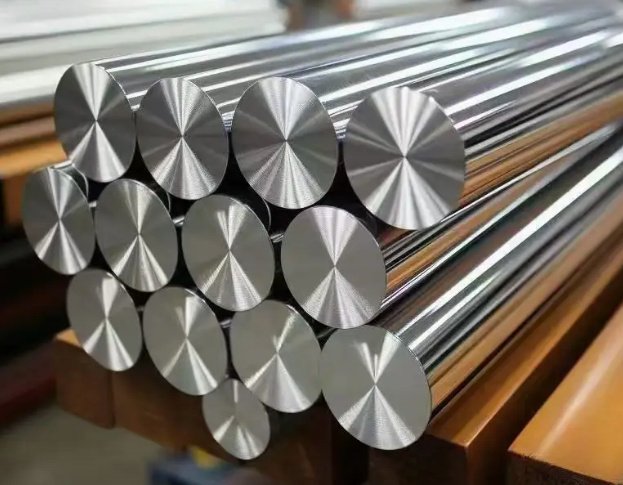
Choosing the right stainless steel grade can make or break your CNC machining project. With over 150 different grades available, engineers and procurement teams face a complex decision matrix involving corrosion resistance, machinability, mechanical strength, and cost. This guide delivers precise, actionable data on the most widely specified stainless steel grades, with particular focus on their performance in CNC machining environments.
What Defines a Stainless Steel Grade
Stainless steel is an iron-based alloy containing a minimum of 10.5% chromium by mass. This chromium content forms a passive oxide layer that provides the material's signature corrosion resistance. The American Iron and Steel Institute (AISI) classification system organizes grades into five primary families based on metallurgical structure and dominant alloying elements.
The grade designation system uses three-digit numbers. The first digit indicates the family: 2xx and 3xx for austenitic, 4xx for ferritic and martensitic, 5xx for heat-resistant chromium grades, and 6xx for precipitation-hardening alloys. Understanding this structure is essential when specifying material for precision CNC components.
Austenitic Stainless Steel Grades
Austenitic grades represent approximately 70% of global stainless steel production. These non-magnetic alloys offer excellent corrosion resistance and formability but typically require work-hardening management during CNC machining operations.
Grade 304: The Universal Standard
Grade 304, also known as 18/8 stainless steel, contains 18% chromium and 8% nickel. It serves as the baseline reference for corrosion-resistant alloys across industries. In CNC machining, 304 presents moderate machinability challenges due to its tendency to work-harden rapidly. Carbide tooling with positive rake angles and consistent feed rates above 0.004 inches per revolution help maintain cutting efficiency.
Typical applications include food processing equipment, chemical storage tanks, architectural components, and general-purpose fasteners. The material exhibits good weldability but is susceptible to sensitization in the heat-affected zone when exposed to temperatures between 800°F and 1500°F.
Grade 316: Marine and Chemical Superiority
Grade 316 adds 2-3% molybdenum to the 304 composition, dramatically improving resistance to chlorides and reducing acids. This makes it the preferred specification for marine hardware, pharmaceutical equipment, and chemical processing infrastructure.
From a CNC machining perspective, 316 is approximately 15-20% more difficult to machine than 304. The molybdenum content increases matrix strength and promotes built-up edge formation on cutting tools. Recommended strategies include using coated carbide inserts, maintaining coolant concentration above 8%, and reducing cutting speeds by 10-15% compared to 304 parameters.
Grade 303: The Machinability Champion
Grade 303 is the most machinable austenitic stainless steel, achieved through deliberate sulfur additions (0.15% minimum) that create manganese sulfide inclusions. These inclusions act as chip breakers and lubrication points during cutting operations.
CNC machinists can run 303 at speeds 25-40% faster than 304 while achieving superior surface finishes (typically Ra 32-63 microinches without secondary operations). However, the sulfur content reduces corrosion resistance and weldability. Grade 303 is unsuitable for marine environments or applications requiring autogenous welding.
Grade 321 and 347: Stabilized Variants
These grades incorporate titanium (321) or niobium/columbium (347) to prevent chromium carbide precipitation during welding and high-temperature service. They maintain equivalent corrosion resistance to 304 while offering superior performance in the 800°F to 1500°F sensitization range. CNC machining characteristics closely mirror 304 parameters.
Ferritic Stainless Steel Grades
Ferritic grades contain 10.5-30% chromium with minimal nickel content. These magnetic alloys offer moderate corrosion resistance, good ductility, and generally superior machinability compared to austenitic counterparts due to lower work-hardening rates.
Grade 430: The Cost-Effective Alternative
Grade 430 provides the most economical corrosion-resistant option among standard stainless grades. With 16-18% chromium and no intentional nickel addition, it costs approximately 30-40% less than 304. The material machines freely with standard high-speed steel or carbide tooling.
Limitations include reduced corrosion resistance in aggressive environments and poor weldability. Grade 430 sees extensive use in automotive trim, appliance panels, and interior architectural elements where atmospheric exposure is minimal.
Grade 409: Automotive Exhaust Standard
Grade 409 contains 10.5-11.75% chromium with titanium stabilization. It offers sufficient oxidation resistance for cyclic high-temperature exposure up to 1500°F, making it the dominant material for automotive exhaust systems. CNC machining of 409 requires attention to titanium nitride tool coatings to prevent galling.
Martensitic Stainless Steel Grades
Martensitic grades can be hardened through heat treatment to achieve high strength and wear resistance. These magnetic alloys contain 11.5-18% chromium with elevated carbon levels (0.15-1.2%).
Grade 410: The General-Purpose Hardenable Grade
Grade 410 offers a balance of corrosion resistance, strength, and machinability in the annealed condition. After heat treatment (quench and temper), it achieves tensile strengths exceeding 180,000 psi. CNC machining of 410 in the annealed state uses parameters similar to medium-carbon steels.
Applications include cutlery, turbine blades, pump components, and valve parts. The material requires post-machining heat treatment to develop full mechanical properties, which must be factored into manufacturing timelines.
Grade 440C: Maximum Hardness in Stainless
Grade 440C contains 0.95-1.20% carbon, enabling hardness levels up to 60 HRC after proper heat treatment. This makes it the standard bearing-grade stainless steel. In the annealed condition, 440C machines acceptably with carbide tooling, though cutting forces are higher than 410.
Post-machining heat treatment requires controlled atmosphere furnaces to prevent decarburization. Finish grinding typically follows heat treatment to achieve bearing-quality dimensional tolerances and surface finishes.
Precipitation-Hardening Stainless Steel Grades
Precipitation-hardening (PH) grades combine austenitic corrosion resistance with martensitic strength potential through copper, niobium, or aluminum additions. These grades achieve high strength through low-temperature aging rather than quench and temper.
Grade 17-4 PH: Aerospace and Defense Standard
Grade 17-4 PH (UNS S17400) contains 17% chromium and 4% copper. It achieves tensile strengths from 110,000 psi (Condition A) to 200,000 psi (Condition H900) depending on aging treatment. The material maintains corrosion resistance approaching 304 levels even in the highest strength conditions.
CNC machining of 17-4 PH in Condition A (solution annealed) presents moderate difficulty. Work-hardening occurs more aggressively than austenitic grades, requiring rigid setups and positive rake tooling. Many manufacturers machine to near-net shape in Condition A, then perform aging treatment to minimize distortion while achieving final mechanical properties.
Applications span aerospace structural components, nuclear reactor hardware, petrochemical valves, and high-performance firearm components. The grade's combination of strength and corrosion resistance justifies its premium cost in critical applications.
Grade 15-5 PH: Improved Toughness Variant
Grade 15-5 PH offers transverse toughness superior to 17-4 PH due to refined grain structure from remelting processes. It machines similarly to 17-4 PH but commands a 15-20% price premium. Specification is common in aircraft structural forgings and high-reliability pressure vessels.
Duplex Stainless Steel Grades
Duplex grades feature a mixed microstructure of approximately 50% austenite and 50% ferrite. This structure delivers strength roughly twice that of austenitic grades while maintaining excellent stress corrosion cracking resistance.
Grade 2205: The Workhorse Duplex
Grade 2205 (UNS S32205) contains 22% chromium, 5% nickel, and 3% molybdenum. Its yield strength of 65,000 psi exceeds 304's yield strength by approximately 100%. This enables thinner wall sections and reduced component weight in pressure vessel and heat exchanger applications.
CNC machining of duplex grades requires careful parameter selection. The dual-phase structure creates chip segmentation and elevated cutting temperatures. Recommended practice includes using sharp, positive-rake carbide inserts, maintaining cutting speeds 20% below 316 parameters, and ensuring adequate coolant delivery to cutting edges.
CNC Machining Considerations by Grade Family
Successful CNC machining of stainless steel requires grade-specific parameter optimization. The following factors govern tooling selection and cutting conditions across the major families.
Work-Hardening Behavior
Austenitic grades exhibit the most aggressive work-hardening, with surface hardness increasing by 50-100% during machining. This demands continuous cutting with feeds above the work-hardening threshold. Interrupted cuts or dwells at constant depth accelerate tool wear through localized hardening.
Martensitic and PH grades in the annealed condition show minimal work-hardening but require attention to heat generation that could trigger unwanted phase transformations. Ferritic grades offer the most forgiving work-hardening characteristics for high-speed machining.
Chip Control and Breaking
Free-machining grades (303, 416) produce discontinuous chips that evacuate easily. Standard austenitic grades generate long, stringy chips that wrap tooling and damage workpiece surfaces. High-pressure coolant systems and chip-breaking geometries become essential for unattended CNC operations on 304 and 316.
Duplex grades produce segmented chips with high cutting forces. Rigid machine tools with through-spindle coolant capability maximize productivity in these materials.
Tool Material Selection
Coated carbide inserts dominate stainless steel CNC machining. Physical vapor deposition (PVD) coatings of titanium aluminum nitride (TiAlN) perform well across all grades. Chemical vapor deposition (CVD) alumina coatings excel in high-speed applications on free-machining grades.
Ceramic inserts find limited application in stainless steels due to chemical reactivity at elevated temperatures. Cubic boron nitride (CBN) and polycrystalline diamond (PCD) are generally reserved for hardened martensitic grades or high-volume production of specific components.
Coolant Requirements
Water-soluble coolants with 8-12% concentration provide optimal performance for most stainless steel CNC operations. Sulfurized or chlorinated extreme-pressure additives improve tool life in difficult-to-machine grades like 316 and duplex alloys. Minimum quantity lubrication (MQL) systems are generally insufficient for austenitic grades due to heat dissipation requirements.
Corrosion Resistance Comparison
Corrosion performance varies dramatically across stainless steel grades. The following hierarchy applies to general atmospheric and aqueous corrosion resistance, from highest to lowest:
316 / 317 > 304 / 321 / 347 > 2205 Duplex > 17-4 PH (aged) > 430 > 410 (passivated) > 440C (passivated) > 409
For chloride-containing environments (seawater, de-icing salts, chemical process streams), the molybdenum-bearing grades (316, 317, 2205) demonstrate decisive advantages. In oxidizing acid environments, higher chromium content provides primary protection.
Mechanical Properties at a Glance
Engineers selecting stainless steel grades for load-bearing CNC components must evaluate yield strength, tensile strength, and elongation in the specified condition. The following summary covers common grades in their standard supply conditions:
Grade 304 (annealed): Yield 30 ksi, Tensile 75 ksi, Elongation 40%
Grade 316 (annealed): Yield 30 ksi, Tensile 75 ksi, Elongation 40%
Grade 303 (annealed): Yield 35 ksi, Tensile 90 ksi, Elongation 50%
Grade 430 (annealed): Yield 35 ksi, Tensile 70 ksi, Elongation 25%
Grade 410 (annealed): Yield 35 ksi, Tensile 75 ksi, Elongation 35%
Grade 410 (hardened): Yield 120 ksi, Tensile 180 ksi, Elongation 15%
Grade 440C (annealed): Yield 65 ksi, Tensile 110 ksi, Elongation 15%
Grade 17-4 PH (H900): Yield 170 ksi, Tensile 200 ksi, Elongation 10%
Grade 2205 (annealed): Yield 65 ksi, Tensile 95 ksi, Elongation 25%
Cost Factors and Availability
Material cost significantly impacts project economics. The following approximate pricing hierarchy applies to standard mill forms (bar, plate, sheet) in North American markets:
409 < 430 < 410 < 304 < 316 < 303 < 440C < 17-4 PH < 2205 Duplex
Lead times vary by grade and form. Grades 304 and 316 maintain extensive distributor inventories with same-day availability in common sizes. PH grades and duplex alloys typically require mill-direct orders with 4-12 week lead times for non-standard dimensions.
Grade Selection Decision Framework
Selecting the optimal stainless steel grade requires systematic evaluation of application requirements. The following decision tree guides specification:
Maximum corrosion resistance required (marine, chemical, pharmaceutical)
Specify 316 or 317 for moderate strength requirements. For high-strength marine components, consider 2205 duplex or titanium-clad constructions. Avoid 303 and 430 in chloride environments.
High strength with moderate corrosion resistance (aerospace, firearms, industrial)
17-4 PH provides the optimal strength-to-corrosion balance. For maximum hardness, specify 440C with post-machining heat treatment. 410 offers a lower-cost hardenable alternative.
High-volume CNC production with cost constraints
303 maximizes machining productivity for non-critical corrosion applications. 430 serves atmospheric exposure needs at lowest material cost. 304 provides the best all-around value for general industrial components.
Welded fabrication with post-weld machining
321 or 347 prevent sensitization in welded heat-affected zones. 316L (low carbon) provides equivalent protection for molybdenum-bearing requirements. Avoid 303 and free-machining grades in welded assemblies.
Quality Verification and Testing
Verifying correct grade specification is critical in CNC machining supply chains. Common verification methods include:
Spark testing: Rapid field identification distinguishing carbon steel from stainless grades based on spark stream characteristics. Limited ability to differentiate between stainless grades.
X-ray fluorescence (XRF): Portable analyzers provide quantitative chemistry verification in seconds. Essential for high-reliability applications and incoming material inspection.
Ferrite measurement: Ferritescopes quantify ferrite content in duplex and austenitic weld metals. Ensures proper phase balance in critical components.
Hardness testing: Confirms heat treatment condition for martensitic and PH grades. Rockwell C scale for hardened materials; Rockwell B or Brinell for annealed conditions.
Common Specification Errors to Avoid
Engineers and buyers frequently encounter pitfalls in stainless steel specification:
Specifying 304 for marine splash zones where 316 or 2205 is required leads to premature chloride-induced pitting. Assuming all "stainless" grades are non-magnetic creates assembly issues when ferritic or martensitic grades are inadvertently substituted. Ordering 303 for welded components results in solidification cracking and sulfur segregation at weld centers. Neglecting to specify condition (annealed vs. hardened) for 410 or 17-4 PH produces components with incorrect mechanical properties.
Environmental and Sustainability Considerations
Stainless steel offers exceptional sustainability credentials. The material is 100% recyclable without quality degradation. Average recycled content in new stainless steel production exceeds 60% globally. The long service life of stainless components (often 50+ years in architectural applications) reduces life-cycle environmental impact compared to materials requiring frequent replacement.
CNC machining generates stainless steel chips and turnings with high scrap value. Efficient chip collection and segregation by grade family maximize recycling returns. Coolant recycling systems reduce waste generation in high-volume machining operations.
Conclusion
Stainless steel grade selection demands technical precision aligned with application requirements, manufacturing capabilities, and economic constraints. This guide provides the foundational knowledge to specify confidently across the major grade families, with particular attention to CNC machining performance factors that determine manufacturing success.
For critical applications, consult material suppliers and heat treaters early in the design process. Metallurgical support ensures optimal grade selection and processing parameters, reducing risk and total project cost.