
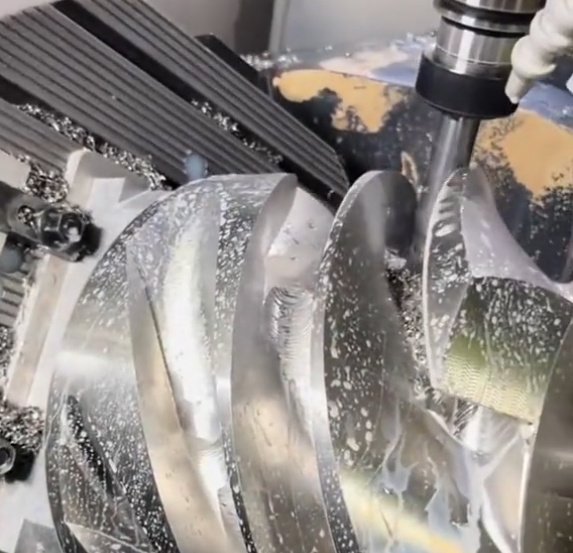
Selecting the right stainless steel machining supplier determines whether your project launches on schedule or bleeds budget through delays and rework. The global precision machining market exceeds $85 billion annually, yet quality variation between suppliers remains extreme. This guide identifies the critical evaluation criteria that separate high-performance machining partners from commodity job shops, with specific focus on the capabilities required for stainless steel component production.
What Defines a Capable Stainless Steel Machining Supplier
Not every CNC shop that machines aluminum or carbon steel can deliver precision stainless steel components cost-effectively. The material's unique demands—aggressive work-hardening, poor thermal conductivity, and elevated cutting forces—require specialized equipment, tooling inventories, and operator expertise.
A qualified supplier maintains dedicated stainless steel machining cells rather than general-purpose equipment shared across all materials. These cells feature rigid machine construction, high-torque spindles, and through-tool coolant systems optimized for the thermal and mechanical challenges stainless steel presents. General-purpose shops without material-specific capabilities typically achieve 30-50% lower tool life and proportionally higher scrap rates on stainless work.
Equipment age matters less than maintenance discipline. A well-maintained 10-year-old vertical machining center with qualified ballscrews and verified positioning accuracy outperforms a neglected new machine. Request recent calibration certificates and ballbar test results before awarding precision stainless steel contracts.
Speed Metrics That Actually Matter
Lead time claims require scrutiny. A supplier quoting "2-week delivery" may achieve that speed through expediting fees, overtime premiums, or quality shortcuts. Sustainable speed comes from systematic process optimization rather than heroic effort.
Quote Velocity as a Process Indicator
Quote turnaround time reveals operational maturity. Suppliers with integrated CAD/CAM systems, standardized estimating databases, and material availability visibility generate accurate quotes within 24 hours. Shops requiring 3-5 days for quotations often lack digital integration, suggesting downstream scheduling and communication delays.
Request itemized quotes breaking out material, programming, setup, machining time, inspection, and finishing. Vague lump-sum pricing obscures cost drivers and complicates value engineering. Transparent suppliers welcome detailed quote review and provide alternative manufacturing suggestions that reduce cost or lead time.
Setup Time Reduction Strategies
Quick-change tooling systems, pre-set tool libraries, and modular workholding reduce setup time from hours to minutes. Suppliers investing in these technologies deliver faster turnaround without premium pricing. Ask about typical setup times for repeat orders—values under 30 minutes indicate modern lean manufacturing practices.
For prototype and low-volume production, suppliers with 5-axis machining capability often produce complex stainless steel components in a single setup that would require 3-4 setups on 3-axis equipment. The setup time savings alone can compress delivery schedules by 40-60% for geometrically complex parts.
Material Availability and Supply Chain Resilience
Stainless steel bar stock and plate availability varies by grade and dimension. Suppliers maintaining strategic inventory of common grades (304, 316, 303, 17-4 PH) in standard sizes eliminate material procurement delays. For specialized grades like 2205 duplex or 440C, verify that the supplier has established distributor relationships with documented lead times.
Supply chain resilience extends beyond inventory. Suppliers with multi-source material strategies and certificate-of-compliance verification protocols avoid the quality escapes that occur when substituting equivalent grades from unqualified mills.
Reliability Through Process Control
Reliable delivery requires more than good intentions. It demands documented processes, statistical quality control, and contingency planning that prevents single points of failure from disrupting production.
Quality Management System Depth
ISO 9001 certification represents baseline quality commitment, but certification alone does not guarantee precision outcomes. Evaluate the supplier's process capability indices (Cpk values) for stainless steel components similar to your requirements. Cpk values above 1.33 indicate processes producing fewer than 63 defective parts per million. Values above 1.67 demonstrate Six Sigma-level performance.
First article inspection (FAI) documentation should include full dimensional reports, material certifications, and surface finish verification. For aerospace or medical applications, AS9100 or ISO 13485 certification provides additional assurance of industry-specific quality discipline.
In-Process Verification Technology
Suppliers integrating machine-touch probes, laser measurement, and automated inspection reduce the risk of dimensional drift going undetected. Probe-based in-process gaging catches errors within the machining cycle rather than after completion. This technology is particularly valuable for stainless steel work, where thermal expansion and tool wear create progressive dimensional variation.
Coordinate measuring machine (CMM) capability remains essential for final verification. Verify that the supplier's CMM has sufficient accuracy (typically 2.5 microns or better) and that operators are trained in geometric dimensioning and tolerancing (GD&T) interpretation.
Traceability and Documentation
Complete lot traceability from raw material through finished component supports recall management and regulatory compliance. Suppliers should provide material heat numbers, machining parameters, inspection data, and operator identification for each production lot. Digital traceability systems with barcode or RFID tracking offer superior reliability to paper-based records.
Cost-Effectiveness Beyond Unit Price
Lowest quoted price rarely equals lowest total cost. A comprehensive cost evaluation considers quality fallout, delivery reliability, engineering support, and lifecycle value.
Total Cost of Ownership Framework
The true cost of a machined stainless steel component includes:
Acquisition cost: Quoted piece price plus tooling and setup charges
Quality cost: Scrap, rework, sorting, and warranty claims
Logistics cost: Shipping, customs, and inventory carrying charges
Engineering cost: Design for manufacturability feedback and process development
Opportunity cost: Delayed product launches from missed deliveries
A supplier quoting 15% above the lowest bid but delivering 99.5% quality and 100% on-time performance typically generates lower total cost over a production program's lifecycle. Calculate the financial impact of a single line shutdown from late delivery or defective components to quantify reliability value.
Design for Manufacturability Partnership
Suppliers offering proactive DFM feedback reduce production costs before the first chip forms. Suggestions to consolidate operations, relax non-critical tolerances, or select more machinable grade alternatives can yield 20-40% cost reductions without functional compromise. This engineering partnership distinguishes strategic suppliers from transactional vendors.
Request examples of DFM improvements the supplier has implemented for other stainless steel projects. Specific case studies with quantified savings demonstrate genuine capability rather than marketing claims.
Volume Flexibility and Economies of Scale
Cost-effective suppliers maintain capacity for volume ramps without requiring long-term commitments that transfer inventory risk to the customer. Evaluate production capacity against your forecasted demand, including seasonal peaks and product launch surges. Suppliers running at 85-90% utilization offer optimal balance of availability and efficiency.
For prototype through production transitions, suppliers with identical processes across prototype and production equipment eliminate re-qualification costs. Separate prototype and production shops often require process revalidation that adds weeks to market introduction.
Technical Capabilities Assessment
Evaluate supplier technical depth through specific capability verification rather than general capability claims.
Multi-axis machining capability requirements
5-axis simultaneous machining enables complex stainless steel geometries with reduced setups and improved accuracy. Verify actual 5-axis experience through sample parts or facility tours. Some suppliers claim 5-axis capability based on machines with rotary tables that only support 3+2 positioning rather than true simultaneous contouring. Request CAM simulation files demonstrating collision-free 5-axis toolpaths for your component geometry.
Surface finish and tolerance achievement records
Review capability studies for tolerances and surface finishes matching your requirements. A supplier claiming ±0.0005-inch capability should provide recent CMM reports demonstrating sustained performance at that level. Surface finish capability studies using profilometers rather than visual comparison charts provide objective verification.
Secondary operation integration
Heat treatment, passivation, electropolishing, and specialized cleaning often follow CNC machining for stainless steel components. Suppliers integrating these operations internally control scheduling and quality rather than managing external vendors. Verify that in-house heat treatment furnaces maintain temperature uniformity within ±10°F and that passivation processes meet applicable specifications (ASTM A967, AMS 2700).
Communication and Project Management
Technical capability without responsive communication creates project risk. Evaluate supplier communication practices during the quotation phase as a predictor of ongoing project management quality.
Single Point of Contact Accountability
Effective suppliers assign dedicated program managers or account engineers who understand your technical requirements and business priorities. This individual coordinates internal resources and provides status updates without requiring you to contact multiple departments. During evaluation, note whether your inquiries receive prompt, knowledgeable responses or generic acknowledgments with delayed follow-up.
Digital Integration and Visibility
Modern suppliers offer customer portals providing real-time order status, inspection data access, and shipping tracking. API integration with your ERP or MRP systems eliminates manual data entry and reduces procurement administrative burden. While not essential for all relationships, digital integration capability indicates operational maturity and scalability.
Problem Resolution Protocols
Every manufacturing relationship encounters issues. Supplier reliability manifests in problem response speed and root cause correction effectiveness. Request documentation of corrective action processes (8D reports, 5-Why analysis) and verify that the supplier implements systemic improvements rather than isolated fixes.
Geographic and Logistics Considerations
Supplier location affects shipping costs, delivery speed, and communication convenience. However, geographic proximity should not override technical capability.
Domestic suppliers offer advantages for time-sensitive projects, complex components requiring engineering collaboration, and applications where face-to-face quality reviews add value. Overseas suppliers may offer lower labor rates but introduce longer lead times, customs complexity, and intellectual property exposure.
For many stainless steel precision components, the machining cost represents a small fraction of total program value. The cost of a delayed product launch or quality failure far exceeds modest unit price differences between geographic regions. Select suppliers based on total value delivery rather than unit price minimization.
Red Flags in Supplier Evaluation
Certain indicators suggest suppliers unlikely to deliver fast, reliable, cost-effective stainless steel machining:
Vague or evasive answers to technical questions: Indicates lack of expertise or unwillingness to disclose limitations
No recent equipment investment: Suggests financial stress or operational stagnation
Excessive reliance on overtime or expediting: Reveals poor capacity planning rather than systematic speed
Refusal to provide customer references: May indicate dissatisfied clients or contractual confidentiality issues that warrant investigation
Quote significantly below market range: Often signals misunderstanding of requirements, planned change orders, or quality shortcuts
Building Long-Term Supplier Relationships
The most cost-effective stainless steel machining relationships develop over time through mutual investment and continuous improvement. Long-term partnerships enable:
Process optimization: Suppliers refine parameters and tooling for your specific components, reducing cycle time and improving consistency
Inventory programs: Kanban or vendor-managed inventory reduces your carrying costs while ensuring material availability
Engineering collaboration: Early supplier involvement in new product development prevents manufacturability issues and accelerates time to market
Volume leverage: Consolidated spend across multiple components improves pricing and scheduling priority
These relationship benefits compound over time, creating sustainable competitive advantage that transactional purchasing cannot replicate.
Conclusion
Finding a stainless steel machining supplier that delivers speed, reliability, and cost-effectiveness requires systematic evaluation across technical capability, quality systems, communication practices, and total value proposition. The lowest quoted price rarely corresponds to the lowest total cost when quality fallout and delivery risk are quantified.
Invest time in thorough supplier qualification during selection. Request facility tours, review capability studies, and verify references from customers with similar stainless steel requirements. The effort invested in supplier selection pays returns through reduced program risk, lower total cost, and components that meet specification consistently from the first article through production end-of-life.