
What Custom Titanium Fabrication Encompasses
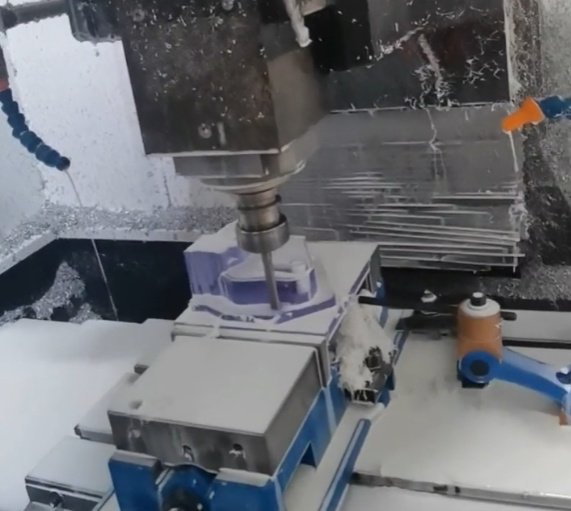
Custom titanium fabrication is the process of transforming raw titanium materials into finished components, assemblies, and structures tailored to specific engineering requirements. Unlike off-the-shelf titanium products, custom fabrication addresses unique geometries, performance specifications, and application environments that cannot be satisfied by standard catalog items. The fabrication process integrates multiple manufacturing disciplines including cutting, forming, welding, machining, and surface treatment, each requiring specialized knowledge of titanium's metallurgical behavior. Industries ranging from chemical processing and power generation to marine engineering and architectural design depend on custom titanium fabrication for components that must withstand corrosive environments, extreme temperatures, or demanding structural loads.
Material Selection for Custom Titanium Fabrication
Commercially Pure Titanium Grades
Commercially pure (CP) titanium grades 1 through 4 offer excellent corrosion resistance and formability, making them the preferred choice for chemical processing equipment, heat exchangers, and architectural applications. Grade 1 provides the highest ductility with elongation values exceeding 24 percent, allowing severe forming operations without cracking. Grade 2 balances strength and formability for general fabrication work, while Grade 4 delivers the highest strength among CP grades at approximately 550 MPa tensile strength. The absence of alloying elements simplifies welding procedures and eliminates the risk of alloy segregation during fabrication.
High-Strength Titanium Alloys
Ti-6Al-4V (Grade 5) dominates custom fabrication for aerospace, medical, and high-performance engineering applications where strength-to-weight ratio is critical. The alloy achieves tensile strengths of 900 to 1100 MPa depending on heat treatment condition, nearly double that of Grade 2 CP titanium. Ti-3Al-2.5V (Grade 9) offers intermediate strength with superior cold formability and weldability, making it popular for tubular structures including bicycle frames, aerospace hydraulic lines, and marine components. Ti-6Al-4V ELI (Grade 23) provides enhanced fracture toughness for fracture-critical applications including medical implants and subsea equipment operating at extreme depths.
Specialty Alloys for Extreme Environments
Applications involving elevated temperatures or aggressive chemical environments require specialty titanium alloys beyond standard grades. Ti-6Al-2Sn-4Zr-2Mo retains strength at temperatures up to 540°C, making it suitable for gas turbine components and exhaust systems. Grade 7 titanium, with 0.12 to 0.25 percent palladium addition, provides enhanced crevice corrosion resistance in chloride environments at temperatures up to 260°C. Grade 12 titanium with molybdenum and nickel additions offers improved resistance to reducing acids, expanding the range of chemical processing applications where titanium fabrication is cost-effective compared to higher-nickel alloys.
Cutting and Preparation Processes
Waterjet Cutting for Titanium
Abrasive waterjet cutting is the preferred method for profiling titanium plate and sheet in custom fabrication. The process generates no heat-affected zone, eliminating the risk of metallurgical changes that can occur with thermal cutting methods. Waterjet systems achieve positioning accuracy of ±0.1 mm with kerf widths as narrow as 0.8 mm, enabling tight nesting of parts to maximize material utilization. The absence of thermal stress means that waterjet-cut titanium parts require no post-cut stress relief, reducing fabrication time and cost. For thick sections exceeding 50 mm, waterjet cutting remains effective while plasma and laser cutting become increasingly challenging due to titanium's low thermal conductivity.
Laser Cutting Capabilities and Limitations
Fiber laser cutting offers high-speed processing of thin titanium sheet up to approximately 6 mm thickness. The process achieves cutting speeds of 5 to 15 meters per minute on 1 mm sheet, significantly faster than waterjet for thin-gauge material. However, the heat-affected zone produced by laser cutting requires post-cut edge conditioning to remove the oxide layer and any microstructural changes. Nitrogen assist gas is essential for titanium laser cutting to prevent edge oxidation and embrittlement. Fabricators must implement fume extraction systems rated for combustible metal dust when laser cutting titanium, as fine particles generated during the process present a fire hazard.
Shearing and Sawing Operations
Conventional shearing and sawing remain cost-effective for straight cuts and simple profiles in custom titanium fabrication. Guillotine shears rated for titanium can process sheet up to 6 mm thickness, though blade life is significantly shorter than for steel due to titanium's abrasiveness. Band saws with bimetal blades running at 15 to 25 meters per minute provide efficient cutting of bar, plate, and structural shapes. Blade tooth pitch must be selected based on material thickness, with a minimum of three teeth engaged in the cut at all times to prevent tooth stripping. Coolant delivery directly to the cutting zone is essential to prevent work hardening and extend blade life.
Forming and Shaping Titanium
Press Brake Forming Parameters
Titanium exhibits significant springback during press brake forming due to its low elastic modulus relative to its yield strength. Springback compensation requires overbending by 10 to 25 degrees beyond the target angle, with the exact compensation determined by material grade, thickness, and bend radius. The minimum bend radius for annealed CP titanium grades ranges from 1.5t to 2.5t, where t is material thickness, while Ti-6Al-4V requires larger radii of 3t to 4t to prevent cracking. Hot forming at temperatures between 200°C and 400°C reduces springback and allows tighter bend radii, though it requires specialized tooling and longer cycle times.
Roll Forming and Plate Rolling
Custom titanium fabrication frequently involves rolling plate into cylindrical shells for pressure vessels, heat exchangers, and process columns. Plate rolling of titanium requires multiple passes with progressively decreasing roll spacing to achieve the target diameter without exceeding the material's forming limits. Pre-bending the plate edges before rolling ensures a consistent radius through the entire circumference. For Ti-6Al-4V plate exceeding 12 mm thickness, warm rolling at 300°C to 400°C reduces the required forming force and minimizes the risk of cracking. Post-forming stress relief at 540°C to 595°C for 30 to 60 minutes restores dimensional stability for welded assemblies.
Hot Forming and Superplastic Forming
Complex titanium components with deep draws or tight radii often require hot forming or superplastic forming techniques. Hot forming at temperatures between 650°C and 800°C significantly increases titanium's formability, allowing geometries that would be impossible at room temperature. Superplastic forming exploits the exceptional elongation of fine-grained Ti-6Al-4V at 900°C to 925°C, achieving elongations of 500 to 1000 percent under controlled strain rates. The process uses argon gas pressure to form sheet into single-sided dies, producing complex shapes with uniform wall thickness. Tooling costs for superplastic forming are substantial, making it economical primarily for aerospace and high-performance automotive applications where part consolidation justifies the investment.
Welding and Joining Technologies
Gas Tungsten Arc Welding Procedures
Gas tungsten arc welding (GTAW/TIG) is the most common welding process for custom titanium fabrication. The process requires comprehensive inert gas shielding of both the weld pool and the cooling weld metal to prevent atmospheric contamination. Primary shielding is provided by the welding torch, while trailing shields protect the solidifying weld bead, and backing gas purges shield the weld root. Argon is the standard shielding gas, though helium additions of 25 to 75 percent can increase heat input for thicker sections. Weld discoloration indicates inadequate shielding, with a bright silver or straw-colored weld indicating acceptable gas coverage, while blue, gray, or white oxides indicate contamination requiring weld removal and rework.
Weld Joint Design and Preparation
Proper joint design is critical for achieving full-penetration titanium welds with minimal distortion. Butt joints in material up to 3 mm thickness can be welded with a square edge preparation and zero root gap. Thicker sections require V-groove preparations with included angles of 60 to 90 degrees and root faces of 1 to 2 mm. All joint surfaces must be mechanically cleaned with dedicated stainless steel wire brushes and degreased with acetone or isopropyl alcohol immediately before welding. Contamination from sulfur, chlorine, or other halogens can cause severe weld embrittlement, making it essential to segregate titanium fabrication tools from those used for other metals.
Filler Metal Selection and Storage
Titanium filler metal must match the base metal composition to ensure consistent corrosion resistance and mechanical properties. ERTi-2 filler is used for CP titanium grades 1 and 2, while ERTi-5 matches Ti-6Al-4V base metal. Filler wire must be stored in sealed containers and handled with clean gloves to prevent surface contamination. Wire brushing or chemical cleaning of filler metal immediately before use removes any adsorbed moisture or contaminants that could introduce hydrogen into the weld. Hydrogen concentrations above 150 ppm in the weld metal can cause delayed cracking, particularly in high-strength alloys and thick sections.
Quality Control and Inspection
Visual and Dye Penetrant Inspection
Visual inspection is the first line of quality control for custom titanium fabrication, with weld discoloration serving as an immediate indicator of shielding adequacy. Dye penetrant inspection per ASTM E165 detects surface-breaking defects including cracks, porosity, and incomplete fusion. The process uses low-chlorine, low-sulfur penetrant materials specifically formulated for titanium to avoid stress corrosion cracking. Post-inspection cleaning must remove all penetrant residues, as dried penetrant can cause corrosion during service or contamination during subsequent welding operations.
Radiographic and Ultrasonic Testing
Volumetric inspection methods are required for critical titanium fabrications including pressure vessels, structural components, and rotating equipment. Radiographic testing per ASTM E1742 provides permanent film records of internal weld quality, detecting porosity, tungsten inclusions, and incomplete penetration. Ultrasonic testing per ASTM E2375 offers detection of lack-of-fusion defects as small as 1.5 mm in titanium welds, with phased array techniques providing detailed cross-sectional imaging of weld geometry and defect location. The inspection method must be specified on fabrication drawings based on the component's criticality classification and applicable code requirements.
Dimensional Inspection and Documentation
Custom titanium fabrications often involve tight tolerances driven by assembly requirements with mating components. Coordinate measuring machine inspection verifies dimensional conformance to the 3D CAD model, while laser scanning captures complete surface geometry for comparison to nominal dimensions. Fabrication shops serving aerospace and nuclear customers must maintain complete inspection records traceable to individual components for the life of the installation. First article inspection reports document all dimensional, mechanical, and nondestructive testing results for the initial production unit, establishing the baseline for subsequent production conformity.
Surface Contamination Prevention During Titanium Fabrication
Titanium's susceptibility to contamination during fabrication requires rigorous housekeeping and material handling procedures. Dedicated fabrication areas with stainless steel work surfaces prevent iron contamination from carbon steel tools and fixtures. All grinding, wire brushing, and cutting tools used on titanium must be reserved exclusively for titanium work and clearly marked to prevent cross-contamination. Iron contamination from grinding sparks or steel tooling can cause localized corrosion and embrittlement when the fabricated component enters service. Temperature-indicating crayons and markers containing sulfur or chlorine must never be used on titanium, as these elements cause severe intergranular attack during welding and heat treatment. Fabrication shops should implement a tool control program with color coding to segregate titanium tooling from tools used for other metals.
Post-Fabrication Heat Treatment and Stress Relief
Stress relief heat treatment is often necessary after custom titanium fabrication to restore dimensional stability and reduce residual stresses from welding and forming. CP titanium grades are stress relieved at 480°C to 595°C for 15 minutes to 4 hours depending on section thickness, with air cooling providing adequate cooling rates. Ti-6Al-4V fabrications may require solution treatment at 955°C followed by aging at 540°C to achieve specified mechanical properties. All heat treatment must be performed in vacuum or inert gas atmosphere furnaces to prevent surface oxidation and alpha-case formation. Alpha-case, a brittle oxygen-enriched surface layer, must be removed by chemical milling or machining after heat treatment, as it severely reduces fatigue life and ductility. Furnace temperature uniformity surveys and instrument calibration records must be maintained as part of the fabrication quality documentation.