
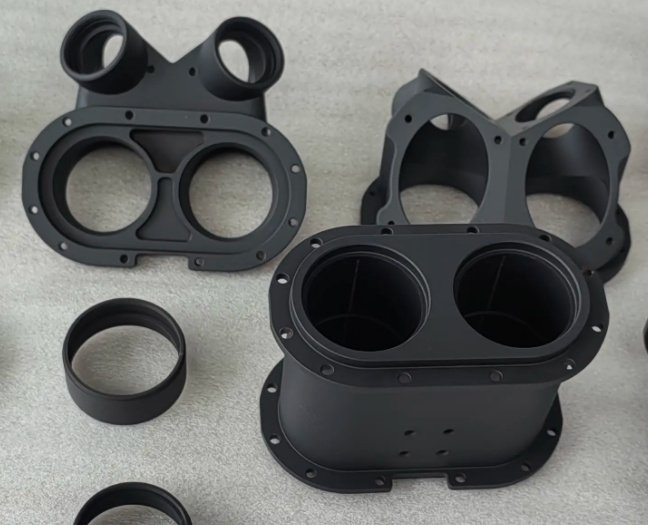
Titanium parts finishing and plating solve critical challenges in aerospace, medical, and industrial applications where lightweight strength meets extreme environmental demands. While titanium's natural oxide layer provides excellent corrosion resistance, it creates significant barriers to adhesion, electrical conductivity, and surface compatibility. This guide covers proven finishing methods, plating techniques, and process parameters that deliver measurable performance improvements.
Why Titanium Requires Specialized Surface Treatment
Titanium ranks among the most difficult metals to plate due to its reactive nature. Within nanoseconds of exposure to oxygen, titanium forms a tenacious oxide film (TiO₂) measuring 2–10 nm thick. This passive layer exhibits:
- Dielectric properties that block electrical current
- Extreme chemical stability resisting most acids
- High hardness (HV 600–800) preventing mechanical interlocking
- Instant reformation after removal
Standard plating procedures designed for steel or copper substrates fail on titanium because the oxide layer prevents metallurgical bonding between the substrate and deposited coating. Effective titanium finishing requires deliberate oxide disruption and activation protocols.
Surface Preparation: The Foundation of Adhesion
Mechanical Pre-Treatment
Mechanical methods remove existing oxides and create surface topography for mechanical anchoring. Common approaches include:
- Blasting: Aluminum oxide media at 60–80 psi pressure increases surface area by 30–50%
- Grinding: Silicon carbide wheels for precision dimensional correction
- Polishing: Progressive grit sequences (120 → 400 → 800 → 1200) for mirror finishes
Critical consideration: blasting with steel media risks iron contamination and subsequent galvanic corrosion. Ceramic or glass bead media prevent contamination while achieving Ra 0.4–1.6 μm surface roughness optimal for plating adhesion.
Chemical Etching Protocols
Chemical etching dissolves the oxide layer while micro-roughening the substrate. The Piranha etch (30% HNO₃ + 3% HF, 20–30 seconds immersion) remains the aerospace industry standard, producing a uniformly active surface with 2–5 μm etch depth. Process control requires:
- Strict temperature maintenance at 20–25°C
- HF concentration monitoring via titration every 4 hours
- Immediate water quench followed by methanol rinse to prevent re-oxidation
Alternative alkaline etching (NaOH + H₂O₂ solutions at 80–100°C) offers safer handling for medical-grade titanium (Ti-6Al-4V ELI) where hydrogen embrittlement risks must be minimized.
Activation and Strike Plating
Post-etching, titanium requires immediate activation to prevent oxide reformation. The Wood's nickel strike (240 g/L NiCl₂·6H₂O + 31 mL/L HCl, pH <1.0, 3–5 A/dm² current density) deposits a thin nickel layer (0.1–0.3 μm) within 30–60 seconds. This strike layer:
- Provides a catalytic surface for subsequent electroplating
- Prevents re-oxidation during transfer to plating baths
- Creates a diffusion barrier between titanium and final coating
Strike bath temperature must exceed 50°C to maintain chloride activity. Failed strikes—indicated by brownish discoloration rather than uniform gray—require re-etching rather than re-immersion.
Electroplating Processes for Titanium
Nickel Plating on Titanium
Electroless nickel (EN) and electrolytic nickel serve distinct functions. Electroless nickel-phosphorus (EN-P) deposits uniformly on complex geometries without current density variations. Standard parameters:
| Parameter | Low-Phosphorus (2–5% P) | Mid-Phosphorus (6–9% P) | High-Phosphorus (10–14% P) |
|---|---|---|---|
| Hardness (as-plated) | HV 600–700 | HV 500–550 | HV 450–500 |
| Corrosion resistance | Moderate | Good | Excellent |
| Magnetic properties | Magnetic | Slightly magnetic | Non-magnetic |
| Deposition rate | 15–20 μm/hour | 20–25 μm/hour | 12–18 μm/hour |
Post-plating heat treatment at 400°C for 1 hour increases EN-P hardness to HV 900–1000 through Ni₃P precipitation, matching wear requirements for titanium valve components.
Gold Plating for Electrical Contacts
Titanium connectors in satellite and implantable medical devices require gold plating for stable contact resistance. The process sequence:
- Nickel strike (Wood's or sulfamate)
- 5–8 μm sulfamate nickel underlayer
- 0.5–1.5 μm hard gold (Au-Co alloy, 99.7% purity)
Contact resistance measurements show gold-plated titanium maintaining <0.5 mΩ through 10,000 mating cycles, compared to >50 mΩ for unplated titanium after 500 cycles. The nickel underlayer prevents gold-titanium interdiffusion that creates brittle intermetallics at temperatures above 150°C.
Copper Plating for Thermal Management
Copper plating on titanium heat sinks improves thermal conductivity from 7 W/m·K (titanium) to 180–200 W/m·K (copper layer). Critical process factors:
- Cyanide copper strike: 30–60 seconds at 1–2 A/dm² establishes initial adhesion
- Acid copper build-up: 20–50 μm thickness for thermal vias
- Stress control: Organic brighteners at 0.5–2 mL/L prevent deposit cracking
Applications include titanium-copper composite substrates for high-power LED modules where junction temperatures must remain below 85°C.
Chromium and Hard Coatings
Decorative chromium (0.2–0.5 μm) over nickel provides wear-resistant cosmetic finishes for titanium consumer products. Hard chromium (10–100 μm) serves industrial applications:
- Titanium hydraulic rods: 25 μm Cr reduces wear rates by 80% vs. uncoated
- Textile machinery: 50 μm Cr on Ti-6Al-4V guides extends service life from 6 to 24 months
Chromium plating requires fluoride activation in the initial chromium bath (1–2 g/L HF addition) to dissolve residual oxides at the nickel-titanium interface.
Advanced Surface Conversion Treatments
Anodizing Titanium
Titanium anodizing differs fundamentally from aluminum anodizing. Rather than creating a porous oxide for dye absorption, titanium anodizing grows a thin interference oxide (10–100 nm) producing structural colors without dyes. Process specifications:
- Type I: 10–30 V DC in sulfuric/citric acid, gold/blue interference colors
- Type II: 50–120 V for purple/green spectra, medical device identification
- Type III: >120 V for thick wear-resistant oxides (1–5 μm)
Medical device manufacturers use color-coded anodizing (ISO 13485 traceable) to distinguish implant sizes during surgery. The oxide thickness correlates directly with voltage: approximately 2.5 nm per volt in ammonium sulfate electrolytes.
Plasma Electrolytic Oxidation (PEO)
PEO (micro-arc oxidation) produces ceramic-like coatings 20–100 μm thick directly on titanium. The process applies 200–600 V in alkaline silicate/phosphate electrolytes, generating plasma discharges that fuse oxide layers. Resulting coatings exhibit:
- Hardness: HV 800–1500 (exceeding hard anodized aluminum)
- Dielectric strength: 50–100 V/μm
- Coefficient of friction: 0.1–0.3 (dry) with PTFE composite layers
PEO-treated Ti-6Al-4V hip implants demonstrate 40% reduction in wear debris generation compared to uncoated counterparts in simulator testing per ASTM F1714.
Thermal and Plasma Spray Coatings
Atmospheric plasma spray (APS) and high-velocity oxy-fuel (HVOF) deposit thick ceramic/metallic layers:
| Coating Material | Process | Thickness | Application |
|---|---|---|---|
| Hydroxyapatite (HA) | APS | 50–200 μm | Orthopedic implants (bone integration) |
| Alumina-Titania | HVOF | 100–500 μm | Seal surfaces, chemical resistance |
| Tantalum | Vacuum plasma spray | 50–500 μm | Radiopaque medical markers |
HA-coated titanium dental implants achieve 95% osseointegration success at 12 months versus 85% for machined titanium surfaces, per clinical meta-analyses.
Quality Validation and Testing Standards
Adhesion Testing
Coating adhesion determines field reliability. Standardized test methods include:
- Tape test (ASTM D3359): Cross-hatch scoring with 3M 600 tape, rating 4B–5B required
- Pull-off test (ASTM D4541): Minimum 20 MPa for structural aerospace coatings
- Scribe test (ISO 2409): 1 mm grid spacing evaluation under 10× magnification
Titanium-specific challenge: hydrogen embrittlement from acid etching reduces substrate ductility. ASTM F519 slow strain rate testing confirms plating processes maintain >90% of base metal elongation.
Corrosion and Porosity Assessment
Electrochemical impedance spectroscopy (EIS) quantifies coating barrier properties. A defect-free nickel coating on titanium shows impedance modulus |Z| >10⁶ Ω·cm² at 0.1 Hz in 3.5% NaCl. Ferricyanide indicator testing (ISO 2179) reveals porosity through red Prussian blue formation at coating defects.
Thickness and Composition Verification
X-ray fluorescence (XRF) provides non-destructive thickness measurement for gold, nickel, and copper layers with ±5% accuracy. Energy-dispersive X-ray spectroscopy (EDS) confirms intermetallic diffusion zones at <2 μm width—critical for preventing brittle failure in thermal cycling.
Common Defects and Root Cause Analysis
Blisters and Delamination
Blisters indicate trapped hydrogen or inadequate surface activation. Root causes include insufficient etch time (oxide remnants), excessive current density during strike plating (hydrogen evolution), or contaminated rinse water (>50 ppm chloride). Remediation requires complete stripping, re-etching with fresh acid, and controlled strike parameters.
Pitting and Rough Deposits
Pitting stems from localized oxide inclusions or metallic contamination in plating baths. Titanium substrates with alpha case (oxygen-enriched surface layer from forging) require 50% longer etch times. Bath filtration at 5 μm and continuous carbon treatment maintain deposit quality.
Discoloration and Staining
Yellow-brown stains after gold plating indicate nickel underlayer oxidation during transfer. Maximum transfer time: 30 seconds between nickel and gold baths. White patches suggest organic contamination from inadequate degreasing—verify alkaline cleaner concentration at 30–50 g/L and temperature >60°C.
Process Selection Matrix
| Functional Requirement | Recommended Process | Typical Specification | Relative Cost |
|---|---|---|---|
| Wear resistance (industrial) | Hard chromium or PEO | 25 μm Cr / 50 μm PEO | Medium-High |
| Electrical conductivity | Gold over nickel strike | 1.0 μm Au / 5 μm Ni | High |
| Bone integration (medical) | Plasma-sprayed HA | 100–150 μm HA | High |
| Corrosion barrier (marine) | Electroless nickel | 25 μm mid-P EN | Medium |
| Thermal management | Copper plating | 25–50 μm Cu | Medium |
| Color coding (medical ID) | Type II anodizing | 30–80 V, target color | Low |
Environmental and Safety Considerations
Titanium finishing involves hazardous materials requiring engineered controls:
- Hydrogen fluoride: Calcium gluconate gel mandatory for skin contact; exhaust ventilation at 100 fpm face velocity
- Hexavalent chromium: Closed-loop systems with ion exchange recovery; OSHA PEL 0.005 mg/m³
- Cyanide copper: Oxidative destruction (NaOCl at pH >10) before wastewater discharge
Alternative trivalent chromium plating reduces toxicity while achieving 80% of hexavalent chromium hardness. Citric acid-based activation replaces HF for non-critical applications, though adhesion values decrease 15–20%.
Industry Applications and Performance Data
Aerospace: Titanium landing gear components with 50 μm electroless nickel withstand 3,000+ salt spray hours (ASTM B117) versus 48 hours for uncoated titanium. Boeing 787 fastener specifications (BMS10-85) mandate nickel plating on all titanium threaded interfaces.
Medical implants: Gold-plated titanium pacemaker leads maintain <10 mV polarization potential over 10-year implantation periods. PEO-coated dental abutments show 0.15 mm/year wear rates compared to 0.45 mm/year for machined titanium in chewing simulators.
Automotive: Titanium exhaust valves with 20 μm chromium nitride (CrN) PVD coating reduce stem wear by 60% at 800°C operating temperatures. The coating enables titanium use in high-performance engines previously limited to steel valves.
Electronics: Anodized titanium smartphone frames (Type II, 20–40 V) achieve 6–8 on Mohs scratch resistance scale while maintaining RF transparency for antenna performance—critical for 5G mmWave signal integrity.
Conclusion
Titanium parts finishing and plating transform a metallurgically challenging substrate into a versatile engineering material. Success depends on rigorous surface activation, appropriate strike plating, and process control validated through standardized testing. Whether the objective is electrical conductivity, biocompatibility, or wear resistance, matching the finishing process to functional requirements ensures reliable performance in demanding applications. Organizations implementing these protocols report 30–50% reduction in field failures and 2–3× extension of component service intervals.