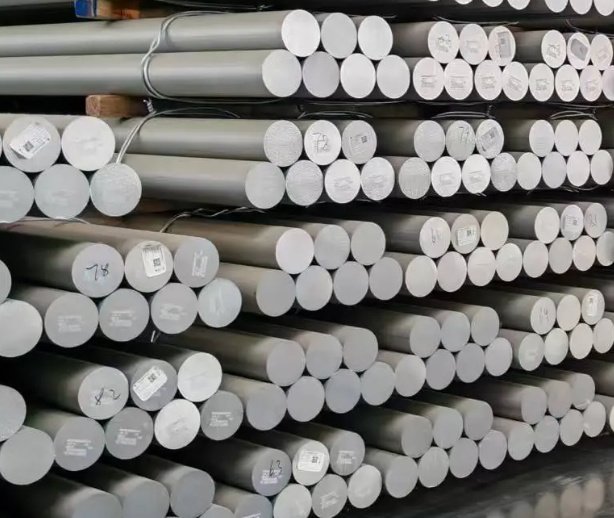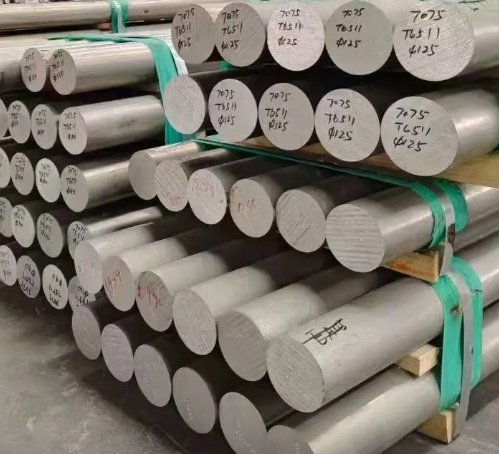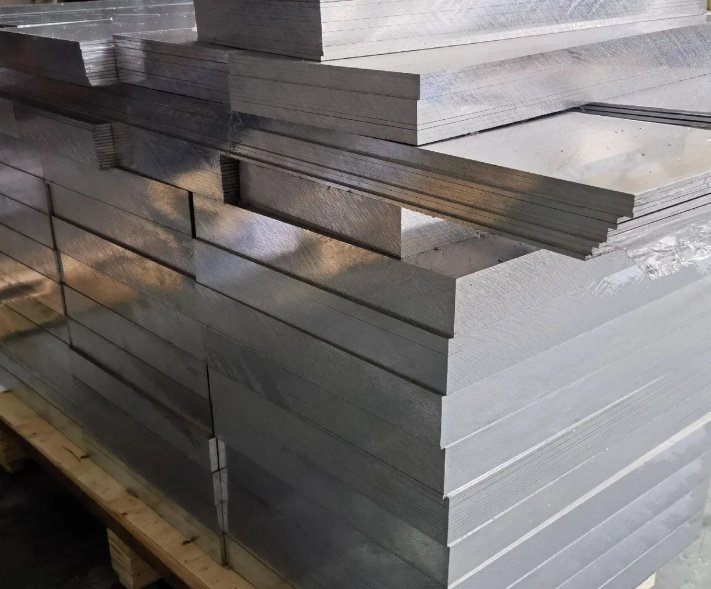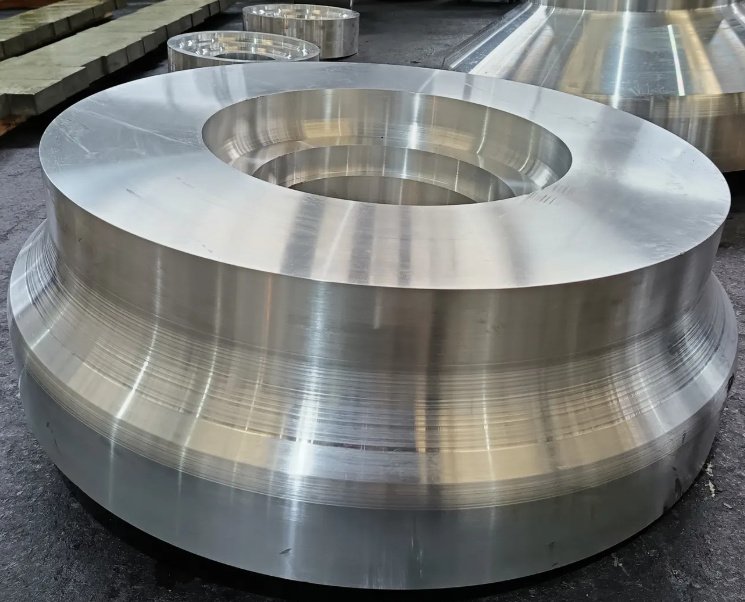
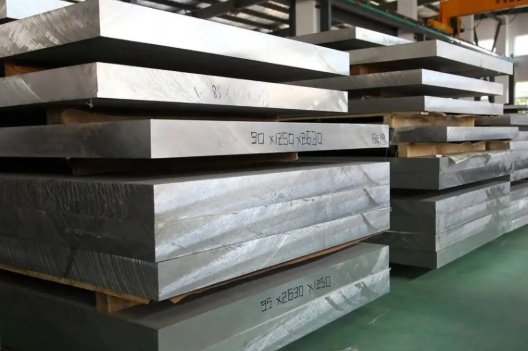
6016 Aluminum, also known as EN AW-6016 or AA6016, is a heat-treatable Al-Mg-Si alloy developed primarily for automotive body sheet, outer panels, closure panels, and formed components that require a balance of formability, surface quality, corrosion resistance, and paint-bake strengthening. Searchers looking for Al 6016, al alloy 6016, or Aluminum 6016 typically need practical engineering data: chemical composition, temper selection, forming behavior, welding performance, and how it compares with 6111, 6061, 6082, and 5754 aluminum.
In modern body-in-white and closure manufacturing, al alloy 6016 is valued because it can be supplied in a soft, formable T4 or T4P condition and then gain strength during paint curing. This makes it especially useful for door skins, hood outer panels, fenders, roof panels, tailgates, and complex stamped sheet parts where dent resistance after baking is more important than very high strength during forming.
What Is Al 6016?
Al 6016 is a 6xxx-series aluminum alloy based on magnesium and silicon precipitation hardening. Its strengthening phase is mainly Mg2Si, which forms during artificial aging or paint-bake cycles. Compared with many general-purpose 6xxx alloys, Aluminum 6016 is optimized for sheet forming, hemming, surface appearance, and controlled bake-hardening response.
- Alloy family: 6xxx aluminum-magnesium-silicon alloy
- Common designations: AA6016, EN AW-6016, AlMgSi1.2 approximately
- Main product form: sheet and coil
- Common tempers: T4, T4P, T6, T8x variants depending on supplier and standard
- Typical use: automotive exterior sheet and closure panels
- Key performance target: high formability before paint and improved dent resistance after paint bake
6016 Aluminum Chemical Composition
The exact limits depend on the governing standard and mill specification, but the following composition ranges are commonly associated with EN AW-6016 / AA6016 sheet products. Buyers should always confirm the certified material test report against EN 573-3, ASTM B209, or the agreed automotive OEM specification.
| Element | Typical Range or Maximum, wt.% | Function in 6016 Aluminum |
|---|---|---|
| Silicon, Si | 1.0 - 1.5 | Forms Mg2Si; supports age hardening and paint-bake response. |
| Magnesium, Mg | 0.25 - 0.60 | Combines with silicon for precipitation strengthening. |
| Iron, Fe | ≤ 0.50 | Impurity control; excessive Fe can reduce formability and surface quality. |
| Copper, Cu | ≤ 0.20 | May improve strength but can affect corrosion performance if excessive. |
| Manganese, Mn | ≤ 0.20 | Controls grain structure and dispersoids in limited additions. |
| Chromium, Cr | ≤ 0.10 | Minor grain and microstructure control. |
| Zinc, Zn | ≤ 0.20 | Normally restricted to maintain corrosion resistance. |
| Titanium, Ti | ≤ 0.15 | Grain refinement during casting. |
| Aluminum, Al | Balance | Base metal providing low density, corrosion resistance, and formability. |
Key Mechanical and Physical Properties
Mechanical properties of 6016 aluminum depend strongly on temper, sheet thickness, natural aging time, pre-strain, and paint-bake cycle. The values below are representative engineering ranges for automotive-quality sheet and should not replace the certified values of a specific lot.
| Property | 6016-T4 / T4P Sheet, Typical | After Forming + Paint Bake, Typical |
|---|---|---|
| Density | 2.70 g/cm3 | 2.70 g/cm3 |
| Elastic modulus | Approximately 69 GPa | Approximately 69 GPa |
| Yield strength, Rp0.2 | About 100 - 150 MPa | About 180 - 240 MPa after typical bake-hardening conditions |
| Tensile strength, Rm | About 210 - 270 MPa | About 240 - 310 MPa |
| Elongation A80 | About 22% - 30% | Lower than T4 after strain and aging, application-dependent |
| Thermal conductivity | Approximately 160 - 180 W/m·K | Similar range |
| Electrical conductivity | Approximately 42% - 48% IACS | Can increase slightly with aging |
| Corrosion resistance | Good in atmospheric service | Good when properly cleaned, pretreated, painted, or anodized |
A typical engineering advantage of Aluminum 6016 is its paint-bake hardening behavior. For example, after 2% pre-strain followed by a paint-bake cycle near 170 - 185°C for about 20 minutes, many 6016 sheet products can show a yield strength increase of approximately 60 - 100 MPa. This allows the panel to be formed in a lower-strength condition and then gain dent resistance after the coating process.
Tempers and Bake-Hardening Behavior
Temper selection is critical for Al 6016 because sheet formability, hemming ability, stretcher-strain resistance, and final panel strength are all influenced by thermal history.
| Temper | Meaning | Best Use | Engineering Note |
|---|---|---|---|
| T4 | Solution heat treated and naturally aged | General forming and stamping | Good ductility; strength gradually changes with natural aging. |
| T4P | Pre-aged after solution treatment | Automotive exterior panels | Designed to control natural aging and improve bake-hardening response. |
| T6 | Artificially aged to higher strength | Less common for deep formed outer panels | Higher strength but reduced formability versus T4/T4P. |
| T8x | Solution treated, cold worked, then artificially aged | Special performance requirements | Used where higher strength is required after controlled strain and aging. |
Engineering note: why T4P is often preferred by automotive buyers
T4P sheet is pre-aged by the producer to reduce uncontrolled natural aging during storage and transport. For stamping plants, this can improve consistency in forming force, springback, and bake-hardening response. A buyer evaluating al alloy 6016 should ask for guaranteed shelf-life data, bake-hardening index, r-value, n-value, and hemming performance, not only tensile strength.
6016 Aluminum vs 6111, 6061, 6082 and 5754
The best alloy depends on the manufacturing route and the performance priority. The table below compares 6016 aluminum with common alternatives used in automotive, transportation, and formed sheet applications.
| Alloy | Strength Level | Formability | Bake-Hardening Response | Typical Application Fit |
|---|---|---|---|---|
| 6016 | Medium before bake; higher after bake | Very good for automotive sheet | Excellent | Outer panels, hoods, doors, fenders, roof panels |
| 6111 | Often higher than 6016 | Good but may be less forgiving in severe forming | Very strong | Outer panels requiring higher dent resistance |
| 6061 | High in T6 | Moderate for sheet forming | Good, but not optimized for Class A outer panels | Structural plate, machined parts, extrusions, brackets |
| 6082 | High among 6xxx alloys | Lower than 6016 for complex panels | Good | Structural members, transport components, machined sections |
| 5754 | Medium, non-heat-treatable | Excellent | No true precipitation bake hardening | Inner panels, marine sheet, formed structures, floor panels |
If the search intent is “6016 vs 6061,” the practical answer is that 6061 is usually selected for structural strength, machining, extrusion, and general fabrication, while 6016 is usually selected for stamped sheet panels that must remain formable before painting and stronger after baking. If the search intent is “6016 vs 5754,” 5754 offers excellent formability and corrosion resistance, but 6016 provides a better path to post-paint strength and dent resistance.
Forming, Stamping and Hemming Performance
The main manufacturing advantage of Al 6016 is its suitability for automotive sheet forming. In T4 or T4P condition, it offers a useful combination of elongation, strain hardening, and surface quality. Compared with high-strength T6 materials, 6016-T4/T4P is easier to draw, stretch, flange, pierce, and hem.
- Deep drawing: suitable for moderate to complex panels when blankholder force and lubrication are optimized.
- Stretch forming: good work-hardening behavior supports outer panel geometries.
- Hemming: widely used for closures; bend radius, edge quality, and pre-strain must be controlled.
- Springback: lower than higher-strength T6 alloys but still requires simulation and die compensation.
- Surface quality: appropriate for painted Class A panels when sheet surface and handling are tightly controlled.
In a representative hood outer panel study, switching from mild steel of about 0.70 mm thickness to Aluminum 6016 sheet of about 0.90 - 1.00 mm can reduce panel mass by roughly 35% - 45%, depending on stiffness targets, hem design, reinforcement layout, and joining method. The final gauge cannot be chosen by density alone because aluminum has about one-third the elastic modulus of steel; stiffness-driven panels often require increased thickness or geometry optimization.
Practical stamping issue: edge cracking during hemming
Edge cracking in 6016 panels is commonly linked to poor trimming quality, excessive burr height, tight hem radius, insufficient lubrication, high pre-strain near the edge, or natural aging beyond the validated forming window. Corrective actions include sharper trimming tools, improved edge deburring, larger bend radius, optimized roll-hemming steps, reduced local strain, and use of T4P material with verified shelf-life stability.
Machining, Cutting, Welding and Surface Treatment
Although 6016 aluminum is best known as a sheet-forming alloy, it is also processed by cutting, punching, laser trimming, resistance spot welding, adhesive bonding, riveting, and surface pretreatment. Its machining performance is acceptable, but it is not normally the first choice where extensive CNC machining is the primary manufacturing process; 6061 or 6082 may be more economical for thick machined parts.
| Process | 6016 Aluminum Behavior | Recommended Control Point |
|---|---|---|
| Shearing and blanking | Good, but edge quality affects hemming and fatigue. | Control burr height, tool clearance, and edge roughness. |
| Laser cutting | Suitable for prototypes and trimmed blanks. | Minimize heat-affected edge defects before forming or hemming. |
| CNC machining | Fair to good; chips may be less controlled than 6061-T6. | Use sharp carbide tools, positive rake, coolant, and stable fixturing. |
| Resistance spot welding | Common in automotive production with parameter control. | Use appropriate electrode force, current schedule, and surface cleaning. |
| MIG/TIG welding | Possible, but heat can reduce local strength in heat-treated zones. | Select filler and post-weld design allowables carefully. |
| Adhesive bonding | Widely used with mechanical fastening or spot welding. | Apply proper cleaning, conversion coating, and curing process. |
| Anodizing | Possible, but cosmetic consistency depends on surface and chemistry. | Validate color match and appearance before production. |
| Painting | Excellent fit for automotive paint systems. | Confirm pretreatment compatibility and bake-hardening response. |
For fabrication, al alloy 6016 should be treated as a precipitation-hardening sheet alloy rather than a simple soft aluminum sheet. Heat input, natural aging, pre-strain, and paint-bake exposure all influence the final mechanical state.
Applications of Aluminum 6016
Aluminum 6016 is most widely specified where lightweighting, corrosion resistance, and high-quality painted surfaces are required. Its strongest fit is automotive sheet, but it can also be used in transportation and industrial panels when the design benefits from forming plus bake hardening.
- Automotive hood outer panels and inner panels
- Door outer panels and door skins
- Fenders, roof panels, decklids, and tailgates
- Closure panels requiring hemming and adhesive bonding
- Lightweight transportation panels
- Formed enclosures where post-paint strength is beneficial
- Prototype stamped panels for electric vehicles and lightweight structures
For electric vehicles, the alloy can support mass reduction in closures and exterior panels, contributing to range and handling targets. However, engineers must evaluate stiffness, dent resistance, crash load paths, joining compatibility, galvanic corrosion with steel fasteners, and repairability.
Procurement and Specification Checklist
For buyers and engineers, ordering 6016 aluminum only by alloy name is not enough. Sheet performance is strongly affected by temper, surface class, thickness tolerance, coil handling, and aging history.
Buyer checklist for Al 6016 sheet and coil
- Confirm designation: AA6016, EN AW-6016, or OEM-specific 6016 variant.
- Specify temper: T4, T4P, or required automotive pre-aging condition.
- Define thickness, width, coil ID, coil weight, flatness, and surface class.
- Request tensile properties in rolling direction, transverse direction, and 45° direction if forming is critical.
- Ask for r-value, n-value, bake-hardening index, and hemming test data.
- Confirm shelf-life limits and storage conditions before stamping.
- Require material test certificates and traceability by coil or lot.
- Validate compatibility with lubricants, pretreatment, adhesive, and paint-bake cycle.
Common purchasing standards may reference EN 485 for sheet, EN 573 for chemical composition, ASTM B209 for aluminum and aluminum-alloy sheet and plate, and internal automotive OEM specifications for surface, forming, hemming, and bake-hardening requirements.
Design Considerations and Real Engineering Trade-Offs
Selecting 6016 aluminum is not just a material substitution decision. Because aluminum has lower elastic modulus than steel, a direct thickness-for-thickness replacement can reduce weight but may not meet stiffness, oil-canning, or dent targets. Successful designs often combine gauge optimization, local reinforcements, bead geometry, adhesive bonding, and validated paint-bake strengthening.
| Engineering Requirement | How 6016 Helps | Risk if Not Controlled |
|---|---|---|
| Low panel mass | Density about one-third of steel | Thickness increase may be needed for stiffness. |
| Dent resistance | Bake hardening raises yield strength after painting | Insufficient bake cycle can leave final strength below target. |
| Complex stamping | T4/T4P provides good forming ductility | Natural aging can change forming response over time. |
| Class A surface | Automotive sheet quality supports painted appearance | Handling scratches, roll marks, or lubricant mismatch can cause defects. |
| Joining to steel | Compatible with adhesives and mechanical joining | Galvanic corrosion must be managed with isolation and coatings. |
In practice, Al 6016 is most competitive when the design takes advantage of its full processing route: form in T4/T4P, join with compatible methods, pretreat and paint, then use bake hardening to increase final service strength.
Reference Data and Standards to Verify
The following sources are commonly used by engineers when validating 6016 aluminum data. Actual acceptance should be based on the active revision of the standard, the material producer’s datasheet, and the purchaser’s engineering specification.
- EN 573: Aluminum and aluminum alloys — chemical composition and form of wrought products
- EN 485: Aluminum and aluminum alloys — sheet, strip and plate
- ASTM B209: Standard specification for aluminum and aluminum-alloy sheet and plate
- ISO 6892-1: Metallic materials — tensile testing at room temperature
- Automotive OEM material standards for 6xxx-series outer panel sheet
- Producer technical datasheets for EN AW-6016 T4/T4P automotive sheet
For ranking material options, 6016 aluminum should be evaluated by formability, bake-hardening index, surface class, hemming performance, and joining behavior rather than by ultimate tensile strength alone. This is why Aluminum 6016 remains a preferred alloy for lightweight exterior body panels and other formed sheet applications requiring a strong balance between manufacturing reliability and final in-service performance.