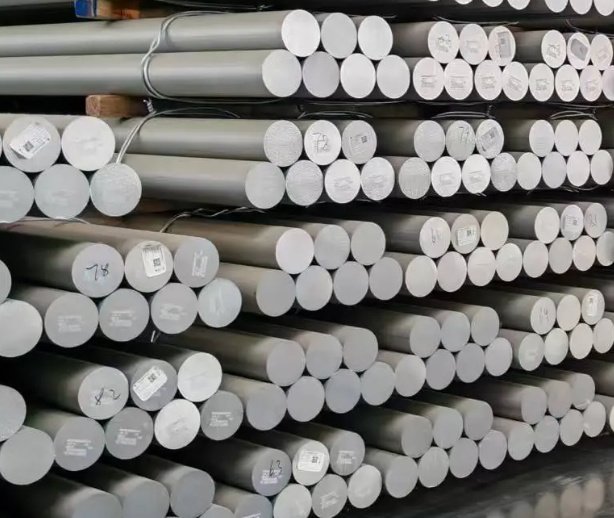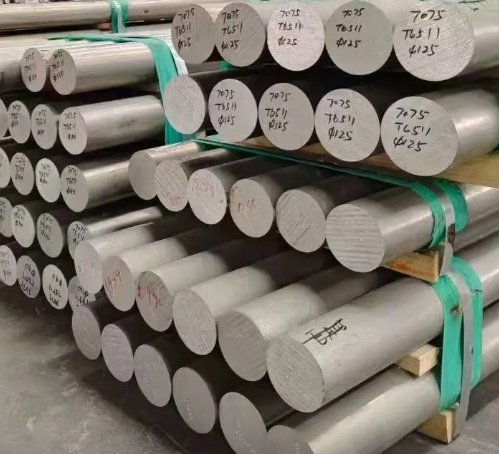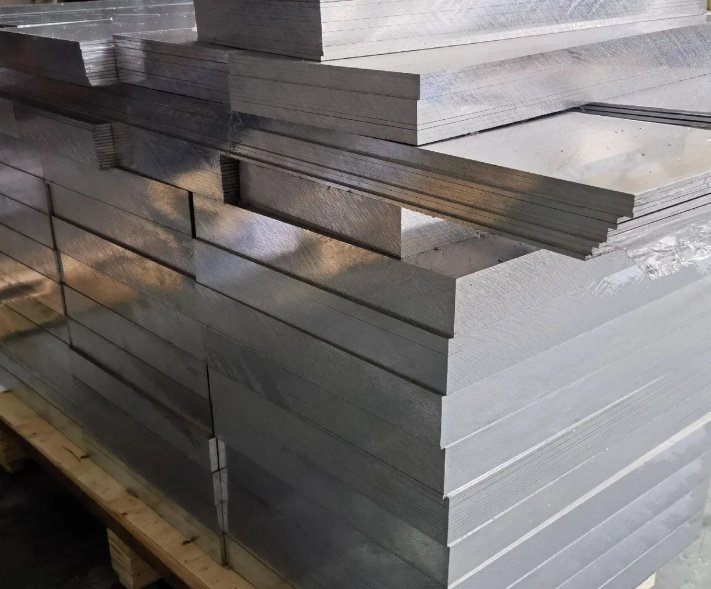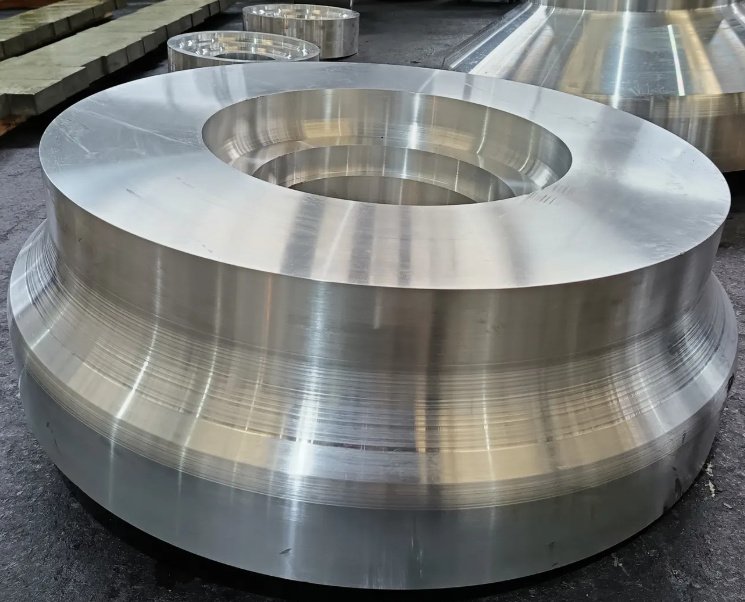
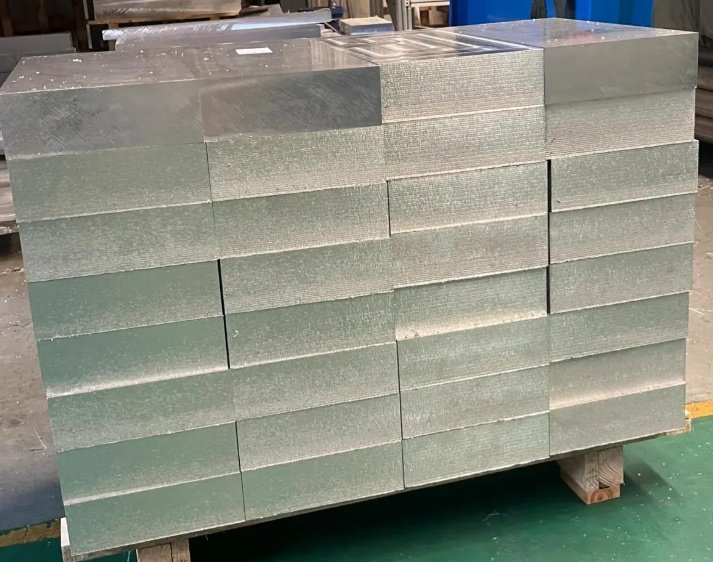
2017 Aluminum is a heat-treatable aluminum-copper-magnesium alloy developed for parts that require higher strength than general-purpose 6xxx alloys while still offering practical machinability. In engineering drawings, material databases and procurement documents, it may appear as Al 2017, al alloy 2017, Aluminum 2017, AA 2017 or UNS A92017.
The alloy is commonly specified for precision-machined components, aircraft fittings, rivets, fasteners, shafts, gears, structural hardware and high-strength turned parts. Its main value is the balance of tensile strength, fatigue capability and cutting performance. Its main limitation is corrosion resistance, which is lower than 6061 and many non-copper aluminum alloys.
What Is 2017 Aluminum?
Aluminum 2017 belongs to the 2xxx series of wrought aluminum alloys. The 2xxx series is strengthened primarily by copper, with magnesium and manganese contributing to precipitation hardening and mechanical stability. After solution heat treatment and natural aging, 2017 can reach useful strength levels for lightweight structural components.
In many supply chains, 2017 is requested when the buyer needs a material that machines cleaner than softer aluminum grades and delivers better mechanical performance than 6061-T6 in selected bar and forging applications. However, because of its copper content, 2017 is not the first choice for marine, outdoor or chemically aggressive environments unless protective finishing is used.
Al 2017 Chemical Composition
The chemical range below reflects typical limits used in recognized aluminum alloy standards. Actual requirements should be verified against the applicable purchase specification, such as ASTM B211 for bar and rod, ASTM B209 for sheet and plate where applicable, EN 573, or customer-controlled aerospace standards.
| Element | Typical Range or Maximum | Function in the Alloy |
|---|---|---|
| Aluminum | Balance | Base metal; provides low density and formability |
| Copper | 3.5% - 4.5% | Main strengthening element; improves hardness and tensile strength |
| Magnesium | 0.4% - 0.8% | Supports age hardening and strength development |
| Manganese | 0.4% - 1.0% | Improves strength and grain structure control |
| Silicon | 0.2% - 0.8% | May support machinability and casting-related tolerance control in feedstock |
| Iron | 0.7% max | Controlled impurity; excessive levels may reduce ductility |
| Zinc | 0.25% max | Controlled residual element |
| Titanium | 0.15% max | Grain refinement in some production routes |
| Chromium | 0.10% max | Controlled residual element |
Buyer note: 2017 vs 2017A naming
In European supply, EN AW-2017A is often encountered and may be treated as a close procurement alternative, but it is not always identical to every AA 2017 requirement. For aerospace, defense or safety-critical parts, buyers should not substitute 2017, 2017A or other 2xxx alloys without written engineering approval and a material cross-reference review.
Mechanical Properties of Aluminum 2017
The mechanical properties of Aluminum 2017 depend on product form, thickness, cold work, heat treatment and test direction. The most common engineering condition is T4, meaning solution heat treated and naturally aged. Some bar and forged products may be purchased in special tempers defined by the supplier or standard.
| Property | Typical Value | Engineering Meaning |
|---|---|---|
| Density | 2.79 g/cm³ | About one-third the density of carbon steel |
| Ultimate tensile strength | 370 - 430 MPa | Suitable for moderately high-load lightweight components |
| Yield strength | 215 - 280 MPa | Higher than many common 6xxx alloys in comparable forms |
| Elongation | 10% - 20% | Moderate ductility; varies strongly with thickness and temper |
| Brinell hardness | Approximately 100 - 115 HB | Supports good chip formation during machining |
| Elastic modulus | About 72 GPa | Similar stiffness to most aluminum alloys |
| Thermal conductivity | Approximately 130 - 150 W/m·K | Lower than high-purity aluminum due to alloying additions |
These values are typical reference data, not guaranteed minimums. For load-bearing designs, engineers should use the material certificate, governing standard, design allowables and safety factors required by the application.
2017 Aluminum vs 2024, 6061 and 7075
Search intent for al alloy 2017 often includes comparison against other aluminum grades. The table below summarizes practical selection differences for engineering and purchasing teams.
| Alloy | Strength Level | Machinability | Corrosion Resistance | Typical Reason to Choose |
|---|---|---|---|---|
| 2017 | Medium-high | Good to very good | Fair | Precision parts needing better strength than 6061 and easier machining than some higher-strength alloys |
| 2024 | High | Good | Fair to poor unless clad or protected | Aircraft structures and fatigue-critical parts where 2024 allowables are specified |
| 6061 | Medium | Good | Good | General machining, frames, brackets, welded structures and outdoor components |
| 7075 | Very high | Good | Moderate to fair | High-strength aerospace, tooling, robotics and performance components |
2017 Aluminum vs 6061
Compared with 6061-T6, Aluminum 2017 generally offers higher tensile strength and better hardness for close-tolerance machined parts. 6061 is usually better for welding, anodizing appearance, corrosion resistance and broad commercial availability. If the part is a welded frame, 6061 is often the lower-risk choice. If it is a turned shaft, gear blank, precision fixture part or mechanical link, 2017 may be more suitable.
2017 Aluminum vs 2024
2024 is more common in aircraft structural applications and often has more established aerospace design allowables. 2017 can be attractive when machinability and moderate-to-high strength are required, but it is not a direct engineering substitute for 2024 unless the drawing permits it.
2017 Aluminum vs 7075
7075 provides much higher strength, especially in T6 and T651 tempers, but it costs more and can be less forgiving in some stress-corrosion or forming scenarios. Al 2017 is a practical middle option when 7075 strength is unnecessary and 6061 is not strong or hard enough.
Engineer note: when the comparison changes the decision
If the component is stiffness-limited rather than strength-limited, switching from 6061 to 2017 may not significantly reduce deflection because most aluminum alloys have a similar elastic modulus near 69 - 73 GPa. The benefit of 2017 is more visible when the design is yield-strength-limited, thread-wear-limited or machining-stability-limited.
Machining Performance of 2017 Aluminum
One of the main reasons engineers specify Aluminum 2017 is machining performance. The alloy is typically easier to cut than very soft aluminum grades because its hardness supports controlled chip formation. It is widely used for CNC turning, milling, drilling, tapping, reaming and screw-machine work.
In production machining, 2017 can deliver stable dimensions and good surface finish when tools, coolant and chip evacuation are selected correctly. Carbide tooling is preferred for high-speed machining, while sharp high-speed steel tools may still be used for lower-volume operations.
| Operation | Recommended Practice | Common Risk |
|---|---|---|
| CNC milling | Use polished carbide end mills, high rake geometry and effective coolant or mist lubrication | Built-up edge if tool is dull or lubrication is poor |
| Turning | Use sharp inserts with positive rake; control chip length with feed and chipbreaker selection | Long chips around small-diameter parts |
| Drilling | Use split-point drills or carbide drills; peck cycles help deep holes | Hole oversize, chip packing and exit burrs |
| Tapping | Use spiral-flute taps for blind holes and cutting fluid suitable for aluminum-copper alloys | Thread galling or tap breakage in deep blind holes |
| Reaming | Leave controlled stock allowance and use stable fixturing | Bellmouth geometry or poor roundness |
For a production benchmark, a shop converting a small turned bushing from 6061-T6 to 2017-T4 may observe cleaner chip breakage and less edge smearing, particularly on tight internal grooves and fine threads. The exact cycle-time improvement depends on machine rigidity, coolant, tool grade and part geometry, but the material can reduce manual deburring when cutting conditions are optimized.
Procurement note: machining cost is not only raw material price
Buyers comparing quotes should evaluate material price together with tool life, cycle time, scrap rate, deburring labor, inspection yield and surface finish requirements. A slightly higher bar cost for al alloy 2017 can be justified if it reduces secondary finishing or improves first-pass dimensional capability.
Heat Treatment, Formability and Welding
2017 is heat treatable and normally gains strength through solution heat treatment followed by aging. The T4 temper is common because it provides a useful combination of strength, toughness and machinability. Artificial aging may be used in controlled cases, but temper selection should follow the relevant specification and mechanical property requirement.
Formability is best before peak hardening and becomes more limited as strength increases. Bending operations should consider grain direction, bend radius, thickness and temper. Sharp bends in hardened 2017 can crack, especially if the bend line and rolling direction are not considered.
Welding is generally not the preferred joining method for Aluminum 2017 because the copper-rich composition can increase hot-cracking tendency and reduce corrosion performance in the heat-affected zone. Mechanical fastening, riveting, threaded joining or adhesive bonding is often more predictable for critical assemblies.
Corrosion Resistance and Surface Finishing
The corrosion resistance of Aluminum 2017 is lower than that of 6061, 5052 or 5083 because copper-containing phases can promote galvanic and localized corrosion. For dry indoor machinery, this may be acceptable. For outdoor, humid, marine or chemical-service environments, protective finishing is strongly recommended.
Common surface treatments include anodizing, hard anodizing, chemical conversion coating, primer and paint, plating systems, or the use of corrosion-inhibiting compounds in assemblies. The appearance of anodized 2xxx aluminum may be less uniform than 6xxx aluminum, so decorative anodizing expectations should be confirmed with sample testing.
In mixed-metal assemblies, avoid direct contact between 2017 and more noble metals such as stainless steel or copper alloys without insulation, sealant or suitable coating. Galvanic corrosion risk increases when an electrolyte such as condensation, salt spray or process fluid is present.
Common Applications for Aluminum 2017
Aluminum 2017 is used where the designer wants a stronger and harder aluminum material without moving to the highest-cost or highest-strength aerospace grades. Typical applications include:
- Precision CNC-machined parts and screw-machine components
- Aircraft fittings, brackets and non-welded structural hardware
- Fasteners, rivets, pins and threaded components
- Gears, shafts, bushings and mechanical linkages
- Fixture plates, tooling details and automation equipment parts
- High-strength bars, rods and forged components
- Transportation and machinery parts requiring lightweight strength
In practical selection, Aluminum 2017 is most compelling when the part is machined from bar or forging, has moderate-to-high stress, requires good dimensional repeatability and does not rely on welding as the primary fabrication method.
Buyer checklist for sourcing 2017 aluminum
- Confirm alloy designation: AA 2017, EN AW-2017A or customer-specific equivalent.
- Specify temper, such as T4, and do not rely on alloy number alone.
- Request mill test certificate with chemistry and mechanical properties.
- Define product form: round bar, flat bar, plate, sheet, forging or extrusion.
- Check diameter, thickness, grain direction and ultrasonic inspection needs where relevant.
- Clarify surface condition, straightness, tolerance and cutting allowance.
- Ask whether protective packaging is needed to avoid transit corrosion or staining.
Design Considerations and Real Engineering Trade-Offs
For lightweight mechanical parts, the most important trade-off is not simply maximum tensile strength. Engineers should consider fatigue, notch sensitivity, corrosion exposure, thread engagement, bearing stress, tolerance stack-up and post-machining distortion. Because 2017 is stronger than many general-purpose aluminum grades, it can sometimes allow smaller part sections, but only if stiffness, fatigue and fastener bearing limits remain acceptable.
Example: a 12 mm diameter aluminum link pin loaded primarily in shear may pass static strength checks in 6061-T6, but repeated assembly wear or thread deformation may push the design toward a harder alloy. In that case, 2017 can improve contact durability while keeping weight close to the 6061 design. If the same pin is exposed to salt spray, however, 6061 with hard anodizing or stainless steel may be more durable over the full service life.
Another example involves a CNC-milled bracket with a thin wall of 3 mm and multiple tapped M5 holes. Replacing a softer material with Al 2017 may improve thread strength and reduce burr formation, but aggressive roughing can still introduce part movement after unclamping. For tight flatness requirements, rough machining, stress relief strategy, finish machining and inspection at stable temperature are more important than alloy selection alone.
Standards, Product Forms and Specification Notes
2017 aluminum may be supplied as bar, rod, wire, sheet, plate, tube, forging or extruded profile depending on regional availability. The most common high-volume requests are round bar and precision-machining stock. Product form matters because mechanical properties and dimensional tolerances are not identical across bar, plate and forging.
Relevant standards and references may include ASTM B211 for aluminum and aluminum-alloy rolled or cold-finished bar, rod and wire; ASTM B209 for aluminum sheet and plate where applicable; EN 573 for chemical composition; EN 485 for sheet, strip and plate; and AMS or customer-controlled specifications for aerospace procurement. Always use the standard named on the drawing or purchase order.
When the drawing states only “Al 2017” without temper, product form or standard, the requirement is incomplete. A complete engineering specification should include alloy, temper, standard, form, dimensions, tolerance, heat lot traceability, inspection requirements and surface condition.
When to Choose 2017 Aluminum
Choose Aluminum 2017 when the application needs a machinable, heat-treatable, medium-high-strength aluminum alloy for non-welded components. It is especially useful for precision turned or milled parts, mechanical hardware and lightweight components where 6061 may be underpowered but 7075 may be unnecessary.
Avoid or reconsider 2017 when the part requires excellent corrosion resistance, decorative anodized appearance, extensive welding, severe forming, or direct substitution into a certified aerospace design without approval. In those cases, 6061, 6082, 2024, 7075, 5052 or 5083 may be more appropriate depending on the operating environment and design code.
For engineering teams, the best use of al alloy 2017 is in a controlled specification environment: define the temper, verify the certificate, machine with aluminum-optimized tooling and protect the surface when corrosion exposure is expected.