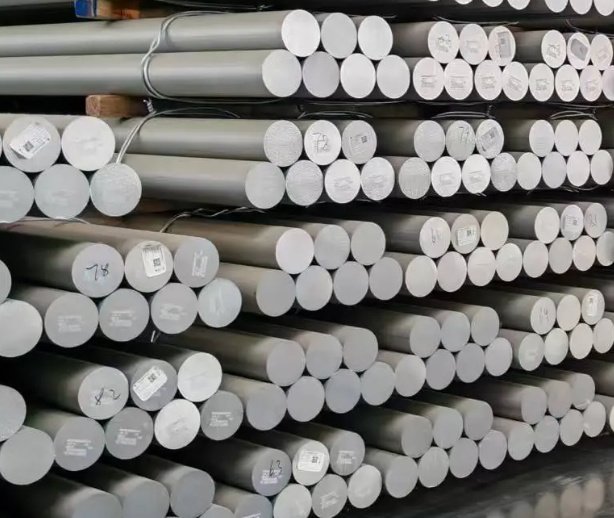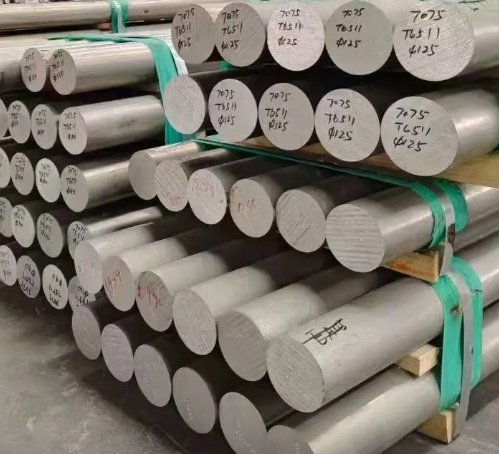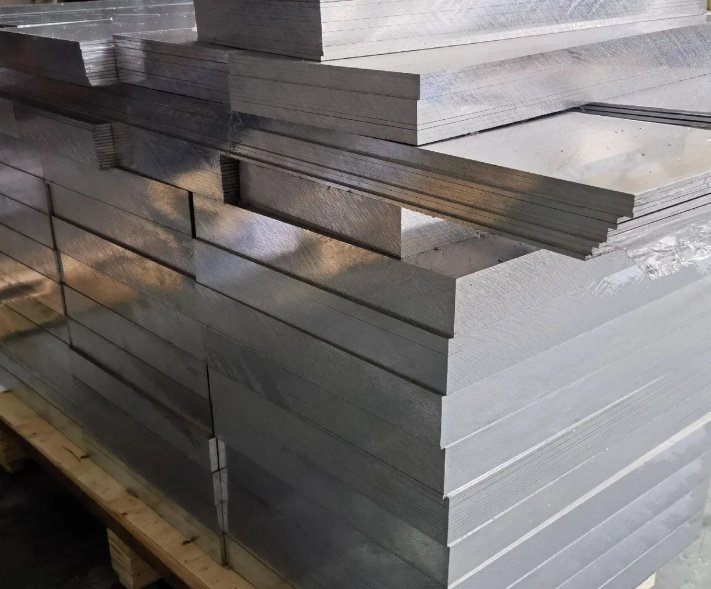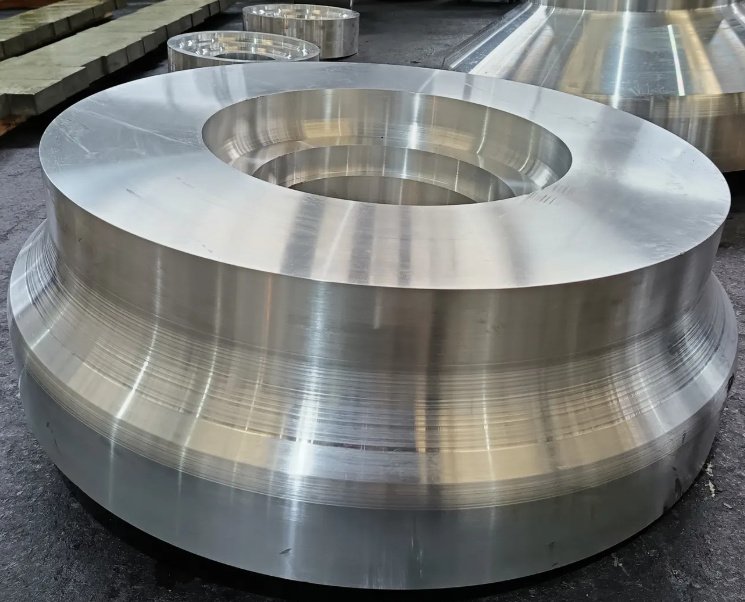
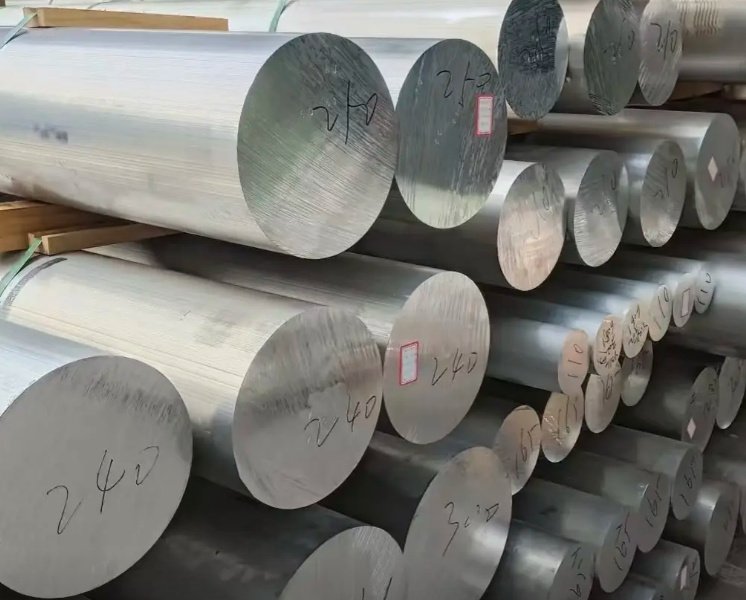
6060 Aluminum is a medium-strength, heat-treatable aluminum-magnesium-silicon alloy widely used for architectural profiles, precision extrusions, frames, rails, tubes and light structural components. In European standards it is commonly designated as EN AW-6060, while engineers may also search for it as Al 6060, al alloy 6060 or Aluminum 6060.
The main reason buyers specify this alloy is its combination of excellent extrudability, good corrosion resistance, smooth anodized appearance and reliable dimensional control. It is not the strongest 6xxx alloy, but it is often the more efficient choice when the part requires thin walls, complex hollow sections, decorative surfaces or cost-effective extrusion productivity.
6060 Aluminum Overview
6060 belongs to the 6000 series aluminum alloys, where magnesium and silicon form magnesium silicide, the phase responsible for precipitation hardening. The alloy is commonly supplied in T4, T5, T6 and T66 tempers, with T5 and T66 frequently used for extruded profiles.
6060 Aluminum is best understood as an extrusion-friendly alloy rather than a maximum-strength structural alloy. It offers a practical balance between formability, surface quality and corrosion resistance, making it especially useful in window systems, curtain wall profiles, furniture frames, lighting housings, display systems and transportation interiors.
| Attribute | Typical Performance | Engineering Meaning |
|---|---|---|
| Strength level | Low to medium among 6xxx alloys | Suitable for light structural and architectural use |
| Extrudability | Excellent | Supports complex, thin-wall and multi-cavity profiles |
| Corrosion resistance | Good to very good | Works well in indoor and many outdoor environments |
| Anodizing response | Very good | Produces decorative and uniform surface finishes |
| Machinability | Moderate | Improves in harder tempers such as T6 or T66 |
| Weldability | Good | Compatible with common MIG and TIG welding practices |
Standards, Chemical Composition and Tempers
6060 Aluminum is usually specified under EN 573 for chemical composition and EN 755 or EN 12020 for extruded products. It may also be referenced in commercial material systems where equivalent or near-equivalent alloy names are used, but exact substitution should be verified by chemistry, mechanical requirements and surface finish expectations.
| Element | Typical Range by Weight | Function in Alloy |
|---|---|---|
| Aluminum | Balance | Base metal providing low density and corrosion resistance |
| Magnesium | Approx. 0.35% - 0.60% | Combines with silicon for age hardening |
| Silicon | Approx. 0.30% - 0.60% | Improves strength and extrusion behavior |
| Iron | Typically limited | Affects surface quality and extrusion response |
| Copper, manganese, chromium, zinc, titanium | Controlled minor additions | Influence strength, grain structure and corrosion behavior |
Actual limits depend on the governing standard and supplier specification. For critical projects, material certificates such as EN 10204 3.1 should be reviewed against the purchase order, applicable drawing and acceptance standard.
| Temper | Description | Typical Use |
|---|---|---|
| T4 | Solution heat-treated and naturally aged | Parts needing forming after extrusion |
| T5 | Cooled from hot working and artificially aged | General architectural profiles and frames |
| T6 | Solution heat-treated and artificially aged | Higher strength profile requirements |
| T66 | Special controlled aging condition | Improved mechanical properties over standard T6 ranges in some specifications |
Buyer note: what to confirm before ordering 6060 Aluminum
For purchasing teams, the most important items are alloy designation, temper, profile drawing revision, dimensional tolerance standard, surface finish, anodizing class or powder coating requirement, straightness, twist, packaging method and certificate type. If the profile is decorative, agree on visible surface zones and acceptable die lines before production.
Mechanical and Physical Properties of Aluminum 6060
The properties of Aluminum 6060 vary by temper, section thickness, extrusion geometry and applicable standard. The values below are representative engineering ranges and should not replace certified data for safety-critical design.
| Temper | Tensile Strength | Yield Strength | Elongation | Typical Interpretation |
|---|---|---|---|---|
| T4 | Approx. 120 - 160 MPa | Approx. 60 - 90 MPa | Good | Better for post-extrusion forming |
| T5 | Approx. 160 - 190 MPa | Approx. 110 - 150 MPa | Moderate to good | Common for architectural extrusions |
| T6 or T66 | Approx. 190 - 230 MPa | Approx. 150 - 190 MPa | Moderate | Used where higher profile strength is required |
| Property | Typical Value | Design Relevance |
|---|---|---|
| Density | Approx. 2.70 g/cm³ | Low weight compared with steel |
| Elastic modulus | Approx. 69 GPa | Deflection often controls profile design |
| Thermal conductivity | Typically around 200 W/m·K | Useful for housings, frames and heat-spreading parts |
| Electrical conductivity | Moderate to good | Can support grounding paths when properly designed |
| Coefficient of thermal expansion | Approx. 23 x 10-6/K | Important for long profiles and assemblies with dissimilar materials |
Because 6060 has a relatively low modulus compared with steel, increasing profile moment of inertia is often more effective than simply changing temper. For long-span frames, extrusion geometry, wall thickness, rib placement and joint design are usually decisive.
6060 Aluminum vs 6061, 6063 and 6082
Search intent for al alloy 6060 often includes comparison. The key question is not which alloy is universally better, but which alloy provides the right combination of strength, extrusion complexity, surface quality and cost for the application.
| Alloy | Strength | Extrudability | Surface Finish | Best-Fit Applications |
|---|---|---|---|---|
| 6060 | Low to medium | Excellent | Very good | Architectural profiles, decorative extrusions, light frames |
| 6063 | Low to medium | Excellent | Excellent | Architectural extrusions where finish is a priority |
| 6061 | Medium to high | Moderate | Good | Machined parts, structural brackets, plates and general engineering |
| 6082 | High among 6xxx alloys | Lower than 6060 or 6063 | Good, but less ideal for very decorative profiles | Structural members, transport components, load-bearing parts |
Choose 6060 over 6061 when extrusion detail and appearance matter more than peak strength. A thin-wall hollow profile with multiple chambers may be easier, faster and more stable to extrude in 6060 than in 6061. Conversely, a machined bracket requiring higher yield strength is often better suited to 6061-T6 or 6082-T6.
Compared with 6063, 6060 is similar in market positioning and often overlaps in architectural applications. In many regions, 6060 is more common under European specifications, while 6063 is heavily used in North American and international architectural extrusion supply chains. Selection should consider local availability, required certificates and finish approval samples.
Engineer note: 6060 vs 6063 for anodized profiles
Both 6060 and 6063 can produce attractive anodized finishes. If the project has visible decorative surfaces, the decision should be based on approved extrusion samples, die design, billet quality, surface pretreatment and anodizing process control. Alloy choice alone does not guarantee color consistency across batches.
Processing, Fabrication and Surface Finishing
6060 Aluminum is strongly associated with extrusion processing. It flows well through dies, supports complex cross-sections and is suitable for profiles that combine functional and decorative requirements. Typical downstream processes include cutting, CNC machining, drilling, tapping, bending, welding, anodizing, powder coating and mechanical finishing.
Extrusion
The alloy's excellent extrudability allows manufacturers to produce hollow sections, screw ports, snap-fit channels, heat-dissipation fins and multi-functional frame profiles. In production, wall thickness uniformity, corner radius, tongue ratio and die bearing design affect tolerance stability and surface quality.
For thin-wall profiles, 6060 can reduce extrusion pressure and improve output compared with stronger 6xxx alloys. This may lower scrap risk, improve die life and support better dimensional repeatability, especially for decorative or long-length profiles.
Machining
Machinability is moderate. Harder tempers such as T6 and T66 generally machine better than softer conditions because they reduce built-up edge and improve chip control. For CNC milling and drilling, sharp carbide tools, appropriate lubrication and controlled chip evacuation are recommended.
| Operation | Common Issue | Practical Control |
|---|---|---|
| Saw cutting | Burr formation on thin walls | Use suitable blade geometry, clamping and deburring allowance |
| Drilling | Hole edge deformation | Support the profile and use sharp tools |
| Tapping | Thread stripping in thin sections | Design sufficient engagement length or use inserts |
| CNC milling | Built-up edge | Use polished flutes, coolant or mist lubrication |
Welding and Joining
6060 can be welded using common aluminum welding methods, including MIG and TIG. As with other heat-treatable 6xxx alloys, the heat-affected zone may lose strength after welding. If welded strength is important, joint design, filler selection, post-weld treatment and design allowables must be reviewed.
Anodizing and Powder Coating
6060 is well suited to anodizing, especially when decorative appearance and corrosion resistance are required. Anodized finishes can include clear, bronze, black and other electrolytic or dyed colors. Powder coating is also common for architectural systems and outdoor profiles.
Surface quality depends on alloy cleanliness, extrusion parameters, die condition, handling marks and pretreatment. For visible parts, cosmetic acceptance criteria should be agreed before production, not after delivery.
Production note: controlling surface defects on decorative extrusions
Common defects include die lines, pickup marks, scratches, streaking and color variation after anodizing. Practical controls include clean billet supply, optimized extrusion temperature, correct die maintenance, protective interleaving, separated handling of visible faces and batch-based finish inspection under agreed lighting conditions.
Applications of 6060 Aluminum
6060 Aluminum is used where extruded shape efficiency, corrosion resistance and finish quality are more important than very high static strength. It is especially common in architectural, industrial and consumer-facing products.
- Window frames, door frames and curtain wall profiles
- Partition systems, display frames and exhibition structures
- Furniture tubes, rails, handles and decorative trims
- LED lighting housings and moderate heat-spreading profiles
- Solar panel frames and mounting accessories in non-heavy-duty designs
- Transport interior profiles, luggage racks and lightweight trim
- Machine guards, enclosures and modular framing components
- Consumer product housings requiring anodized or coated surfaces
In these applications, profile geometry is often more important than alloy strength alone. A well-designed 6060 extrusion with ribs, closed sections and sufficient wall thickness can outperform a poorly designed stronger-alloy profile in stiffness, assembly accuracy and cost.
Real Engineering Example: Reducing Weight in an Aluminum Frame
Consider a light equipment enclosure originally designed using a rectangular steel tube frame. The project goal is to reduce weight, improve corrosion resistance and simplify assembly while maintaining acceptable stiffness for handling loads.
| Design Factor | Steel Tube Baseline | 6060 Aluminum Extrusion Concept | Observed Engineering Effect |
|---|---|---|---|
| Material density | Approx. 7.85 g/cm³ | Approx. 2.70 g/cm³ | Large weight reduction potential |
| Corrosion protection | Requires coating or plating | Anodized or powder-coated extrusion | Improved long-term appearance |
| Assembly features | Welded tabs and drilled holes | Integrated slots and screw ports | Fewer secondary parts |
| Frame weight | 100% baseline | Typically 35% - 55% lower after redesign | Lower handling and shipping burden |
| Stiffness concern | Higher modulus material | Lower modulus but optimized hollow profile | Requires geometry-based stiffness design |
In one practical redesign approach, replacing simple steel tubes with multi-chamber 6060 extrusions can reduce mass by approximately 40% while keeping deflection within project limits, provided that the aluminum profile has sufficient moment of inertia and joints are reinforced at load transfer points. The key is not a direct material swap; it is a section redesign.
Procurement and Quality Checklist for al alloy 6060
For buyers and engineers sourcing al alloy 6060, a clear specification reduces disputes and improves production consistency. The purchase order should define both technical and commercial requirements.
| Item | What to Specify | Why It Matters |
|---|---|---|
| Alloy and standard | EN AW-6060 or required equivalent | Prevents substitution with unsuitable material |
| Temper | T5, T6, T66 or project-specific temper | Controls strength, hardness and machinability |
| Tolerance | EN 755, EN 12020 or drawing-specific limits | Affects assembly fit and straightness |
| Surface finish | Mill finish, anodized, brushed, polished or powder-coated | Determines appearance and corrosion performance |
| Mechanical testing | Tensile test, hardness or certificate data | Confirms compliance for engineering use |
| Packaging | Protective film, paper interleaving, crates or bundles | Reduces scratches and handling damage |
| Inspection criteria | Visible surface definition, length tolerance, twist, bow, burrs | Aligns supplier quality with buyer expectations |
The most common sourcing mistake is specifying only “6060 Aluminum” without temper, tolerance and finish requirements. This can result in technically correct material that still fails assembly, cosmetic or performance expectations.
Buyer perspective: questions to ask a 6060 Aluminum extrusion supplier
- Which standard will the material be certified to?
- Can the supplier provide EN 10204 3.1 material certificates?
- What tolerance standard applies to the profile?
- Are visible surfaces marked on the drawing?
- Can pre-production samples be approved before mass production?
- How are anodized or coated color differences controlled between batches?
- What packaging method prevents scratches during transport?
When to Specify Al 6060
Specify Al 6060 when the project needs a high-quality extruded aluminum profile with good corrosion resistance, attractive finish options and moderate mechanical performance. It is an excellent choice for architectural systems, decorative frames, light-duty industrial structures and functional profiles with integrated assembly features.
Consider another alloy when the design requires high yield strength, heavy structural capacity, thick machined plate, fatigue-critical loading or elevated-temperature strength. In those cases, 6061, 6082 or another engineering alloy may be more appropriate after validation.
For the best result, evaluate 6060 Aluminum as a complete engineering system: alloy, temper, extrusion geometry, tolerance, surface finish, joining method and inspection criteria. When these factors are specified together, Aluminum 6060 can deliver a reliable balance of manufacturability, appearance, cost and performance.