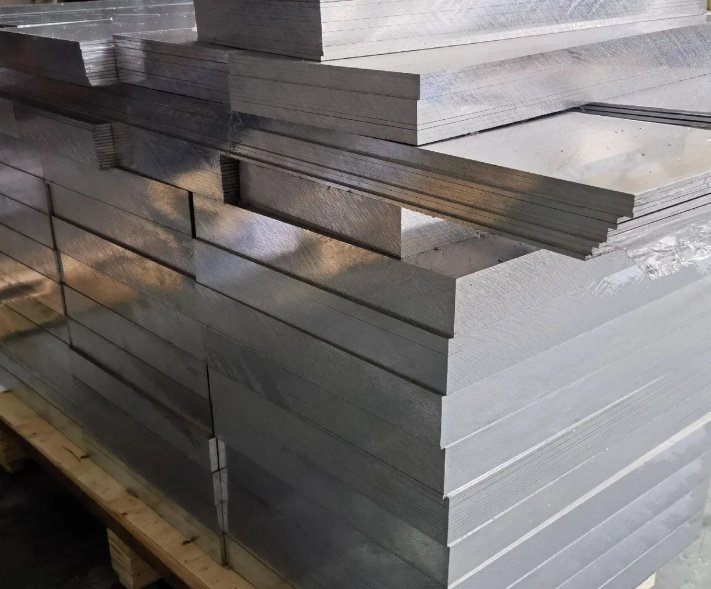
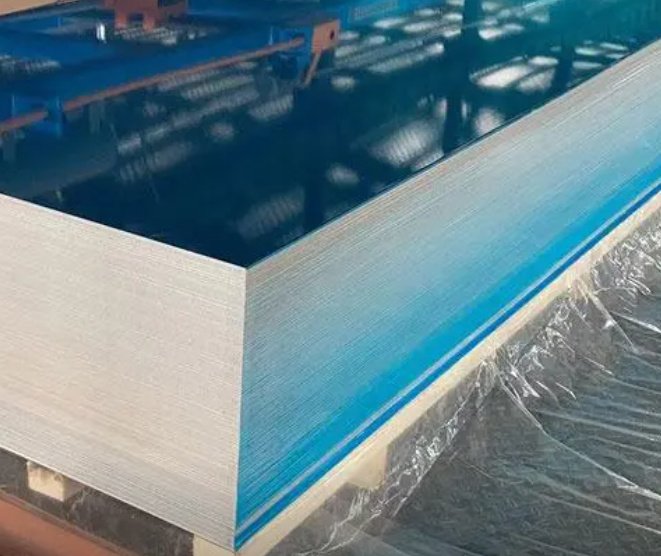
3105 Aluminum is a wrought, non-heat-treatable aluminum-manganese alloy with a small magnesium addition. It is commonly supplied as sheet and coil for building products, pre-painted panels, gutters, siding, roofing, mobile home components, transportation skins and general formed parts. In practical purchasing language, Aluminum 3105 combines very good formability, good corrosion resistance and moderate strength, making it a reliable choice when 1100 is too soft and 5052 is stronger than needed.
Searchers comparing Al 3105, al alloy 3105 and 3105 aluminum usually want to confirm whether it can be bent, painted, stamped, roll formed or used outdoors without excessive cost. The short answer is yes: it is widely used for painted exterior sheet and medium-strength formed components, provided the correct temper, thickness tolerance and surface finish are specified.
What Is 3105 Aluminum?
Al 3105 belongs to the 3xxx aluminum alloy series, where manganese is the principal alloying element. It is not strengthened by heat treatment; instead, its mechanical properties are mainly controlled by cold working and partial annealing. This is why 3105 is frequently ordered in tempers such as O, H12, H14, H16, H18, H22, H24, H26 and H28.
In engineering documents, 3105 may be referenced as UNS A93105 or EN AW-3105. It is typically produced according to standards such as ASTM B209 for aluminum and aluminum-alloy sheet and plate, depending on the region, product form and buyer requirement.
| Item | Common Reference |
|---|---|
| Alloy designation | 3105 |
| UNS number | A93105 |
| European designation | EN AW-3105 |
| Alloy family | 3xxx aluminum-manganese series |
| Strengthening method | Strain hardening, not heat treatment |
| Typical product forms | Sheet, coil, strip, painted coil, embossed sheet |
3105 Aluminum Chemical Composition
The composition of Aluminum 3105 is designed to improve strength over commercially pure aluminum while preserving good ductility and corrosion behavior. Manganese provides solid-solution strengthening, while magnesium adds additional strength and helps make the alloy more useful for formed sheet products.
| Element | Typical Range or Maximum by Weight | Engineering Role |
|---|---|---|
| Aluminum, Al | Balance | Base metal; low density and corrosion resistance |
| Manganese, Mn | 0.30–0.80% | Improves strength and work hardening response |
| Magnesium, Mg | 0.20–0.80% | Increases strength while retaining formability |
| Iron, Fe | Up to 0.70% | Impurity control; affects ductility and surface quality |
| Silicon, Si | Up to 0.60% | Impurity control; influences forming and finish |
| Copper, Cu | Up to 0.30% | Limited to preserve corrosion resistance |
| Zinc, Zn | Up to 0.40% | Controlled residual element |
Exact composition limits vary by standard and mill practice, so certified material test reports should be used for contractual acceptance rather than general web data.
Mechanical and Physical Properties of Al 3105
Mechanical properties depend strongly on temper and thickness. Soft O temper is selected for deep forming and high elongation, while H14 or H24 are common choices for roll forming, panels and general sheet fabrication. Harder tempers such as H18 or H28 provide higher strength but less bendability.
| Temper | Typical Tensile Strength | Typical Yield Strength | Typical Elongation | Typical Use Case |
|---|---|---|---|---|
| O | 110–130 MPa | 40–55 MPa | 20–30% | Deep forming, soft bending, drawn shapes |
| H12 | 130–150 MPa | 105–125 MPa | 8–14% | Moderate forming with improved stiffness |
| H14 | 150–175 MPa | 130–155 MPa | 4–10% | Sheet panels, gutters, siding, roll-formed profiles |
| H24 | 150–180 MPa | 120–150 MPa | 5–12% | Painted sheet requiring stable forming behavior |
| H18 | 185–210 MPa | 170–195 MPa | 2–5% | Flat products requiring higher stiffness and limited forming |
| Property | Typical Value | Design Relevance |
|---|---|---|
| Density | About 2.71 g/cm³ | Useful for lightweight panels and coil weight estimation |
| Elastic modulus | About 69 GPa | Similar stiffness to most aluminum alloys |
| Thermal conductivity | About 160–190 W/m·K | Good heat transfer compared with steels |
| Electrical conductivity | About 40–45% IACS | Not primarily an electrical alloy but conductive enough for many enclosures |
| Melting range | Approximately 630–655°C | Relevant for brazing, coating bake cycles and thermal exposure limits |
For structural calculations, use values from the applicable design code, mill certificate or tested batch. Online property tables are suitable for preliminary comparison, not final safety-critical design.
3105 Aluminum vs 3003, 3004, 5052 and 1100
Alloy comparison is often the decisive step. 3105 overlaps with 3003 and 3004 in general sheet applications but offers a different balance of strength, formability, price and availability. Compared with 5052, it is easier to form and often more economical, but it is not as strong and is not the first choice for demanding marine or high-fatigue service.
| Alloy | Relative Strength | Formability | Corrosion Resistance | Best-Fit Applications | When to Avoid |
|---|---|---|---|---|---|
| 1100 | Low | Excellent | Excellent | Chemical equipment, reflectors, decorative sheet | When higher dent resistance or panel stiffness is required |
| 3003 | Low to medium | Very good | Very good | General sheet metal, tanks, HVAC, cookware | When painted building coil specifications call for 3105 |
| 3105 | Medium | Good to very good | Good to very good | Building panels, siding, roofing, gutters, painted coil | When high marine strength or high structural load capacity is needed |
| 3004 | Medium to higher | Good | Good | Can stock, lamp bases, higher-strength formed sheet | When simpler forming or lower cost is more important |
| 5052 | Higher | Good | Excellent, especially marine atmosphere | Marine parts, vehicle panels, pressure vessels, enclosures | When tight-radius forming or cost control favors 3105 |
In a roofing or wall panel project, the decision is usually not “which alloy is strongest?” but “which alloy holds shape, coating and bend geometry at the required gauge?” For that question, Al 3105 is often more cost-effective than 5052 and more dent resistant than 1100.
Tempers, Thicknesses and Product Forms
3105 aluminum sheet and coil are commonly supplied in gauges from thin architectural coil to thicker general-purpose sheet. Typical commercial thickness ranges include approximately 0.20 mm to 6.0 mm, although availability varies by mill, width, temper and surface finish.
- O temper: best for severe forming, draw operations and tight-radius bends.
- H14 temper: common half-hard condition for general sheet metal and panel work.
- H24 temper: strain-hardened and partially annealed; frequently used where predictable forming and coating performance are needed.
- H26 and H28 tempers: selected for higher strength, flatter panels and limited forming.
- Painted coil: used for roofing, siding, trim coil, gutters and downspouts.
- Embossed sheet: used where surface texture, slip resistance or decorative appearance is required.
Buyer note: how to specify 3105 aluminum coil or sheet without ambiguity
A reliable purchase description should include alloy, temper, thickness, width, length or coil ID, surface finish, coating system if any, tolerance standard, edge condition and packaging method. For example: “3105-H24 aluminum coil, 0.80 mm thickness, 1,220 mm width, mill finish or PE/PVDF coated, ASTM B209 tolerance, slit edge, moisture-protected export packaging.” This reduces disputes over temper, surface appearance and dimensional acceptance.
Fabrication and Processing of 3105 Aluminum
Fabrication performance is one of the main reasons engineers choose al alloy 3105. It can be sheared, slit, punched, stamped, brake formed, roll formed, spun, embossed and painted using standard aluminum processing practices. It is also weldable by common fusion welding methods, although joint strength and distortion control must be considered.
Bending and Roll Forming
Bendability depends on temper, bend direction, thickness, tool radius and surface condition. O temper can accept tighter radii, while H14 and H24 usually require larger inside bend radii to prevent orange peel, edge cracking or coating damage. For painted sheet, the minimum bend radius should be validated after coating because the paint system may crack before the metal fails.
Stamping and Drawing
3105-O and softer H tempers are preferred for stamping or drawn components. Lubrication, blank-holder pressure and grain direction affect final part quality. When converting from 3003 to 3105, a trial run is recommended because the magnesium addition can slightly change work hardening behavior and springback.
Welding, Joining and Fastening
3105 can be joined by MIG welding, TIG welding, resistance welding, clinching, riveting and adhesive bonding. For visible architectural products, mechanical fastening or adhesive bonding is often selected to avoid weld distortion and preserve surface appearance. When using dissimilar metals, isolate fasteners to reduce galvanic corrosion risk in wet environments.
Surface Finishing and Coating
Aluminum 3105 is widely used as pre-painted coil because it accepts cleaning, conversion coating and paint systems well. Polyester, SMP, HDP and PVDF coatings are common in building applications. Coating adhesion is strongly influenced by surface cleanliness, pretreatment chemistry and bake-cycle control, not just alloy selection.
Engineering note: a real forming issue seen with painted 3105-H24 panels
In one wall-panel production case, 0.90 mm 3105-H24 painted coil developed micro-cracks along 90-degree bends after switching to a smaller punch radius. The alloy chemistry was within specification, but the bend radius was reduced from about 1.5t to 0.8t and the coating was a higher-build exterior system. Returning to a radius near 1.5t and aligning bends consistently relative to rolling direction reduced visible coating cracks by more than 70% during inspection. The lesson is that alloy, temper, coating thickness and tooling radius must be validated together.
Corrosion Resistance and Outdoor Performance
3105 aluminum has good atmospheric corrosion resistance and is suitable for many outdoor applications, especially when painted or properly finished. The naturally forming aluminum oxide layer protects the metal in normal air exposure. In industrial, coastal or highly alkaline environments, coating selection and maintenance become more important.
Bare 3105 is usually acceptable for moderate indoor and outdoor exposure, but painted 3105 is preferred for exterior building components because it improves color retention, UV resistance and long-term appearance. For marine structures, 5052 or 5083 may be more appropriate if higher strength and chloride resistance are required.
- Use coated 3105 for long-life roofing, siding and architectural trim.
- Avoid direct contact with copper, carbon steel or treated lumber without isolation in wet service.
- Specify protective film only when removal timing and storage temperature can be controlled.
- Store coils and sheets dry to prevent water staining before fabrication.
Common Applications of Aluminum 3105
The strongest market fit for Aluminum 3105 is formed and painted sheet where moderate strength, corrosion resistance and economical production matter more than maximum structural strength.
- Building and construction: roofing panels, wall panels, siding, trim coil, flashing, gutters, downspouts and soffit panels.
- Transportation: trailer siding, RV panels, vehicle interior panels and lightweight covers.
- General fabrication: cabinets, enclosures, appliance panels, decorative sheet and formed covers.
- Industrial products: signs, ducting, light-duty housings and coated sheet components.
- Consumer goods: decorative panels, embossed surfaces and non-critical formed parts.
For these uses, the most common procurement form is 3105 aluminum coil, because coil supports high-speed slitting, painting, roll forming and continuous panel production.
Engineering Selection: When 3105 Is the Right Choice
3105 is a strong candidate when the part requires better strength than 1100, better formability or lower cost than many 5xxx alloys, and reliable coating performance for architectural or industrial sheet products.
| Requirement | 3105 Suitability | Reason |
|---|---|---|
| Outdoor painted panel | Excellent | Good corrosion resistance and proven coating compatibility |
| Tight-radius deep drawing | Good in O temper | Soft temper provides ductility, but tooling trials are still needed |
| Marine load-bearing component | Limited | 5052, 5083 or 5086 may provide better strength and chloride resistance |
| High-strength structural part | Limited | 3105 is not heat treatable and has moderate strength only |
| Gutter or downspout production | Excellent | Good roll forming behavior and coating performance |
| Decorative embossed sheet | Good | Accepts embossing and finishing processes well |
Buyer and engineer checklist for selecting Al 3105
- Confirm whether the part is strength-limited, formability-limited or coating-limited.
- Choose O temper for severe forming and H14 or H24 for balanced strength and fabrication.
- Check bend radius against both metal cracking and coating cracking requirements.
- Require mill test certificates for chemical composition and mechanical properties.
- Define surface quality: mill finish, stucco embossed, anodized, pre-painted or film-protected.
- Specify tolerances according to ASTM, EN or project-specific requirements.
- Control storage humidity and packaging to prevent water stain before processing.
Procurement Specifications and Quality Control
Buyers should treat 3105 aluminum as an engineered sheet product rather than a generic commodity. Two suppliers may offer the same alloy and temper, but flatness, coating adhesion, edge burr, coil telescoping, oil residue and packaging can differ significantly.
Important quality-control items include tensile test results, thickness tolerance, width tolerance, diagonal tolerance for cut sheets, surface defects, coating thickness, color difference, pencil hardness, T-bend result, impact resistance and salt-spray or humidity performance when coated products are involved.
| Inspection Item | Why It Matters | Typical Control Method |
|---|---|---|
| Alloy and temper | Determines strength and forming response | Mill certificate and tensile testing |
| Thickness and width | Affects panel fit, weight and forming tools | Micrometer, caliper or automated gauge |
| Flatness | Critical for visible panels and automated feeding | Visual inspection and flatness measurement |
| Surface cleanliness | Influences coating adhesion and appearance | Water-break test, visual inspection, pretreatment control |
| Coating performance | Determines service life for painted products | T-bend, impact, adhesion, color and gloss testing |
| Packaging | Prevents transit scratches and moisture stain | Moisture barrier, desiccant and secure palletization |
In high-volume fabrication, even a small improvement in scrap rate can outweigh a small alloy price difference. For example, reducing forming scrap from 3.0% to 1.5% on a 20-ton monthly coil program saves about 300 kg of material per month before labor, paint and rework costs are considered. This is why temper consistency and process validation are often more valuable than choosing the lowest nominal price.
Summary: Is 3105 Aluminum Suitable for Your Project?
3105 Aluminum is suitable when a project needs a practical balance of moderate strength, good formability, corrosion resistance and coating compatibility. It is especially competitive in painted sheet, trim coil, building panels, gutters, siding, roofing and roll-formed profiles.
Choose 3105 over 1100 when more strength and dent resistance are needed. Consider it against 3003 when architectural coil availability or coating performance is central. Compare it with 5052 when corrosion and strength requirements are higher, but do not pay for 5052 if moderate strength and easier forming are sufficient. In most sheet-metal applications, the correct temper and processing route are as important as the alloy number itself.