
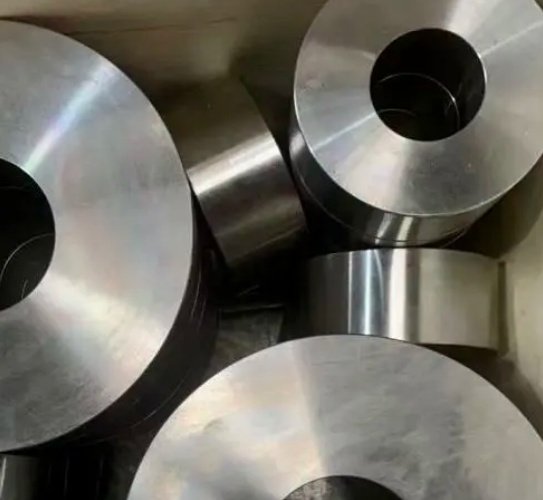
Elgiloy is a cobalt-chromium-nickel alloy known for high strength, excellent fatigue resistance, good corrosion resistance and stable spring performance in demanding environments. It is commonly identified by UNS R30003 and is closely associated with the alloy family also marketed as Phynox in some regions.
Engineers typically consider Elgiloy when standard stainless spring alloys, such as 302, 304, 316 or 17-7PH stainless steel, do not provide enough fatigue life, corrosion resistance, relaxation resistance or elastic performance. The alloy is widely used in precision springs, medical devices, orthodontic components, diaphragms, seals, bellows, aerospace hardware, electrical contacts and chemically exposed miniature parts.
What Is Elgiloy?
Elgiloy is a precipitation-strengthenable cobalt-based alloy with a balanced combination of cobalt, chromium, nickel, molybdenum and iron. Its nominal chemistry is designed to deliver corrosion resistance from chromium and molybdenum, toughness from nickel and iron, and high elastic strength from cobalt-based metallurgy.
The alloy is most often selected as a premium spring material where components must retain force, shape and fatigue performance under corrosive, cyclic or elevated-temperature conditions.
- Common designation: UNS R30003
- Alloy family: cobalt-chromium-nickel-molybdenum alloy
- Typical product forms: wire, strip, sheet, bar, rod, tubing and precision-machined parts
- Typical conditions: annealed, cold worked, spring temper and age-hardened
- Comparable trade names: Elgiloy and Phynox, depending on supplier and market
Typical Chemical Composition
Exact chemistry may vary by producer, specification and purchase order requirements. The following ranges are typical for Elgiloy-type UNS R30003 material and should be verified against the applicable material certification.
| Element | Typical Range | Primary Metallurgical Role |
|---|---|---|
| Cobalt | Approx. 39-41% | Base element, strength, elastic behavior and temperature stability |
| Chromium | Approx. 19-21% | Oxidation and corrosion resistance |
| Nickel | Approx. 14-16% | Toughness, corrosion resistance and austenitic stability |
| Molybdenum | Approx. 6-8% | Pitting resistance, crevice corrosion resistance and strength |
| Iron | Balance, commonly around 15% | Matrix balance and workability |
| Manganese, carbon and other residuals | Controlled minor additions | Processing control and mechanical property consistency |
Key Mechanical and Physical Properties
Elgiloy is valued for high strength, corrosion resistance and fatigue life, especially after controlled cold working and aging. Final values depend strongly on product form, reduction ratio, heat treatment, size, directionality and supplier processing route.
| Property | Typical Engineering Significance |
|---|---|
| Tensile strength | Can be very high in cold-worked and age-hardened strip or wire, making it suitable for precision springs and flexures. |
| Fatigue resistance | Excellent for cyclic loading when surface finish, design stress and heat treatment are properly controlled. |
| Corrosion resistance | Superior to many conventional spring stainless steels in chloride, body-fluid and chemical environments. |
| Elastic performance | Maintains spring force and dimensional recovery better than many lower-cost alloys under demanding service conditions. |
| Magnetic behavior | Generally considered low magnetic in many conditions, although cold work and processing may influence magnetic response. |
| Service temperature capability | Suitable for many elevated-temperature spring applications, subject to stress relaxation limits and design validation. |
For critical components, designers should use certified data from the mill or distributor instead of generic handbook values. Small changes in temper and aging practice can significantly affect yield strength, elongation, hardness and spring performance.
Standards, Specifications and Supply Forms
Elgiloy may be purchased to recognized industry specifications, customer drawings or proprietary mill standards. Commonly referenced standards and specifications may include ASTM, AMS and medical-device material requirements, depending on product form and end use.
Commonly Referenced Specifications
- UNS R30003 for alloy identification
- ASTM F1058 for wrought cobalt-chromium-nickel-molybdenum alloy used in surgical implant applications
- AMS specifications for aerospace-quality wire, strip or bar where applicable
- Customer-specific medical, spring, aerospace or electronics material specifications
Common Product Forms
- Spring wire for compression springs, extension springs, torsion springs and guidewires
- Cold-rolled strip and foil for flat springs, clips, diaphragms and contacts
- Bar and rod for CNC machining, pins, shafts and miniature mechanical components
- Sheet and plate for formed parts, membranes and corrosion-resistant hardware
- Tube and specialty profiles for medical, aerospace and instrument applications
Buyer note: documents to request with Elgiloy material
For traceable procurement, request a mill test certificate, heat number, UNS designation, applicable specification revision, chemical analysis, mechanical properties, condition or temper, heat-treatment condition, country of origin and any required RoHS, REACH, conflict minerals or medical-device declarations. For regulated applications, also confirm whether the material is produced under quality systems suitable for aerospace or medical supply chains.
Heat Treatment and Strengthening Behavior
Elgiloy obtains many of its best spring properties through a combination of cold work and age hardening. Cold reduction increases strength and introduces the worked structure needed for aging response. Subsequent aging, often in the approximate range of 480-540°C depending on product form and specification, can increase strength and improve elastic behavior.
Because heat treatment affects final performance, it should be defined by the drawing, material standard or supplier process sheet. Over-aging, excessive temperature, uncontrolled atmosphere or improper fixturing can reduce mechanical performance, create distortion or alter surface condition.
Typical Processing Route for Spring Components
- Select wire, strip or bar in the required starting condition.
- Form, coil, stamp, laser cut or machine the component while accounting for work hardening.
- Apply stress relief or age hardening according to the material specification.
- Inspect dimensions, force, hardness, surface finish and fatigue-critical features.
- Passivate, clean, electropolish or package according to end-use requirements.
Corrosion Resistance and Service Environments
Elgiloy’s corrosion resistance comes primarily from chromium and molybdenum additions. It performs well in many chloride-bearing, marine, physiological and chemical environments where conventional stainless spring alloys may suffer pitting, crevice corrosion or loss of spring properties.
Common environments where Elgiloy is considered include saline exposure, body fluids, sour or chemically aggressive process streams, aerospace fluids, industrial atmospheres and high-reliability electronic assemblies. However, corrosion performance is always environment-specific. Factors such as pH, chloride concentration, temperature, oxygen level, crevice geometry, surface finish and residual stress can change the result.
Surface Condition Matters
Smooth, clean surfaces improve corrosion and fatigue performance. For medical and high-cycle spring applications, electropolishing, passivation, controlled cleaning and burr-free edges are often more important than the base alloy selection alone.
CNC Machining Elgiloy
CNC machining Elgiloy is possible, but it requires planning because the alloy is strong, tough and prone to work hardening. Its behavior is closer to many cobalt-based and nickel-bearing superalloys than to free-machining stainless steel. Shops should expect higher tool wear, greater cutting forces and more sensitivity to heat buildup.
Machinability Considerations
- Use rigid workholding to prevent chatter and maintain dimensional stability.
- Select sharp carbide tooling with appropriate geometry for tough cobalt alloys.
- Avoid rubbing cuts; maintain a consistent feed to cut beneath the work-hardened layer.
- Use high-quality coolant or cutting fluid to manage heat and improve tool life.
- Plan for conservative speeds compared with common stainless steels.
- Deburr carefully because burrs can reduce fatigue life and interfere with medical or precision assembly requirements.
- For miniature parts, consider Swiss CNC turning, wire EDM, micro-milling or laser processing depending on geometry.
Annealed Elgiloy is generally easier to machine than heavily cold-worked or age-hardened material. However, if the part requires final spring strength, the process plan must account for heat treatment after machining and the dimensional changes that may follow.
Information engineers should provide for a CNC machining quote
Provide the Elgiloy grade or UNS R30003 requirement, material condition, drawing tolerances, critical-to-function surfaces, required heat treatment, surface roughness, burr limits, inspection method, passivation or electropolishing requirements, annual volume and whether the part will be used in medical, aerospace, chemical or general industrial service. This reduces quotation risk and helps the machine shop choose the correct tooling and process route.
Forming, Welding and Surface Finishing
Elgiloy can be formed, coiled, stamped and drawn, but forming loads are higher than for many stainless steels. The alloy work hardens rapidly, so tooling design, bend radius and intermediate stress relief may be important for tight geometries.
Welding and Joining
Resistance welding, laser welding, electron beam welding and GTAW may be used in suitable applications, but welding procedures should be qualified for the exact product form and service environment. Heat input, shielding gas, cleanliness and post-weld condition influence corrosion resistance and mechanical behavior.
Finishing Options
- Mechanical polishing for improved surface smoothness
- Electropolishing for fatigue-critical, medical and corrosion-sensitive components
- Passivation or controlled cleaning for removal of surface contamination
- Precision deburring for springs, contacts and miniature machined parts
- Ultrasonic cleaning for medical, aerospace and electronic assemblies
Common Applications of Elgiloy
Elgiloy is usually specified when the cost of failure is high and the component must retain spring force, corrosion resistance or fatigue performance over long service life.
- Medical implants, surgical instruments and minimally invasive device components
- Orthodontic archwires, guidewires and small medical springs
- Precision compression, extension, torsion and flat springs
- Valve springs, seals, diaphragms and bellows exposed to corrosive media
- Aerospace fasteners, clips, contacts and control-system components
- Oil and gas components requiring resistance to aggressive environments
- Electrical contacts, relay springs and high-reliability connector components
- CNC-machined pins, shafts, bushings and miniature corrosion-resistant hardware
Elgiloy vs Stainless Steel, Inconel and MP35N
Material selection often involves comparing Elgiloy with 316 stainless steel, 17-7PH stainless steel, Inconel alloys and MP35N. The best choice depends on strength, corrosion exposure, fatigue load, operating temperature, magnetic requirements, biocompatibility expectations and budget.
| Material | Why It Is Considered | Typical Limitation Compared with Elgiloy |
|---|---|---|
| 316 stainless steel | Good general corrosion resistance, widely available, economical | Lower spring strength and fatigue performance in demanding cyclic service |
| 17-7PH stainless steel | High strength and common use in springs | May offer less corrosion resistance in chloride or severe chemical environments |
| Inconel alloys | Excellent oxidation and high-temperature performance | May not match Elgiloy’s spring-specific fatigue and elastic behavior in certain designs |
| MP35N | Very high strength and excellent corrosion resistance | Can be more expensive and may be specified for more extreme performance requirements |
| Titanium alloys | Low density and excellent biocompatibility | Different elastic modulus and spring response; may not be ideal for compact high-force springs |
Engineer perspective: when Elgiloy is worth the premium
Elgiloy is often justified when a smaller spring must deliver stable force, when corrosion would shorten the life of stainless steel, when fatigue failure is unacceptable, or when the component operates in a regulated medical or aerospace system. If the part is not exposed to cyclic stress, corrosive media or tight elastic-performance requirements, a lower-cost stainless steel may be sufficient.
Procurement and Quality Control Tips
Elgiloy should be purchased by specification, not just by trade name. The purchase order should define alloy designation, product form, dimensions, temper, heat-treatment condition, mechanical requirements, applicable standards, inspection requirements and certification level. For precision parts, define whether heat treatment occurs before or after machining or forming.
For production programs, certificate-backed material traceability is important because lot-to-lot variation in cold work and aging response can affect spring force, fatigue life and dimensional repeatability. Incoming inspection may include chemistry verification, hardness testing, tensile testing, dimensional checks, surface examination and documentation review.
Critical Questions Before Ordering
- Is the required condition annealed, cold worked, spring temper or age hardened?
- Which standard or customer specification controls chemistry and mechanical properties?
- Are fatigue life, spring force, hardness or tensile strength acceptance criteria defined?
- Will the component be formed, welded, CNC machined, heat treated or electropolished after purchase?
- Are medical, aerospace, implant, cleanroom or regulatory documentation requirements involved?
- Does the supplier have experience with small-diameter wire, thin strip or tight-tolerance machined Elgiloy parts?
Buyer perspective: common sourcing risks
The most common sourcing risks are vague temper descriptions, missing heat-treatment requirements, non-equivalent substitute alloys, unverified traceability, inconsistent surface finish and quotes based on easier-to-machine stainless steel assumptions. For CNC parts, buyers should also confirm whether the supplier priced tooling wear, deburring, inspection and post-machining heat treatment correctly.
Design Guidance for Reliable Elgiloy Components
Successful Elgiloy parts are usually the result of coordinated alloy selection, geometry, manufacturing process and inspection planning. Designers should avoid sharp internal corners, uncontrolled burrs, excessive forming strain and unspecified surface conditions in fatigue-critical components.
- Use generous radii where fatigue loads are present.
- Specify surface finish on high-stress regions.
- Control edge condition on stamped, laser-cut or machined features.
- Define heat treatment and stress relief explicitly.
- Validate spring force and fatigue life with production-representative material.
- Consider corrosion testing when the environment includes chlorides, acids or crevices.
For medical and aerospace applications, prototype testing should use the same material condition, processing route and finishing method intended for production. A successful prototype made from annealed stock may not represent the behavior of cold-worked and age-hardened production material.
Summary
Elgiloy is a high-performance cobalt-chromium-nickel alloy for applications that require durable spring behavior, corrosion resistance, fatigue strength and reliable performance in harsh or regulated environments. It is more expensive and more difficult to machine than standard stainless steel, but it can provide meaningful value when component failure, force loss or corrosion damage would be costly.
For the best results, specify UNS R30003 or the applicable material standard, control temper and heat treatment, plan CNC machining around work hardening, and require proper certification for critical applications. When these factors are managed correctly, Elgiloy can be an excellent material for precision springs, medical devices, aerospace hardware, chemical-service components and high-reliability machined parts.