
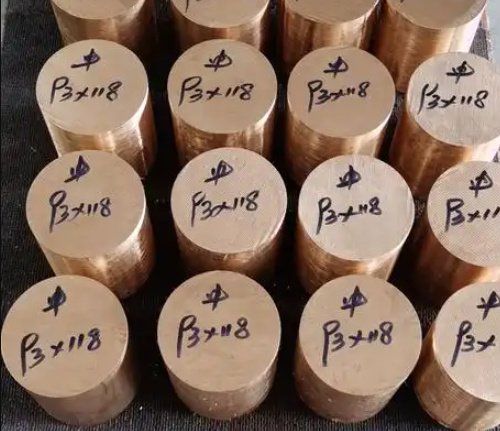
C175 is a commonly used shorthand for high-conductivity beryllium copper alloys, especially UNS C17500 and UNS C17510. These copper alloys are selected when engineers need a balance of electrical conductivity, thermal conductivity, mechanical strength, wear resistance and reliable performance after age hardening.
In industrial sourcing, the term C175 usually appears in drawings, RFQs and material specifications for resistance welding electrodes, electrical contacts, mold components, springs, connectors, die-casting tooling and CNC machined copper alloy parts. Because C175 may refer to more than one closely related alloy, correct grade identification is important before quotation, machining or heat treatment.
What Is C175 Metal Material?
C175 belongs to the family of precipitation-hardenable copper alloys known as beryllium copper, beryllium bronze or BeCu. Unlike standard copper, C175 contains small additions of beryllium and either cobalt or nickel to improve strength while retaining relatively high conductivity.
The two grades most frequently associated with C175 are:
- UNS C17500: a copper-beryllium-cobalt alloy often described as CuCoBe or Alloy 10.
- UNS C17510: a copper-beryllium-nickel alloy often described as CuNiBe or Alloy 3.
C175 is not the same as C17200. C17200 is a high-strength beryllium copper alloy with lower electrical conductivity, while C17500 and C17510 are high-conductivity grades designed for applications where current transfer, heat dissipation and mechanical durability must work together.
Procurement note: how to specify C175 correctly
For accurate purchasing, do not specify only “C175” if the end use is critical. State the exact UNS grade, product form, temper, standard, dimensions, conductivity requirement, hardness requirement and heat-treatment condition. A clear example is: “UNS C17510 rod, ASTM B441/B441M, AT temper, minimum 45% IACS, for CNC machined electrical contact pins.”
C17500 vs C17510: Key Grade Differences
C17500 and C17510 are similar in purpose, but their alloying systems differ. C17500 uses cobalt as the main precipitation-hardening addition, while C17510 uses nickel. Both grades are engineered to provide better conductivity than high-strength BeCu alloys while still offering meaningful hardness and strength after aging.
| Grade | Common Description | Main Alloying System | Typical Use Preference |
|---|---|---|---|
| UNS C17500 | High-conductivity beryllium copper | Copper-beryllium-cobalt | Resistance welding electrodes, conductive tooling, electrical hardware |
| UNS C17510 | High-conductivity beryllium copper | Copper-beryllium-nickel | Electrical contacts, connectors, springs, precision CNC parts |
In many applications, the two grades may be considered alternatives, but they should not be substituted automatically. Electrical conductivity, hardness, temper availability, machining behavior and customer standards can affect material approval.
Typical Chemical Composition
The exact chemistry should be verified against the applicable mill certificate and standard, but C175 alloys generally contain copper as the base metal with controlled beryllium and cobalt or nickel additions.
| Alloy | Typical Beryllium Range | Typical Secondary Element | Base Metal |
|---|---|---|---|
| C17500 | Approximately 0.4% to 0.7% Be | Cobalt, commonly around 2.4% to 2.7% | Copper balance |
| C17510 | Approximately 0.2% to 0.6% Be | Nickel, commonly around 1.4% to 2.2% | Copper balance |
Because beryllium content is intentionally controlled at low levels, C175 offers a practical compromise between conductivity and strength. The cobalt or nickel addition promotes precipitation hardening during aging, which improves hardness, tensile strength and wear resistance.
Mechanical, Electrical and Thermal Properties
The property profile of C175 depends on grade, product form, temper and heat treatment. In commercial use, C175 materials are often supplied as solution-annealed, cold-worked, age-hardened or mill-hardened products.
| Property | Typical C175 Performance Range | Engineering Relevance |
|---|---|---|
| Electrical conductivity | Often about 45% to 60% IACS, depending on grade and temper | Useful for electrodes, contacts and conductive components |
| Hardness | Commonly around Rockwell B 85 to Rockwell C 30+ after aging | Supports wear resistance and dimensional stability |
| Tensile strength | Moderate to high for a conductive copper alloy | Improves load-bearing capacity over pure copper |
| Thermal conductivity | Higher than many high-strength copper alloys | Important for heat extraction and thermal cycling |
| Corrosion resistance | Good in many industrial environments | Suitable for electrical and tooling applications |
The main value of C175 is its conductivity-to-strength ratio. It is frequently chosen where pure copper is too soft, brass lacks conductivity, and C17200 does not provide enough electrical or thermal conductivity.
Heat Treatment and Temper Conditions
C175 is age hardenable. The strengthening mechanism is precipitation hardening, in which fine particles form during aging and increase hardness and strength. The material can be supplied in different tempers depending on the amount of cold work and whether aging has already been performed.
Common condition terms may include solution heat treated, cold worked, precipitation hardened, age hardened, mill hardened, AT temper and HT temper. Exact definitions vary by standard, supplier and product form, so engineering drawings should specify the required standard and final property values.
- Solution-treated condition: easier to form or machine in some cases, followed by aging to reach final properties.
- Cold-worked condition: increased strength before aging, often used when final spring or contact performance is required.
- Age-hardened condition: supplied with final hardness and conductivity already developed.
- Mill-hardened condition: convenient for machining and fabrication when post-machining heat treatment is not desired.
Engineering note: machining before or after aging
Machining C175 before aging can reduce tool wear and make heavy material removal easier, but aging after machining may cause slight dimensional change. Machining fully aged C175 supports tighter final dimensional control, but cutting forces and tool wear may increase. For tight-tolerance parts, confirm the sequence with the material supplier, heat treater and CNC shop before production.
CNC Machining of C175 Beryllium Copper
C175 is suitable for CNC turning, CNC milling, drilling, boring, reaming, tapping, wire EDM and precision grinding. Compared with pure copper, it generally machines more predictably because its higher strength reduces gumminess. Compared with free-machining brass, however, C175 requires more attention to cutting parameters, tool geometry, chip control and safety.
Carbide tooling is commonly preferred for production machining of C175, especially for aged material, tight tolerances or high-volume electrical components. Sharp cutting edges, positive rake geometry and stable workholding help reduce burrs and maintain surface finish.
CNC Turning
For turned C175 parts such as contact pins, bushings, inserts and electrode tips, use rigid setups and avoid excessive tool rubbing. Proper chip evacuation is important because copper alloys can generate stringy chips depending on temper and cutting conditions.
CNC Milling
For milled C175 components such as heat-transfer blocks, mold inserts and electrical bus components, maintain consistent feed rates and minimize vibration. Climb milling with sharp carbide end mills often improves finish and dimensional stability.
Drilling, Tapping and Threading
Drilling C175 requires attention to chip breaking and coolant delivery. Tapping should be performed with proper lubrication, suitable tap geometry and controlled torque. Thread milling may be preferred for high-value parts or difficult blind-hole threads.
EDM and Precision Finishing
Wire EDM can be used for complex profiles, thin slots and precision tooling details. After EDM, surface requirements should be reviewed because recast layers, microcracking risk and cleaning requirements vary by application.
Buyer note: what CNC suppliers need for quoting C175 parts
A useful RFQ package includes the exact grade, temper, drawing, 3D model, tolerances, surface finish, heat-treatment requirement, inspection standard, quantity, application environment and any restrictions on beryllium-containing dust. If conductivity or hardness is function-critical, request material certification and final inspection values.
Surface Finish, Plating and Joining
C175 can be supplied or processed with machined, polished, ground or plated surfaces depending on the final application. For electrical contacts and connector parts, nickel, silver, gold or tin plating may be specified to improve contact resistance, corrosion performance or solderability.
Joining methods must be selected carefully because heat can alter age-hardened properties. Brazing, soldering and welding may be possible, but they can reduce strength or conductivity near the heat-affected zone if the process is not controlled. For critical parts, joining procedures should be validated with test coupons and post-process inspection.
Common Applications of C175
C175 is used where both conductivity and strength are required. It is especially valuable in components exposed to electrical current, localized heat, repeated loading or wear.
- Resistance welding electrodes, seam welding wheels and projection welding tooling
- Electrical contacts, switch components, relays and conductive pins
- Connector springs, contact fingers and current-carrying clips
- Injection mold and die-casting inserts requiring heat removal
- Plunger tips, bushings, sleeves and high-wear copper alloy parts
- Heat sinks, thermal transfer components and conductive mounting blocks
- Oil and gas, aerospace, electronics and industrial automation components
C175 is often selected for resistance welding because it resists softening better than pure copper while still conducting enough current and heat for stable electrode performance.
C175 Compared with Other Copper Alloys
Material selection often involves comparing C175 with pure copper, chromium zirconium copper, C17200 beryllium copper, brass and bronze. Each alloy family has a different balance of strength, conductivity, machinability, cost and availability.
| Material | Relative Conductivity | Relative Strength | Typical Reason to Choose |
|---|---|---|---|
| Pure copper | Very high | Low | Maximum conductivity and formability |
| C17500 / C17510 | High | Medium to high | Balanced conductivity, hardness and wear resistance |
| C17200 | Lower than C175 | Very high | Springs, high-strength contacts and fatigue-loaded parts |
| CuCrZr | High | Medium | Welding electrodes and heat-transfer tooling |
| Brass | Moderate to low | Moderate | Cost-effective machining and decorative hardware |
For conductive precision parts, C175 is often a stronger alternative to pure copper and a more conductive alternative to C17200. The final choice should be based on required IACS conductivity, tensile strength, fatigue life, operating temperature, machining cost and compliance requirements.
Standards, Product Forms and Certification
C175 alloys are available in product forms such as rod, bar, plate, strip, wire, tube, forged shapes and custom machined components. Relevant standards may include ASTM B441/B441M for copper-cobalt-beryllium and copper-nickel-beryllium rod and bar, along with other ASTM, SAE, EN or customer-specific specifications depending on region and application.
Typical certification documents include mill test reports, chemical composition records, hardness test results, electrical conductivity values, dimensional inspection reports and heat-treatment records. For regulated industries, traceability from raw material to finished part may be required.
Quality note: inspection items for C175 finished parts
Important inspection points include material grade verification, hardness, conductivity, dimensional tolerances, surface roughness, plating thickness, burr control, thread quality and cleanliness. For electrical contacts, contact surface condition and plating adhesion may be as important as dimensional accuracy.
Safety and Handling Considerations
Finished C175 alloy products are commonly handled as solid metal components. However, machining, grinding, sanding or polishing can generate fine particles. Because C175 contains beryllium, airborne dust or fumes must be controlled according to applicable workplace safety regulations.
Dust control is essential when cutting or finishing beryllium copper. Recommended controls may include wet machining where appropriate, local exhaust ventilation, proper filtration, housekeeping procedures, personal protective equipment and compliance with occupational exposure limits.
Scrap should be segregated as beryllium-containing copper alloy when required by local recycling and environmental rules. Shops unfamiliar with BeCu machining should review safety data sheets and regulatory requirements before processing C175.
How to Select C175 for Engineering and Purchasing
When selecting C175, start with the functional requirement rather than only the alloy name. For electrical parts, conductivity and contact performance may dominate. For tooling and wear parts, hardness, thermal conductivity and resistance to softening may be more important. For CNC machined components, tolerance, burr control, surface finish and heat-treatment sequence affect the final cost and reliability.
- Confirm whether the required grade is C17500 or C17510.
- Specify the governing standard, such as ASTM B441/B441M when applicable.
- Define temper, hardness and conductivity requirements.
- Decide whether machining occurs before or after age hardening.
- State plating, surface finish and cleanliness requirements.
- Require material certification for critical electrical, aerospace or industrial parts.
C175 remains a high-value material for applications that demand more than ordinary copper can provide. With the correct grade, temper, heat treatment and CNC machining process, it delivers a practical combination of conductivity, strength, wear resistance and dimensional performance for demanding industrial components.