
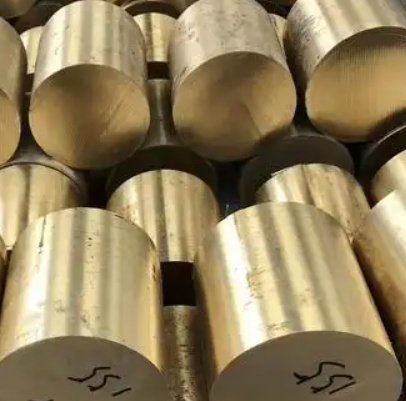
C260 brass, also known as UNS C26000 cartridge brass, is a copper-zinc alloy valued for its excellent cold formability, attractive yellow-gold color, good corrosion resistance and reliable performance in sheet, strip and formed components. It is one of the most widely used alpha brasses for stamping, deep drawing, bending, rolling and general fabrication.
For engineers, buyers and manufacturers, C260 is often selected when a part needs a balanced combination of ductility, moderate strength, solderability, brazability, electrical conductivity and visual appeal. While it can be CNC machined, its machinability is lower than free-cutting brass grades such as C360, so process planning is important when tight tolerances, high-volume production or fine surface finishes are required.
What Is C260 Brass?
C260 brass is a wrought copper alloy composed primarily of copper and zinc. It is commonly called cartridge brass because it has historically been used for ammunition cartridge cases, where deep drawability and consistent wall thickness are essential.
Metallurgically, C260 is an alpha brass, meaning it generally has a single-phase structure at room temperature. This structure gives the alloy excellent ductility and cold-working capability, making it suitable for complex formed parts that would crack or split in less ductile materials.
C260 is commonly supplied as sheet, strip, coil, plate and sometimes bar or rod, depending on distributor availability and manufacturing route. The alloy is frequently specified under ASTM and SAE standards for flat products used in electrical, architectural, industrial and decorative applications.
C260 Brass Chemical Composition
The typical composition of C260 brass is approximately 70% copper and 30% zinc. Small limits may apply to residual elements depending on the governing standard and product form.
| Element | Typical Range or Limit | Function in the Alloy |
|---|---|---|
| Copper, Cu | 68.5% to 71.5% | Provides ductility, corrosion resistance, conductivity and warm color |
| Zinc, Zn | Balance | Improves strength, hardness and cost efficiency compared with pure copper |
| Lead, Pb | Usually very low, controlled by specification | Not intentionally added; C260 is not a free-machining brass |
| Iron, Fe and other residuals | Low maximum limits | Controlled to maintain forming and surface quality |
The low lead content is important for applications where RoHS, REACH or lead-restricted purchasing requirements are relevant. However, buyers should always request a mill test certificate or material certification for the specific heat, lot and standard being supplied.
Key Physical and Mechanical Properties
C260 brass properties vary significantly with temper. Annealed material is soft and highly formable, while cold-rolled tempers provide higher tensile strength and hardness at the expense of elongation.
| Property | Typical Value | Engineering Relevance |
|---|---|---|
| Density | About 8.53 g/cm³ | Useful for weight estimation and costing by mass |
| Melting range | Approximately 915°C to 955°C | Relevant to thermal processing, brazing and casting considerations |
| Elastic modulus | About 105 to 115 GPa | Important for spring-back and stiffness calculations |
| Electrical conductivity | About 28% IACS | Suitable for some conductive parts, but less conductive than copper |
| Thermal conductivity | About 115 to 125 W/m·K | Supports heat transfer in moderate thermal applications |
Typical tensile strength can range from roughly 300 MPa in annealed conditions to above 500 MPa in harder cold-worked tempers. Because actual values depend on thickness, temper, standard and mill practice, engineering drawings should specify the exact temper and applicable standard rather than relying on a generic alloy name.
Common C260 Brass Tempers and Standards
C260 brass is commonly ordered in tempers such as soft annealed, quarter hard, half hard, hard and spring-type cold-rolled conditions. The correct temper affects bending radius, stamping performance, spring-back, hardness, tensile strength and finished part durability.
- Annealed or soft temper: Best for deep drawing, severe forming and parts requiring high elongation.
- Quarter hard temper: Useful when moderate formability and improved strength are both needed.
- Half hard temper: Common for stamped parts requiring better dimensional stability and strength.
- Hard temper: Selected for flatter, stronger parts with less severe forming.
- Spring temper: Used when elastic recovery and stiffness are important, though C260 is not a dedicated high-performance spring alloy.
Frequently referenced standards include ASTM B36 for brass plate, sheet, strip and rolled bar, ASTM B134 for brass wire, and other copper alloy standards depending on product form. In procurement documents, specify alloy, temper, thickness, tolerance, finish and certification requirements to reduce substitution risk.
Buyer note: how to specify C260 brass on a purchase order
A practical purchase description may include: “UNS C26000 brass sheet, ASTM B36, H02 half hard, 1.00 mm thickness, mill finish, certified chemical and mechanical properties, RoHS compliant where applicable.” Add width, length, coil ID, burr direction, surface protection, grain direction and flatness tolerance if they affect production yield.
C260 Brass CNC Machining Performance
C260 brass can be machined by turning, milling, drilling, tapping, engraving and deburring, but it is not primarily designed for high-speed chip-breaking machining. Its machinability rating is commonly considered much lower than C360 free-cutting brass, which contains lead to improve chip formation.
In CNC machining, C260 tends to produce longer, more ductile chips, especially in soft tempers. This can increase the risk of chip wrapping, built-up edge, poor surface finish or tool rubbing. For precision components, the best results typically come from sharp tools, positive rake geometry, stable workholding and controlled cutting parameters.
CNC Turning and Milling Recommendations
- Use sharp carbide or high-speed steel tools with polished flutes and positive rake angles.
- Apply appropriate coolant or light oil mist to reduce friction, improve finish and help clear chips.
- Avoid excessive tool dwell, which can smear the surface or increase burr formation.
- Use chip breakers, peck drilling or interrupted toolpaths when long chips are a problem.
- Deburr carefully; thin C260 edges can form ductile burrs after milling or drilling.
- For thin sheet parts, support the material well to prevent vibration, lifting and distortion.
If the design is mainly a machined part rather than a formed part, engineers should compare C260 with C360 brass, C353 brass or other machinable copper alloys. C260 is often the better choice for formed and stamped geometry, while C360 is usually more economical for extensive screw machining and CNC production.
Engineer note: when C260 is not the best CNC choice
Choose C260 when formability, appearance, low lead content or sheet availability is the main requirement. Consider C360 or another free-machining brass when the part requires heavy material removal, small drilled holes, high-volume turned features or aggressive cycle-time targets. If the part combines stamping and secondary CNC machining, prototype both operations before locking the specification.
Forming, Stamping, Joining and Finishing
The strongest advantage of C260 brass is its ability to be cold formed. It is widely used in stamping dies, progressive tooling, blanking, bending, embossing, coining, spinning and deep drawing. Proper grain direction, bend radius and temper selection are critical for avoiding edge cracking and maintaining repeatable part geometry.
C260 can be soldered and brazed with good results. Welding is more limited than soldering or brazing because zinc vaporization and thermal distortion can affect joint quality. Mechanical fastening, riveting and crimping are also common in fabricated assemblies.
Surface finishing options include polishing, brushing, plating, lacquering, clear coating, passivation-type cleaning and chemical coloring. Because brass naturally tarnishes, decorative parts often receive a protective coating when color stability is important. For electrical contacts or connectors, surface cleanliness and oxide control may be more important than cosmetic brightness.
Corrosion Resistance and Environmental Behavior
C260 brass offers good corrosion resistance in indoor atmospheres, freshwater conditions and many mildly corrosive environments. Its copper-rich composition helps it resist general atmospheric corrosion better than plain carbon steel, while its zinc content improves strength and lowers material cost compared with pure copper.
However, like many brasses, C260 can be vulnerable to dezincification in certain waters, acidic environments, high-chloride conditions or stagnant service. Dezincification is a selective corrosion process in which zinc is leached from the alloy, leaving a porous copper-rich surface. For plumbing, marine or aggressive chemical exposure, dezincification-resistant brass or bronze alternatives may be more appropriate.
Stress corrosion cracking can also occur in ammonia-containing environments or under residual tensile stress. Annealing, stress relief and proper cleaning after forming can help reduce risk in sensitive applications.
Typical Applications of C260 Brass
C260 brass is used across industries because it combines formability, strength, corrosion resistance and appearance. Its balance of engineering and aesthetic properties makes it suitable for both functional and decorative components.
- Ammunition cartridge cases and related drawn components
- Electrical terminals, connector parts, contacts and shielding components
- Stamped brackets, clips, washers, eyelets and grommets
- Decorative trim, nameplates, badges, hardware and architectural details
- Radiator components, heat exchanger fins and moderate thermal-transfer parts
- Musical instrument components and polished brass assemblies
- Small appliance parts, lighting components and consumer product hardware
- Prototype sheet-metal parts requiring good bendability and visual quality
For high-volume manufacturing, C260 often delivers the best value when the process relies on forming rather than heavy machining. Its predictable behavior in strip and coil form makes it especially useful for progressive die stamping operations.
Procurement and quality considerations for C260 brass parts
Before ordering production material, confirm the applicable standard, temper, grain direction, thickness tolerance, surface finish, flatness, burr allowance, lead restriction and traceability level. For stamped parts, ask whether the supplier controls coil-to-coil hardness variation. For CNC-machined features, confirm whether the selected temper produces acceptable chip control and burr size during sampling.
C260 Brass vs. Other Brass and Copper Alloys
C260 is often compared with C268 yellow brass, C270 brass, C280 Muntz metal and C360 free-cutting brass. The right selection depends on forming severity, machining volume, strength requirement, corrosion environment, conductivity and regulatory limits.
- C260 vs. C360: C260 is better for forming and low-lead requirements; C360 is much better for machining.
- C260 vs. C268: Both are yellow brasses, but composition and mechanical behavior differ by standard and temper.
- C260 vs. C280: C280 has higher zinc content and greater strength potential, but lower ductility than cartridge brass.
- C260 vs. C110 copper: C110 has much higher electrical and thermal conductivity, while C260 provides higher strength and better cost efficiency.
- C260 vs. bronze: Bronzes may offer better wear or marine corrosion resistance, while C260 is often easier to form and polish.
The most reliable material decision comes from matching the alloy to the primary manufacturing process. If the part is stamped, drawn, bent or decorative, C260 is often a strong candidate. If the part is primarily CNC turned from bar stock, a free-machining brass may reduce cycle time, tooling cost and scrap.
Summary: When to Choose C260 Brass
C260 brass is a highly formable copper-zinc alloy suited to sheet, strip, stamped, drawn and decorative components. It offers good corrosion resistance, moderate strength, attractive color, solderability and useful conductivity. Its main limitation is machining efficiency: although CNC machining is possible, C260 does not chip as easily as leaded free-machining brass.
Choose C260 when the design benefits from cartridge brass formability, clean appearance and balanced mechanical properties. Specify the correct temper, standard and tolerances, and validate CNC operations early if the component includes drilled, milled or turned features. With the right specification and manufacturing route, C260 brass remains one of the most versatile and commercially important brass materials available.