
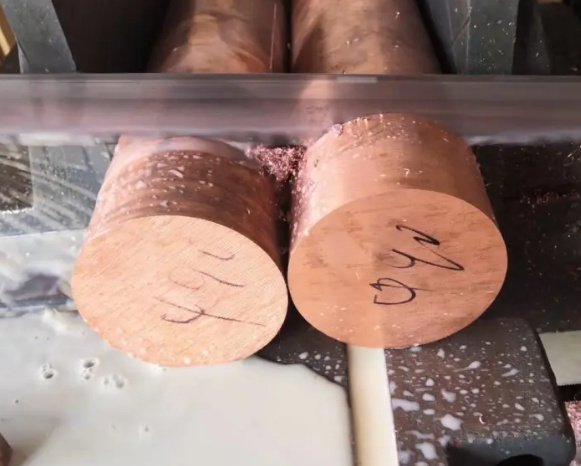
C360 brass, also known as C36000 free-cutting brass, is one of the most widely used copper alloys for high-speed machining. It is a leaded brass engineered for excellent chip control, stable dimensional accuracy, and economical production of precision components such as fittings, valve parts, inserts, bushings, fasteners, shafts, connectors, and instrument hardware.
For engineers, CNC machine shops, and buyers comparing brass alloys, C360 is often the reference material because its machinability rating is commonly listed as 100%. That does not mean it is the strongest or most corrosion-resistant brass available; it means it is the benchmark for fast turning, milling, drilling, threading, knurling, tapping, and automatic screw machining.
What Is C360 Brass?
C360 brass is a copper-zinc-lead alloy classified under UNS C36000. It is frequently supplied as round bar, hex bar, square bar, flat bar, rod, and precision-cut blanks. In many purchasing documents, it may appear under names such as free-machining brass, free-cutting brass, leaded brass, C36000 brass, CDA 360, or ASTM B16 brass rod.
The alloy is designed around a practical balance: copper and zinc provide the brass matrix, while lead improves chip breakability and reduces tool wear. The lead phase is dispersed in the microstructure rather than fully dissolved, which helps the material cut cleanly at high speeds.
C360 Brass Chemical Composition
The typical composition of C360 brass is standardized but may vary slightly by mill certificate, product form, and governing specification. The following ranges are commonly associated with UNS C36000:
| Element | Typical Range | Role in C360 Brass |
|---|---|---|
| Copper | 60.0%–63.0% | Provides conductivity, corrosion resistance, and base alloy structure |
| Lead | 2.5%–3.7% | Improves machinability, lubrication at the cutting edge, and chip formation |
| Iron | Up to about 0.35% | Controlled impurity; excessive iron may affect performance |
| Zinc | Remainder | Increases strength and lowers material cost compared with high-copper alloys |
When specifying material for regulated products, always verify the actual chemistry on the material test report. Lead content is a major compliance factor for potable water, food-contact, medical, electronics, and export-controlled applications.
Key Mechanical and Physical Properties
C360 brass properties depend on temper, bar diameter, manufacturing route, and test standard. Typical values are useful for early-stage design, but final engineering decisions should be based on certified data from the supplier.
| Property | Typical Value or Range | Design Relevance |
|---|---|---|
| Density | About 8.47 g/cm³ | Useful for part weight and material cost estimation |
| Machinability | 100% reference rating | Excellent for high-volume CNC and screw machine production |
| Tensile strength | Approximately 345–500 MPa, depending on temper | Suitable for moderate-load precision components |
| Yield strength | Varies widely by temper and product form | Important for threaded parts, inserts, and load-bearing fittings |
| Elongation | Often about 10%–35% | Indicates formability and fracture behavior |
| Electrical conductivity | About 26% IACS | Relevant for terminals, contacts, and conductive hardware |
| Thermal conductivity | About 110–130 W/m·K | Useful for heat-transfer and temperature-stable parts |
| Melting range | Approximately 885–900°C | Relevant to brazing, soldering, and thermal exposure |
The most important practical property is not a single tensile value but the combination of machinability, dimensional stability, surface finish, corrosion behavior, and cost. In many turned-part programs, C360 reduces cycle time enough to offset raw material price differences.
CNC Machining C360 Brass
C360 brass is one of the easiest metals to CNC machine. It produces short, broken chips, accepts aggressive feeds and speeds, and usually delivers fine surface finishes without extensive secondary polishing. This makes it highly suitable for Swiss machining, CNC turning, multi-spindle screw machining, milling, engraving, cross-hole drilling, internal threading, external threading, and micro-machined brass components.
In CNC production, C360 brass machining is valued because it can reduce tool load, limit built-up edge, and maintain tight repeatability across long production runs. The alloy’s lead content acts as a chip-breaking and lubricating phase, which allows efficient cutting even in small-diameter holes, fine threads, and complex turned profiles.
Typical CNC Machining Advantages
- Excellent chip control for automatic bar-fed machines
- High cutting speeds compared with many steels and stainless steels
- Low cutting forces, helping protect small tools and thin-wall features
- Good surface finish directly from turning or milling
- Reliable thread quality in internal and external threads
- Reduced burr formation compared with tougher copper alloys
- Strong suitability for high-volume precision components
Machining Considerations
Although C360 is forgiving, process setup still matters. Sharp carbide tools, positive rake geometry, controlled chip evacuation, and stable workholding improve consistency. Dry machining is possible in many operations, but coolant or mist may help manage heat, flush chips, and improve finish during deep drilling or high-speed production.
Designers should avoid assuming that all brass alloys machine like C360. Lead-free brass grades, naval brass, cartridge brass, and high-strength manganese bronze can require different speeds, feeds, tool coatings, and deburring strategies.
Engineer and machinist notes for tighter tolerance C360 parts
For close-tolerance CNC components, specify the required temper, bar form, tolerance class, and surface finish rather than only calling out “brass.” C360 bar stock can vary in straightness, residual stress, diameter tolerance, and hardness depending on the supplier and manufacturing route.
Features such as long slender shafts, thin threaded walls, deep micro-holes, and cosmetic surfaces should be reviewed with the machine shop before production. Stress relief, custom collets, live tooling strategy, or adjusted cutting parameters may be needed for repeatability.
Common Applications of C360 Brass
C360 brass is selected where machinability, corrosion resistance, appearance, and moderate strength are more important than weldability or high-temperature performance. It is common in industrial, electrical, plumbing-adjacent, automotive, aerospace support, musical instrument, and consumer hardware applications.
- Compression fittings and pneumatic fittings
- Hydraulic adapters and low-to-moderate pressure connectors
- Valve stems, valve bodies, seats, and plugs
- Threaded inserts for plastics and molded assemblies
- Electrical terminals, pins, sockets, and connector bodies
- Standoffs, spacers, bushings, nuts, screws, and custom fasteners
- Instrument components and precision hardware
- Decorative turned parts, knobs, and architectural hardware
- Gears, sleeves, and low-friction mechanical components under moderate load
C360 is often used for parts that must be produced quickly with consistent dimensions. Its golden appearance is also useful when the component remains visible, although lacquer, plating, passivation-like cleaning processes, or anti-tarnish packaging may be required for cosmetic applications.
C360 Brass vs Other Brass and Copper Alloys
Material selection should consider performance, regulatory limits, machining economics, and service environment. C360 is not a universal replacement for every brass or copper alloy.
| Material | How It Compares with C360 | Typical Reason to Choose It |
|---|---|---|
| C260 cartridge brass | Better formability, lower machinability | Stamping, drawing, sheet metal components |
| C464 naval brass | Better seawater resistance, more difficult to machine | Marine fittings, corrosion-prone environments |
| C353 brass | Similar free-machining behavior in some uses | Machined parts with different strength or form requirements |
| Lead-free brass grades | Better regulatory fit, typically lower machinability | Potable water, RoHS-sensitive, or low-lead applications |
| C110 copper | Much higher conductivity, lower machinability | Electrical and thermal components |
| Bronze alloys | Often better wear or bearing performance | Bushings, bearings, marine wear parts |
If the search intent is “best brass for CNC machining,” C360 is usually a leading candidate. If the intent is “brass for potable water,” “lead-free brass,” or “marine brass,” another alloy may be more appropriate.
Corrosion Resistance, Plating, and Finishing
C360 brass provides good corrosion resistance in indoor atmospheres, mild industrial environments, many oils, fuels, and non-aggressive fluids. However, it can tarnish over time and may be vulnerable to dezincification or stress corrosion cracking in specific environments, especially where ammonia, chlorides, acidic media, or high residual stress are present.
Common finishing options include nickel plating, tin plating, silver plating, gold plating, chrome plating, black oxide-like decorative treatments, clear lacquer, polishing, tumbling, vibratory finishing, and passivation-style cleaning. For electrical components, plating selection should consider contact resistance, solderability, wear, corrosion exposure, and mating-cycle requirements.
For threaded inserts and cosmetic hardware, surface finish requirements should be clearly defined using measurable criteria such as Ra value, plating thickness, color range, visual inspection level, and acceptable handling marks.
Forming, Joining, and Heat Treatment
C360 brass is primarily chosen for machining, not heavy forming or welding. It has fair cold working capability in limited operations, but the lead content reduces suitability for welding and severe forming. Soldering and brazing are generally more practical than fusion welding, though process selection must account for lead and zinc fumes, cleanliness, joint design, and service requirements.
Heat treatment is not used to harden C360 in the same way as steels. Mechanical properties are mainly controlled by cold work, temper, and product form. Annealing can soften brass, but it may also change dimensional stability and should be evaluated carefully for precision parts.
Standards, Specifications, and Material Certification
C360 brass may be purchased under several standards depending on region, product form, and industry. Common references include UNS C36000 and ASTM B16 for free-cutting brass rod, bar, and shapes. Buyers may also encounter EN, JIS, or customer-specific material specifications for equivalent or near-equivalent free-machining brass grades.
A reliable purchase order should identify the alloy, specification, temper, shape, dimensions, tolerance requirements, certification level, country-of-origin requirements if needed, and any compliance declarations. Mill test reports can confirm chemical composition and sometimes mechanical properties.
Buyer checklist for C360 brass bar stock and machined parts
- Confirm UNS C36000 or the exact equivalent grade required.
- Request the applicable standard, such as ASTM B16, when needed.
- Specify round, hex, square, flat, rod, or custom cut-to-length stock.
- Check bar diameter tolerance, straightness, temper, and surface condition.
- Ask whether full mill test reports or certificates of conformance are available.
- Clarify RoHS, REACH, Proposition 65, low-lead, or customer-specific restrictions.
- Define packaging requirements to reduce tarnish, dents, and handling marks.
Lead Content, RoHS, REACH, and Regulatory Considerations
The main limitation of C360 brass is its lead content. Lead is the reason C360 machines so well, but it can also create regulatory barriers. Some applications allow leaded brass under exemptions or controlled conditions, while others require low-lead or lead-free alternatives.
For electronics, check RoHS exemptions and customer-specific substance restrictions. For European supply chains, REACH obligations may apply. For drinking water components in the United States and other regions, low-lead requirements can make standard C360 unsuitable. For consumer products, Proposition 65 warnings or other labeling obligations may be relevant.
Compliance should not be assumed from the alloy name alone. Material compliance verification should include chemistry, intended use, jurisdiction, customer specification, and current exemption status.
When C360 may not be the right material
C360 brass may not be suitable for potable water wetted parts, lead-free product lines, welded assemblies, high-strength structural parts, severe marine exposure, high-ammonia environments, or applications where lead contamination is unacceptable.
In those cases, consider low-lead brass, silicon brass, dezincification-resistant brass, naval brass, bronze, stainless steel, aluminum bronze, or copper alloys selected for the specific operating environment.
Advantages and Limitations of C360 Brass
Advantages
- Benchmark machinability for brass and copper alloy machining
- Excellent productivity in CNC turning and screw machining
- Good dimensional repeatability for precision parts
- Clean threading, drilling, and knurling behavior
- Attractive brass color and good polishability
- Good corrosion resistance in many non-aggressive environments
- Widely available as bar stock in many shapes and sizes
Limitations
- Contains lead, which may restrict regulated applications
- Poor weldability compared with non-leaded alloys
- Not ideal for severe forming operations
- Can tarnish without protective finishing or packaging
- May be vulnerable to dezincification in unsuitable environments
- Not the best choice for very high strength or high-temperature service
How to Specify C360 Brass for Manufacturing
A clear specification reduces quoting errors, scrap, and production delays. For machined components, the drawing should identify the material as C36000 brass and include any governing standard, finish requirements, dimensional tolerances, thread class, deburring expectations, plating requirements, and inspection criteria.
For CNC-machined brass parts, it is helpful to define whether burr-free edges are required, whether sharp edges are allowed for sealing features, and whether cosmetic surfaces require special handling. If parts will be plated, the drawing should account for plating buildup on threads, bores, press-fit features, and sealing diameters.
For purchasing teams, C360 brass bar stock availability can influence lead time and cost. Common round and hex sizes are usually easy to source, while special profiles, tight tolerance bars, or certified domestic-origin material may require longer procurement planning.
Conclusion: Is C360 Brass the Right Material?
C360 brass is an excellent choice when the priority is fast, accurate, and economical CNC machining. It performs especially well in turned parts, threaded fittings, inserts, connectors, valve components, and precision hardware. Its machinability, surface finish, and availability make it one of the most practical brass alloys for production manufacturing.
The decision becomes more complex when the part must meet lead-free regulations, potable water standards, severe corrosion requirements, welding requirements, or high-strength structural demands. In those cases, C360 should be compared with lead-free brass, naval brass, bronze, stainless steel, or copper alloys based on the actual service environment and compliance obligations.