
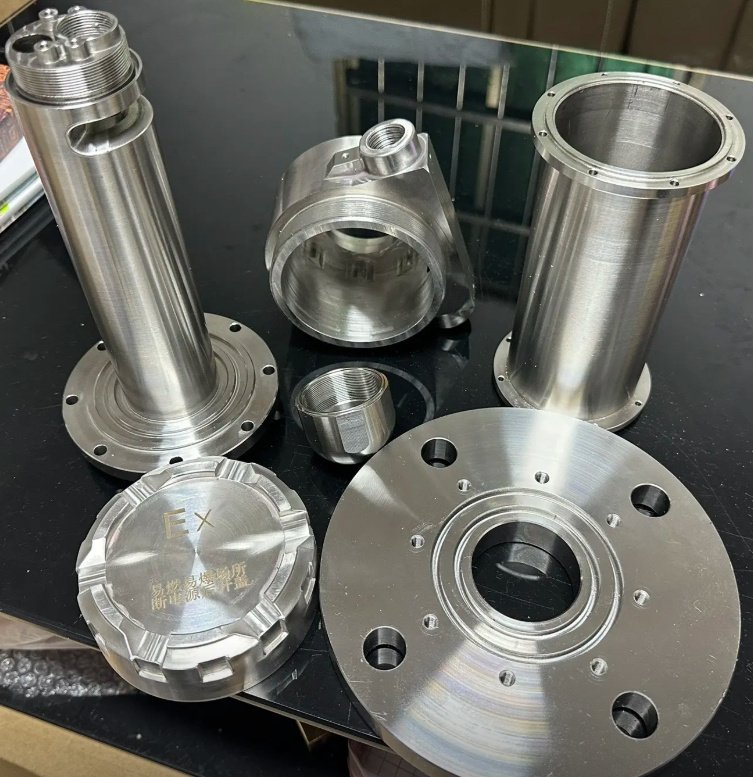
Hastelloy CNC machining is widely required for chemical processing equipment, aerospace hardware, marine components, pressure-resistant parts, and corrosion-critical assemblies. Alloys such as Hastelloy C-276, C-22, B-2, X, and G-30 are valued for exceptional resistance to pitting, stress corrosion cracking, oxidation, and aggressive chemical media. However, the same metallurgical properties that make these nickel-based alloys durable also make them difficult to cut.
Machining Hastelloy is not simply a matter of slowing down the spindle. Shops must manage rapid work hardening, high cutting temperature, abrasive carbide phases, poor chip control, tool deflection, residual stress, and tight surface integrity requirements. This guide explains the most common challenges in Hastelloy CNC machining and practical ways to solve them using tooling, cutting parameters, coolant strategy, fixturing, and inspection planning.
Why Hastelloy Is Difficult to Machine
Hastelloy is a family of high-performance nickel alloys containing elements such as molybdenum, chromium, iron, tungsten, cobalt, and manganese. These alloying elements improve corrosion and heat resistance, but they also reduce machinability compared with carbon steel, aluminum, or many stainless steels.
Several material behaviors affect CNC turning, milling, drilling, boring, reaming, and threading:
- Low thermal conductivity keeps heat concentrated at the cutting edge.
- High toughness increases cutting force and promotes tool deflection.
- Rapid strain hardening causes the next tool pass to cut a harder layer.
- High chemical affinity with tool materials encourages built-up edge and notch wear.
- Abrasive carbides and intermetallic phases accelerate flank wear.
- Elastic recovery can affect dimensional accuracy, especially on thin-wall parts.
For reference, common wrought Hastelloy bar and plate materials may be specified under standards such as ASTM B574, ASTM B575, ASTM B619, ASTM B622, and ASTM B626, depending on alloy grade and product form. CNC machinists should always confirm the exact UNS designation, heat treatment condition, hardness, and mill certificate before choosing parameters.
Common Hastelloy grades encountered in CNC machining
Hastelloy C-276, UNS N10276, is one of the most common grades for severe corrosion service and is frequently used for valves, pump parts, flanges, and chemical processing components. Hastelloy C-22, UNS N06022, offers excellent resistance to oxidizing and reducing environments. Hastelloy X, UNS N06002, is often used in high-temperature aerospace and gas turbine applications. Hastelloy B-2, UNS N10665, is used in hydrochloric acid environments but requires careful handling due to its chemistry-specific performance.
Challenge 1: Rapid Work Hardening
One of the biggest problems in Hastelloy machining is work hardening. When the tool rubs instead of shearing cleanly, the surface layer becomes harder and more resistant to cutting. A light finishing pass, dwell mark, worn insert, or interrupted toolpath can create a hardened skin that damages the next tool edge.
Work hardening is especially problematic during drilling, grooving, parting, and internal turning because chip evacuation and coolant access are limited. Once a hardened layer forms, machinists may see chatter, poor surface finish, elevated spindle load, and sudden tool failure.
How to solve work hardening
- Use positive rake geometry and sharp cutting edges where part rigidity allows.
- Maintain a consistent feed rate so the tool cuts below the previously hardened layer.
- Avoid dwelling, rubbing, spring passes, and overly shallow cuts.
- Use climb milling where appropriate to reduce rubbing at tool entry.
- Program smooth toolpaths with controlled engagement instead of abrupt changes in load.
- Replace tools before wear creates excessive rubbing and heat.
For many Hastelloy alloys, a slightly more aggressive feed with a stable setup is often better than an extremely light pass. The goal is to form a chip reliably, not polish the surface with the cutting edge.
Challenge 2: Excessive Heat at the Cutting Zone
Hastelloy has low thermal conductivity compared with steel and aluminum. Heat does not flow quickly into the workpiece or chip, so it remains concentrated at the cutting edge. This causes crater wear, plastic deformation of the insert edge, oxidation, built-up edge, and premature loss of tool coating.
Heat-related failure is common when shops use surface speeds that are too high, coolant that cannot reach the cut, or tools with insufficient hot hardness. The problem becomes more severe in deep pockets, small holes, and long-reach milling where chip evacuation is restricted.
How to control heat
- Use conservative cutting speeds and adjust upward only after tool life is stable.
- Apply high-pressure coolant for turning, drilling, and grooving when possible.
- Use through-tool coolant for deep holes and internal features.
- Select coated carbide grades designed for nickel-based superalloys.
- Use trochoidal or adaptive milling to control radial engagement and reduce heat spikes.
- Monitor chip color and edge condition; blue or straw-colored chips may indicate excessive temperature.
A useful starting principle is to protect the cutting edge first and then optimize cycle time. In Hastelloy, chasing speed too early usually increases insert consumption, scrap risk, and total manufacturing cost.
Challenge 3: Severe Tool Wear and Edge Chipping
Tool wear in Hastelloy can appear as flank wear, notch wear at the depth-of-cut line, crater wear, built-up edge, micro-chipping, or catastrophic fracture. Notch wear is particularly common in nickel alloys because work-hardened surfaces, high temperature, and chemical interaction concentrate damage at the engagement boundary.
Tool life is affected by alloy grade, hardness, casting or wrought condition, interruption, machine rigidity, tool overhang, coolant delivery, and the ratio of depth of cut to nose radius. A tool that performs well in 316 stainless steel may fail quickly in Hastelloy C-276 or Hastelloy X.
How to improve tool life
- Use carbide grades formulated for heat-resistant superalloys, often classified for ISO S materials.
- Choose PVD coatings such as TiAlN, AlTiN, or advanced nanolayer coatings for edge toughness and heat resistance.
- Use a strong edge preparation for roughing, but avoid overly honed edges for light finishing.
- Reduce tool overhang and increase holder rigidity.
- Vary depth of cut in roughing to distribute notch wear when possible.
- Use ceramic or whisker-reinforced ceramic tools only in suitable high-speed, rigid, continuous-cut applications.
For turning, negative inserts may provide strength in roughing, while positive inserts may reduce cutting pressure in finishing or on thin-wall parts. For milling, variable helix end mills and high-performance carbide tools designed for nickel alloys can reduce vibration and edge failure.
Tooling note for Hastelloy versus stainless steel
Hastelloy often requires lower surface speed, higher edge toughness, more controlled engagement, and better coolant access than austenitic stainless steel. Although both material families can work harden, Hastelloy typically generates higher cutting temperature and more aggressive notch wear. Tooling decisions should therefore be based on nickel alloy machining data, not only stainless steel experience.
Challenge 4: Poor Chip Control and Built-Up Edge
Hastelloy tends to produce tough, stringy chips, especially during turning and drilling. Long chips can wrap around the tool, damage the workpiece, block coolant, scratch finished surfaces, and create safety hazards. Built-up edge may also form when material welds to the cutting edge, changing tool geometry and causing rough surface finish.
Chip control is not only a productivity issue. It directly affects dimensional accuracy and surface integrity because trapped chips can recut the surface or force the tool out of position.
How to improve chip formation
- Select inserts with chipbreakers designed for medium-to-difficult stainless and nickel alloys.
- Increase feed within the safe range to help the chipbreaker function correctly.
- Use high-pressure coolant aimed directly at the cutting edge and chip flow direction.
- Peck drill carefully, but avoid excessive dwell at the bottom of the hole.
- Use drills with polished flutes, coolant-through design, and geometry for tough alloys.
- Program chip-clearing moves in deep pockets and narrow slots.
In CNC turning, chipbreaker performance depends heavily on feed and depth of cut. If the cut is too light, the insert may not break the chip even if the chipbreaker geometry is correct.
Challenge 5: Chatter, Deflection, and Dimensional Instability
Hastelloy’s high strength and toughness increase cutting forces. If the machine, toolholder, fixture, or workpiece lacks rigidity, the process may produce chatter marks, tapered diameters, poor roundness, and inconsistent wall thickness. Thin-wall Hastelloy parts are especially sensitive because the material springs back after the tool passes.
Vibration also accelerates tool chipping and can create a work-hardened surface. This turns a rigidity problem into a tool life problem and then into a dimensional problem.
How to increase process stability
- Use the shortest possible tool overhang and a rigid holder system.
- Support long workpieces with tailstock, steady rest, or custom fixturing.
- Use balanced toolholders and stable spindle speeds for milling.
- Reduce radial engagement before reducing feed too much.
- Use variable pitch or variable helix cutters to interrupt vibration harmonics.
- Machine thin walls in stages, leaving support material until late in the process.
- Plan semi-finish passes to relieve stress before final finishing.
For high-value Hastelloy components, process stability should be validated during first-article machining. Measuring only the final dimension may not reveal whether the process is close to chatter or tool failure.
Challenge 6: Drilling, Tapping, and Threading Difficulties
Holes and threads in Hastelloy are often more difficult than external turning or open milling because heat and chips are trapped inside the cut. Drills may wander, seize, chip, or produce poor hole finish. Taps are vulnerable to torque overload, galling, and breakage, especially in blind holes.
Internal threads in corrosion-resistant components may need to meet standards such as ASME B1.1, ISO metric thread requirements, or application-specific pressure equipment specifications. Because rework options are limited, holemaking strategy must be planned early.
How to improve holemaking and threading
- Use carbide coolant-through drills for production holes where machine rigidity supports them.
- Spot or pilot drill only when required by the drill manufacturer; unnecessary pilot holes can worsen tool engagement.
- Use appropriate peck cycles for deep holes, balancing chip evacuation against work hardening.
- Consider thread milling instead of tapping for larger threads, blind holes, and expensive parts.
- Use forming taps only when the alloy grade, hole size, lubrication, and thread specification allow it.
- Apply high-performance cutting fluid with strong lubricity for tapping and reaming.
Thread milling is often preferred for critical Hastelloy parts because it reduces torque, improves chip evacuation, allows diameter compensation, and lowers the risk of scrapping a part due to a broken tap.
Recommended Cutting Strategy for Hastelloy CNC Machining
There is no universal speed and feed that works for every Hastelloy grade, machine, tool brand, and part geometry. However, successful shops follow a consistent strategy: start with conservative parameters from the tool supplier, maintain chip load, control heat, and document tool life.
Turning strategy
- Use rigid clamping and minimize unsupported length.
- Select inserts with strong substrates and chipbreakers for nickel alloys.
- Use coolant precisely directed at the rake face and flank face.
- Avoid very light roughing passes that rub and work harden the surface.
- Use a separate finishing tool with a fresh edge for final dimensions and surface finish.
Milling strategy
- Use climb milling and stable tool engagement where possible.
- Apply adaptive clearing for pockets and complex profiles.
- Keep radial step-over controlled to avoid sudden heat and force spikes.
- Use high-performance carbide end mills with variable helix geometry.
- Avoid burying the cutter in full-width slots unless the tool and setup are designed for it.
Finishing strategy
- Leave consistent stock for finishing after roughing.
- Use sharp tools and stable feeds to prevent rubbing.
- Check surface roughness requirements such as Ra, Rz, or application-specific finish callouts.
- Control burr formation at edges, holes, and thread starts.
- Inspect for tool marks that may affect sealing, fatigue life, or corrosion performance.
In practical production, the best results come from treating roughing, semi-finishing, and finishing as separate processes instead of using one tool and one parameter set for all operations.
Coolant and Lubrication Best Practices
Coolant strategy is central to Hastelloy machining. Flood coolant may be adequate for simple open cuts, but high-pressure coolant or through-tool coolant is often needed for consistent chip control and tool life. The coolant must reach the shear zone; simply filling the machine enclosure with fluid is not enough.
High-pressure coolant can help break chips, reduce built-up edge, flush heat from the tool, and improve surface finish. In turning, coolant nozzles should be aimed accurately at the cutting edge. In drilling, internal coolant improves chip evacuation and reduces the risk of chip packing.
For tapping, reaming, and difficult finishing operations, lubricity is as important as cooling. Some applications may benefit from oil-based cutting fluid, high-lubricity soluble oil, or minimum quantity lubrication only when validated for the operation and material condition.
Surface Integrity, Burr Control, and Inspection
Hastelloy parts are often used in environments where surface condition affects performance. Scratches, smeared metal, embedded chips, micro-cracks, and heavy burrs can create corrosion initiation points or interfere with sealing. For aerospace and chemical processing applications, machining quality must be assessed beyond basic dimensional checks.
Important inspection and quality-control items include:
- Dimensional accuracy, roundness, flatness, and true position.
- Surface roughness values such as Ra or Rz.
- Burrs at cross holes, grooves, threads, and sealing faces.
- Evidence of chatter, tearing, laps, or smeared surfaces.
- Thread quality using go/no-go gauges or thread measurement systems.
- Material traceability and heat number verification for regulated applications.
Deburring should be planned as part of the CNC process rather than treated as a final rescue step. Excessive manual deburring can alter dimensions, damage edges, or create inconsistent cosmetic results.
Cost Drivers in Hastelloy CNC Machining
Hastelloy is expensive as raw material, and machining mistakes can be costly. The main cost drivers include material price, low material removal rate, tool consumption, long cycle time, inspection requirements, and scrap risk. A lower hourly rate does not necessarily reduce total part cost if the process causes excessive tool changes or rejected parts.
Cost-effective Hastelloy machining usually depends on:
- Designing parts with manufacturable radii, thread depths, and wall thicknesses.
- Choosing near-net-size stock where possible.
- Using dedicated tooling for repeat production.
- Documenting proven speeds, feeds, tool life, and offsets.
- Reducing setups through multi-axis machining where justified.
- Inspecting critical features at controlled checkpoints instead of only at final inspection.
Early design-for-manufacturing review can prevent features that are technically possible but unnecessarily expensive, such as very deep small-diameter holes, sharp internal corners, thin unsupported walls, and hard-to-access thread locations.
Key Takeaways
Hastelloy CNC machining is challenging because nickel-based alloys combine high toughness, rapid work hardening, low thermal conductivity, and strong corrosion-resistant chemistry. These characteristics create tool wear, heat concentration, chip control problems, chatter, and demanding inspection requirements.
The most reliable solutions are not single adjustments but a complete process approach: rigid setup, correct tool grade, controlled cutting speed, adequate feed, high-pressure coolant, stable toolpaths, planned finishing, and disciplined inspection. When these factors are aligned, Hastelloy components can be machined with predictable tool life, accurate dimensions, and surface quality suitable for demanding industrial applications.