
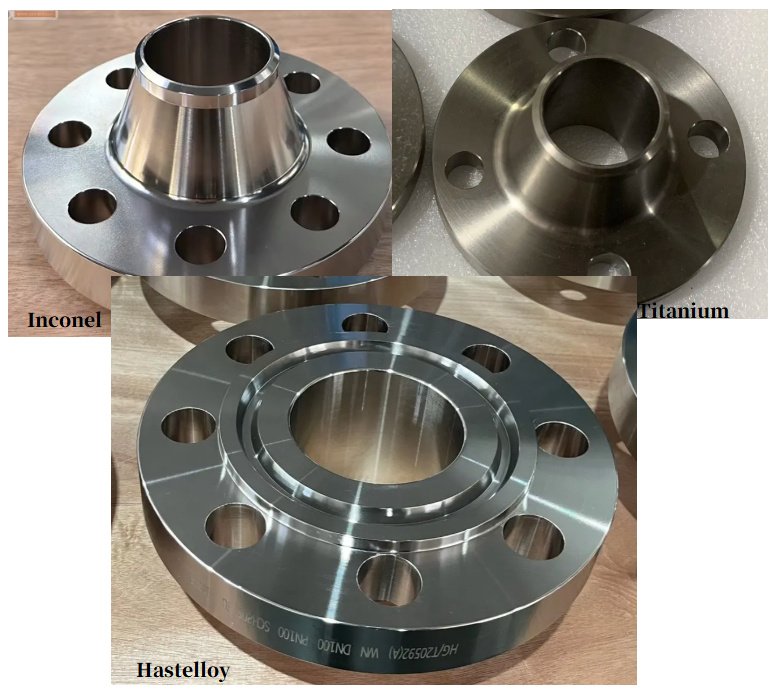
Selecting the right engineering alloy is critical in high-performance industries such as aerospace, chemical processing, marine engineering, and energy systems. Among the most widely compared materials are Inconel, titanium, and Hastelloy. Each belongs to a different advanced alloy family with distinct advantages in strength, corrosion resistance, and machinability. Understanding their differences helps engineers optimize performance, durability, and manufacturing cost.
Overview of Inconel, Titanium, and Hastelloy
The three materials represent distinct metallurgical families:
- Inconel – Nickel-based superalloys designed for extreme heat and oxidation resistance
- Titanium – Lightweight metal known for high strength-to-weight ratio and biocompatibility
- Hastelloy – Nickel-molybdenum-chromium alloys optimized for severe chemical corrosion resistance
These materials are often chosen based on operating environment rather than cost alone, especially in mission-critical systems.
Inconel vs Titanium vs Hastelloy: Comparison Table
| Property | Inconel | Titanium | Hastelloy |
|---|---|---|---|
| Material Type | Nickel-based superalloy | Lightweight metal (Titanium alloys) | Nickel-molybdenum-chromium alloy |
| Primary Strength | High-temperature strength & creep resistance | High strength-to-weight ratio | Extreme corrosion resistance |
| Density / Weight | High density (heavy) | Low density (very lightweight) | High density (similar to Inconel) |
| Temperature Resistance | Excellent (up to ~1000°C depending on grade) | Moderate (degrades at high temperature) | Good (not optimized for extreme heat) |
| Corrosion Resistance | Excellent oxidation resistance | Excellent in seawater, limited in acids | Outstanding in strong acids & chemicals |
| Typical Applications | Jet engines, gas turbines, nuclear systems | Aerospace structures, medical implants, marine parts | Chemical reactors, acid processing equipment |
| CNC Machinability | Difficult (work hardening, tool wear) | Difficult (heat buildup, galling) | Difficult (abrasive, work hardening) |
| Cost Level | Very high | High | Very high |
Chemical Composition & Material Classification
Each alloy family has a unique chemical structure that defines its performance characteristics.
Inconel is primarily composed of nickel and chromium, often enhanced with elements like molybdenum, niobium, and iron. This composition enables exceptional stability at elevated temperatures.
Titanium alloys typically contain titanium with aluminum and vanadium additions, forming lightweight yet strong structures with excellent fatigue resistance.
Inconel is engineered with high molybdenum and chromium content, making it highly resistant to pitting, crevice corrosion, and stress corrosion cracking in aggressive chemical environments.
Mechanical Properties Comparison
The mechanical behavior of these materials varies significantly depending on temperature, load, and environment.
Inconel alloys maintain strength at temperatures exceeding 700°C, making them ideal for turbine and combustion systems.
Titanium alloys provide superior strength-to-weight ratio, though their high-temperature performance is limited compared to nickel-based superalloys.
Hastelloy offers moderate mechanical strength but excels in chemical stability under highly corrosive conditions.
Strength-to-Weight Performance Insight
Titanium dominates when weight reduction is critical, such as aerospace structural components. In contrast, Inconel prioritizes thermal stability, while Hastelloy focuses on chemical resistance rather than structural lightness.
Corrosion Resistance & Temperature Performance
Corrosion resistance is a defining factor when comparing these alloys in harsh environments.
Inconel performs exceptionally well in oxidation and high-temperature gas environments due to its protective chromium oxide layer.
Titanium resists seawater corrosion extremely well but can suffer in reducing acid environments or high-temperature oxidation zones.
Hastelloy is widely regarded as one of the best materials for chemical processing systems due to its resistance to hydrochloric acid, sulfuric acid, and chloride-induced corrosion.
High-Temperature Behavior
Inconel retains structural integrity under extreme heat, while titanium begins to lose mechanical stability at elevated temperatures. Hastelloy performs well chemically but is not typically used in extreme thermal stress applications.
CNC Machining Considerations
From a manufacturing standpoint, CNC machining behavior is a major factor in material selection for precision components.
Inconel machining is challenging due to severe work hardening and high cutting temperatures. Specialized carbide tooling, low cutting speeds, and high-pressure coolant systems are often required.
Titanium machining also presents difficulties due to low thermal conductivity, which concentrates heat at the cutting edge and accelerates tool wear. Chip evacuation is critical to prevent galling.
Hastelloy machining is similarly demanding, with strong work-hardening behavior and abrasive tool wear requiring optimized feed rates and rigid machine setups.
CNC Optimization Strategies
Successful machining of these alloys relies on rigid fixturing, sharp cutting tools, controlled feed rates, and flood or high-pressure coolant delivery. Multi-axis CNC systems often improve efficiency for complex geometries in aerospace and chemical components.
Applications Across Industries
Each alloy serves specific high-performance industries based on its dominant properties.
- Inconel – Gas turbines, jet engines, nuclear reactors, exhaust systems
- Titanium – Aerospace structures, medical implants, marine components
- Hastelloy – Chemical reactors, pharmaceutical equipment, acid handling systems
In aerospace engineering, Inconel is preferred for hot-section components, while titanium dominates structural airframes. Hastelloy is essential in chemical processing plants where failure due to corrosion is unacceptable.
Cost, Availability, and Selection Guidelines
Material selection is not only a technical decision but also an economic one.
Inconel is generally expensive due to complex alloying and processing requirements. Titanium is also costly, especially in forged and aerospace-grade forms. Hastelloy often ranks among the most expensive due to its specialized chemical resistance properties.
How to Choose the Right Alloy
If thermal resistance is the priority, Inconel is typically the best choice. If weight reduction is critical, titanium becomes dominant. For extreme chemical environments, Hastelloy is unmatched in long-term corrosion protection.
Summary Comparison
Inconel, titanium, and Hastelloy each excel in different engineering domains. Their selection depends on balancing mechanical strength, corrosion resistance, thermal stability, and machinability. Understanding these trade-offs is essential for designing reliable, high-performance systems in aerospace, chemical, and industrial applications.